A wild bird in a house or apartment is no longer a rarity. But the raven is a symbolic, even epic, representative of the avian world. Many ornithologists consider corvids to be the most intelligent of all birds: they can distinguish colors and shapes, remember scents, respond to vocal timbre, have the ability to imitate sounds, and are simply exceptionally knowledgeable for a bird.
The tame raven stands out from its relatives with its incredible intelligence, atypical for birds. Its black, pea-like eyes will leave no one indifferent: this highly intelligent feathered predator will make a truly extraordinary pet. It is radically different from parrots and other birds, and is also incredibly affectionate, like a loyal dog. You will definitely never be bored with such a pet.
Getting a tame raven means taking on responsibility and devoting a lot of free time to the tamed bird, especially at first.
Content
Keeping a tame raven at home - features of keeping
The domestic raven is a small bird with glossy black plumage, sometimes with a silvery-smoky sheen, and tenacious feet. It weighs no more than 750-900 grams. Other distinctive features include a massive body and a wingspan of 90 to 140 cm, a sharp beak, graceful legs, and a captivating head with a jet-black sheen.
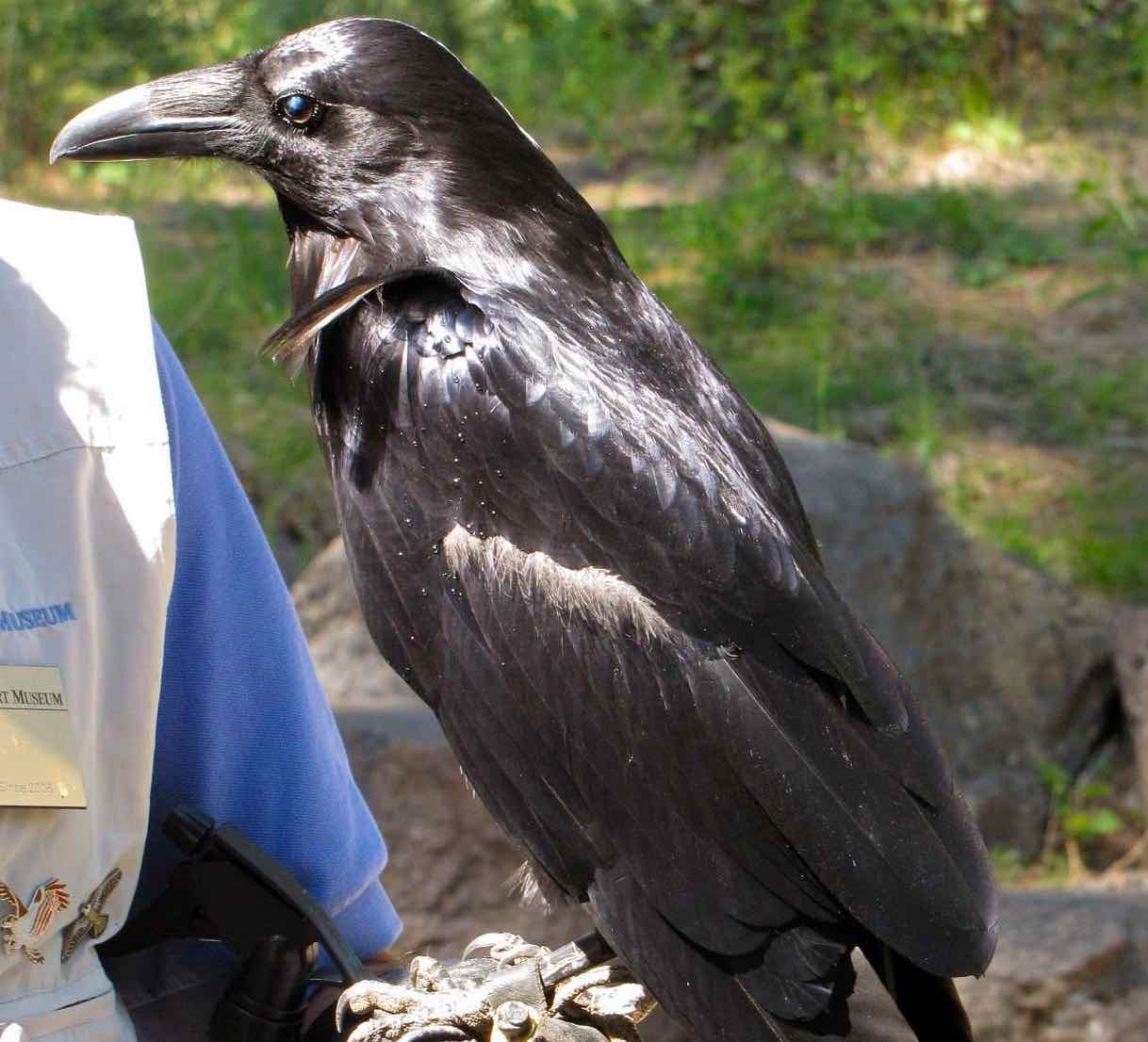
Experts recommend getting a young bird: it's much easier to form friendships this way, and it will be easier for the bird to develop its abilities and skills.
Ornithologists point out several advantages of keeping a raven as a pet: they are long-lived, not as noisy as smaller birds, and are also clean. Below, we'll explore other benefits that justify keeping a tame raven as a pet.
- Crows are predators, but they are quite omnivorous and unfussy about any diet. When it comes to home-cooked foods, these birds will accept any menu that includes foods familiar to humans. These include vegetables, cereals, greens, fruits, dried fruits, eggs, fermented milk products, meat (except pork), or fish.
- All corvids are capable of imitating human speech. Ravens do this masterfully, copying the tone and timbre of their voices, specifically those of humans. They learn to imitate sounds quite easily—more easily than budgerigars.
- Longevity. You'll have a feathered friend for a long time. A raven is a wonderful alternative as a friend and companion. These birds rarely get sick, have strong immune systems, and require very little maintenance to stay healthy.
Crows are beautiful creatures, despite their dull and monotonous appearance. But to maintain their beauty and docile nature, they require adequate living conditions. A private home is ideal; this makes it much easier for the bird's owner to organize walks and train them. However, a raven should be kept in a proper home—usually an aviary or a large cage, preferably floor-to-ceiling—where the bird will feel comfortable.
If you're truly interested in having a predator as a friend and you like birds, then the raven, with its intelligent features, will evoke a wealth of emotions and a strong attachment that will last for many years.
Nutrition and care
It seems like this bird will eat anything, a common analogy with street crows. In fact, domesticated corvids are real gourmets. They'll eat anything they see on your table with relish, and if you refuse them a treat, they'll even decide to steal it. Be prepared.
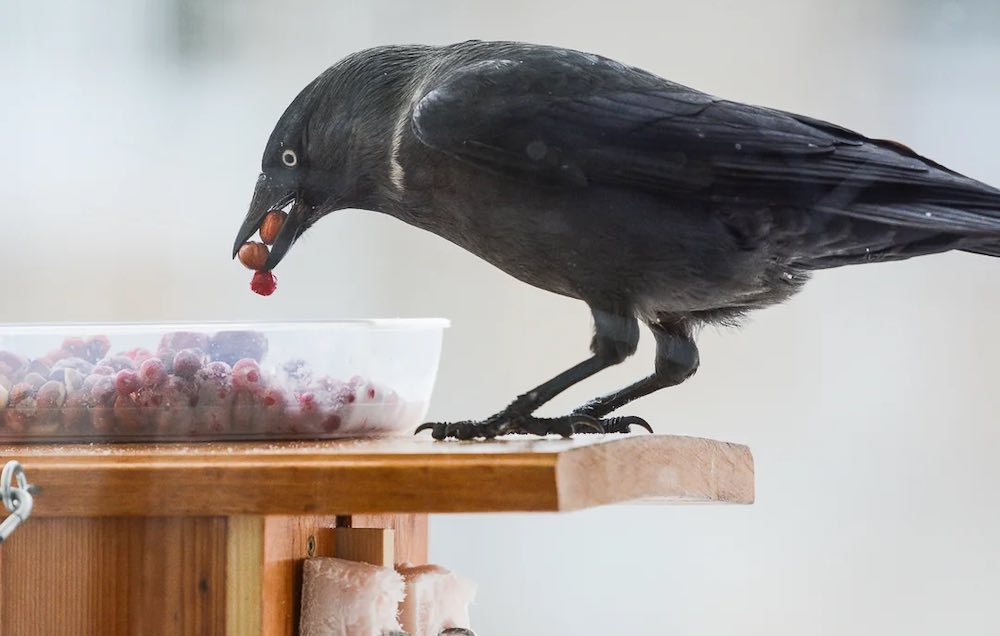
What do ornithologists recommend feeding domestic crows?
- Porridge made from a mixture of cereals, with the addition of pieces of vegetables and fruits.
- Raw fruits, vegetables, herbs.
- Unprocessed chicken fillet, minced chicken and rabbit by-products, ground beef.
- Cottage cheese and even kefir.
- Raw and boiled fish, even whole.
- Sunflower seeds, nuts
- Bone residue in raw and boiled form.
- Grated carrots and apple.
And, of course, the bird needs free access to water; it is changed every day.
The crow does not require any special care, the main thing is to provide it with decent and preferably clean housing, with sticks and twigs, and the opportunity to move freely.
The bird is recommended to take daily walks, but it must be taken into account that the pet will not fly away.
Other content requirements:
- The crow's cage is cleaned daily and disinfected at least once a week.
- The domestic raven's enclosure is lined with paper; sawdust or moss can be added to the bottom.
- Place a shallow bowl of water on the floor – crows love to bathe.
- Perishable food is removed from the house daily.
- Free range around the room should only be done under the owner's supervision and for short periods of time. Birds can leave "surprises" without warning, and cleaning up their waste every 10 minutes isn't everyone's cup of tea.
Read also about canary keeping.
Education and training
The speed at which a bird learns to mimic sounds depends largely on the age of the raven and the effort put in by the breeder. But in any case, corvids are quite easy to train—much easier than parrots.
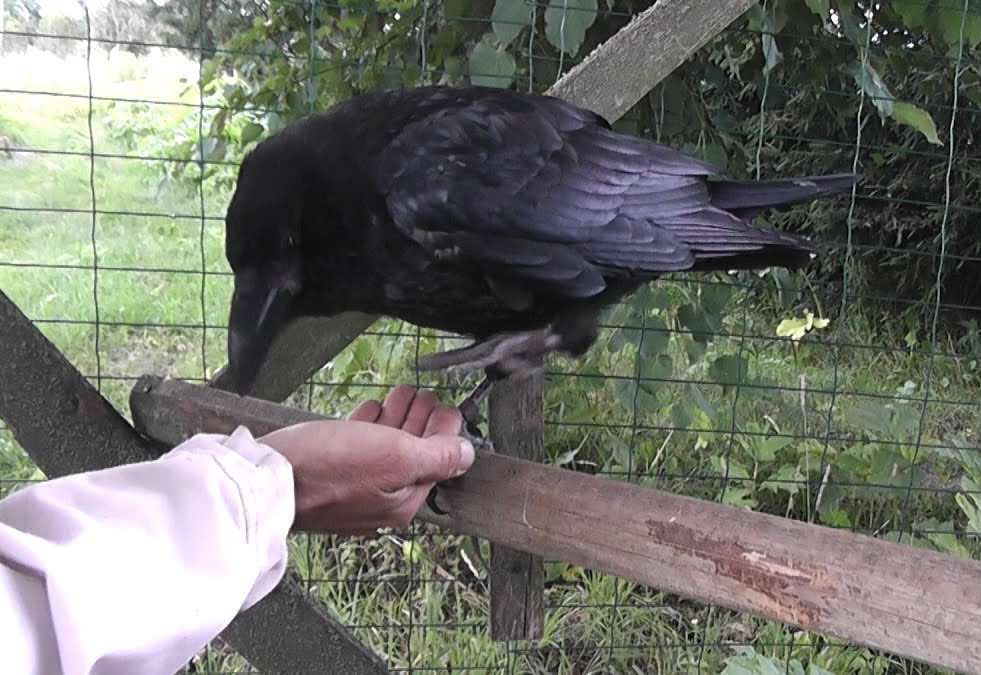
- During the first 2 months of life, a chick requires much more attention – up to 5-6 hours a day, compared to an adult bird (1.5-2 hours).
- The main method of training a raven is to accustom it to leashes (leather or velour straps). Later, a leash is added, which the bird quickly becomes accustomed to—this is how the young raven is tamed.
- To train your bird to roam freely outdoors without a leash, you'll need 2-3 hours daily for about 2-3 weeks. At 2 months of age, you can begin teaching your bird commands and tricks.
- It's not at all difficult to train a raven to sit in one place and listen to prohibitions - start teaching it correct behavior at an early age.
Remember, even a tame crow can always fly away, so you can’t expect a domesticated wild bird to completely lose its desire for freedom.
Diseases of the crow family
The near-perfect health of crows makes them exceptional among their relatives. The most dangerous are infectious diseases and reoviruses, which cause fever and death. These diseases are transmitted by blood-sucking insects and through the fecal-oral route. If your feathered pet rarely goes outdoors or is kept under your strict supervision on your property, it is unlikely to encounter fatal infections.
The main recommendation from ornithologists is to monitor your newly adopted bird for two weeks, i.e., quarantine it. If the raven is fine after 14 days, it's considered healthy.
Read also: 7 most dangerous birds.
What to feed a crow at home
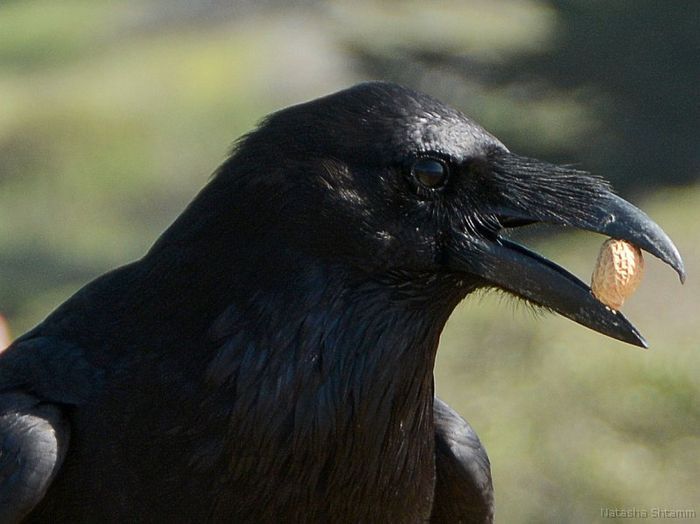
A crow kept at home will be well-fed if the owner learns to offer it not only a tasty, but also a healthy and varied menu:
- Useful – protein (dietary meat, chicken eggs, sea or river fish, boiled and raw).
- Any porridge (buckwheat, rice, millet, even with milk), dairy and cottage cheese dishes - syrniki and raw cottage cheese.
- Separate vegetables and vegetable salad without dressing and salt, dried apricots, prunes, dates.
- The raven will eat a piece of a bun or kozinaki without a twinge of conscience, and will be happy to peck at a pie with apple filling, stewed liver, or a steamed cutlet.
- Don't be surprised if your baby crow curiously tries to steal seafood, cheese or sausage, banana peel or a pâté sandwich - it's not that healthy, but it's delicious.
Birds are prohibited from eating anything salty or peppery, fried or snack foods, sweets or dairy products.
Breeders generally feed the bird porridge with added grated vegetables and giblets, occasionally giving cottage cheese and boiled eggs, and sometimes introducing cat or dog food or baby food – this is a sufficient menu for a tame raven.
The bird's diet should be supplemented with fish and seafood more often, or it's worth introducing supplements for poultry with increased vitamin and mineral levels. Keep pieces of chalk, fruit tree twigs, and wood charcoal readily available—these are sure to attract the attention of your feathered pet. A properly fed pet crow will never look mangy or shaggy.
How long do crows live at home?
There are many myths about the lifespan of corvids. These are mostly just conjectures, as the domestic raven can live from 20 to 40 years—a truly long-lasting companion. However, some long-lived birds, under favorable conditions, can live up to 60-70 years.
Should I keep a raven in my apartment?
Unlike most of the common pet birds, the raven benefits from both diet and exercise—minimal illnesses, no special care or maintenance procedures. It's sufficient to provide the bird with ample space to move and fly (at least occasionally), and to devote time to its feathered pet. Without companionship, the bird will become sad and avoid direct contact, which impacts its attachment and its extensive training potential.
Tips and nuances
Some of the habits of a tame raven can be surprising. With regular training, a bird can fetch a specific object when asked, imitate sounds down to the decibel level, obediently follow, or perch on a shoulder. But all of this is the result of close companionship and constant training aimed at mastering the skills and abilities of a domesticated bird.
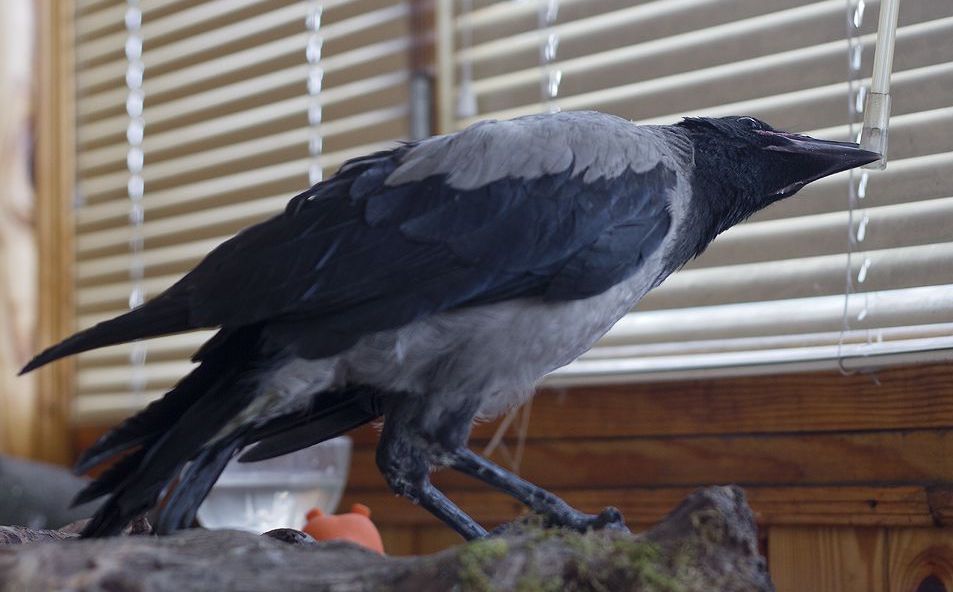
Some nuances of keeping crows at home are given below:
- For homes and apartments, ornithologists recommend purchasing small gray crows with smoky feathers. They are smaller and adapt better to indoor conditions.
- Male corvids are much more aggressive than females. Keep this in mind, especially if you have children.
- This is a noisy bird, not singing, but cawing and mimicking other sounds, always quite loudly. Keep this in mind if you decide to keep a tame raven in your apartment.
- The corvid family develops a strong attachment to its owner, so a raven must have only one owner. This behavior is typical of many birds of prey. However, even the most intense attachment does not preclude the possibility that an adult bird may fly away or, unusually, become accustomed to a new friend (owner).
- The raven is a conscientious and intelligent creature that sees humans as allies and friends. However, a tame raven, or even a baby raven, can easily not only fly around the house but also damage furniture and household appliances. When alone, the bird can easily damage something with its beak. This is why corvids need plenty of attention, taking them for walks, or even taking them out into the open—a forest, a field, or a ravine—to stretch their wings.
- The mutual affection between bird and owner doesn't preclude hostility toward other family members. Pet crows can often bully small pets—children and even teenagers. They can also become jealous of other pets, such as cats and dogs.
- Despite all the advantages of this feathered bird, it's important to remember that the raven's psychology is similar to that of a wild animal. This explains its aggression towards other household members and inappropriate behavior if it receives little attention or is not trained to behave properly around people. Furthermore, ravens are often sensitive: this manifests itself not only when alone but also in urges to peck or pinch.
- A crow is an intellectual, capable of fetching a requested object, carefully turning the pages of books, and rearranging pencils—even by color. But a tame bird can just as easily tear wires, scatter papers, hide socks, keys, and spoons, and sometimes even food and scraps. It's all about training and attention—if a bird is occupied with useful activities, there's simply no time to harm it.
Keeping a raven as a pet means gaining a loyal companion and devoted friend for years to come. While their plumage may not be particularly impressive, their incredibly clear mind and trainability transform the common street raven into a surprisingly intelligent, docile, and highly affectionate pet. Unpretentious and easy to care for, you can be sure this bird will steal your heart forever. And finding common ground with a tame raven is easy: a little patience and a little love are guaranteed.
Read also, How to teach a parrot to talk.