 The kiwi is one of the most amazing creatures on our planet. For many, its name evokes associations with the fruit of the same name. What do kiwis have in common with birds? Why did zoologist William Calder dub these birds "honorary mammals"? Where can you find these unique creatures? The answers to these questions, as well as some interesting facts about the kiwi, are in this article.
What does a bird look like?
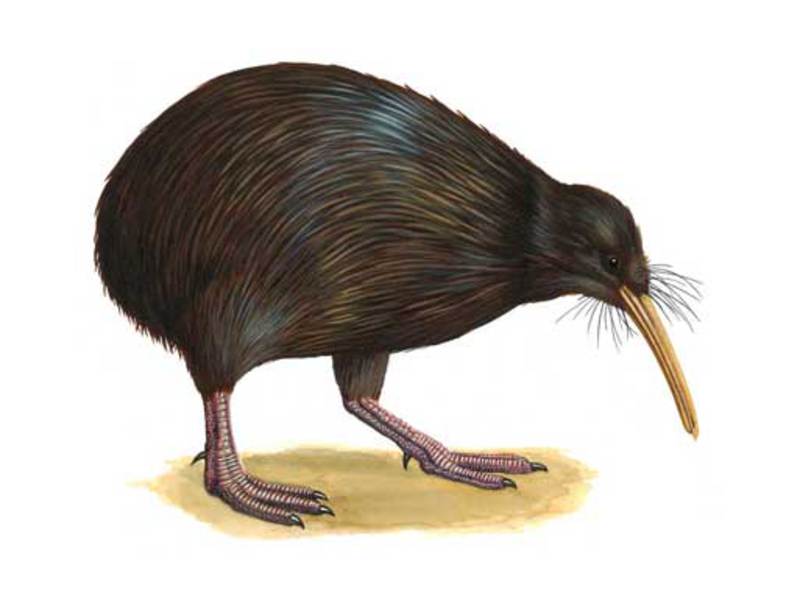
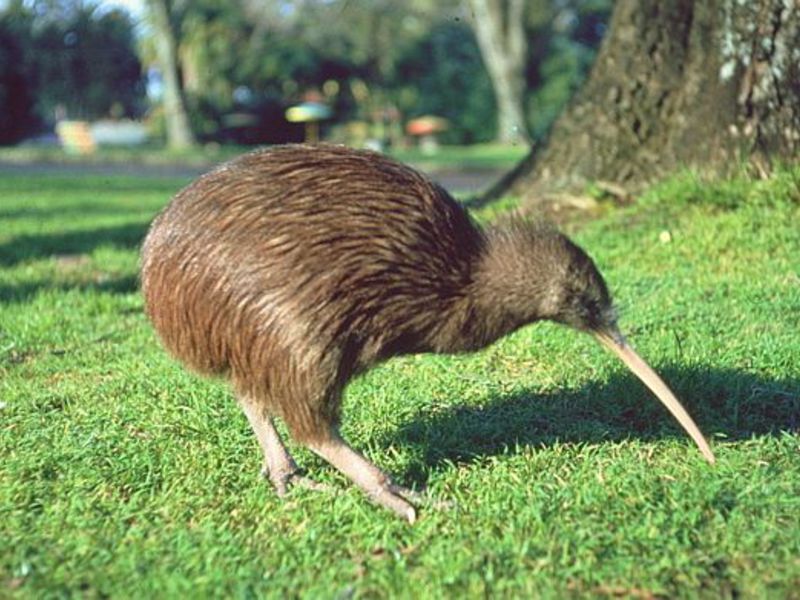
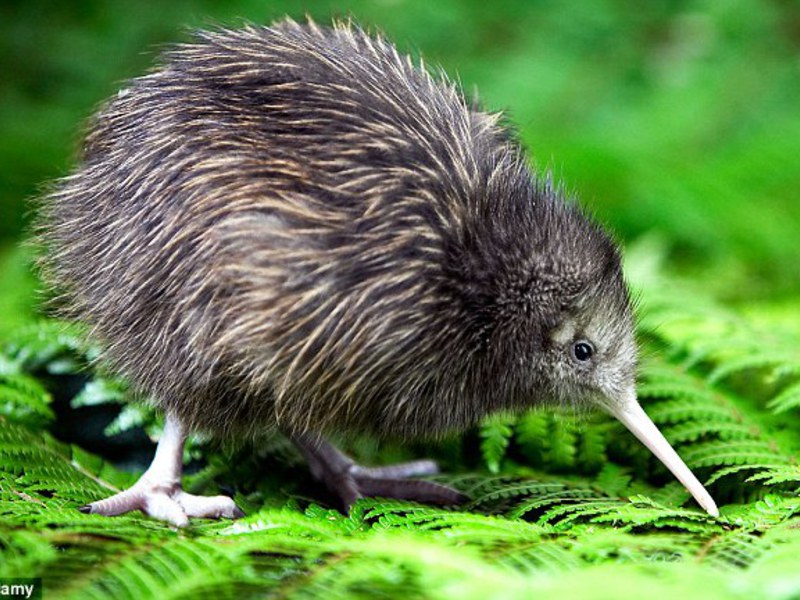
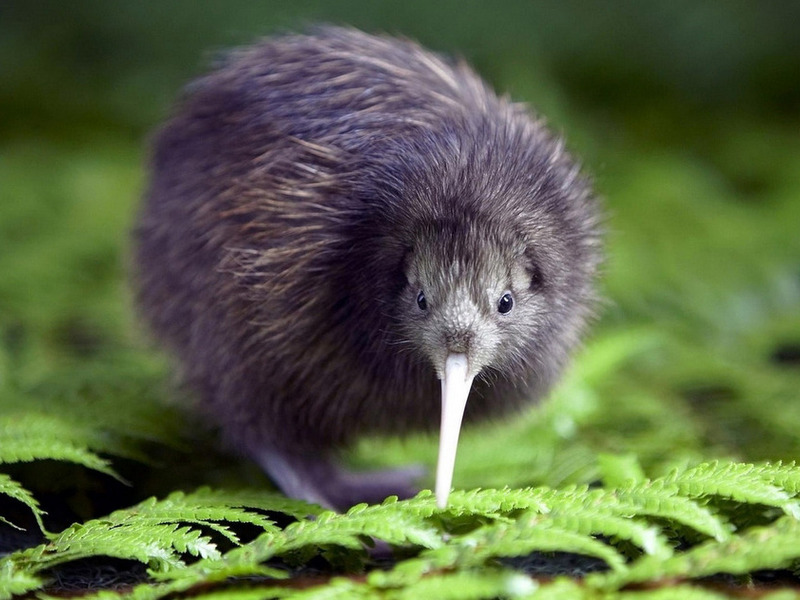
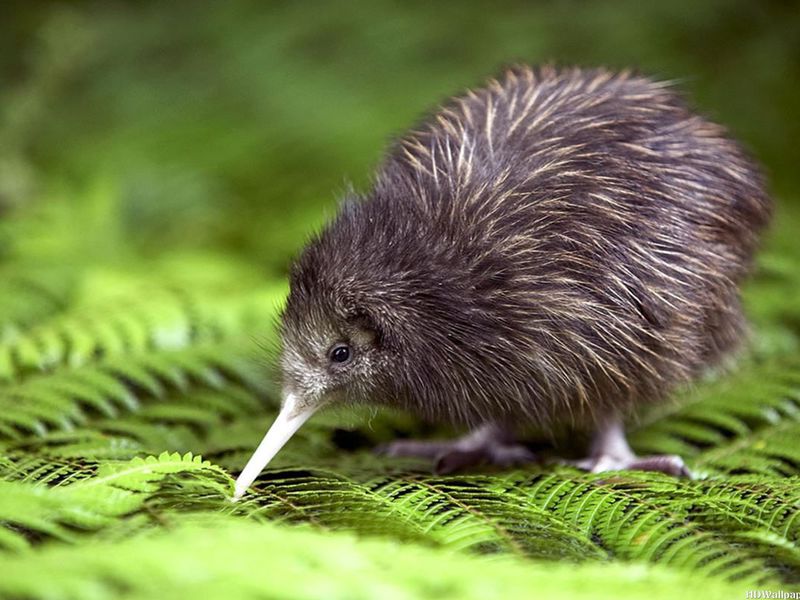
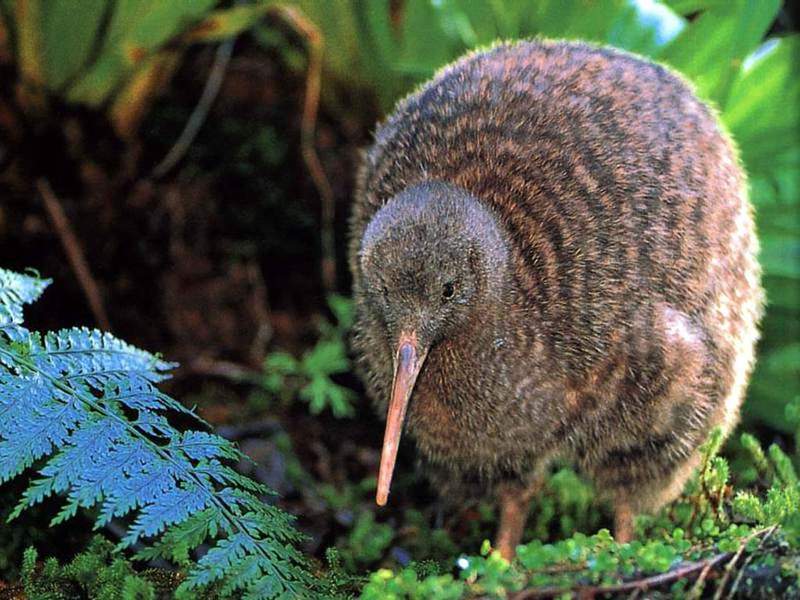
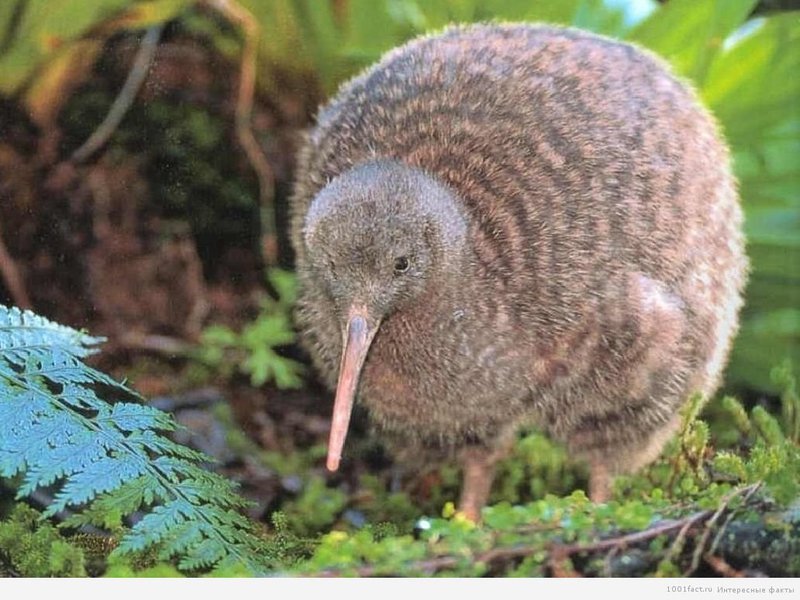
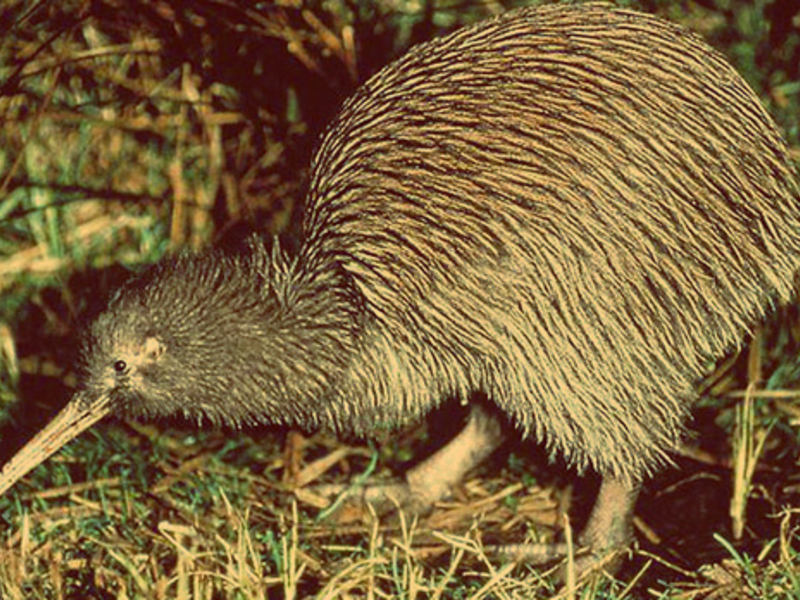
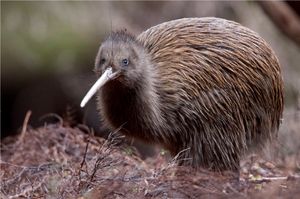
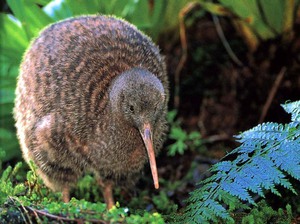
You can judge by the size of the kiwi compare with regular chickenIts body is covered in feathers that resemble thick animal fur. The light brown or gray plumage does indeed resemble the fuzzy skin of a kiwi fruit. Incidentally, the fruit was named after the bird, not the other way around.
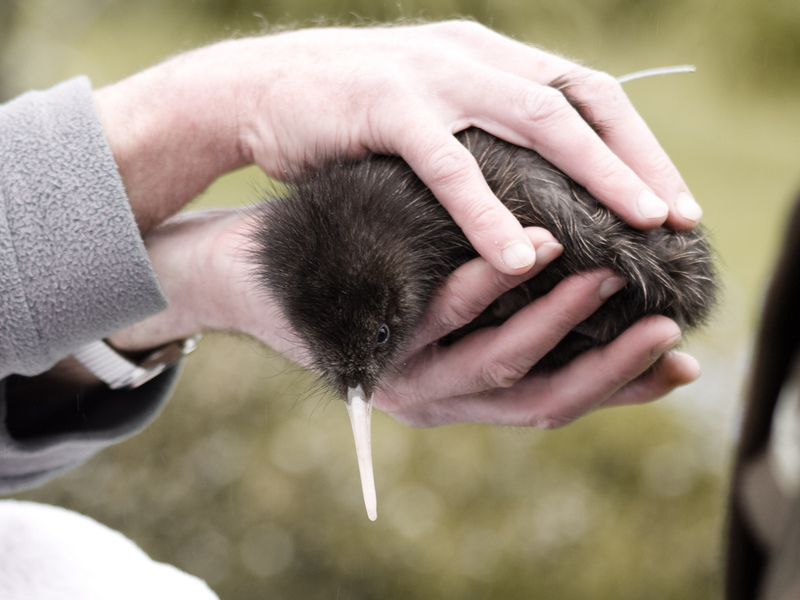
The feathered kiwi has a somewhat pear-shaped body and a small head on a short neck. Its body weight ranges from 1.5 to 4 kg. Females weigh more than males due to the need to carry eggs.
Can kiwis fly? No, because their vestigial wings, only 5 cm long, are unsuitable for flight. However, they have retained the habit of tucking their beaks under their wings when sleeping and resting.
This feathered creature lacks a tail. Furthermore, there are other characteristics that make it more animal-like than bird-like:
- body temperature of 38°C is close to the body temperature of mammals (in birds 40-42°C);
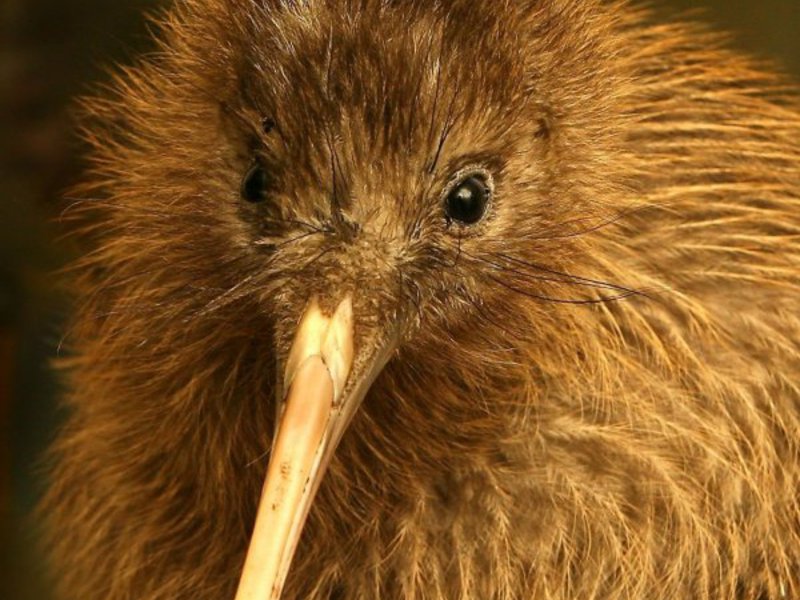
- At the base of the beak are vibrissae – thin, long whiskers that perform the function of smell.
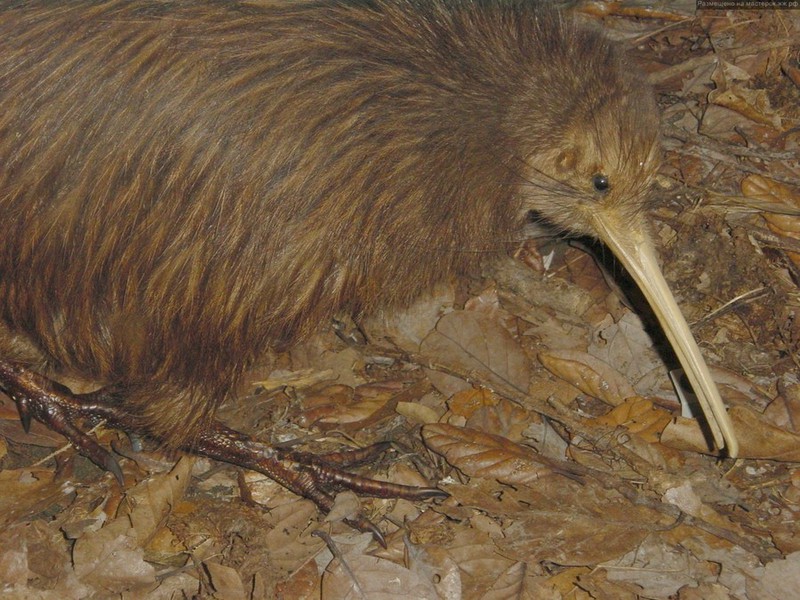
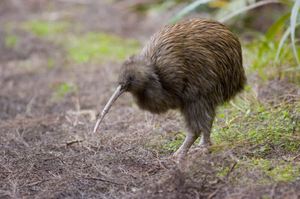
So who is this: bird or animal? The kiwi has a beak and four-toed feet—these characteristics indicate that it is, in fact, a bird. Its feet are short and strong, with sharp claws. These allow the bird to confidently maintain its footing in marshy ground. The beak is long and thin, sometimes curved, and averages 10-12 cm in length.
The flightless bird's vision is poorly developed—its tiny eyes, less than a centimeter in diameter, are proof of this. This deficiency is compensated for by its highly developed hearing and sense of smell. Among birds, kiwis are second only to condors in their keen sense of smell. Besides the whiskers, they have another interesting feature: their nostrils are located at the tip of their beak, not at the base, as in all other birds.
Where does it live?
The kiwi is endemic to New Zealand. This means it lives here and nowhere else in the world. Its damp evergreen forests and swamps are its natural habitat. habitual habitatIn areas most densely populated by these birds, there are only 4-5 individuals per square kilometer.
Lifestyle and nutrition
 Kiwis are not easy to spot in the wild, as they are nocturnal. During the day, they hide in various burrows, hollows, and under tree roots. It's worth noting that they are very cautious and behave like true guerrillas. They don't use a freshly dug burrow for shelter, but rather patiently wait several weeks for it to become overgrown with grass and moss, or they camouflage the entrance themselves with branches and leaves.
In their territorial area, birds have about fifty such shelters and replace them daily. Territorial division is very clear; the kiwis mark their territory with loud cries that can be heard at night.
Cautious and secretive, these quiet birds become active and aggressive at night. Males defend their territory from rivals, although fights between kiwis are quite rare. The first impression the kiwi gives of a clumsy and slow-moving bird proves to be wrong. They manage to cover their entire territory during the night—an area ranging from 2 to 100 hectares!
Half an hour after sunset, the birds set out in search of food. Their prey includes insects, earthworms, and mollusks, which they sniff out by dipping their long beaks into the soil. They also enjoy fallen berries and fruit.
Reproduction
 Mating season lasts from June to MarchBirds are monogamous by nature: pairs remain together for 2-3 mating seasons, and sometimes for their entire lives.
The female's primary mission is to lay a single egg. And what a one! The egg weighs 500 grams, which is about a quarter of the bird's body weight. In this respect, the kiwi holds the record for heaviest eggs among birds. And it's not the last—the yolk accounts for 65% of the egg's yolk, which is much higher than that of other birds (up to 40%).
During the entire gestation period, the female triples her food intake. This is because she will be fasting in the last few days before laying the egg—her body simply there will be no room left for food! But it's the male who incubates the eggs. He only leaves the nest for a couple of hours to grab a snack—sometimes the female takes over for this time.
The incubation period lasts approximately 80 days. Because the eggshell is quite thick, the chick must work hard and use its feet and beak to break out. This takes 2-3 days. Kiwi chicks are born with feathers, not covered in down like other birds. This makes them look more like adults.
Kiwis are hardly caring parents—they abandon their chicks immediately after birth. For the first week after hatching, the chick does not search for food, but feeds on the yolk reserves stored in its skin. After some time, when the chick is one and a half to two weeks old, it begins to forage for food on its own.
Initially, chicks feed only during the day, gradually transitioning to a nocturnal lifestyle. This makes the young birds vulnerable and easy prey for predators. About 90% of young birds do not survive beyond six months of age.
The chicks only reach adult size at 4-5 years of age. But furry birds live a long timeIn the wild, they can live up to 50-60 years—a lifespan many other birds would envy.
Kiwi population
Due to the kiwi's secretive lifestyle, encountering them in the wild is nearly impossible. For this reason, their rapid population decline remained unknown for a long time. Just a thousand years ago, their population numbered approximately 12 million individuals, while in 2004, it was only 70,000.
Nature has endowed these unusual birds with a high ability to adapt to environmental changes. However, deforestation and the introduction of predators—cats, dogs, and weasels—to New Zealand by Europeans have taken their toll.
There are 5 species in the genus kiwi - all of them listed in the International Red Book:
- Southern, or common, kiwi;
- Northern brown kiwi;
- Big grey kiwi;
- Small grey kiwi;
- Rovi
In 1991, a government kiwi restoration program was launched. Conservation measures include predator control and captive breeding.
Scientists have also suggested develop a deodorant for kiwiThe fact is that their feathers have a specific mushroom smell, which makes it easy for predators to find the birds.
Interesting facts and information
Hairy and wingless, unlike other birds in many ways—that's the kiwi. Interesting facts about it serve as proof of its uniqueness:
 The bird is a symbol of New Zealand, and its image appears on stamps and coins.
- New Zealanders themselves jokingly call themselves "Kiwis".
- Before New Zealand was colonised by cats, dogs and other predators, the furry birds had no natural enemies.
- The bird is related to emus and cassowaries.
- It got its name from the sounds made by the male.
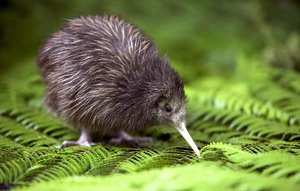 The bird is a symbol of New Zealand, and its image appears on stamps and coins.
This is what kiwi is like – unique creature, combining the features of both birds and animals.