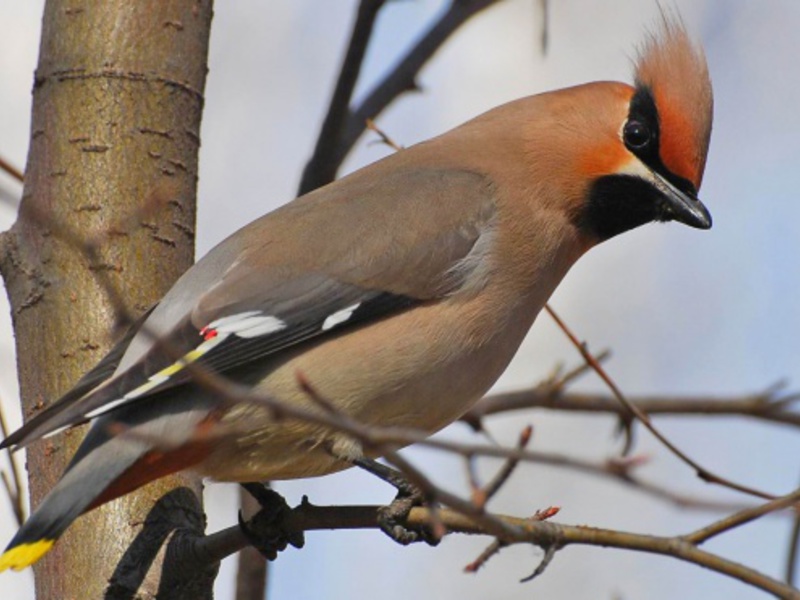
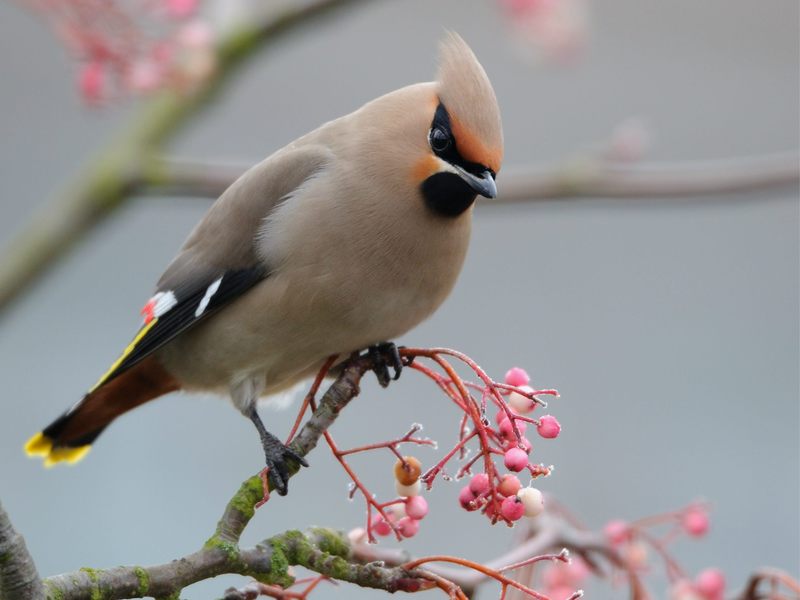
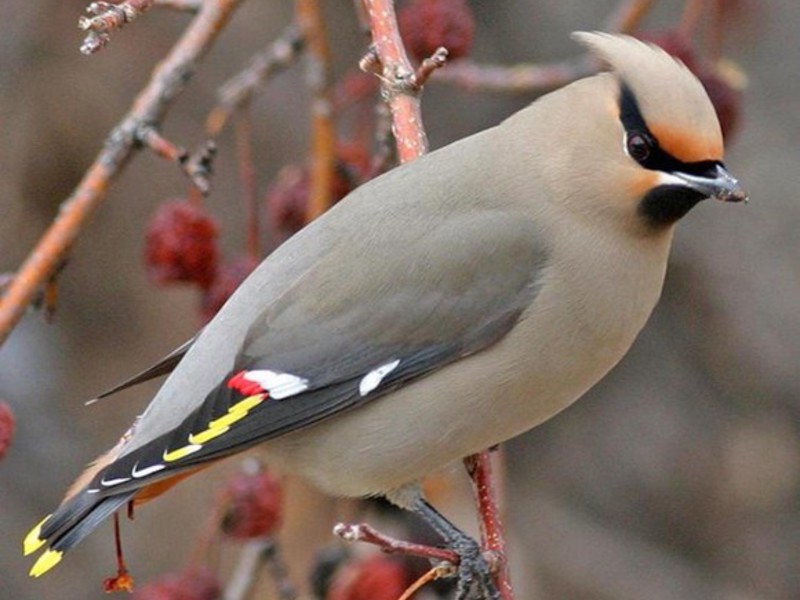
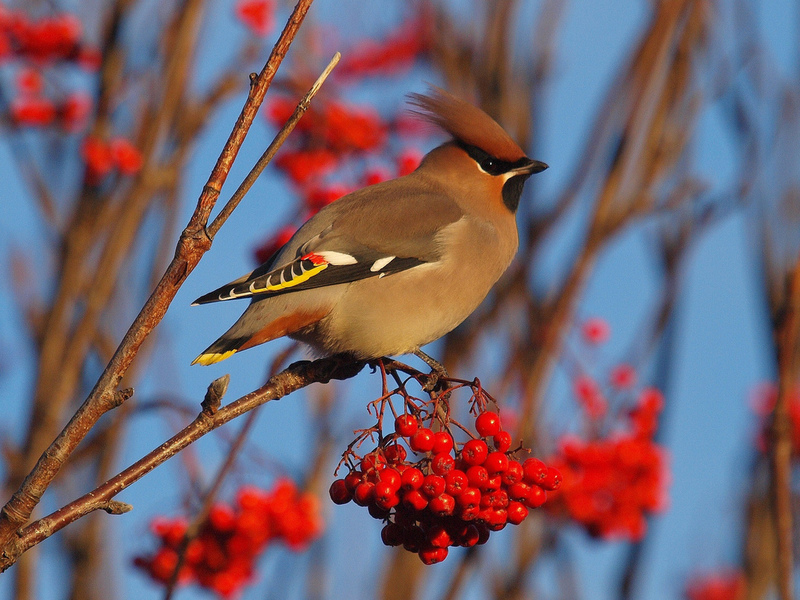
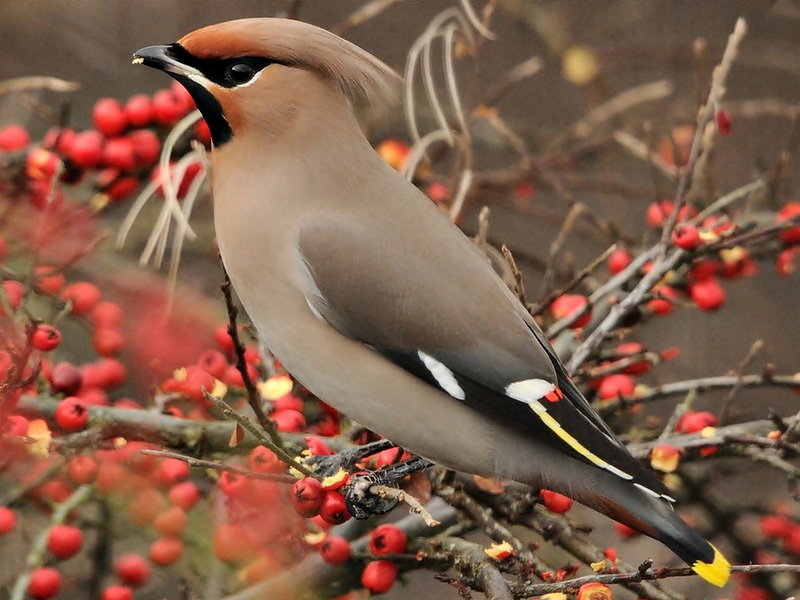
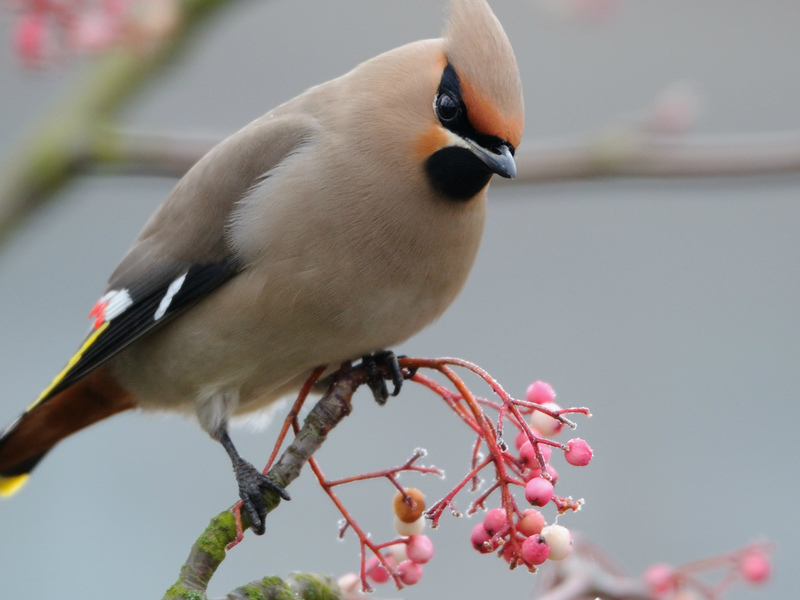
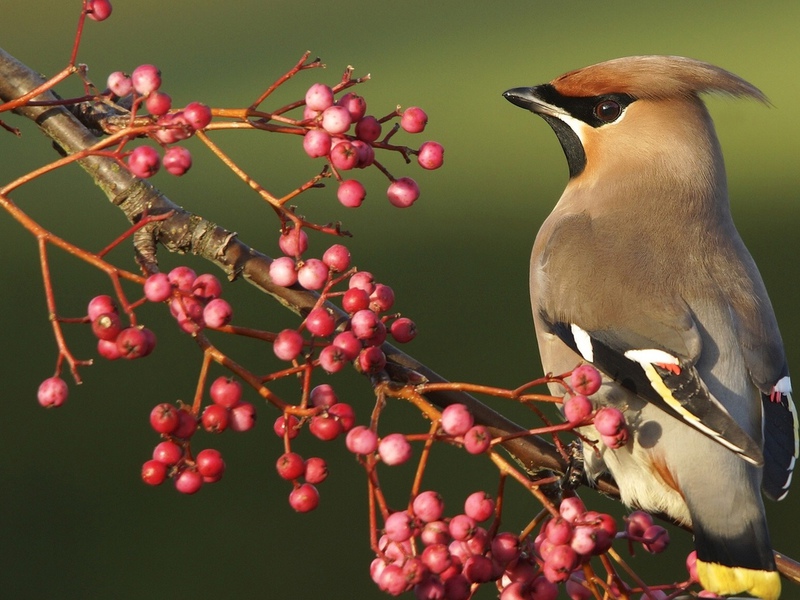
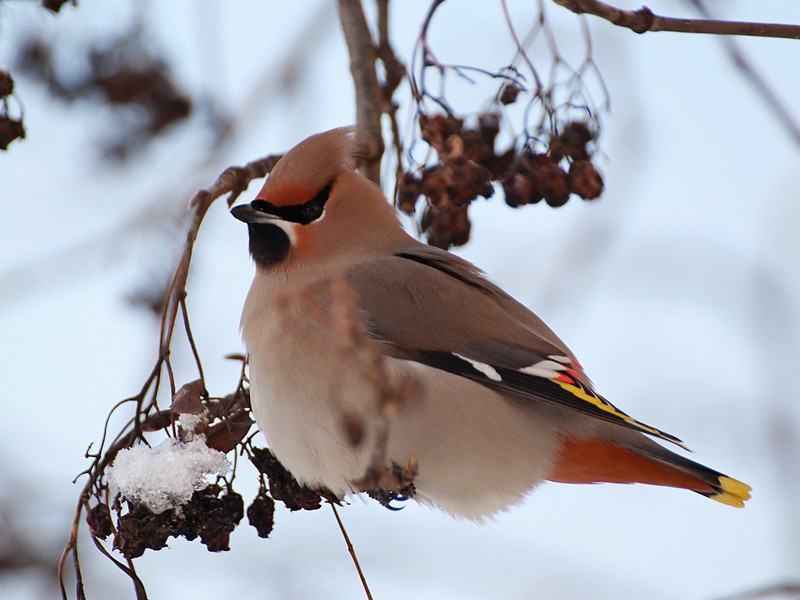
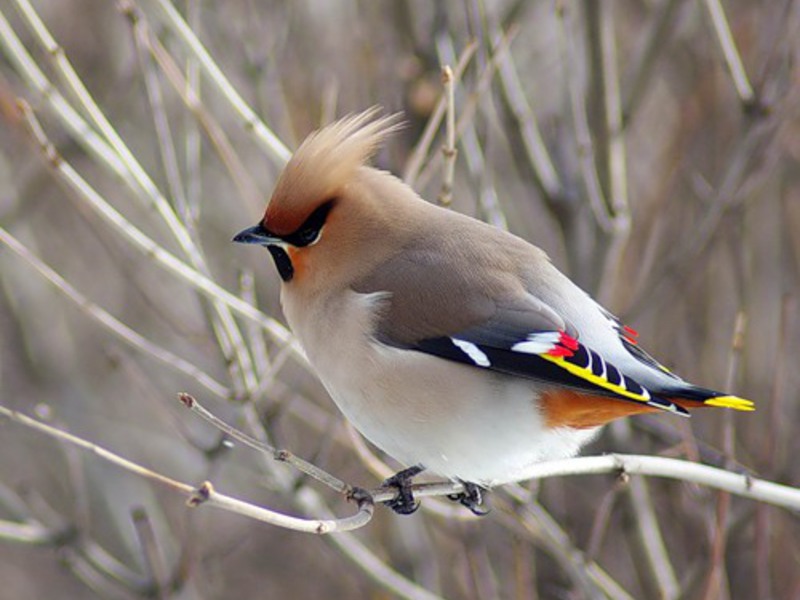
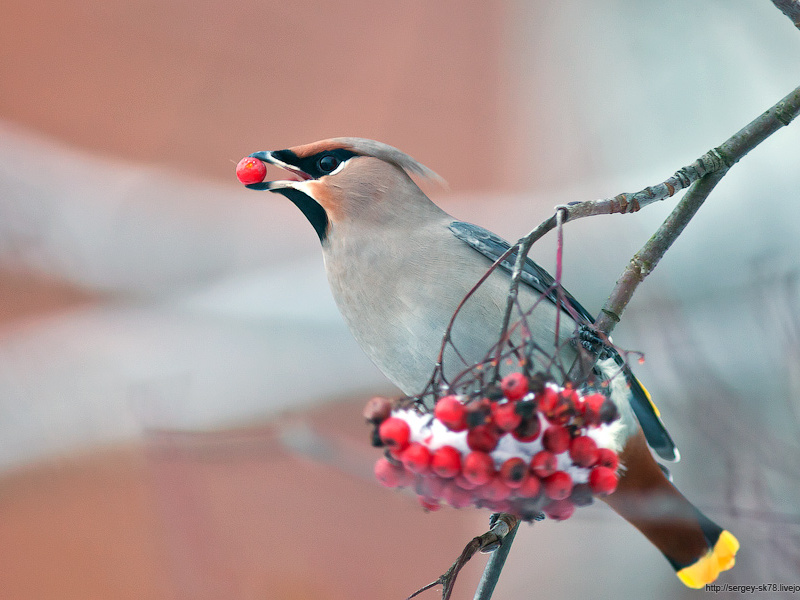
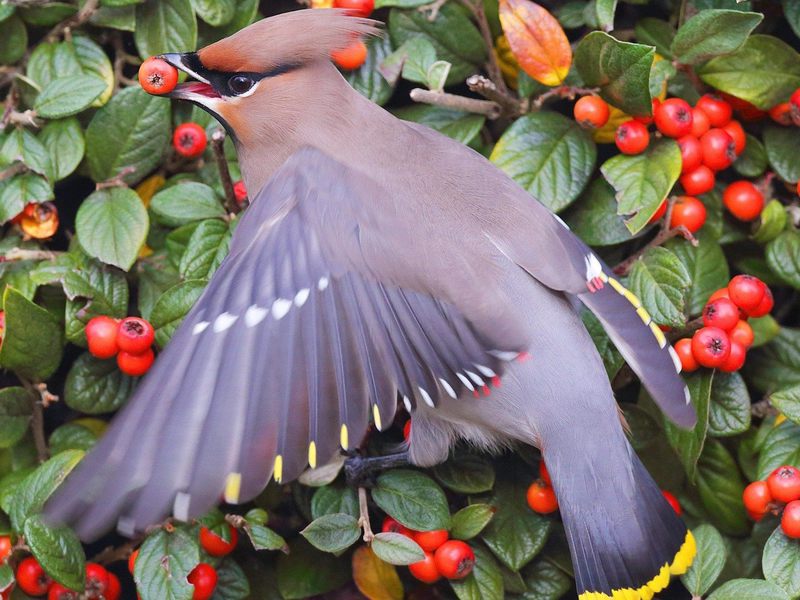
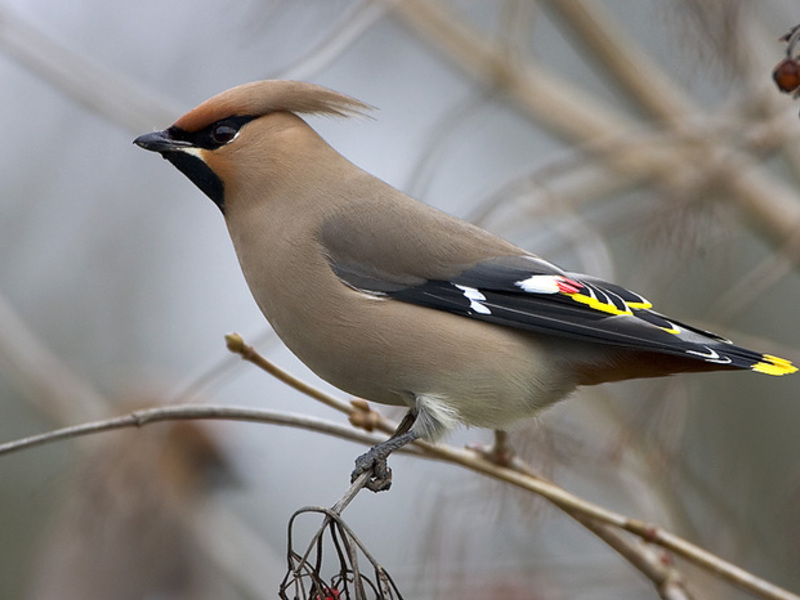
 As soon as the cold weather sets in, brightly colored birds can be seen on the rowan bushes in city parks. Their plumage stands out from the rest of the bird kingdom, like noisy foreign visitors who have unexpectedly visited the avian world. In fact, they are waxwings.
Description and characteristics of the waxwing
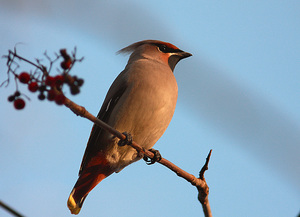
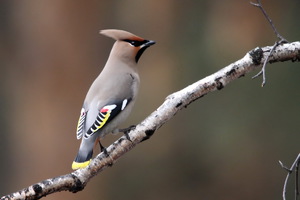
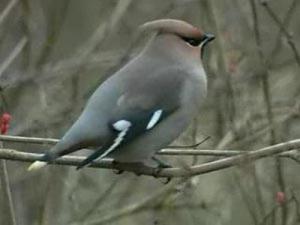
The waxwing has a charming and expressive appearancePeople have always considered this bird to be beautiful, but it couldn't sing. This is where its interesting name comes from. In Old Russian, its name meant "to whistle, to scream." But if you listen to this bird's song, the ancient name can certainly be disputed: after all, this bird can sing beautifully, sonorously, and melodically. There is a second interpretation of this bird's name, and it is related to the sound of the waxwing. The distinctive features of this bird's appearance are:
- A small body that can reach 20 centimeters.
- The plumage is grey-pink, but the wings are black with bright yellow and white stripes, and also small red specks.
- The tail is black with a yellow edging.
- Pink and funny tuft on the head.
- Black spot on the neck.
- Black arrows around the eyes.
- The beak is short and has a small tooth.
Types of waxwings
The waxwing family is small. It includes 3 subfamilies and 8 species, but unfortunately, not all of them have been studied yet. The following main species are currently recognized in the wild:
- Ordinary.
- American.
- Amur.
Habitat of the waxwing
 Waxwings primarily inhabit forests, which can include coniferous, birch, or mixed forests. Their habitat includes the northern regions of Eurasia and North America. Waxwings also inhabit the Russian taiga.
Is the waxwing a migratory bird or a sedentary one? This question interests many bird enthusiasts. It's impossible to give a definitive answer to this question, as the question itself is controversial when it comes to waxwings. Many scientists they are still recognized as nomadic birdsThey leave their habitats, heading southwest in search of fruits and berries. It is during these migrations that scientists study them. But during other, more normal times of life, waxwings try to maintain an inconspicuous and secretive appearance.
When birds migrate, they settle briefly in areas where food is available and then continue onward. In Russia, for example, they sometimes fly as far as Crimea and the Caucasus. They also have to cross the temperate zone along their migration route, sometimes even twice. As soon as the spring warming begins, the birds return to their northern homelands. Waxwings are sedentary and secretive in their nesting areas, so ornithologists try to study them during migration.
Waxwing flocks vary widely, from 5 to 30 individuals. These birds have a beautiful flight. They typically hover in a curved line until they begin to ascend again.
The waxwing also has many enemies:
- Martens.
- Squirrels.
- Falcon.
- Hawk.
Waxwing nutrition
The waxwing can feed both plant and animal feed:
 Berries.
- Fruits of plants.
- Tree buds.
- Insects that birds catch in flight.
- Midges.
- Butterflies
- Dragonflies and their larvae.
- Mosquitoes.
 Berries.
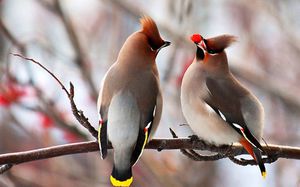
The search for food drives these birds to migrate. Therefore, waxwings linger longer in areas where they can find abundant berries. During winter and times of famine, these birds become true vegetarians.
They pick berries from branches in an interesting and amusing way. They do this by hanging upside down and very dexterously and cunningly trying to reach and pick the berries. Usually, nothing remains on the bush after they've picked them. In this strange position, they can reach even the most distant berry.
Waxwings have another name - "mistletoe". They got this nickname because love the white and juicy fruits of mistletoeThey stay in the area where this berry grows as long as possible.
Incidentally, it's very easy to tell if waxwings have appeared. Just look closely at the snow under the bushes. If you see red spots of berries on the snow, or if you find pecked seeds that the waxwings couldn't digest, it means the birds are in your area.
These marks in the snow are caused by the waxwing's small stomach, but as soon as these birds see bright and tasty berries, they begin stuffing their crops with a huge quantity. Naturally, their bodies can't handle such a large quantity of berries; it's too much food for a small bird.
Accordingly, many berries are excreted from the intestines in the same form they entered the body, without any changes. Consequently, waxwings are the most useful seed dispersers in a rather unique way. This is confirmed by the germination of seeds transferred by waxwings in this way.
Waxwings, unlike other birds such as bullfinches or thrushes, practically do not eat when eating. never descend to earthBut they remove all remaining berries from the branches, leaving nothing behind.
But berries often become the cause of death for waxwings. This happens like this: constantly eating all the berries, gorging themselves, the birds don't notice when they've also consumed fermented berries. Intoxicated and drugged, the birds begin to get confused, losing their bearings. Sometimes they even become flightless and, when attempting to take off, can crash. And that's tragic.
Unfortunately, people don't always understand what's happening when a waxwing suddenly starts banging against a shop window or the glass of a house. It's generally believed that any bird banging against a window is a bad omen. However, this behavior can occur not only in winter but also in spring. In such cases, the cause of this strange behavior may be fermented maple sap, which waxwings find in damaged bark.
But it is impossible to know when the waxwings will arrive or, conversely, when they are about to fly away. The following factors influence their flights:
- Weather conditions.
- Berry yield.
But any arrival of a waxwing is, of course, a celebration. After all, the bird itself, bright and colorful, can bring joy and happiness to both children and adults.
Reproduction and lifespan of the waxwing
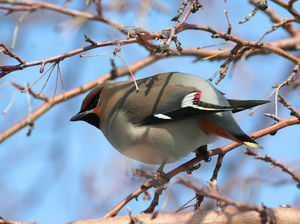 Waxwings build their nests in the place where they return after their winter migration. But their mating season begins even before their departure. If a pair is formed, then they go on flights together.
Waxwings begin building nests around May, but can also do so in June. Therefore, encounters with them during this time are virtually impossible: they become cautious and secretive.
They choose nesting sites near bodies of water or in sparse forests. They build their nests in tall spruce trees, approximately 13 meters above the ground, where the canopy is very dense. They use a wide variety of materials to build their nests, including:
- Thin spruce branches.
- Needles.
- Feathers.
- Fluff.
- Moss.
- Pieces of lichen.
- Thin grass stems.
- Reindeer wool.
The waxwing is making a nest spherical shape, resembling a huge bowl, yet sturdy and warm. A single nest can contain 4 to 6 eggs, which are dark purple with small dark spots. Females incubate the eggs for approximately 14 days. During this time, the male brings food to the female.
The chicks grow for approximately 2.5 weeks, and then begin a nomadic lifestyle, similar to the adult bird. New pairs are formed each year. The average lifespan of a waxwing is 13 years.
Naturally, the birds' bright and colorful plumage attracts those seeking to tame waxwings. This bird is known to be easy to keep in captivity, requiring no special care. It adapts easily to captivity, but becomes lethargic and inactiveTherefore, it is worth keeping them in flocks so that she can live longer.