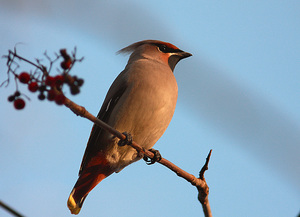
 Russia's natural and animal life boasts remarkable diversity, as our country, the largest in the world, encompasses several dozen climate zones. This vast expanse is home to a large number of different bird species, each distinguished by its own unique appearance and lifestyle. Birds with a distinctive head ornament—the crest—are of particular interest.
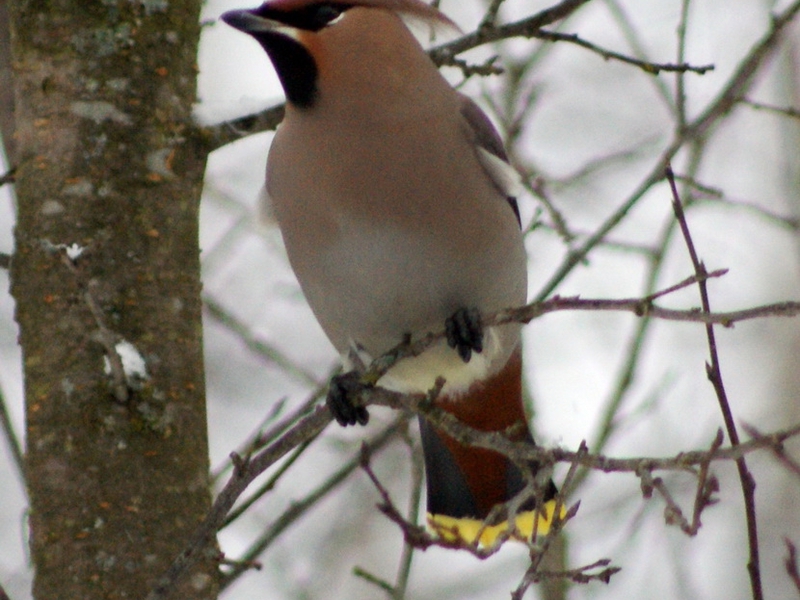
Waxwing
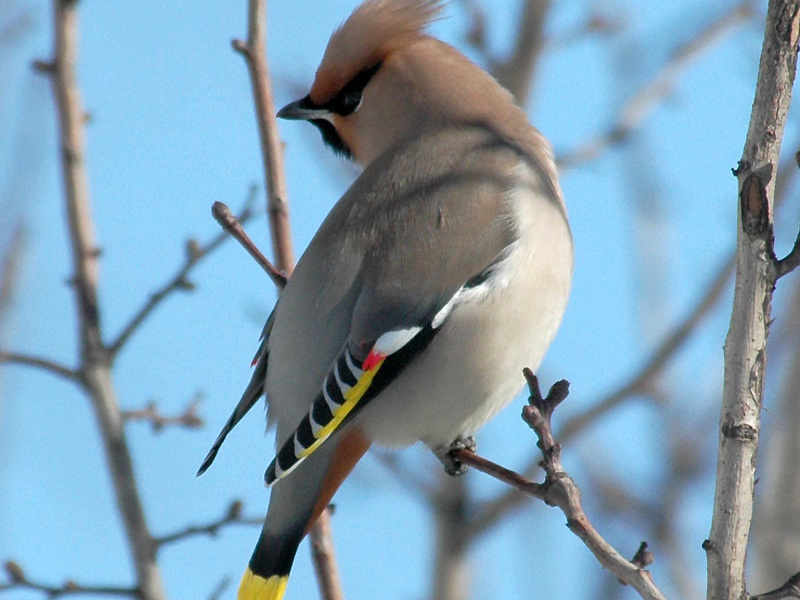
One of these bird species is the waxwing. has small dimensions (15-18 cm), weighing up to 70 grams, with brownish-gray plumage with red spots. The wings, tail, head, and throat are black with white and yellow stripes.
Waxwings live in the northern regions of Siberia (the taiga and forest-tundra), and with the onset of winter, they migrate to more southern regions—the cities and towns of the Moscow region, Crimea, the Caucasus, and Central Asia. During warmer months, their diet consists primarily of insects, but they also consume pine cone seeds and birch buds.
In winter, birds feed on the fruits of viburnum, rowan, hawthorn, and rose hips, swallowing them whole without having time to digest them. Consuming fermented fruits, they often become intoxicated. Drunken waxwings also appear in the spring after drinking tree sap (maple, etc.). Birds in this state behave inappropriately, aggressively, often receiving injuries, which results in death.
Waxwings build nests from pieces of moss, lichen, dry twigs, and grass, using feathers and down for lining. During courtship, the male brings berries to the female. The female typically lays 3 to 7 gray or purple speckled eggs, which she incubates for approximately 14 days. The chicks become independent and can fly within two weeks, after which they join a flock of 5 to 30 birds.
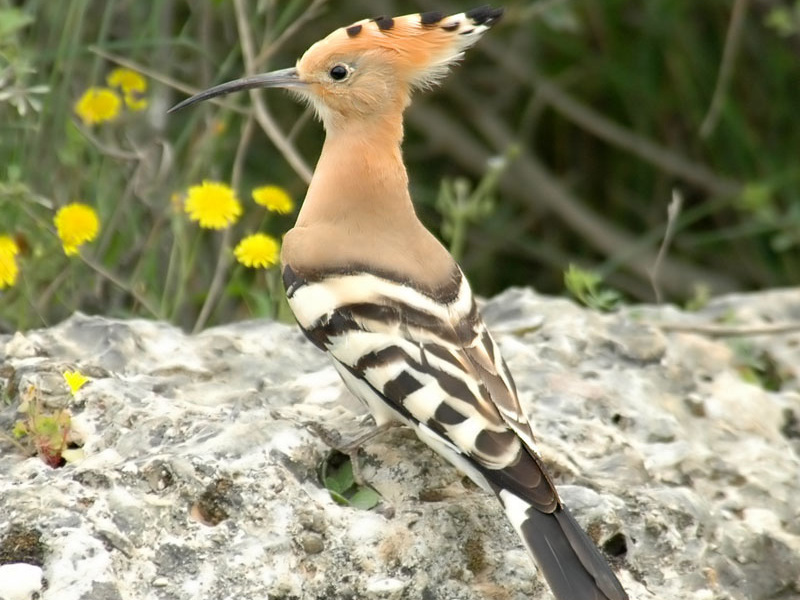
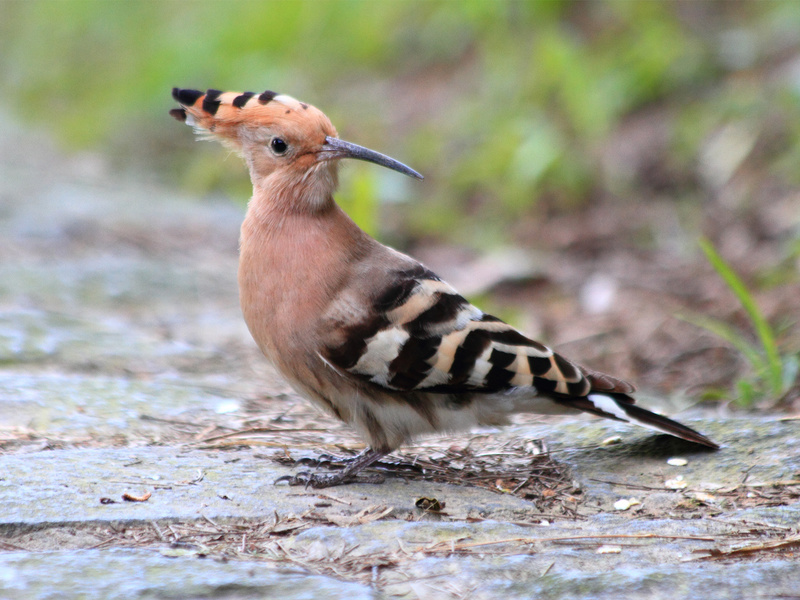
Hoopoe
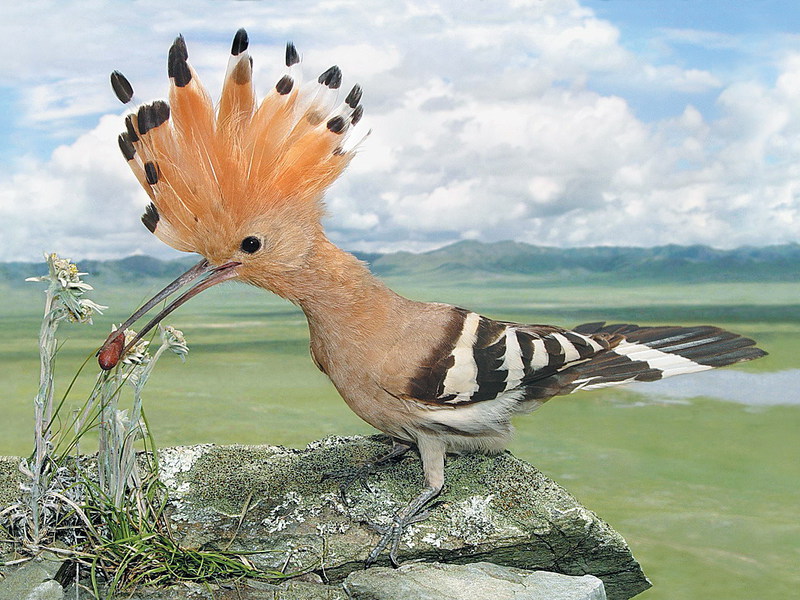
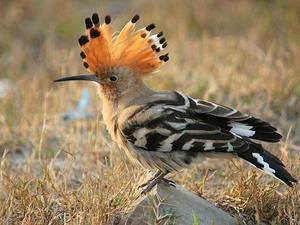 Another bird species with a similar appearance is the hoopoe. The bird is almost as large as the waxwing. It has a long, thin bill up to 4-6 cm long. Its coloring is very striking: a reddish back, black wings and tail with white stripes, and a tall, reddish crest edged in black, normally folded.
Birds are widespread throughout our country – in the Central Black Earth Region, Siberia, Transbaikalia, and the Far East.
These species of birds live in open flat or forest-steppe territoryThey can run quickly on the ground, and in case of danger, they can press themselves to the ground, spreading their wings and raising their beak upward.
Hoopoes feed on both insects and small reptiles (snakes, etc.). They nest in dense thickets, and the foul odor emanating from the droppings they leave behind serves as protection from predators.
A clutch typically contains 3 to 8 eggs, which are incubated for two weeks. The parents continue to care for the chicks even after they fledge.
Reed Bunting
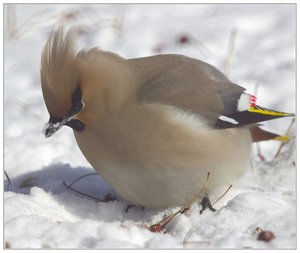 Some species of birds in the bunting family also have a crest. One such bird is the penduline bunting, which resembles a sparrow in appearance. This small bird, approximately 15 cm in size and weighing between 16 and 20 grams, has rufous-brown plumage with white and red stripes. Unlike the sparrow, it has a small crest, more pronounced in males, and a short, sturdy bill, which easily cleans grains. When feeding chicks, the penduline bunting soaks the food in its bill.
Bird usually lives in open spaces:
- in the swamps
- in steppe regions with shrubs
- in swampy river valleys
The oatmeal's diet consists primarily of insects and often grain crops and berries.
The nest is built on the ground in a depression, occasionally in bushes, in the shape of a cup, woven from the stems and leaves of cereal crops. It is lined with moss, lichen, horsehair, or animal hair. Birds lay 4-5 grey or white eggs with brownish speckles, they incubate them for about two weeks.
The birds' habitat in Russia is quite extensive—the northern European part of the country, Siberia, and the Far East. In winter, they migrate to parts of East Asia.
Jay
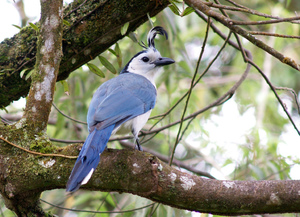 One of the representatives of the tufted bird species is the jay, a fairly small bird, about 15 cm tall and weighing 200-250 g. It has bright reddish-brown plumage, bright blue shoulders with black stripes, and a long black tail with a white rump.
The bird has long, flexible toes with sharp, curved claws, which it uses to move quickly through trees. This allows the jay to search for a variety of insects, and its curved bill allows it to handle large beetles (May beetles, leaf-eating beetles) or small rodents, lizards, and frogs. In winter, the bird may feed on acorns and various berries.
Jays live in deciduous forests, in shrubby areas. During the brooding period, they often use old tree hollows or hidden spots in tree branches to build nests. They lay 5 to 10 greenish or light yellow eggs.
Birds are able to imitate the sounds of animals (dogs, cats, chickens) or any household sounds, similar to the creaking of a well chain, etc.
Lapwing
The lapwing can be found in many parts of the country. It's a rather distinctive bird with bright plumage. Unlike the other species presented, it's larger, reaching 28-30 cm in length. the weight reaches 130-330 gramsThe lapwing's plumage is black and white, with purple, greenish-blue, and yellow hues on its wings. The bird has large, expressive eyes, long feathers on its head form a crest, and its legs are a vibrant crimson.
The lapwing lives in open areas with abundant vegetation:
- in wetlands
- in the fields of corn and potatoes
- in wet meadows
The bird feeds on insects and invertebrates.
The nest is built directly on the ground in a depression lined with twigs and grass. The female lays four eggs, and the parents incubate them in turns. The chicks hatch after 28 days.
Often feathered are at risk during this periodSince the nesting site may be located directly in a planted field, many birds die during harvesting.
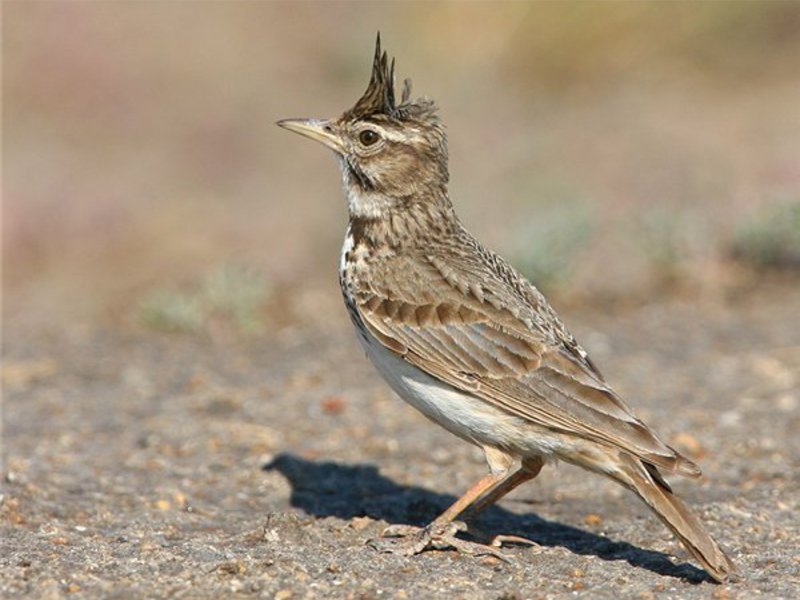
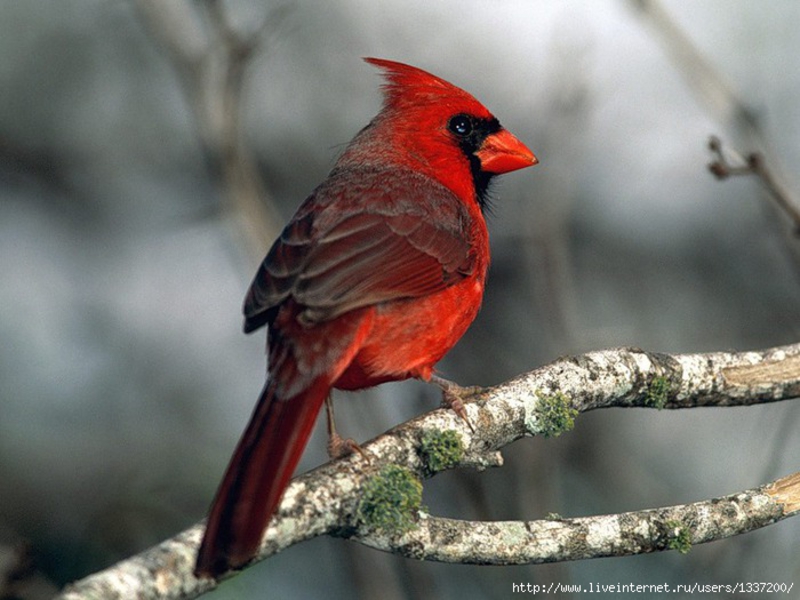
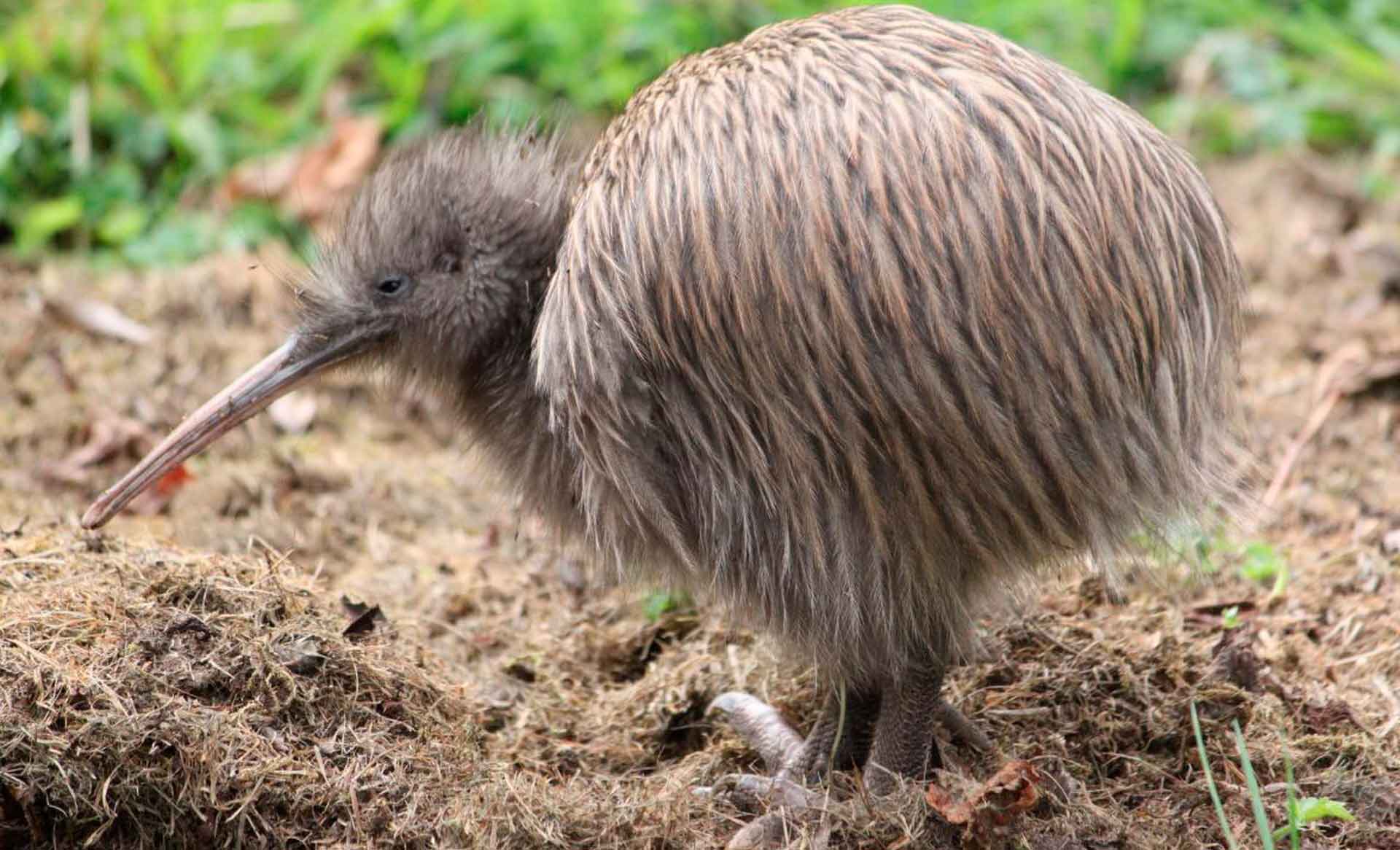
The photo shows various species of birds with a crest on their heads.
 Yana
Yana  Lara Aleshina
2 comments