If you've long dreamed of having a talking parrot in your home but doubt you can teach it, know that it's entirely possible, and talkative birds are not uncommon. However, you should be prepared to put in a lot of effort, methodically and patiently training your pet day after day to hone their skills. Furthermore, to ensure your efforts aren't wasted, it's best to familiarize yourself with some of the theoretical intricacies of the training process beforehand.
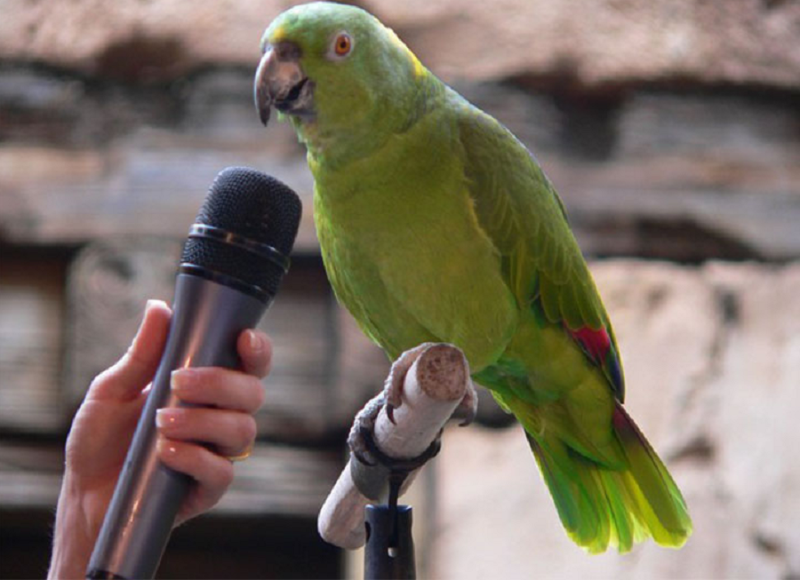
Repeat the same words in his presence
To begin, choose a first word. It should be short and consist of 2-3 syllables. Parrots learn best with simple words like "porridge," "hello," "bye," "mom," and so on. Say the word several times while looking at your pet so it understands that you're speaking to it. Speak slowly and try to be as emotional as possible to engage your pet. But avoid, especially during your first few attempts, pronouncing the word with different intonations, as this can confuse and stupefy your parrot.
Take your time and allow the bird to respond to your speech for a while. At first, the parrot will try to respond with just sounds, and then, little by little, you'll begin to discern the outlines of words.
Maintain silence during training.
The training room should be quiet so that nothing can distract the naturally curious bird from learning. Remove the mirror and toys from the cage during the lesson, otherwise the training will be ineffective.
But after training, be sure to return the mirror to your feathered owner so that he has the opportunity to properly practice in front of it and refine his pronunciation skills.
Use special disks and computer programs
Most often, specialized discs and computer programs are used to teach birds to sing. These are time-tested methods based on the same principles as vocal training—the bird tries, initially awkwardly, and then more confidently, to repeat certain melodies and chants. Such discs are most often used to teach young canaries to sing.
However, it's safe to say that parrots can also happily reproduce sounds recorded on electronic media that imitate songs or melody. This is especially true if the recording is played in a high-pitched voice, as this timbre is most easily perceived by birds.
Parrots also enjoy simply listening to rhythmic music, trying to imitate and mimic the singing. This often occurs in the form of a peculiar babbling sound, but this is the first sign of progress in learning to pronounce distinct words.
Praise her for her first successes
Don't forget to use positive reinforcement during training: reward your pet with treats and a kind, encouraging tone. Treat your parrot with something special, not usually included in its regular diet. This will truly be an effective method for training your feathered student.
Be patient, don't yell or get irritated with your bird, even if it's stubborn or disinterested. It's possible your parrot is bored or tired; in this case, don't insist and postpone your training until your pet is ready to learn again.
Do exercises
All exercises should be regular, and training sessions should last at least 10-20 minutes a day. It's best to schedule sessions at the same time each day, with the duration adjusted slightly depending on the parrot's mood.
Parrots don't understand the meaning of words, but they can associate them with specific actions, which can be very beneficial for creating a specific form of learning, somewhat similar to teaching children. This is a form of memorizing words "tied" to specific situations, for example: "meeting" - "hello," "goodbye" - "goodbye," feeding - "porridge," "eat." The only requirement is that the situations are real, not imaginary, so the bird can associate the word you say with what's happening around it.
Parrots are very intelligent birds with a good memory and a wide range of abilities to learn human speech. They communicate easily and form strong bonds with people, which can undoubtedly be a major advantage during their training. However, teaching a bird to speak clearly and practicing these skills requires considerable effort and patience.