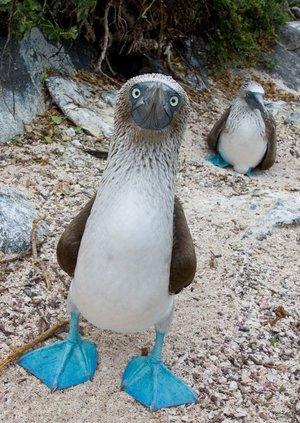
 Nature, like nothing else, has the power to capture the imagination with its creations. Amazing landscapes, fantastic plants, and unusual animals always capture the interest of not only scientists but also those who simply appreciate natural beauty. One such unique creature is the blue-footed booby. Photos of these incredibly cute and trusting birds have already won the hearts of internet users.
The first to study and describe the blue-footed booby was the well-known Charles DarwinFor this purpose, he specifically visited the Galapagos Islands, a favorite habitat for these birds. Incidentally, studying their habits is not all that difficult. Boobies are practically unafraid of people and allow them to approach them closely.
Because of this gullibility, which often ended very tragically for the birds, and because of their rather clumsy gait, like all seabirds, they were nicknamed "booby" in English. This name comes from the Spanish bobo, meaning "fool" or "clown." Indeed, in all the photos, the birds look very funny and cute.
Content
Appearance of the Blue-footed Booby
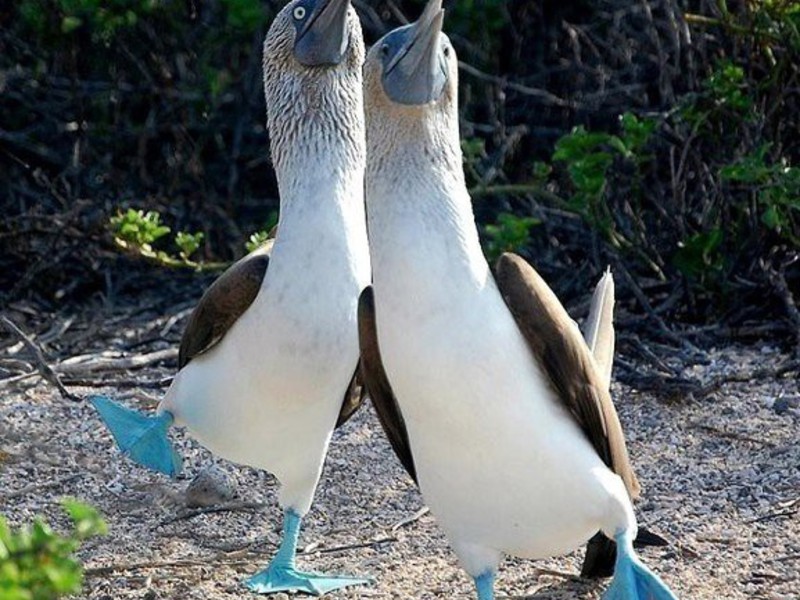
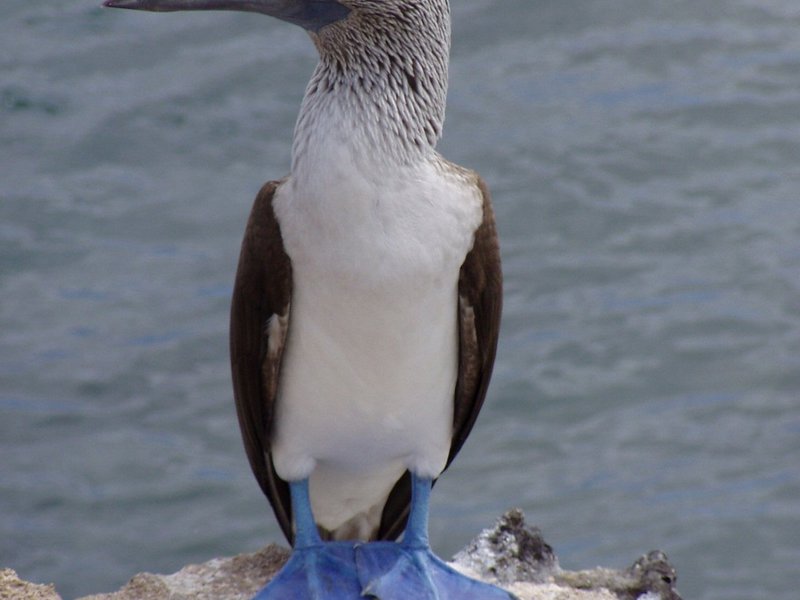
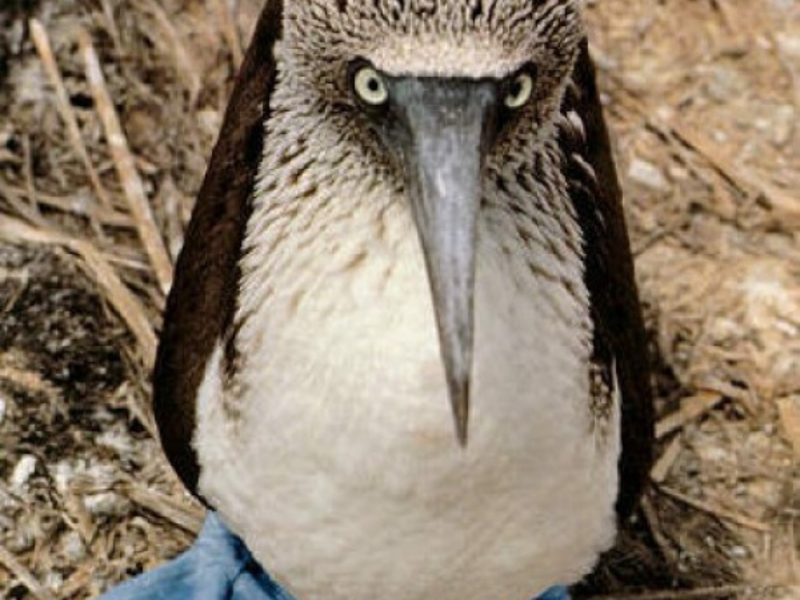
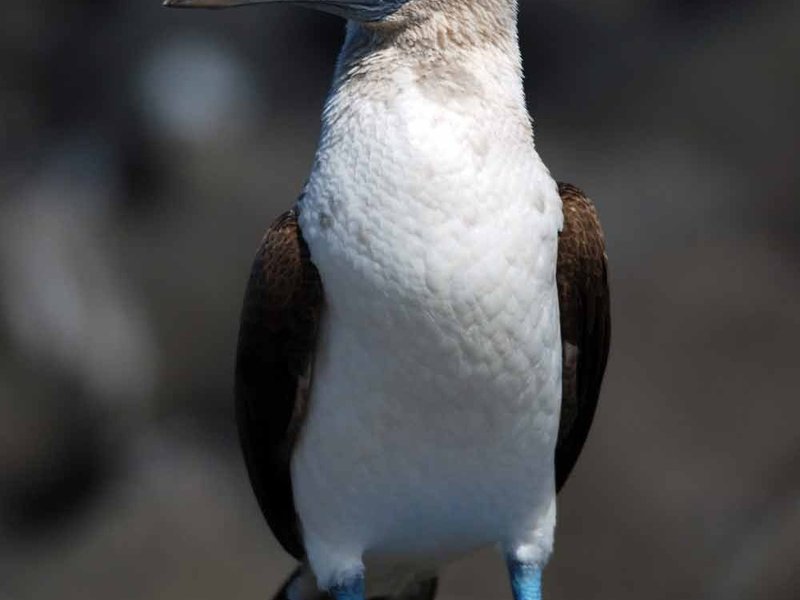
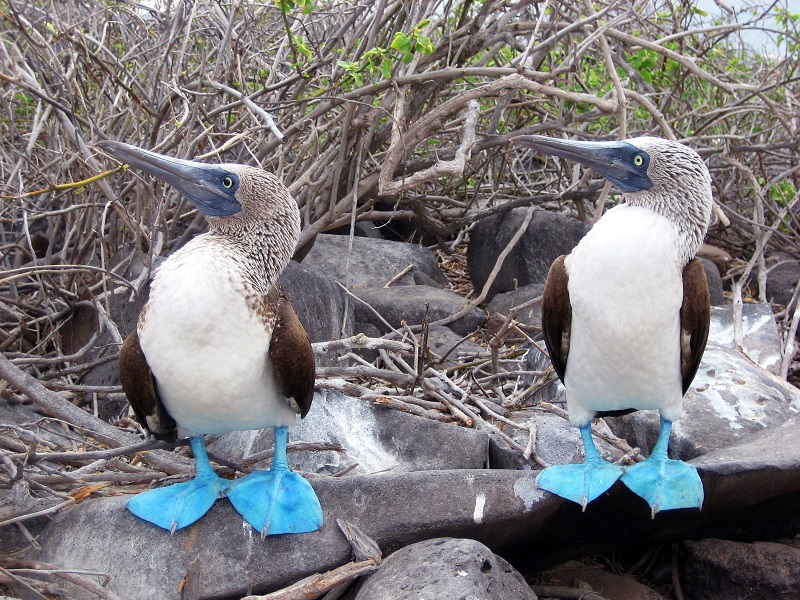
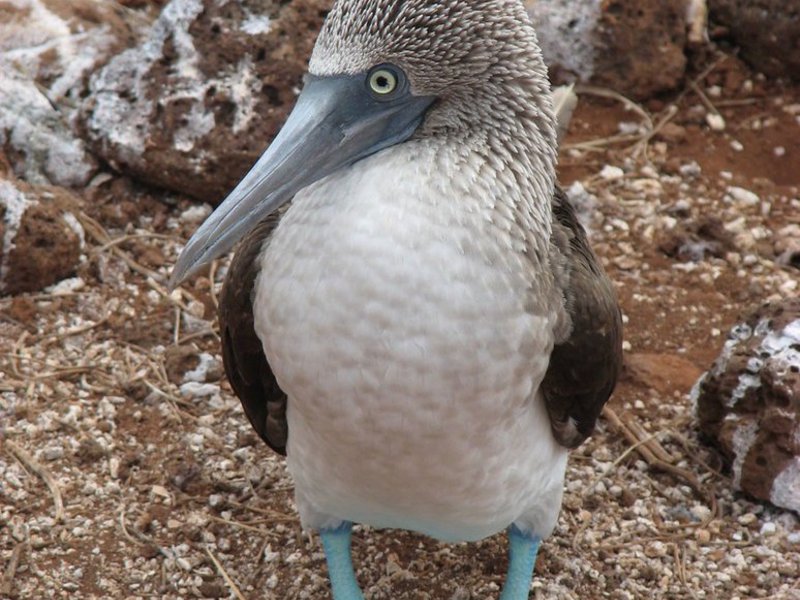
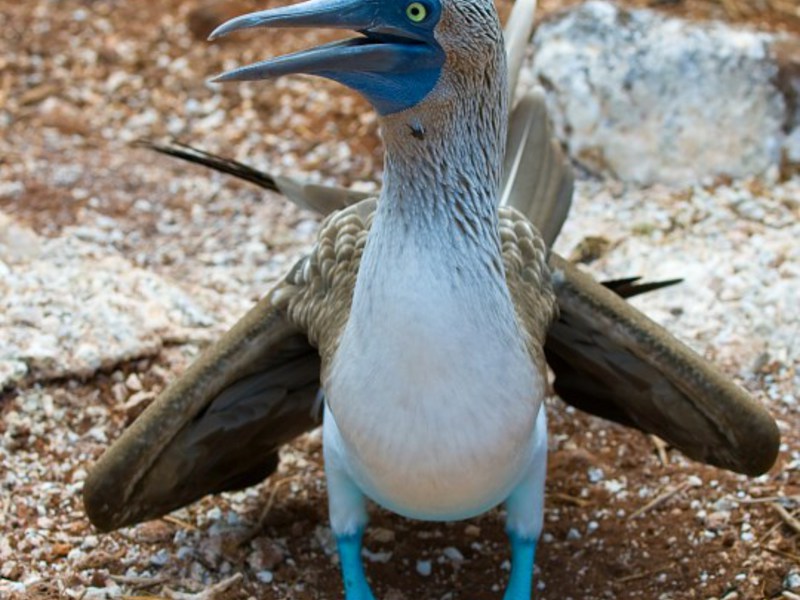
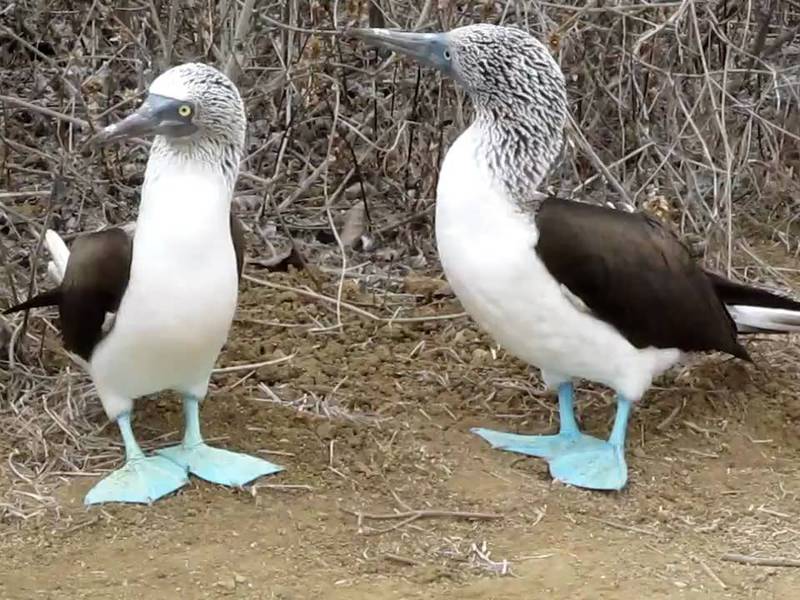
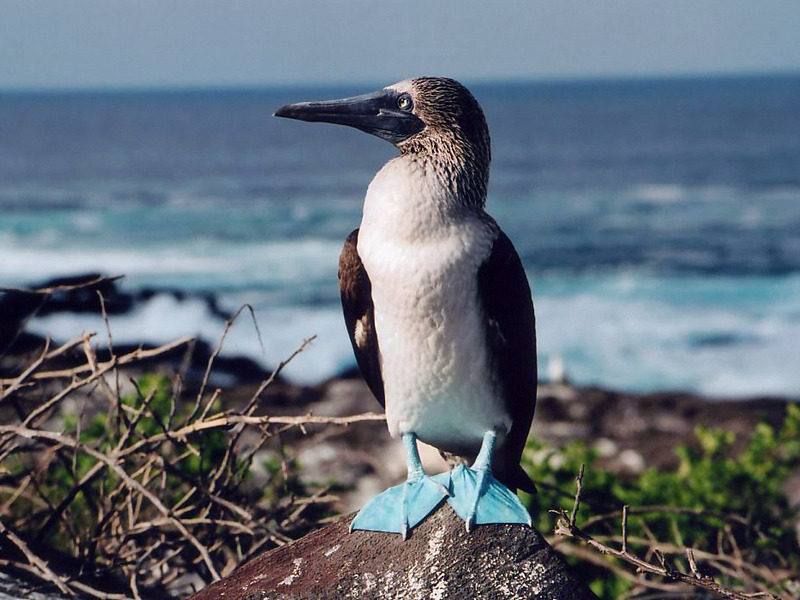
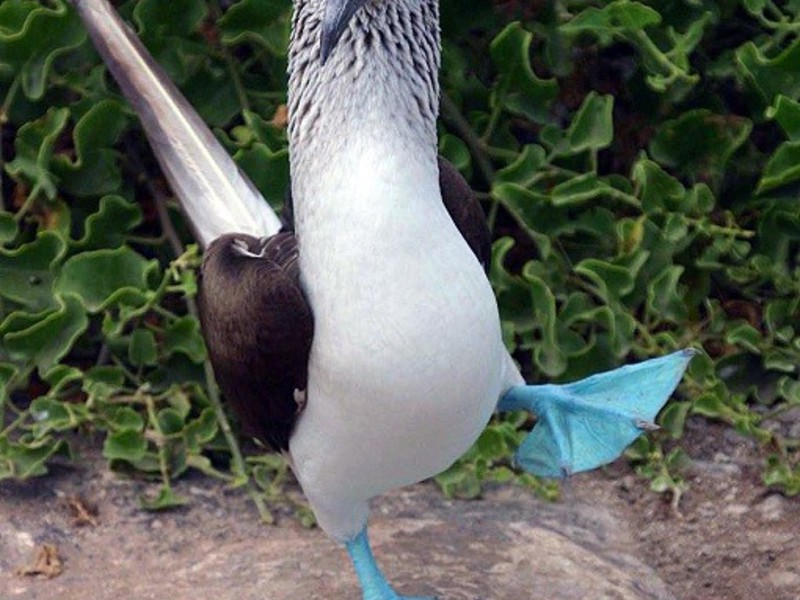
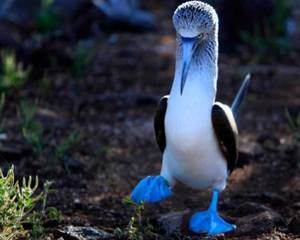 The first thing you notice when looking at this bird is, of course, its unusual blue webbed feet. Their shade can vary. from bright blue to gray-blueIt all depends on the age and health of the gannet. It also depends on its gender. Males have brighter feet, while females have more muted tones.
The head and neck are covered in light brown and white feathers, the wings are dark brown, the tail is black, and the belly and underparts are completely white. This interesting alternation of tones gives the bird a "spiny" appearance.
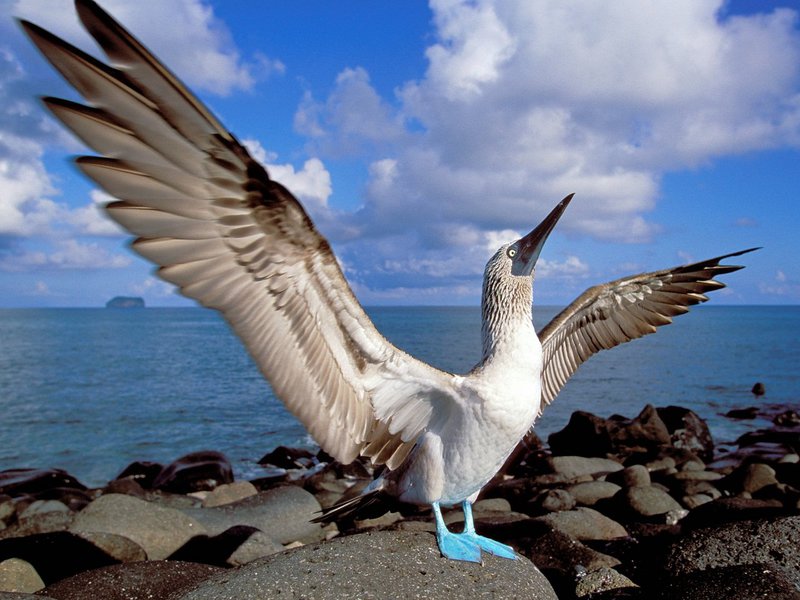
The gannet's wings are long and pointed at the tips. The bill is quite large and has a greenish-gray tint. The eyes are yellow and directed forward, and males also have a pigment spot around the pupils, making the eyes appear larger. Incidentally, these birds have excellent eyesight.
To catch prey, gannets have to dive frequently. For this reason, nature gave the bird closed nostrilsHow do they breathe then? Oddly enough, through the corners of their mouths.
Here are some of the "technical" characteristics of the species:
- weight about 2 – 3 kg;
- body length approximately 80 cm;
- wingspan – 1.5 m;
- life expectancy – up to 20 years.
Birds communicate using hoarse cries and thin, whistling sounds. Studies have shown that not only do males and females have distinct voices, but gannets can also distinguish their mates from other birds by their voices.
Hunting and food
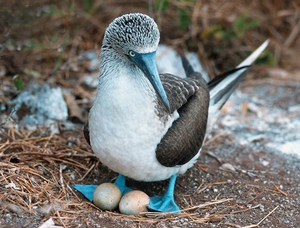 The diet of gannets consists of exclusively from fishFresh fish helps the body produce a pigment called a carotenoid, which boosts immunity and is an excellent antioxidant. This same pigment gives the birds' feet their vibrant color. If you remove fresh fish from their diet, their feet will become dull within 48 hours.
Gannets prefer to hunt small fish: sardines, mackerel, bonito, and even flying fish. They won't refuse, on occasion, squid or the entrails of larger fish.
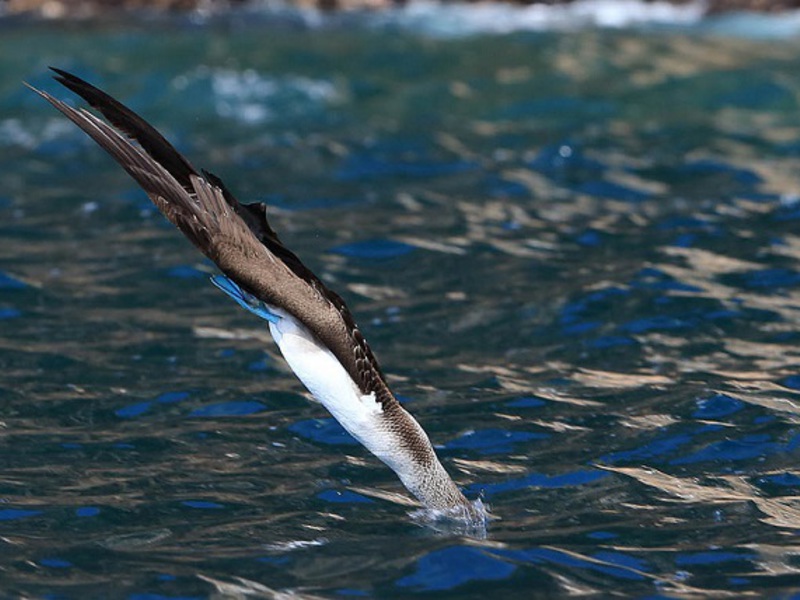
Birds usually hunt in flocks, and only a few hunt alone. They fly out to hunt in the evening or at dawn. They take to the air, carefully scanning for prey. The beak is always directed downwardsIn search of fish, gannets can travel far out to sea. As soon as the leading bird spots prey in the water, it immediately signals to the others, and all the gannets dive into the water at once.
These feathered hunters are incredible divers. They dive to depths of up to 25 meters, reaching speeds of up to 100 km/h. The height from which they fall, with their long wings folded, can reach up to 30 meters. Gannets can even easily swim several meters underwater while pursuing their prey. If they're lucky, they emerge near the oude's dive site with a fish in their beak.
An interesting fact: birds of this species prefer to catch fish not while diving, but rather while surfacing. The reason for this cunning hunt lies in the coloration of the fish, which are usually dark on the back and light on the belly, making it much easier to spot in the dark water depths. So much for the "fool"...
Gannets also enjoy flying fish. They don't even have to dive for such food; they catch them right out of the air. They also feed on the surface of the sea. Moreover, if they hunt in a flock, they all eat together, and those who hunt alone eat alone.
Reproduction and chicks
The only thing sea creatures like gannets need land for is breeding. Their nesting season is year-round. Every 8 months The female lays eggs.
The nests of this bird species are usually trampled depressions in the ground. The birds enclose them with branches and defend them fearlessly. Sometimes they may nest on cliffs or trees. The bird usually has two or three such nests, located a fair distance apart.
Mating dance
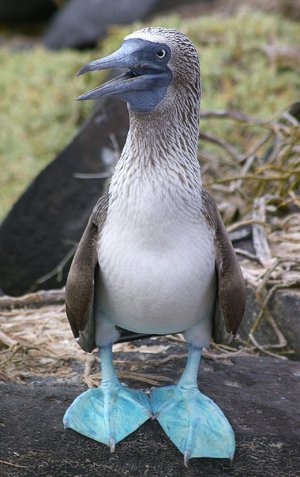 Boobies are monogamous birds, although under certain circumstances they may mate with multiple partners. When a male courts a female, he first presents her with a unique "gift" in the form of a small twig or pebble.
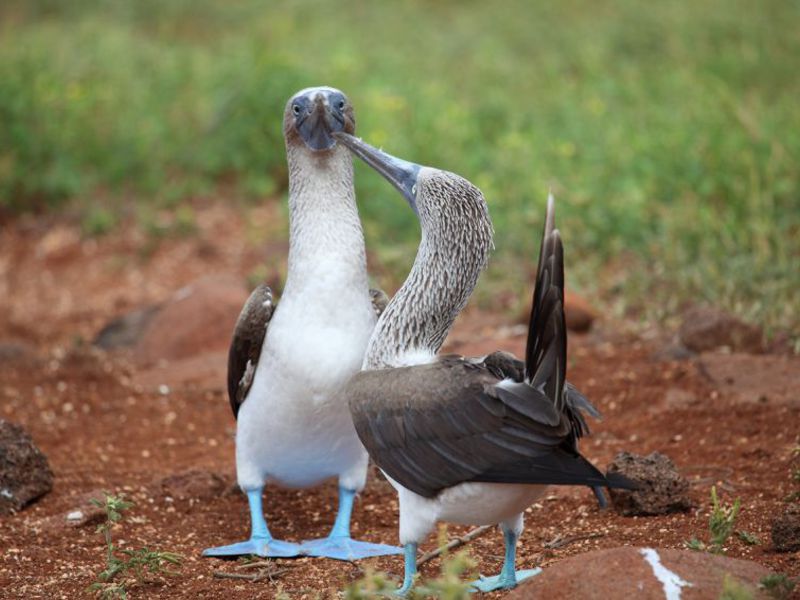
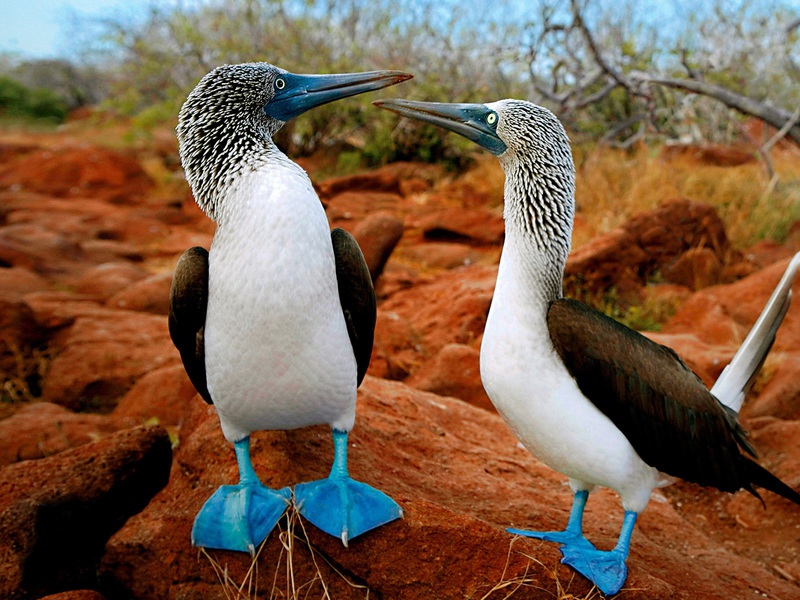
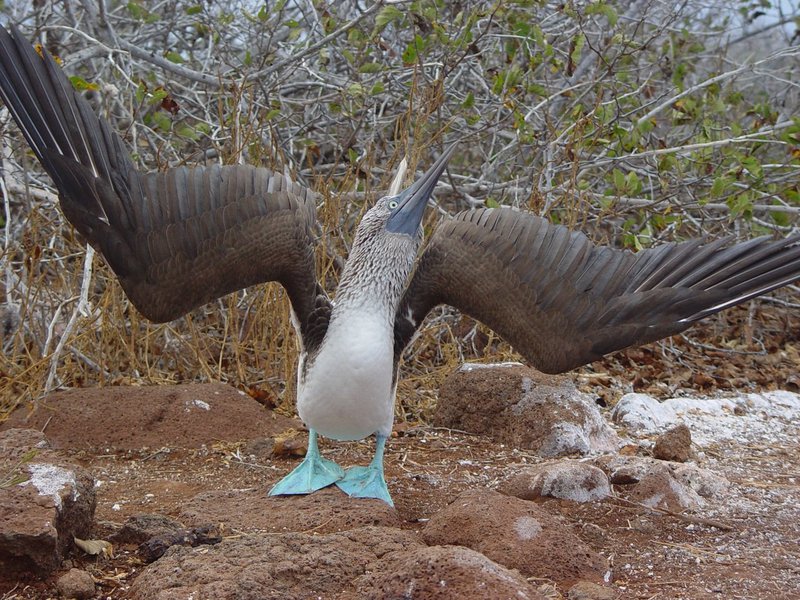
Then the actual dance begins. The male makes interesting moves, displaying his bright blue paws to the female. He raises his beak, tail, and wings to the sky, whistles comically, and tries with all his might to attract the attention of the object of his courtship.
If the female likes the man, they bow and touch beaks. Then the pair begins to dance together. This dance can last for a very long time, sometimes even several hours. Because the birds are very trusting of people and don't run away at their mere appearance, you can find many photos and videos of blue-footed boobies' mating dances online. And they're worth watching, as the whole process is very amusing and touching.
An important criterion in choosing a partner is the shade of his pawsThe brighter the paws, the younger and healthier the male, and, consequently, his chances of mating greatly increase. Paw color is also important for females. The brighter the paws, the more eggs the female will lay. Males pay increased attention to such individuals.
Hatching and raising chicks
Blue-footed boobies lay eggs every 8-9 months. The clutch size is small, 2 or 3 eggs. This small number, compared to other birds, is explained by the fact that boobies warm their eggs with their feet, not their bodies. During the mating season, blood rushes to their feet, causing them to swell and harden. The temperature of their "cold" blue feet rises to 39°C.O.
The female and male take turns warming the eggs and wait for the chicks to hatch. This process continues. about 45 daysNewly hatched chicks are very helpless. Their bodies are covered in soft white down, and they are not yet able to regulate their temperature. Only after a month do the little birds become covered in feathers instead of down.
These fluffy little balls need regular feeding. The male usually brings food, but if there isn't enough, the female may also go hunting. It often happens that when both parents go foraging, the nest is destroyed. In such cases, blue-footed boobies immediately begin laying new eggs, but they watch them much more carefully.
If there's still not enough food for the entire family, the largest chick, which has a better chance of survival, gets the food. The chicks eat the fish chewed by the adults.
The babies leave the nest 10 weeks after birth. Their first instinct is to go to the water. However, they can only swim so far, not fly or dive. Due to their small size, special devices prevent the birds from going underwater. subcutaneous air sacs.
The chicks reach full adulthood after about two years, when all the necessary plumage has fully developed. After three to four years, the young gannets are considered sexually mature and can continue their bird lineage.
Habitat of the Blue Booby
Scientists estimate there are approximately 40,000 pairs of blue-footed boobies worldwide. These birds have chosen warm tropical seas as their habitat and have spread along almost the entire coast of Central and South America. They can be found in:
 Gulf of California;
- Peru;
- Mexico;
- Ecuador;
- in the Galapagos Islands.
 Gulf of California;
Galapagos Islands – a favorite habitat for gannets. There are approximately 20,000 pairs of them here. And it's no surprise, as they are protected by law on these islands.
That's what these little birds are like. Unusual, inventive, trusting, and incredibly cute.