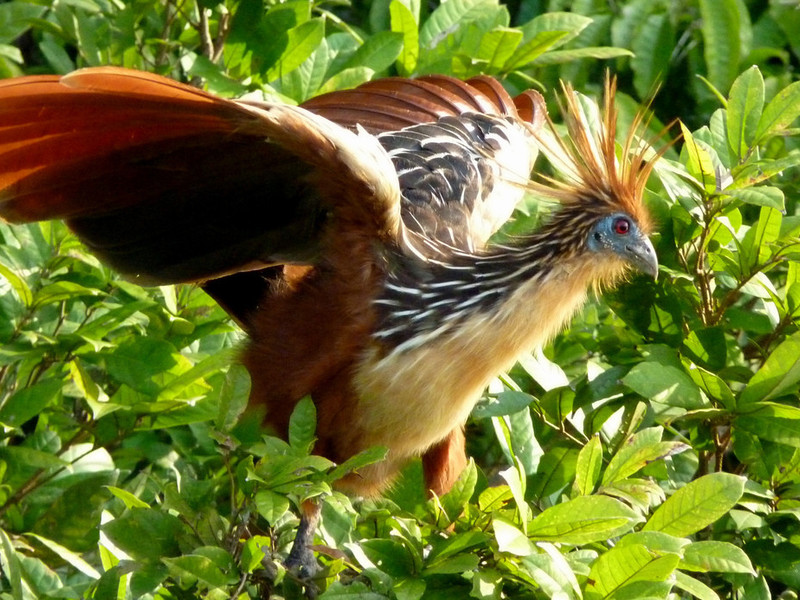
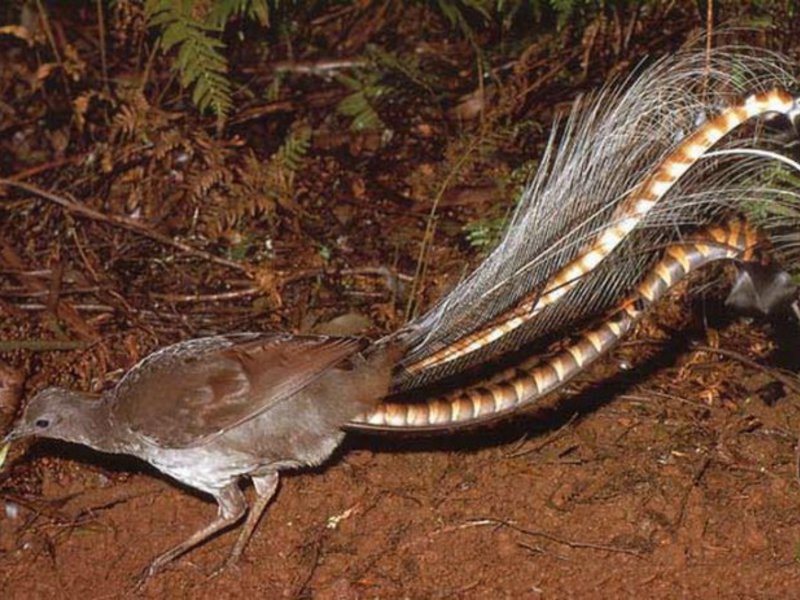
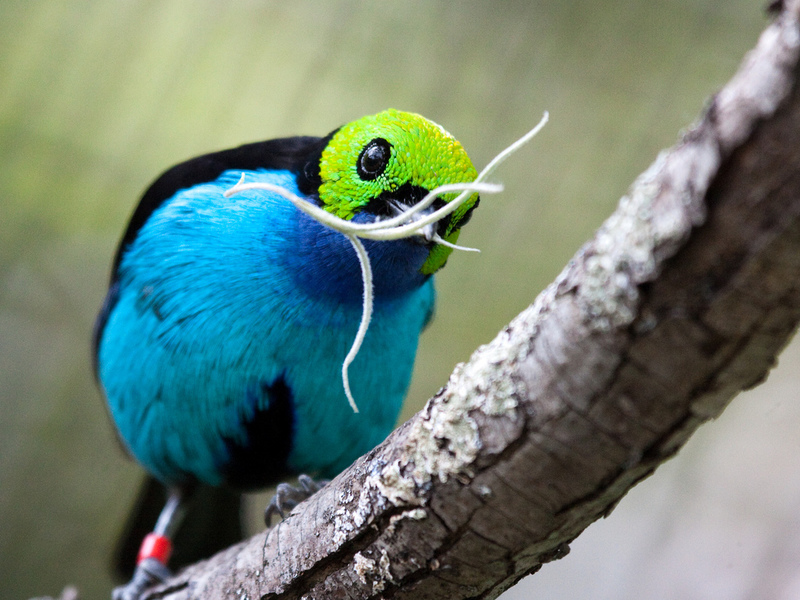
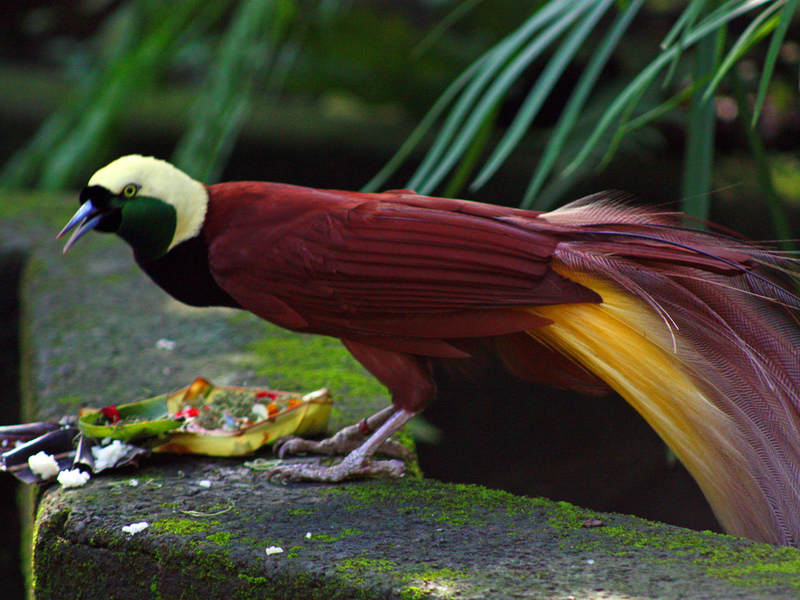
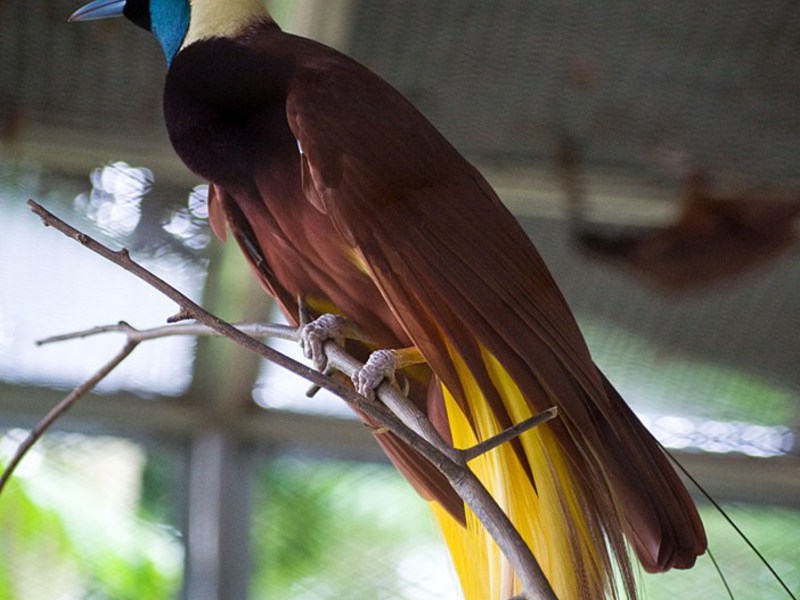
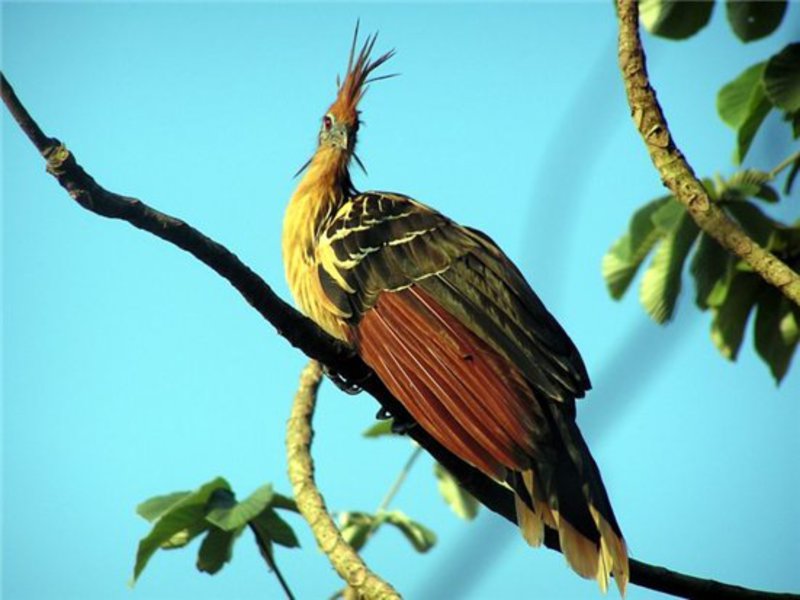
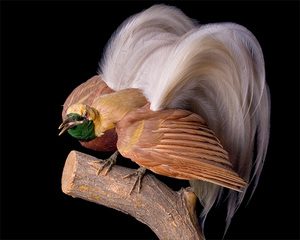
 Birds of paradise are a family of birds belonging to the order Passeriformes. These charming creatures have long been known to humanity and have a rich, centuries-long history. Despite this fact, birds of paradise are one of the most secretive species. For an extremely long period of time, it was nearly impossible to detect and count all the birds.
And this is despite numerous expeditions and studies. It has recently become known that in the world There are 45 species of birds of paradise, 38 of which live on the islands of New Guinea. All species became known thanks to the heroism of Tim Lehman, who in 2003 organized 18 long excursions with the goal of identifying and photographing absolutely every species of bird of paradise.
A bit of history
Birds of paradise became known to people back in 1522, thanks to their marvelous skins. They created a sensation in the fashion world of the time. The skins were brought back to Europe by a crew of sailors returning from Magellan. Those skins were gutted and missing limbs. People began to spin tales about how these strange birds were legless and spent their entire lives levitating, laying eggs (allegedly perched on the back of a flying male) and feeding in the air. They ignored the claims of one of the expedition members who insisted that they did indeed have legs. The people were unstoppable, and these beautiful legends took hold.
In 1824, the legend was destroyed by the French doctor René Lasson, during a trip to the islands of New Guinea, met a living specimen, nimbly jumping on two legs.
The captured pelts brought back by sailors became a huge success. The feathers were used as clothing and jewelry. People were fascinated by the unprecedented beauty; every girl desired a similar feather in her hat. During the short period of German colonization, over fifty thousand bird-of-paradise pelts were exported from the islands.
Nowadays, killing birds of paradise is strictly prohibited. The only exceptions are hunting birds for research purposes and making jewelry for Papuans (primarily as a tribute to tradition, and secondly, the number of birds killed by Papuans is negligible).
Unfortunately, the threat has not passed. The bird's feathers have risen sharply in price, and are now a coveted prize for poachers.
General characteristics of appearance
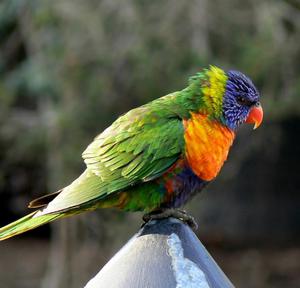 Birds have a powerful beak, which varies in size from breed to breed. Almost all birds have a broad, straight tail. Some species boast a long, stepped version.
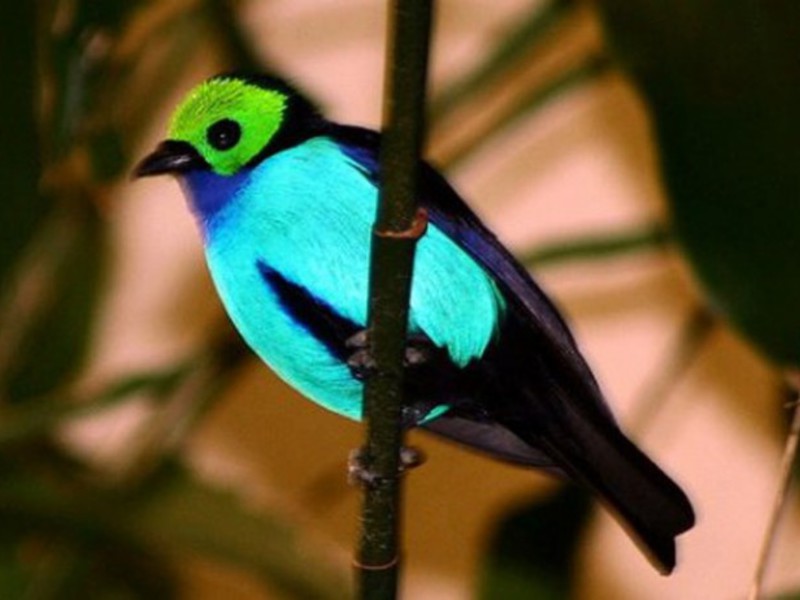
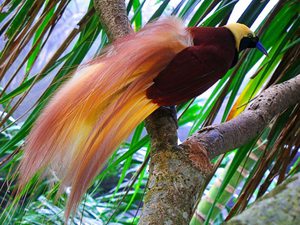
The coloration of members of this family varies widely, from very dark, metallic-looking specimens to bright and colorful ones. Birds of paradise include:
- Yellow, with a lemon tint;
- Red, combined with black;
- From bright blue to deep onyx and many more.
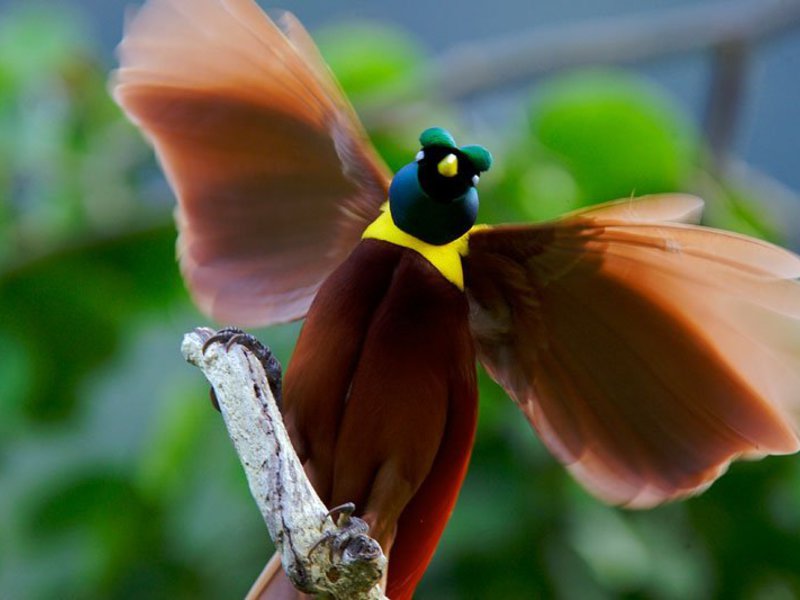
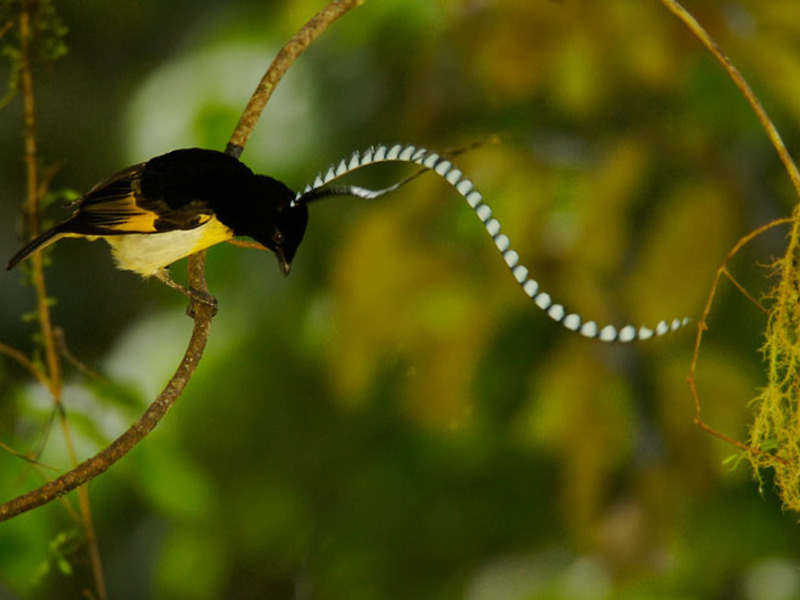
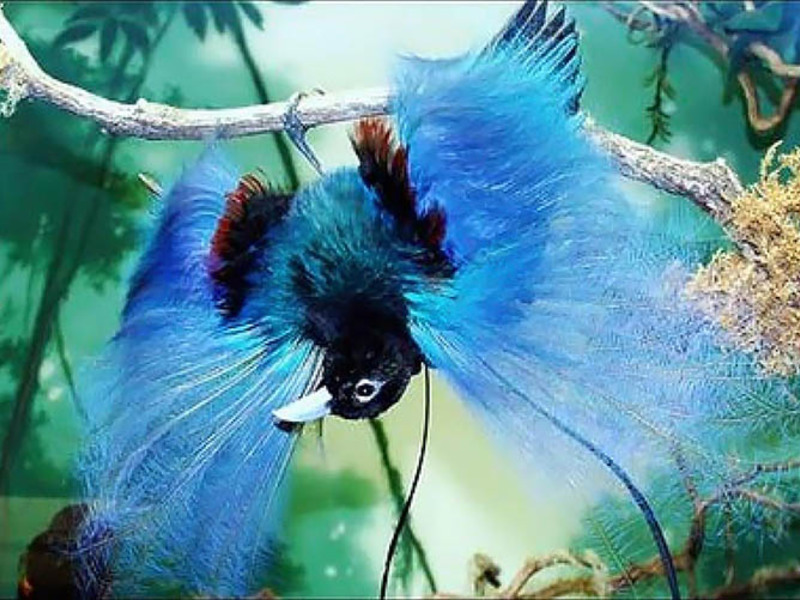
Males have a brighter coloration, than females. Males boast massive, brightly colored feathers on their heads and sides. These "decorating feathers" are displayed during displays and courtship dances. This is due to widespread sexual dimorphism in some bird species. This difference was also captured in Timothy Lehman's photo report.
Main habitats
This species is native to New Guinea. The adjacent islands are densely populated by various species of birds of paradise. Most members of this family prefer to live and feed in forests, often inhabiting high-mountain forests.
Some species live in Australia, in the North and East of the country.
Nutrition
Birds of paradise don't have a particularly refined palate, so their diet isn't much different from that of other birds. Smaller specimens actively consume all kinds of seeds, small berries, and any other fruits they can handle. Also, tiny insects and beetles are used, arachnids. Most large specimens are predators, quite capable of feasting on a small frog or lizard.
Reproduction
 As sad as it may be, birds of paradise prefer to live alone. However, it's not all bad; some individuals do find a "life partner" and exist in pairsThe reason for this is the same dimorphism. The more the male and female differ in appearance, the less likely the male is to be monogamous.
Some males are willing to help the mother of their chicks. These birds form pairs and work together. Most species, however, prefer only to fertilize the female. The weaker sex performs the rest of the work independently. They build the nest, incubate the chicks, feed them, and so on.
Deserving special attention mating games of family membersThis event resembles a vibrant festival. Males gather and begin to display themselves to females. The birds try to show off their best assets, spreading their wings and "dancing." During this period, entire flocks of graceful "suitors" gather in the treetops, trying to win the attention of females. The females, in turn, select the most suitable partner for mating.
Sometimes impromptu bird shows are held on the ground. The "performers" find a suitable location and carefully prepare it, clearing away excess leaves and creating comfortable perches for the "spectators."
During the mating season, the behavior of females also differs. In one species, when the male flirts with her, spreads its wings and hides its head in them. At this time, the bird looks like an oriental wife, an inhabitant of a harem, hiding her face behind a burqa.
Notable representatives, their descriptions and photos
 The Pennant-winged Paradise Bird can reach up to 29 centimeters in length. Males of this species have a purple back and a dark green chest. Distinguishing features include two pairs of white feathers on the sides and a small growth above the bill. Females are significantly smaller and predominantly brown. They live primarily on the Maluku Islands and feed on fruit and small insects.
- The avocets have a very long, pointed bill, hence their name. Their coloring is quite dark, yet rich, with small splashes of bright yellow. Before being classified as part of the paradise family, these birds were part of the hoopoe family. They inhabit New Guinea and Indonesia. Like many other species, they prefer moist, lowland forests.
- Parotias are one of the rarest species. They inhabit hard-to-reach places, hiding. Although these partisans are poorly studied, some details are known about them. Males are polygamous, meaning they do not participate in raising the offspring and do not assist the females in hatching the chicks. Males are predominantly deep black, with an iridescent neck as a contrast. Six thin feathers, reminiscent of antennae, are located on their heads. Females of this species are less distinctive.
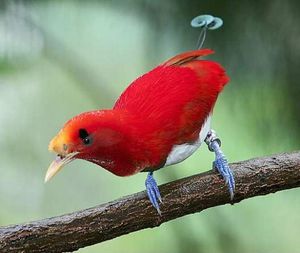
- The kingbird is a striking member of the bird-of-paradise family, displaying clear signs of sexual dimorphism. The bright red upperparts, head, and back contrast with the snow-white breast and blue legs. The kingbird's primary habitat is Popua, New Guinea. Its diet includes small invertebrates and the fruits of certain plants.
 The Pennant-winged Paradise Bird can reach up to 29 centimeters in length. Males of this species have a purple back and a dark green chest. Distinguishing features include two pairs of white feathers on the sides and a small growth above the bill. Females are significantly smaller and predominantly brown. They live primarily on the Maluku Islands and feed on fruit and small insects.