 Eastern Europe's fauna is rich in pristine natural environments, home to a wide variety of bird species. Belarus alone boasts over 325 species from a wide variety of bird families and orders. The avifauna of the Volgograd Region includes approximately 300 species, while the Donbas region boasts 425 different bird species.
It's impossible to list all the birds in one article, so we'll focus on the most beautiful and interesting representatives of the spring avifauna. In our photo gallery, you can see photos, learn their names, and learn some of their characteristics.
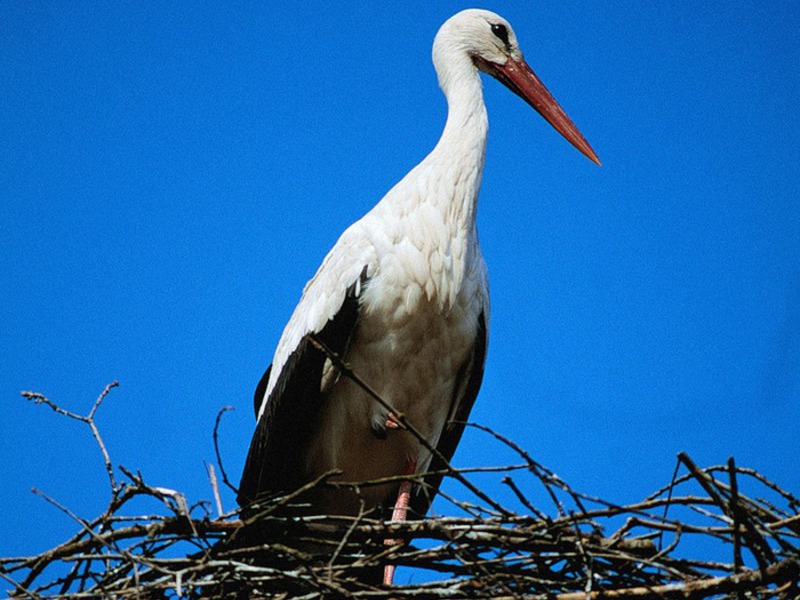
Stork – a bird of Belarus: photo and description
Since ancient times, the white stork has been considered a harbinger of prosperity, happiness, and a bird of fate. It was believed that a house where a white stork built a nest would be blessed with harmony, prosperity, and happiness. This beautiful bird has a wide range of habitats, but Belarusians, thanks to the 1970s song "The White Stork Flying...," consider it their symbol.
Proud bird is quite large in size and differs:
- with wide-spread wings;
- with a large red beak;
- with red, long paws;
- with snow-white plumage.
Storks have a fairly loud call, which they only make when meeting a female. For the winter, the birds migrate to East Africa, South Arabia, or Ethiopia.
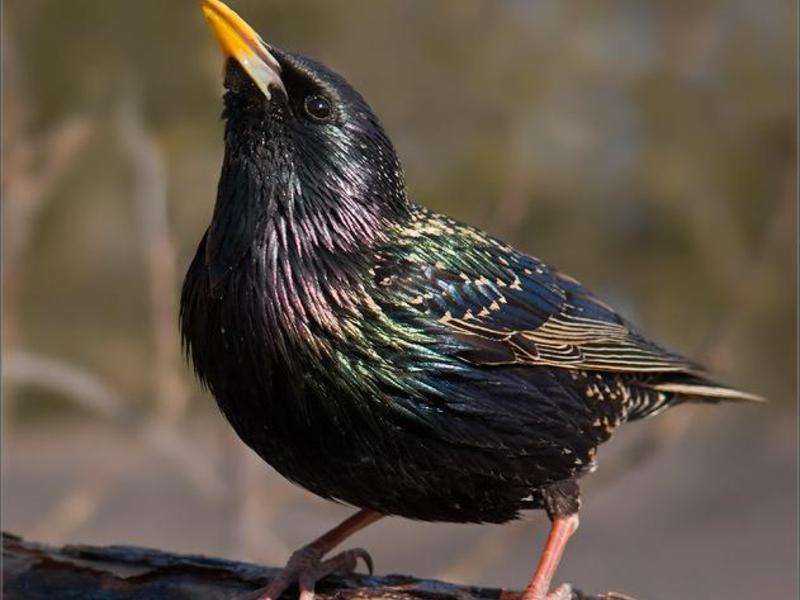
Starlings
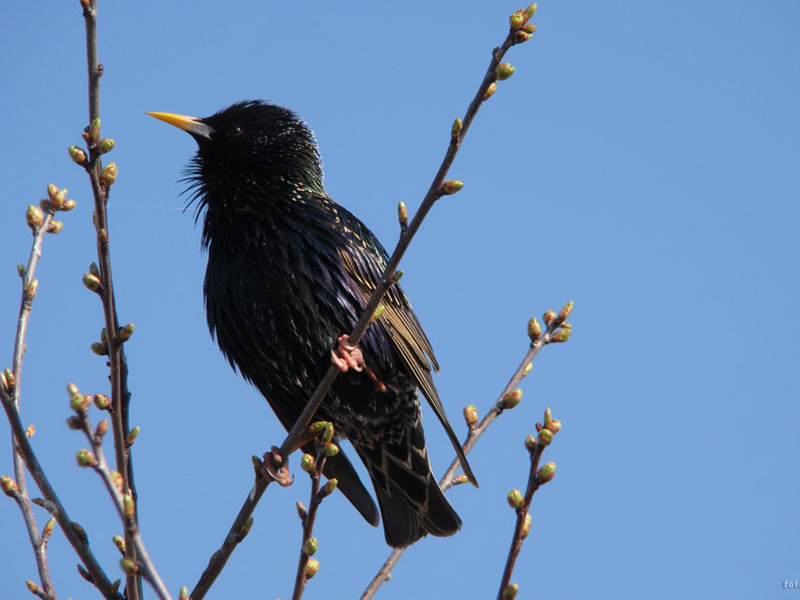
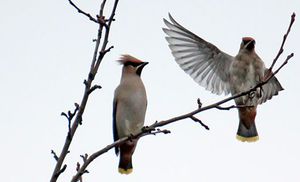 Starlings are the first harbingers of spring. They appear as early as March, searching for nesting sites, perching on tree branches, and beginning their trilling song, which attracts the females who arrive a little later.
The appearance of starlings differs:
- small sizes up to 20 cm;
- black, long, slightly curved beak, which changes its color to yellow during the breeding season;
- black plumage with purple and green metallic sheen.
Most starlings nest near populated areas in tree hollows and cavities, wooden structures, under roofs, or in specially prepared nesting boxes. In Belarus, the starling population reaches 1.5 million pairs.
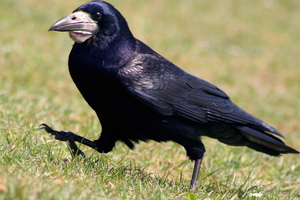
Rooks
Immediately after the starlings, when there is still snow on the fields, migratory birds - rooks - return from wintering grounds. These quite large birds 45-47 cm long are distinguished by:
- wingspan of 88-99 cm;
- with black legs;
- dark gray tip of the beak;
- with bare white cheeks;
- black plumage with a metallic sheen.
These crow-like birds can be found both in the city and in small villages. They nest in colonies of tens to several hundred pairs and often feed in fields.
Scientists have found that rooks are very intelligent birds, since only with the help of their beaks can they create and use any tool that chimpanzees create with their hands.
Cormorants
The Great Cormorant is native to Belarus, Ukraine, and some European regions of Russia. This breeding migratory seabird prefers tropical, temperate climates. It inhabits not only seacoasts but also lakeshores, riverbanks, and wetlands. It returns from its wintering grounds in March–April, as soon as the waters open up.
The Great Cormorant is distinguished by:
 body length up to 92 cm;
- males weigh up to 3 kg;
- elongated body;
- hook-shaped, rather long beak;
- webbing between the toes;
- black plumage;
- brownish feathers on the wings and back;
- on the sides of the neck and head with an admixture of thin white feathers;
- at the bottom of the head with pure white feathers.
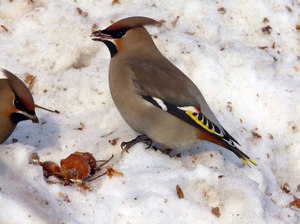 body length up to 92 cm;
The voice of a cormorant is a staccato, hoarse croakThey feed only during the nesting season. Cormorants feed primarily on fish. An adult can consume up to 700 grams of fish per day. Therefore, large numbers of cormorants living in a single body of water cause significant damage to fisheries. In some European countries, this bird species is considered game. Cormorant carcasses are readily eaten.
Great White Egret
In the third ten days of March, great egrets return from their wintering grounds and immediately inhabit large, overgrown bodies of water in treeless areas. They live in shallow waters among reed and shrub thickets.
The Great Egret is similar in build and size to the Grey Heron. However, it has a distinct advantage snow-white plumage and a crest on the headIn spring, adults develop "aigrettes" (long, fluffed feathers) on their shoulders, which were used as ornaments on women's hats in the early 20th century. This fashion, however, nearly led to the complete extinction of this bird species.
A rough, chattering sound is the call of a heron. It's quite rare to hear it. However, you can admire the majestic, smooth flapping of its wings, as white herons are especially beautiful in flight.
Red kite
This relatively rare bird of prey returns from its wintering grounds in March-April. It nests in single pairs in light pine, deciduous, or mixed forests bordering bodies of water and open landscapes. The red kite is distinguished by:
- body length up to 74 cm;
- weighing up to 1150 g for males and up to 1350 g for females;
- deep notch on the tail;
- rusty-red light plumage;
- with light feathers in the form of spots at the bottom of the wings.
Red kite nests build on tall treesThey feed mainly on vertebrate carrion, amphibians, reptiles, small birds, mouse-like rodents, and dead fish.
In recent years, this bird species has become increasingly rare in Belarus and other Eastern European countries and regions. For this reason, the Red Kite is listed as endangered.
Cuckoo
In late April and early May, cuckoos return from their wintering grounds. They are known for the cuckoo call emitted by the male. Resembling a small falcon In flight, cuckoos are distinguished by their coloring and long tail:
- grey plumage of the wings, tail, neck, head and upper body;
- white belly and chest, which seem to be covered with grey-brown stripes;
- white spots on the tail feathers;
- yellow legs;
- black beak, which has a yellow tint below.
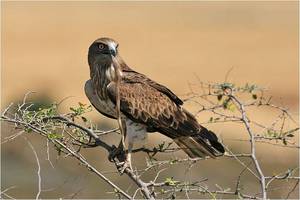 grey plumage of the wings, tail, neck, head and upper body;
The female can be distinguished from the male by their reddish plumage and wider transverse pattern on the neck and front of the body.
Cuckoos inhabit a wide variety of habitats. forests and thickets along the banks of reservoirs.
Of course, the above list is far from complete. Many more bird species can be found in Belarus, Ukraine, Volgograd, and other regions of Eastern Europe. Peregrine falcons, red-footed falcons, hobby falcons, and several varieties of harriers can be found in the forest thickets. Swans (both whooper and mute swans) proudly float across the surface of bodies of water. All birds differ in size, plumage, and voice.