Attentive owners have likely noticed that their cats are partial to green grass. For these furry gourmets, it's not a snack at all, but rather a cure. Yes, cats really do need greens. By eating grass, they replenish vitamins and minerals, normalize gastrointestinal function, and flush out parasites.
Grass also provides a natural cleansing of the digestive system—this is important for cats, as they don't respond to illness the same way humans do. Pills and potions are unavailable to them. So, feel free to allow your pet to eat grass. But this raises another question: what greens are suitable for pets and how to grow them at home. It's simple—see for yourself.
Content
Why do cats eat grass?
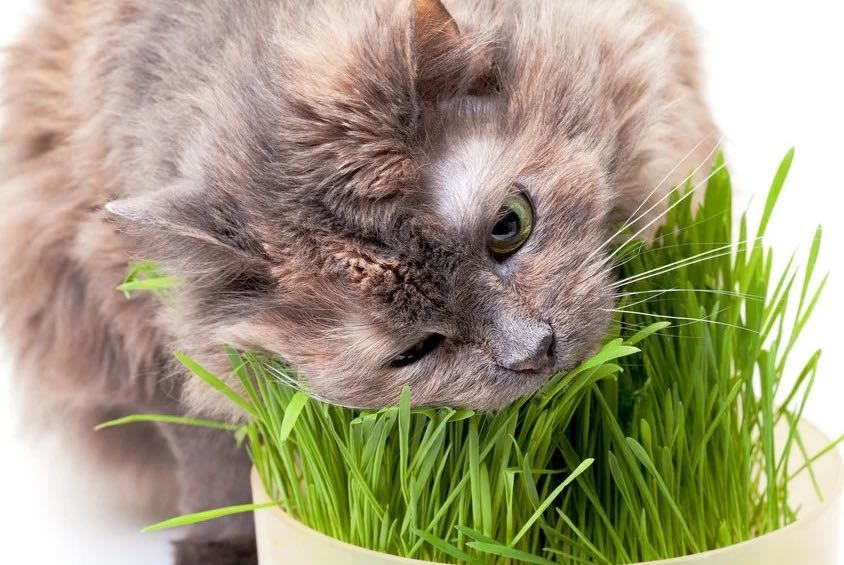
Cats' interest in grass isn't due to hunger. It's a normal instinct, which helps relieve some digestive symptoms and provide them with a vitamin boost—just like humans who include greens in their diet. But most importantly, cats "cleanse" their bodies this way.
More details about each fact:
- Cats, by turning to greens, replenish their diet, which cannot be enriched with protein products and fats (meat, dairy products, cereals and porridges).
- Folic acid (B9) is an essential nutrient for cats, just like their humans. This vitamin helps increase blood oxygen levels and promote normal growth. By eating grass, cats instinctively replenish their micronutrients. Grass also contains vitamins B, C, and A, essential oils, and micro- and macronutrients.
- In the wild, felines feed on mice, birds, and sometimes even insects. They ingest fur, feathers, bones, and the chitinous coverings of insects. To eliminate undigested food, cats eat grass. By eating greens, the animal irritates the stomach lining, thereby helping to eliminate undigested food. Safe cleansing of the digestive tract occurs thanks to common grass, which induces the gag reflex.
- There is another opinion of experts: a cat gets rid of parasites with the help of organic matter.
Domestic cats need cleaning just as much. Even if a pet doesn't eat birds or mice, they often ingest hairs from their own fur while grooming. Therefore, regardless of breed or age, cats need to cleanse their digestive tract, and grass is essential.
In fact, most of the plants "chosen" by cats have distinct properties: some are natural repellents or sources of phytohormones, and all are definitely rich in vitamins and microelements.
In fact, eating grass is a labor-intensive process for furry pets. Their teeth are completely unsuited for biting and chewing grass. However, cats enjoy the process, as it provides a safe and immediate cleansing process (grass eating causes some vomiting) and simultaneously enriches them with beneficial nutrients as they digest the plant remains.
Please note: Cats often don't chew grass. Grass leaves tend to be long—this is normal, natural, and even beneficial for cats.
What kind of grass can I give to my cat?
If you observe your furry friend, you'll surely notice that they happily devour certain young greens and are indifferent to other herbs. This is because cats select plants based on the nutrients they need.
This has nothing to do with the pet's gastronomic preferences, and certainly not with the taste and aroma of herbs:
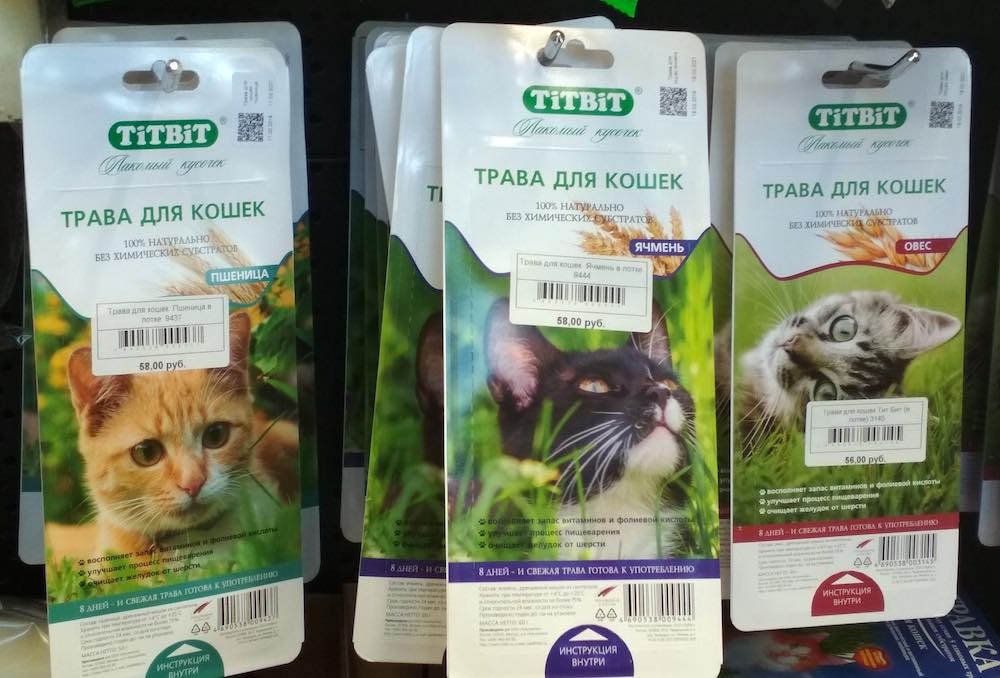
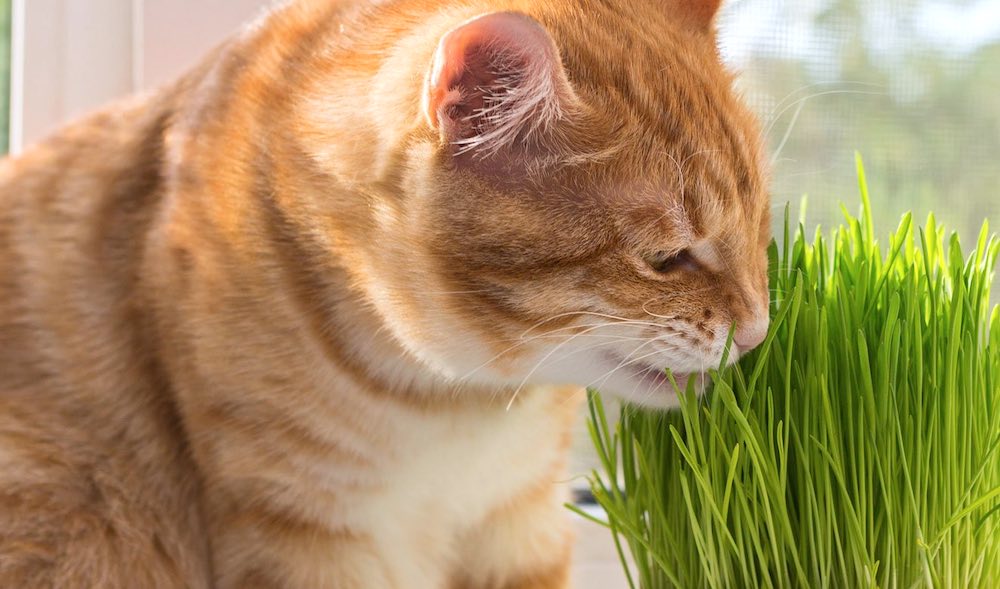
- Cats are rightly attracted to the tender young greens of oats, wheat, barley, and even licorice.
- Outside, cats happily eat couch grass and timothy grass leaves.
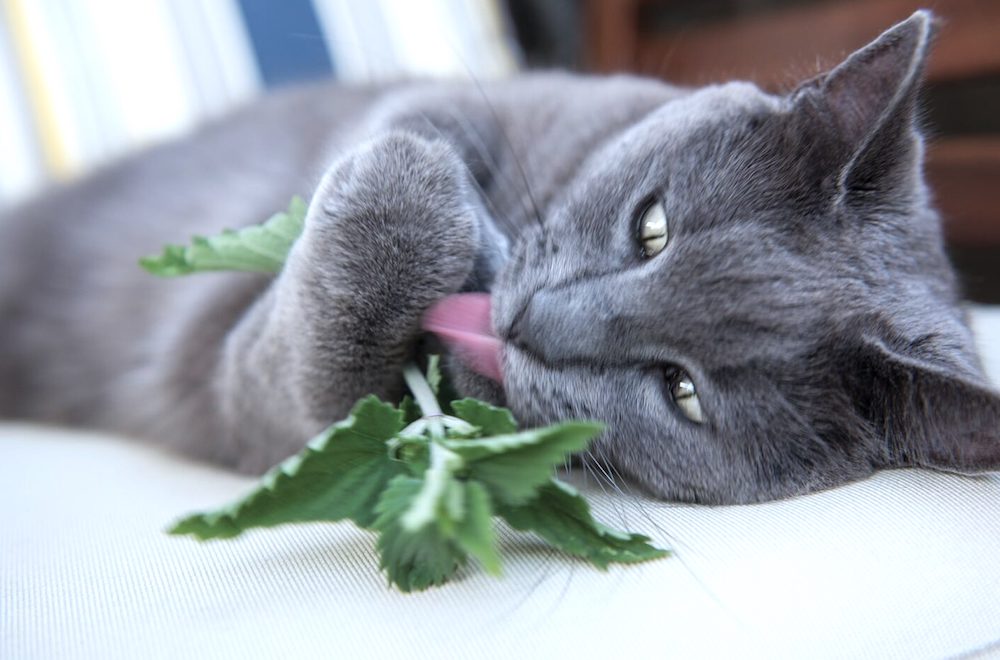
- They say that cats often eat parsley, lemon balm, catnip, and even aromatic lemongrass.
Cats can hardly be considered omnivorous herbivores, as they prefer young, green grasses. Therefore, it's not uncommon for caring owners to grow their own grass on the windowsill for their beloved pets. This can be done almost year-round. We'll explain below how to grow grass for your cat at home.
Growing grass for cats
Outdoor cats, and especially country cats, have it easiest—plants are always available during the warmer months. In the big city, there are only two options: either walk your pet on a harness, preferably somewhere in a park away from roads and industrial areas, or sow the grass yourself. Another way to help your cat is to buy greens at a pet store. Specially grown grass for cats is often sold at pet stores, even in winter.
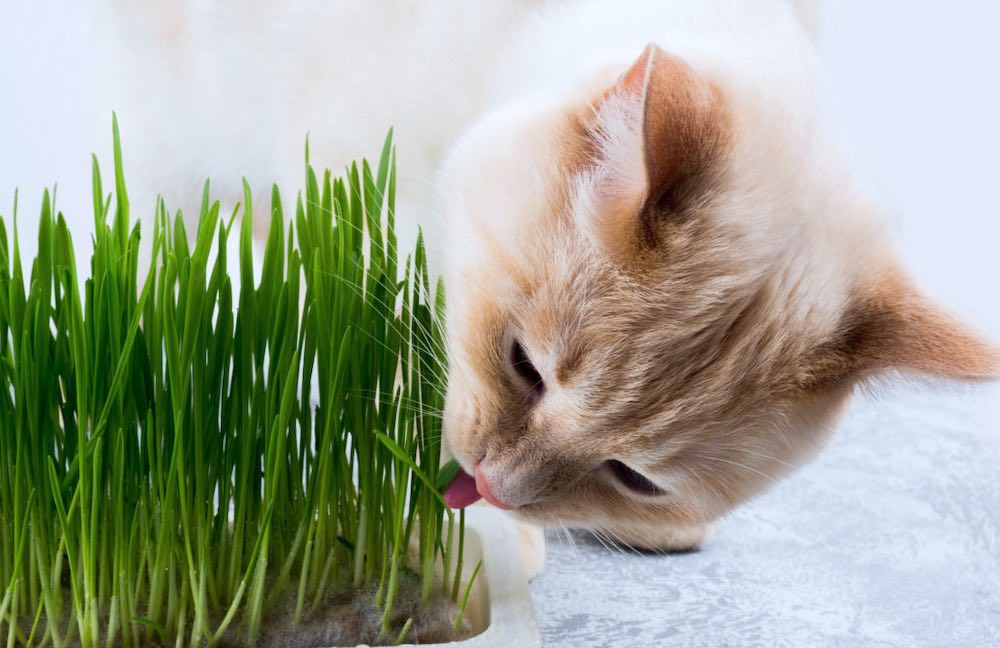
But growing greens for pets is not a complicated process at all.
We proceed as follows:
- We take loose purchased soil (for seedlings) or prepare it ourselves (a mixture of peat, sand and black soil in equal quantities) and cereal seeds.
- We level a layer of soil 10-15 cm high in a bowl or flower pot.
- Carefully spray the surface with water from a spray bottle.
- Scatter the cereal seeds on top at a distance of 0.5 cm from each other and compact them by hand or with a wooden stick to a depth of 1 cm.
- Cereals with small seeds can be simply scattered over the surface of moist soil and sprinkled with a dry layer.
- Water with water at room temperature.
- We place the bowl on the windowsill, but not in direct sunlight.
- Water regularly (every 2-3 days, depending on how dry the soil is – don’t let a crust form).
Absolutely nothing complicated. The sprouting greens quickly grow to the desired size, acquiring a juicy texture. You can offer your kitty a treat straight from the "bed" or cut them and place them fresh vertically in any bowl. All that's left to do is wish them bon appétit!
What grass shouldn't cats eat?
Cats only happily eat plants that are attractive to them and stimulate their appetite. But some herbs are truly attractive to cats, even though they shouldn't be eaten. For example, valerian is a stimulating and addictive herb.
It's also common for houseplants and flowers to be unsafe for pets. These include dracaena, cyclamen, azalea, monstera, euphorbia, and cacti. The leaves and flowers can cause serious poisoning due to their alkaloid content. Even more similar plants from the wild include hydrangea, foxglove, castor oil plant, crocus, begonia, bulbous plants, and all nightshades. Particularly poisonous are celandine, tobacco, datura, and hellebore.
Some plant species are dangerous to cats' mucous membranes and respiratory tracts. For example, dried wild oat stalks become sharp and thorny and can get into cats' respiratory tracts and eyes.
What can happen to your pet if it unknowingly decides to eat these herbs:
- laryngeal edema;
- heart failure;
- burn of the gastrointestinal mucosa;
- acute diarrhea;
- renal failure.
But most often, cats can independently identify the greens they need. They are unlikely to eat onions, garlic, or dill, and they dislike wormwood and marigolds.
Brief conclusions
- Surprisingly, cats love grass and eat it regularly—a sign of health. But there are a few things to keep in mind:
- Don't stop cats from eating grass - it's an instinct, a vital behavior of the animal.
- Make sure your pet doesn't eat poisonous plants—it happens.
- Take your cats for walks during the warmer months—your pet will appreciate it. Go where there's fresh greenery, especially grains, but away from roads and people. Ideally, it's a good idea to take your cat out into nature for a couple of hours at least once a week.
- Remember that bulbous plants and daylilies are dangerous for cats. Even water that has held a bouquet of crocuses or daylilies can be dangerous.
- Don't be afraid to grow your own greens for your cats - it's not difficult.
Cats can't live without grass, as strange as it may sound. Greens are a nutrient-dense food for their digestive tract and a vitamin-rich source. Greens are also unusual and delicious. Don't deprive your pet of this pleasure; without them, your cat will feel not only deprived but also unhealthy.
If you don't take your cat for walks, the easiest solution is to grow your own greens or buy them from pet stores.
Read also, How to feed a cat natural food at home.