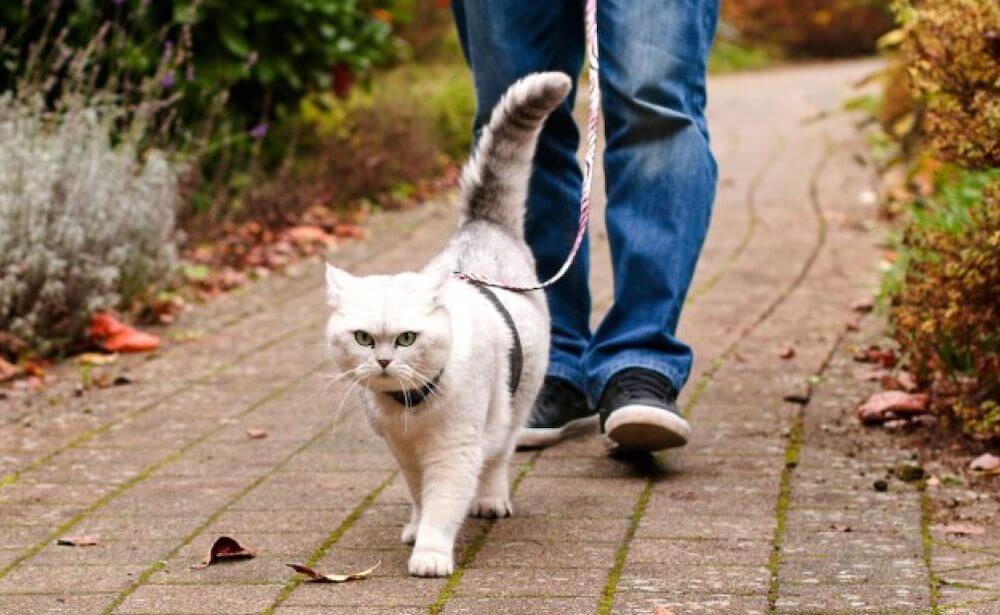
Felines generally dislike walking on a leash, especially since urban environments are completely unsuitable for these pets. Simply taking a cat for a walk isn't an option—they're often frightened by people, cars, and the frantic pace of modern life. Special equipment, such as a harness, can help. Without one, a walk is no fun for either the animal or the owner. Cats on harnesses are also increasingly common at veterinary clinics, at shows, and on public transportation.
Let's find a harness for your cat, learn how to use it, and find out how to train your pet to this convenient feline device.
Content
Should I walk my cat?
Unlike dogs, cats don't necessarily need to be walked—needless to say, nor do they require it due to specific living conditions. Domestic cats happily spend most of their lives within four walls. They're quite content to watch the birds and the changing seasons from the window with curiosity. However, cats aren't always eager to participate in all of this. A measured, calm lifestyle suits them just fine.
But there are some circumstances when you have to walk your cat:
- An adult cat needs to periodically regulate intestinal motility with organic matter. A bouquet of greens won't help here—cats eat grass based solely on personal preference. Greens are needed to cleanse their stomachs of unwanted contents, such as hairballs, which cats often chew out while grooming.
- A trip to the vet isn't always easy to transport a cat. And if the owner doesn't have a special cat crate or carriers, Then a harness will come in handy. It's convenient, ergonomic, comfortable, and safe for your pet.
- Family travel. Even if your cat is perfectly oriented and can walk independently at home, this can be problematic in unfamiliar places. Your pet could become frightened, get lost, or even die. When traveling, it's best to always walk your cat on a harness.
- And perhaps the most banal, yet pleasant, reason is that cats also need fresh air, sun, and freedom, even if only to a limited extent. They enjoy watching insects, rustling leaves, and birds through glass. Sometimes you just want to take your furry friend out into nature for a walk. In that case, you should put your cat on a harness.
A harness will limit your cat's mobility and ensure that it doesn't escape or injure itself (in a worst-case scenario, this could happen right before your eyes or through carelessness). It definitely won't get hit by a car or run off into the next neighborhood while fleeing a stray dog.
How to choose a cat harness
The device consists of straps with metal rings, a leash lock, and a snap closure. A cat harness should be, firstly, comfortable for the pet and practical for the owner. Secondly, it should be affordable, made of high-quality materials, and have secure fastenings.
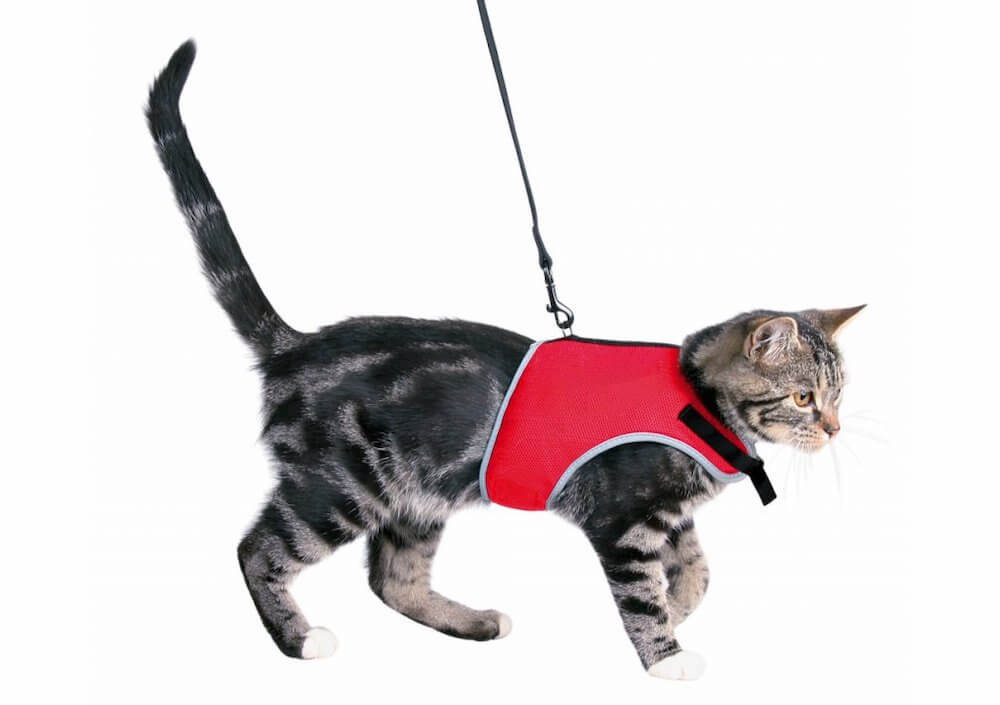
The collar size is determined by the chest circumference—just above the center of the body, behind the front legs. Knowing this length in centimeters makes choosing a harness easy.
What features of a cat leash should you pay attention to?
- The cat harness should be made of practical and durable materials - thick fabric or soft natural leather;
- with elastic straps no more than 1.5 cm wide, which will ensure a comfortable fit and perfect fixation of the straps;
- with reflective stitching, and sometimes with patterns, but at the same time the harness should not be afraid of washing and cleaning, even daily, and not lose its appearance and density;
- A comfortable cat harness fits snugly but does not constrict your pet's neck.
How to properly put a harness on a cat
To put the harness on, show affection and care. Even better, offer your cat a favorite treat or distract it with a toy or a view outside the window.
- We align the straps, making sure that they are not twisted or tangled.
- Carefully let the cat put its muzzle through the two main loops.
- We leave one on the neck - this is a kind of collar.
- We separate the second one and place it over the belly behind the front legs, so that the straps are under the belly. This is a retainer that allows you to hold and control the animal, preventing suffocation.
- We fix the harness and secure the leash.
Read also, How to properly give a cat an injection.
How to train a cat to walk on a harness and leash
The first and most important rule is to train gradually. Patience, persistence, and affection will help speed up the process.
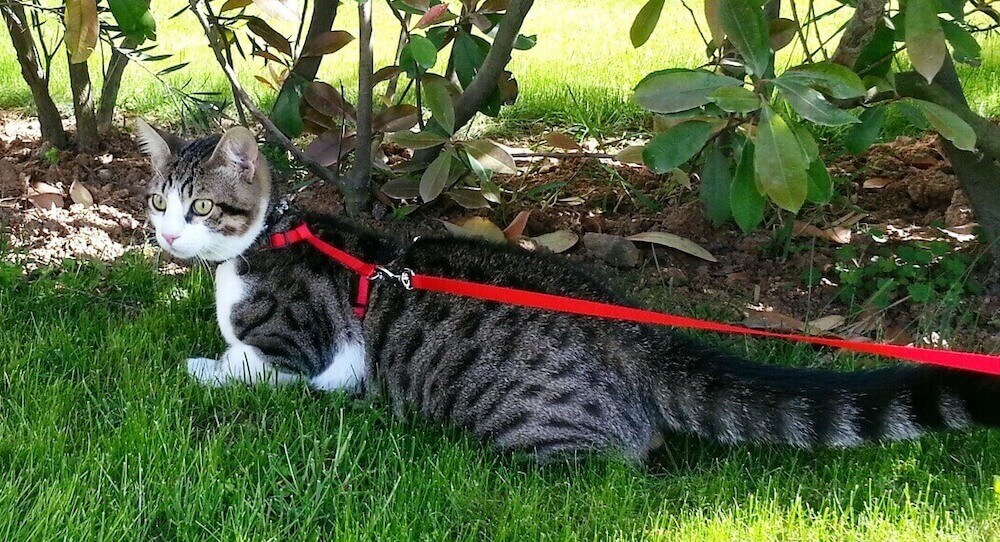
What is harness adaptation for cats?
- First of all, try to buy a device without unpleasant chemicals and foreign odors.
- To make the device feel like home, place it on your cat's bed. Our furry friends love to sleep, and over time, your pet will get used to the scent and the unusual object, become more receptive, and perhaps even play with it.
- After a couple of days, try putting the harness on: first for an hour, then for a couple of hours. Later, you can leave the collar on for a while – several hours at a time. This will help the cat get used to the fact that the device is safe and doesn't cause any harm, and it will stop causing anxiety and worry.
When it becomes clear that the cat responds adequately to the harness, allows you to put the harness on it without any problems, can calmly wear it for several hours at a time, while also walking, lying down, and eating, then the adaptation to the harness has been a success.
Where is the best place to walk a cat?
Walking a cat is virtually no different from walking other pets. Enjoy hiking away from highways, roads, and open spaces, in quieter areas. Ideally, these are parks and squares near your home. It's best to avoid tall trees and dense, impenetrable thickets. Your cat will feel comfortable, distracted from her fears, and focused on the walk in a quieter area.
Remember: don't go for a walk if the weather is bad. It won't be fun for anyone.
Avoid approaching people walking their pets. Cats are less friendly than dogs and are quite selective in their interactions with other cats. It's best to stay away from cats and especially dogs walking nearby—even if they're on a harness or leash and under the owner's control.
Before the first walk, it's best to practice - put a leash on your cat at home and imitate walking on a harness, learning to adjust the leash's strength.
Cat on a Harness: Helpful Tips and Tricks
Ideally, the cat should completely stop paying attention to the harness. Experts recommend starting walks with such a leash at 5-6 months.
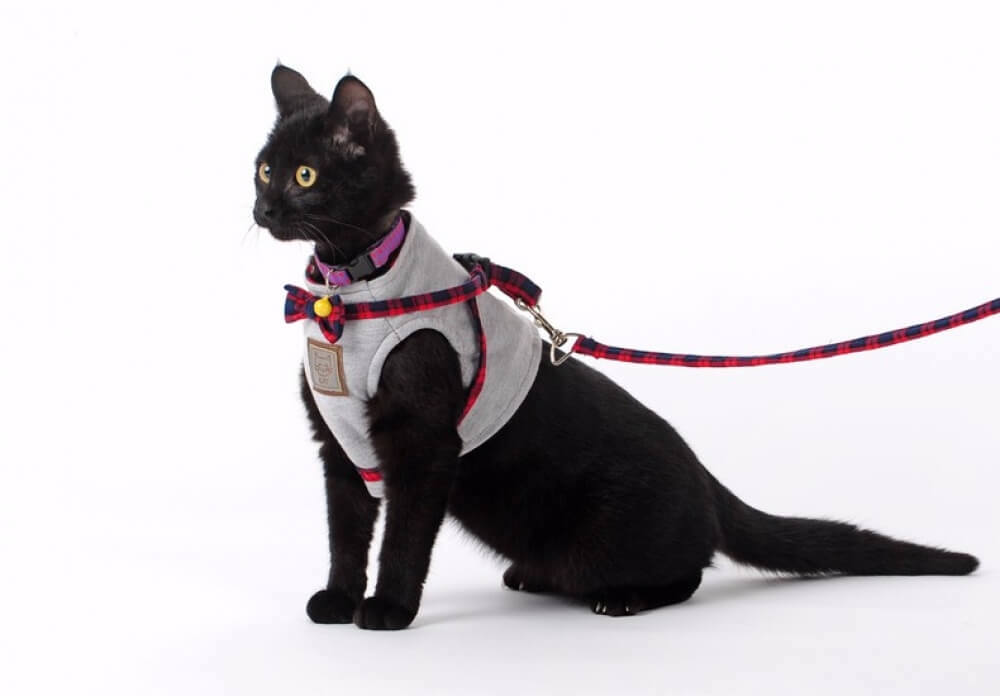
Small kittens are not walked on a harness:
- The first few times, it's recommended to go out for 5-10 minutes. Subsequent walks can last up to 30-60 minutes. After that, it's up to you.
- If your cat is due to give birth soon, you should postpone walks on a harness for now to avoid accidentally injuring the animal.
- Cats are untrainable. Therefore, even with a collar, the owner must always be vigilant – your attention and sensitivity will help make your walk both enjoyable and safe.
- It's not appropriate to jerk the animal sharply or forcefully. You can tighten or loosen your grip to achieve the desired effect.
- If you plan on walking with your cat on a leash, be sure to vaccinate your cat (against rabies) and closely monitor your cat's behavior. Injuries and poisonings are always possible, and cats, like other pets, often notice insects, birds, and trash near containers.
- Sometimes, felines can be quite aggressive. If your cat is nervous and seeks cover (in bushes, indoors, or in doorways of residential buildings), especially if it growls and lies belly down on the ground, trying to hide, it's best to return home. Don't stress your beloved pet out or ruin your own mood. You can try again later, or accept that your cat doesn't want to go for a walk and is quite happy in its home.
- Experts recommend carrying a carrier or small cloth bag on walks to hide your pet from any unexpected dog.
- It's not recommended to walk older cats, especially sick ones, on a leash at all. If the animal has spent its entire life indoors and has no desire to go outside, such an attempt is more likely to result in a tragedy than a fun and exciting adventure for both pet and owner.
Always remember: a cat is unlikely to enjoy walking on such a leash. Therefore, the owner must understand that a harness is a necessary alternative to free-roaming.
Getting your cat used to a harness takes time. But over time, a high-quality, comfortable leash will eliminate any excuses to put off walks. Remember, it's not clear from the first walk whether this is the right choice for you. But with time, you'll definitely know if you made the right choice. If you decide to do so, enjoy the experience for yourself and your pet. Enjoy your walks!
Read also, How to make a collar for a cat correctly.