A cat collar is a simple device that solves a multitude of problems. This product has several names, but the most common is a veterinary collar. In this article, we'll explore the benefits of this accessory, how to choose the right one, and whether you can make one yourself.
Content
What is a cat collar and when is it necessary?
Cats are considered among the most active animals. Even with health problems, they remain physically active. This often interferes with treatment or recovery—trying to lick the medication reduces its effectiveness and injures the affected area.
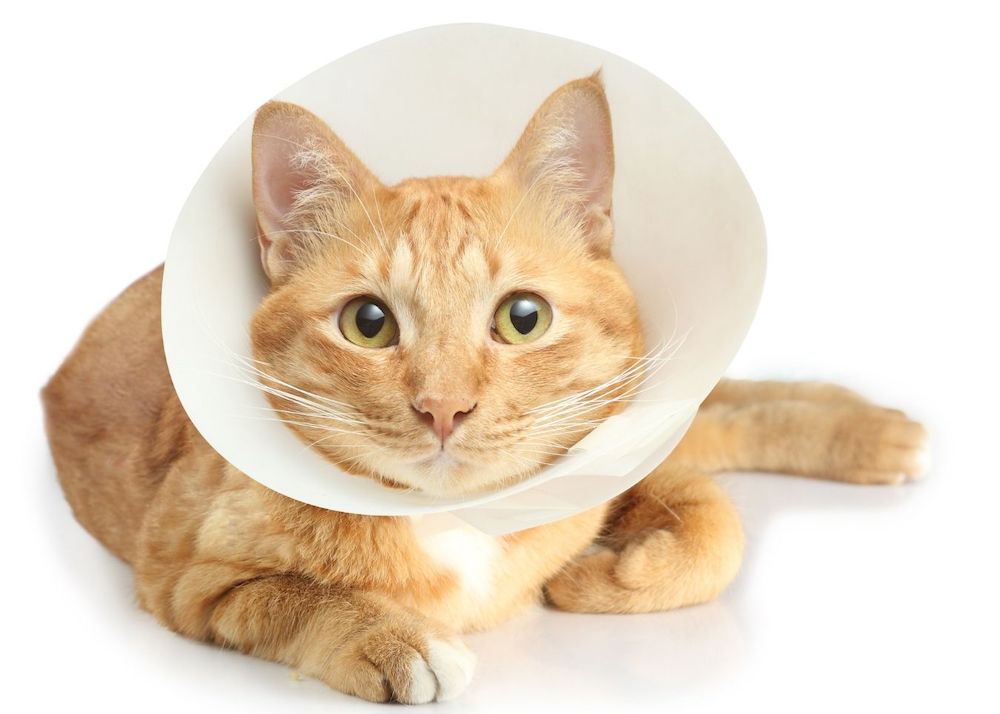
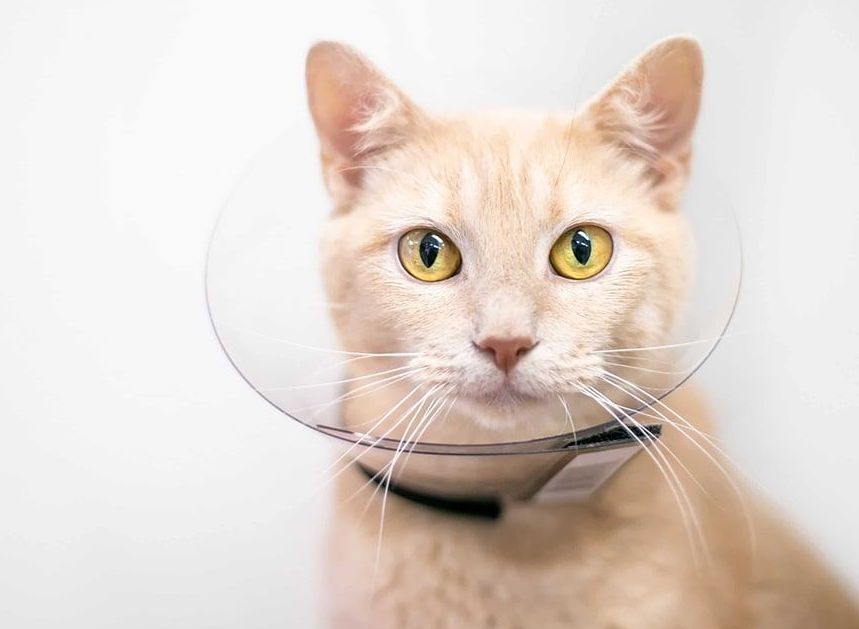
To prevent such situations, pets are fitted with a special device—a veterinary collar. It partially restricts the animal's activity. The device resembles a courtly accessory, making the cat look rather amusing.
Purpose of the veterinary collar:
- it prevents scratching and licking at the site of the lesion or local application of the drug;
- in the postoperative period - prevents infection of the suture site and prevents its divergence from licking;
- After castration, cats, in a diligent attempt to remove the antiseptic from the affected area, often scratch it until it bleeds;
- Ear diseases—such pathologies are usually bacterial in nature and are accompanied by itching. The pet tries to eliminate the discomfort by widening the infection;
- During preventative or therapeutic treatment for ticks and fleas, even applying the product to the withers does not guarantee that the animal will not lick off some of the medication. Moreover, antiparasitic medications contain toxins and poisons. They are dangerous not only for the pests but also for the pets themselves;
- when visiting a groomer - this will make it easier to style your hair or trim your nails.
Some cat owners prefer blankets to collars. Please note that in some situations they are not a complete alternative because:
- easy to remove;
- get wet;
- restrict access to the sore spot only partially.
For the device to provide effective protection, it is important to put it on correctly.
Read also, How to give medicine to a cat.
How to choose a ready-made protective collar for your cat
Factory-made protective products are standardized in size and come in just seven sizes. Each size indicates the neck circumference and collar height. Take your pet's measurements, and you'll know the correct size.
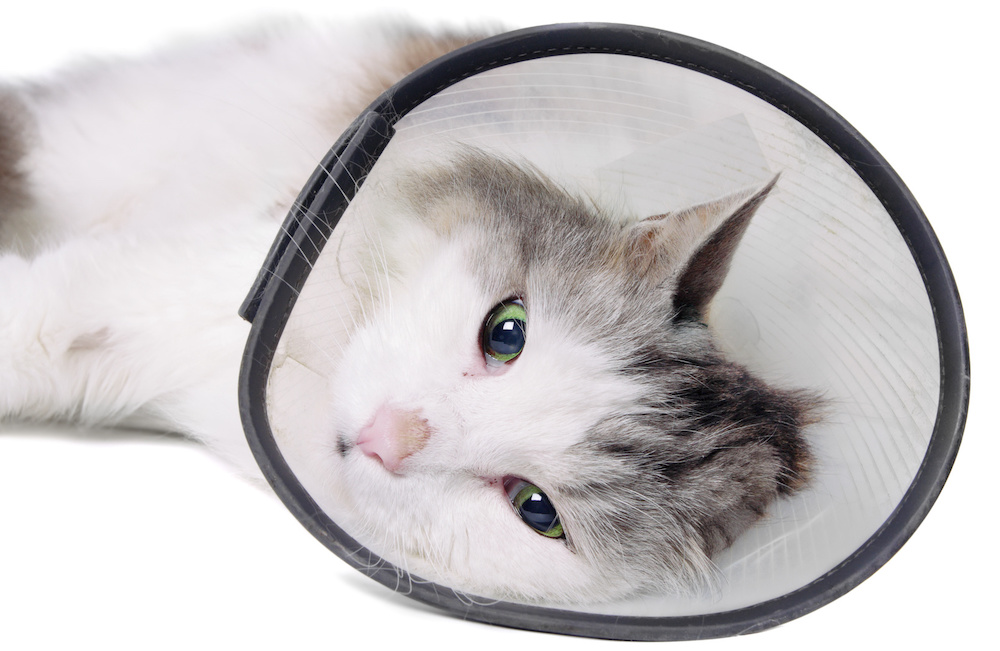
Cat wearing a protective elizabeth collar (also known as a buster collar) after a surgical operation
As a rule, three popular sizes are available in the retail network: 10; 15; 20.
If the animal is larger, the product can be ordered online.
Besides the labeling, veterinary collars purchased at the pharmacy vary in price. Cheaper cones are made of plastic. Their drawback is that they have impractical ties.
The more expensive cones are softer. Their outer surface is made of opaque fabric and is secured with Velcro.
Both options require a collar as an additional attachment. In terms of reliability, both inexpensive and expensive cones are equally effective.
Please note! Some stores offer inflatable collars, which are several times more expensive. Manufacturers claim they provide additional comfort for pets. However, opinions on their effectiveness are mixed.
How to make a cat collar yourself
Of course, a cone you made yourself will not be as attractive as a factory one.
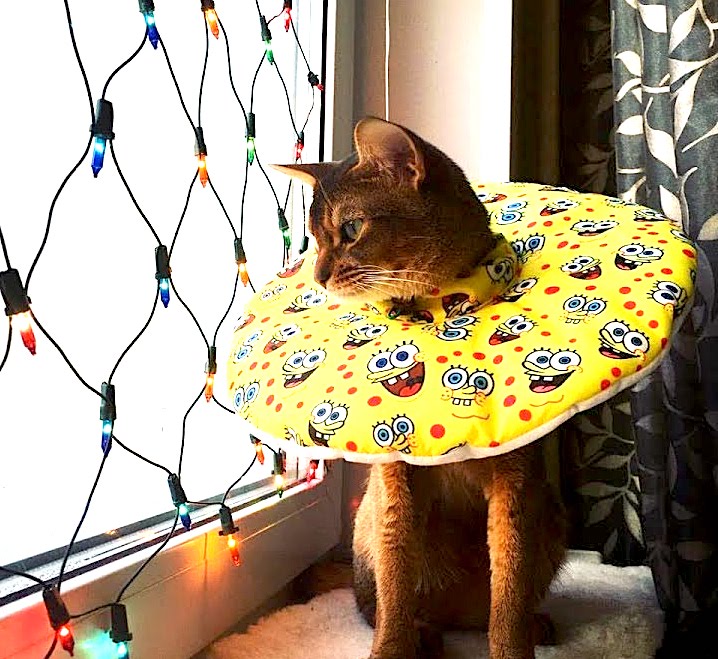
But it has a number of advantages:
- the collar will fit your cat exactly;
- the pet may feel uncomfortable in the finished design - again, due to the mismatch of parameters;
- financial savings - pet owners know that pet supplies are not cheap;
- You can show your imagination and get satisfaction from a creative approach to business.
Let's look at the available options for making a cone collar from scrap materials.
Made of plastic
The most affordable barrier, but not the most convenient. Keep in mind that this isn't the most reliable protection—if your cat has serious problems, it's best to save money and buy a collar at the pharmacy.
To make a plastic device yourself, prepare:
- a 2-liter bottle of mineral water;
- scissors,
- stapler;
- Fasteners: Velcro, adhesive tape. Do not attach the product with tape—it is unsafe.
Step-by-step assembly algorithm:
- Cut the bottle in half. Cut out a semicircle with a diameter of 22-25 cm;
- shape the structure into a cone.
- Cut a hole at the base large enough for the neck to fit through. Make sure there are no sharp edges left in the cut area—this will cause discomfort to the cat and make it try to remove the item.
- Additionally, secure the edges by covering them with wide adhesive tape. Be careful—the tape shouldn't come off the plastic, otherwise it will stick to the fur.
Read also about The best deworming medicine for cats.
Made of cardboard
The cardboard veterinary cone is not designed for long-term use - it is more of a temporary measure.
Take a piece of cardboard and take measurements of your pet:
- neck circumference;
- length from the neck to the tip of the nose.
Transfer them to thick paper. Keep in mind that the loops should be made separately, not on the cone itself. Cut out the cardboard loops and glue them to the outside of the collar.
Use an awl to make holes in the cardboard. Thread a cord through the holes, or attach some Velcro. Seal the outer edges with adhesive tape. This device will last no more than 1-2 days.
Made of fabric
The main advantage of a fabric cone is its softness and comfort. It takes longer to make, but it will last longer than a cardboard one.
Choose a natural material for the base—cotton or linen is best. Remember that many cats suffer from allergies.
To ensure a secure structure, place a plastic or paper base inside the fabric. Pad both sides with cotton wool or synthetic padding.
The pattern for a fabric cone is made in the same way as for a cardboard one - based on two measurements.
How to properly put a collar on a cat
It's difficult to force a cat to do something against its will—the more you insist, the more it will resist.
Follow the instructions:
- If you bought a ready-made product, study the instructions and figure out how to secure the device;
- thread a bandage or collar through it;
- Talk to your pet, pet it, give it something tasty. Your goal is to calm it down as much as possible;
- wrap the animal in a soft blanket or towel and hold it in your arms;
- proceed very carefully, especially if the cat has undergone surgery;
- If aggression occurs, secure the occipital area with your hand;
- Have someone close to you help you carefully put on the collar while you hold the animal in your arms;
- If the cat's head fits inside the cone, you've done it.
Talk to your cat, use kind words—let your tone instill confidence that there's no danger. It's been proven that pets are highly sensitive to and trust their owner's tone of voice.
Useful tips and nuances
When choosing and using a veterinary cone, consider a number of points:
- the animal should be able to breathe freely - the product only covers the neck, but does not squeeze it;
- the device must be lightweight;
- If the size is not right, the collar will fall off;
- in the area where the cap comes into contact with the neck, there should be a soft layer - fabric, plaster;
- Choose the height of the cap so that your pet has a clear view. However, keep in mind that a device that is too low will lose its effectiveness.
- No matter what material the cone is made of, it must hold its shape.
You can buy a veterinary collar for your furry friend at a pet store, or you can make one yourself using readily available materials. Each model has its own advantages and disadvantages. The key is to choose the right size to ensure the product remains functional.
Read also: The best medications for estrus.