 Cat behavior has been sufficiently studied today, so owners are familiar with their habit of sharpening their claws. However, don't assume they do this simply to spite their owners. It's instinctive; it's their nature. It's important to remember that cats are predators, although they differ in size from their wild relatives. This explains the urgent need to sharpen their claws. Owners who know what they're up against always purchase a scratching post before bringing a cat into the home to help protect their furniture.
Content
Why do you need a scratching post?
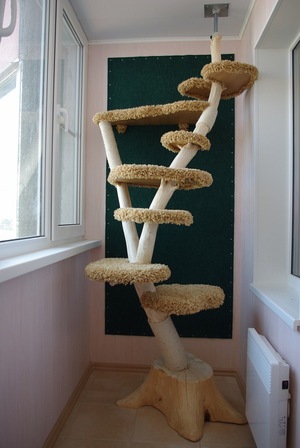 Living in the wild, cats and their relatives sharpen their claws use tree trunksBecause their claws are constantly growing, and at a rapid rate, they must sharpen them to avoid difficulty hunting. Some animals' claws can grow into their paws, causing severe pain. Therefore, cats need a hard surface to sharpen their claws without experiencing discomfort.
Pets are limited in this regard, although if there's an ornamental tree in the house, they can use its surface to sharpen their claws. However, if there's no suitable scratching post at home, owners should address the issue as quickly as possible and purchase or make a scratching post.
What is the purpose of this device? Many cat owners have the misconception that their pets they tear up carpets or sofas on purposeHowever, in reality, this isn't the case: cats are simply following nature's call to maintain their claws. Humans are powerless to change this situation. The only solution is to do everything possible to ensure cats can perform their "manicure" without damaging their home environment.
If you've realized the urgent need for a scratching post, don't rush to the pet store to choose the right claw sharpener. Any pet owner can make a simple scratching post themselves. This will save them a lot of money and give them an extra reason to feel proud.
Why is it better to make a cat house with your own hands?
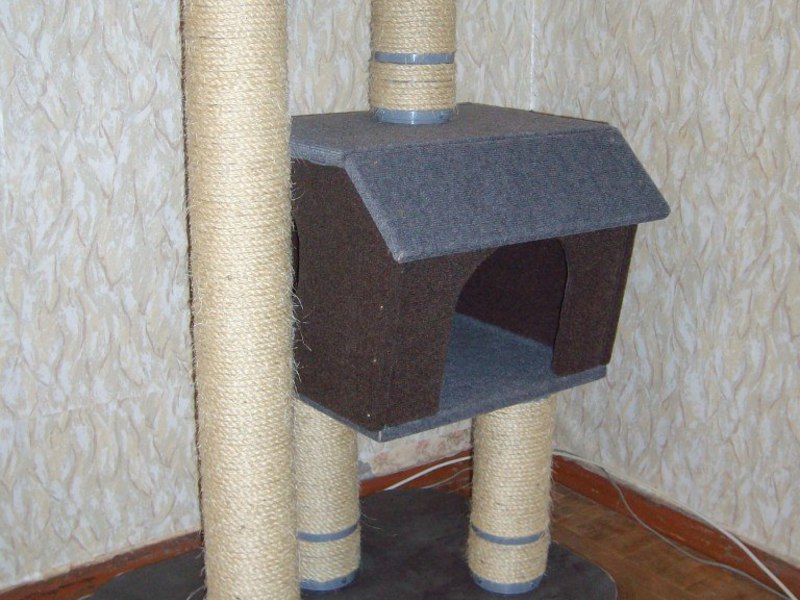
If you look at the design of store-bought scratching posts, their stability is ensured by a retractable stop. In other words, most of these devices are shaped like a house that is placed between the floor and the ceilingSeeing such a pipe, young cats will inevitably be tempted to climb it. However, if they do this too often, over time the device will begin to wobble and eventually fall.
Plastic pipes are used to make scratching post supports, but they don't provide sufficient strength. Furthermore, many devices are designed for use in apartments with standard ceiling heights and come with a support of a strictly defined length. In apartments with high ceilings, such devices are unsuitable, so owners will have to consider purchasing a custom-made scratching post. Naturally, it will cost significantly more than ready-made models. However, you don't have to spend a fortune on this device; you can build your own cat house, saving a significant amount of time and money.
DIY cat scratching posts
First, it wouldn't hurt to get to know your cat's scratching post better. It's important to know that a cat house must have certain characteristicsso that it can effectively perform its functions:
 Stability. The device must be designed so that it won't tip over when pressed by an animal that will frequently sharpen its claws. Therefore, the scratching post must be made with the animal's weight in mind;
- Compactness. Considering that many apartments are small, and not every owner will want to invest in a bulky device, it makes sense to build a compact cat house;
- Durability. It's best to make a scratching post from durable materials. This will give it the necessary strength and protect your furniture from your cat's constant manicure.
 Stability. The device must be designed so that it won't tip over when pressed by an animal that will frequently sharpen its claws. Therefore, the scratching post must be made with the animal's weight in mind;
Project planning
Before you start making your own scratching post, The following questions need to be resolved:
- draw up a design layout;
- prepare the necessary tools;
- purchase building materials.
It's important to decide whether you'll build a portable or permanent cat house. If you have a young, active cat, it's recommended to secure the structure to the floor for added stability.
The color of the cat house's finish is also worth considering. To do this, consider the decor of the room where you plan to install the claw sharpening station. Ensure that the upholstery is not only attractive but also durable. Calculate the height of the station in advance, matching it to your pet's size. The scratching post should be large enough for your pet to stretch out to their full height when they want to sharpen their claws.
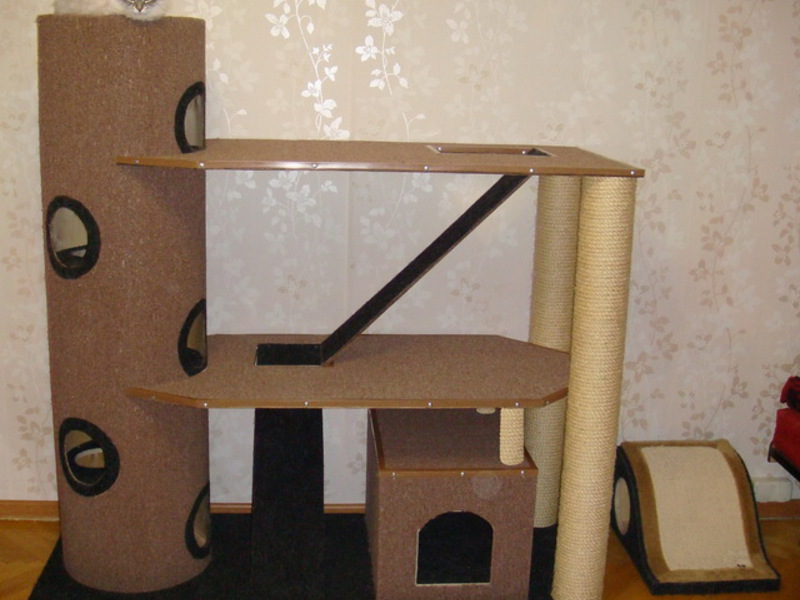
If you live in a small apartment, then you can choose one of the following cat house design options:
- rope post;
- personal rug on the wall;
- forest thicket;
- corner construction.
How to make a cat scratching post with your own hands: materials for making
First of all, you it is necessary to prepare materials to make a cat house:
- wooden boards 2 pcs. – 40 x 40 cm;
- plastic pipes – up to 15 cm;
- upholstery fabric or carpet;
- foam rubber;
- hemp rope;
- furniture corners;
- drill;
- screws and screwdriver;
- small nails;
- glue.
 wooden boards 2 pcs. – 40 x 40 cm;
DIY Cat Scratching Post: Step-by-Step Instructions
Once you have the necessary tools and materials, you can begin assembling your own cat scratching post. A DIY cat house tutorial is available. describe in the following stages:
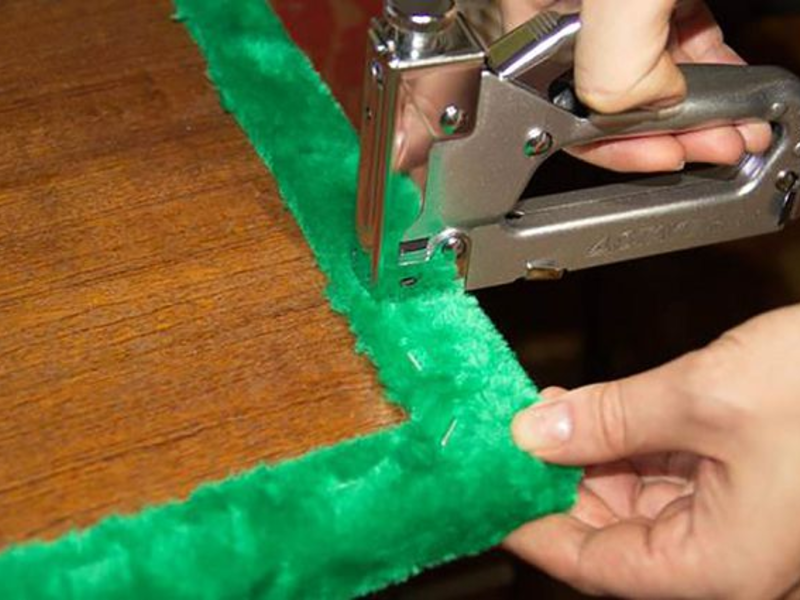
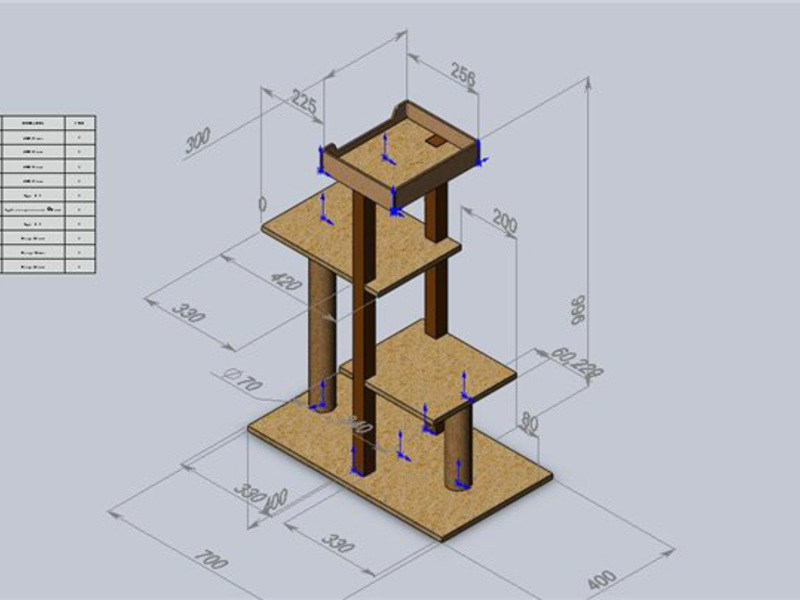
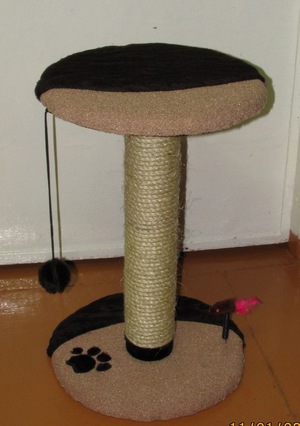
- The base of the structure. You'll need wooden boards, the length of which should be calculated based on the size of your pet. If you're making a scratching post for a small animal, you can use 40 x 40 cm boards. For larger cats, 50 x 50 cm boards are better for comfortable scratching. Take the prepared upholstery fabric, such as carpet, and lay it on the floor, keeping in mind that the back side should face the ceiling. Place the board on top. Then mark the required amount of fabric: to achieve this, place the board 5 cm from the edge. Next, glue the pattern and attach it to the board. To ensure the material stays in place, secure it with nails.
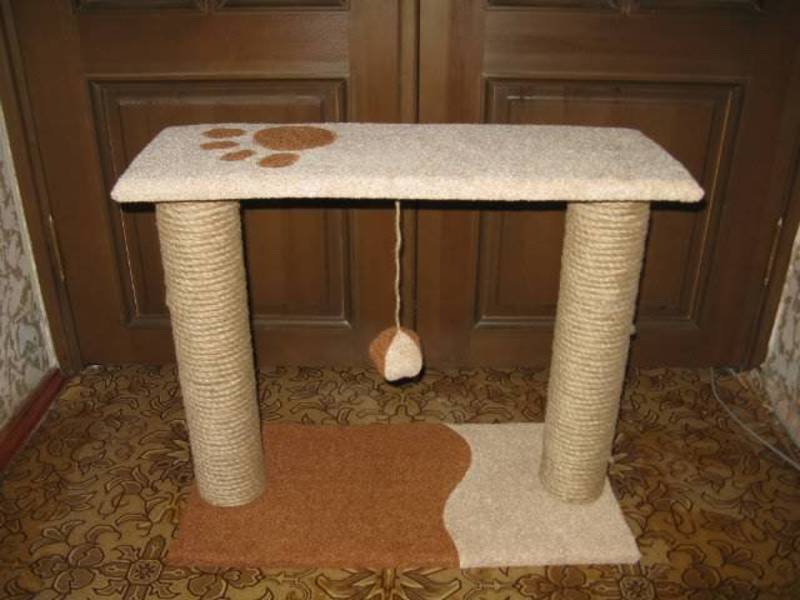
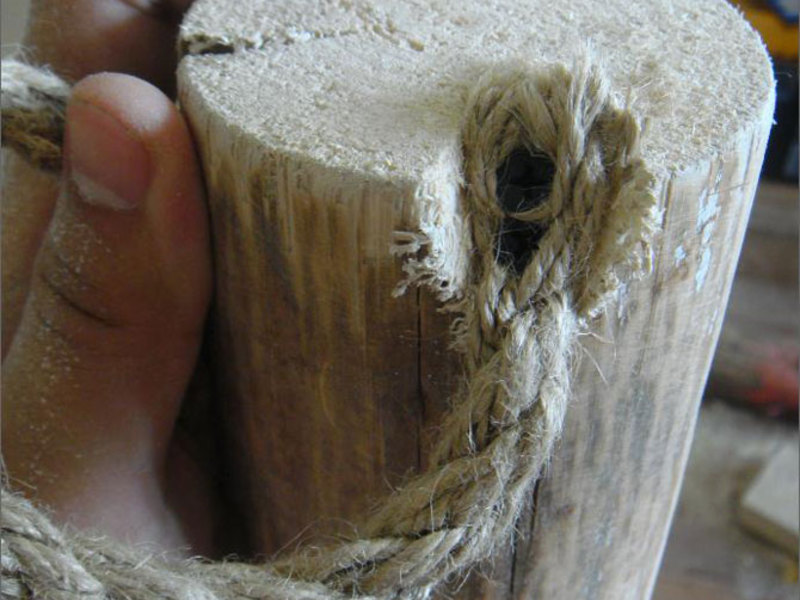
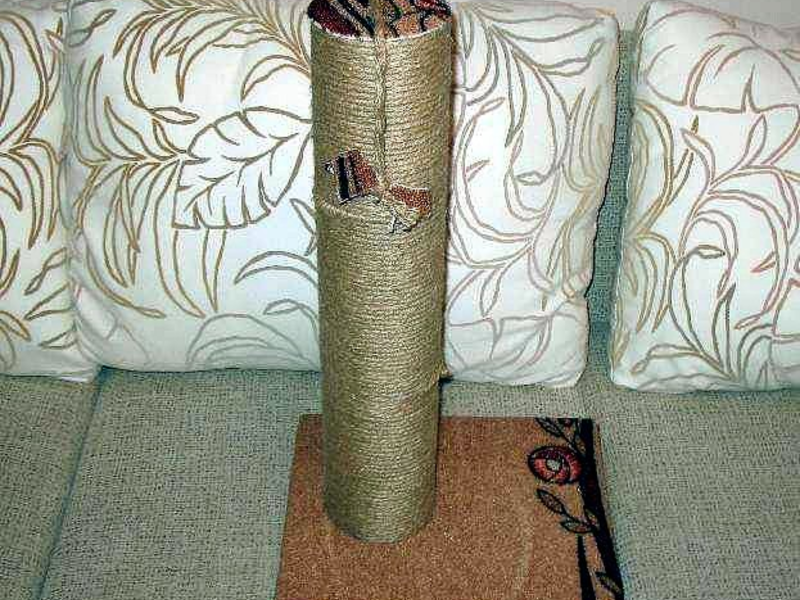
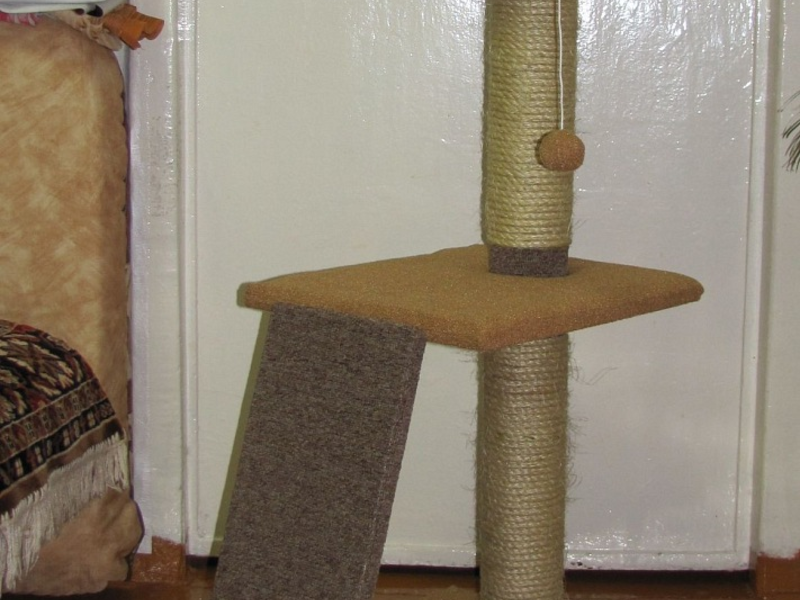
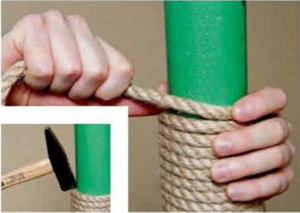
- A vertical column. Here we'll need furniture brackets. We'll use them to attach the plastic pipe to the base. However, beforehand, we'll need to check the pipe's dimensions and adjust them if necessary. The pipe's height should be based on the animal's size, but it shouldn't be less than 50 cm. Once the pipe is in place, we'll wrap a hemp rope around it from below. First, secure the loose end to any corner. While winding, the rope should fit as tightly as possible around the pipe to ensure its integrity while the animal is using it. The other end of the rope should be secured in a hole drilled in the top of the pipe.
- A bed. You can make the scratching post more functional by installing a bed on top of the pipe. It's made in a similar way to the base. The difference is that the space between the board and the fabric is filled with foam. This will provide a comfortable resting place for your pet. Once the bed is finished, it's secured to the end of the top pipe using furniture brackets, which are secured with screws or nails.
Interesting options
There are also many other ideas for making a scratching post with your own hands.
Rope post
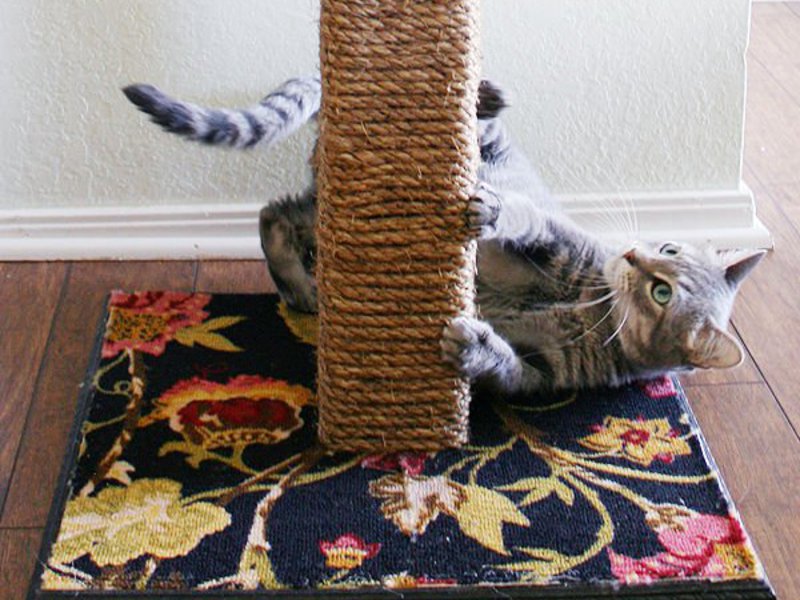
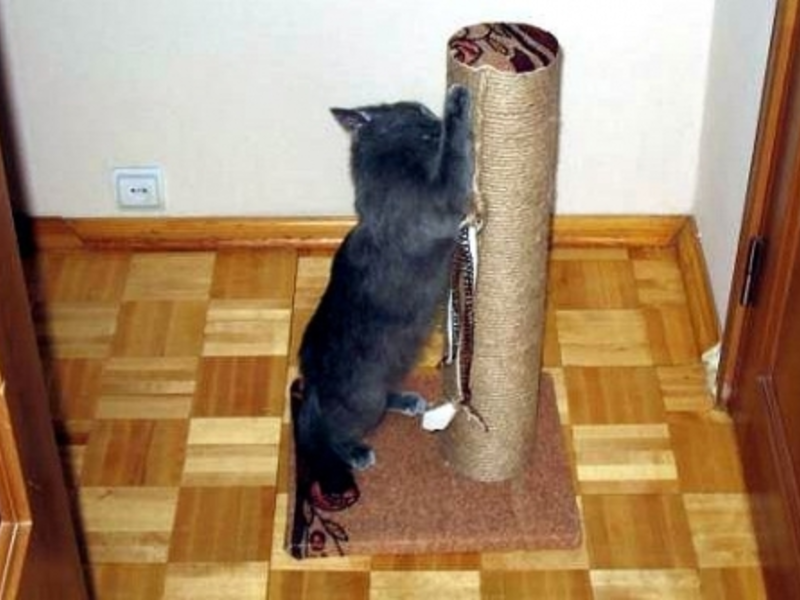
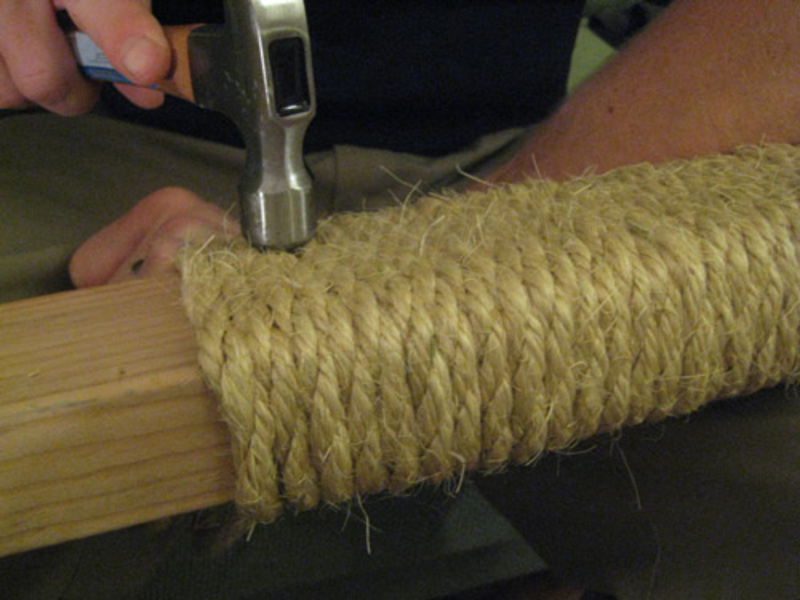
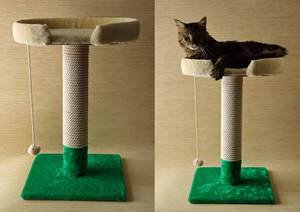 If you don't want to bother making the cat house described above, you can make a simpler version - rope postThe tutorial for creating it goes like this: you'll need a wooden beam, a plastic pipe, or a board. Wrap a rope around the base. This must be done very carefully, ensuring each coil is tightly connected to the next. For added strength, secure the rope with nails, driving them in 10 cm apart.
By following these simple steps, you'll have a wonderful claw sharpening device. To begin using the post, place it on a heavy, stable base and secure it to it. This will prevent your cat from tipping it over while sharpening.
If desired, you can add a soft-padded shelf to the end of the pipe. Once your pet has had enough of playing, they'll begin to look for a suitable resting spot.
Personal rug on the wall
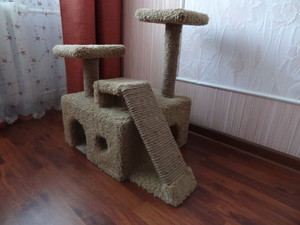 You will bring joy to your pet if you make for him a version of a scratching post like this one personal rug mounted on the wallThis design will appeal to owners who don't have the time or desire to make bulky claw sharpening devices. This mat is easy to make, as it requires readily available materials: wooden planks, carpet, felt or other thick upholstery material, and screws.
So, let's move on to the master class. First, take the fabric and cut a piece out of it. Hang it on the wall, securing it with slats. These are attached on all sides to create a square or rectangular structure. When you bring a small cat into your home, you can easily teach it to use this device. If you're making a scratching post for an adult cat, you can teach it what it is if... treat the rug with your pet's favorite scent.
Forest thicket
You can also make it even easier, without spending a lot of time and effort on making a special claw sharpening device. While out for a walk, try to find a dry, leafless tree or a thick branch with lots of knots and branches. A branch will serve as an excellent material for making a scratching post, which can turn into a real exercise area for your pet.
Corner scratching post
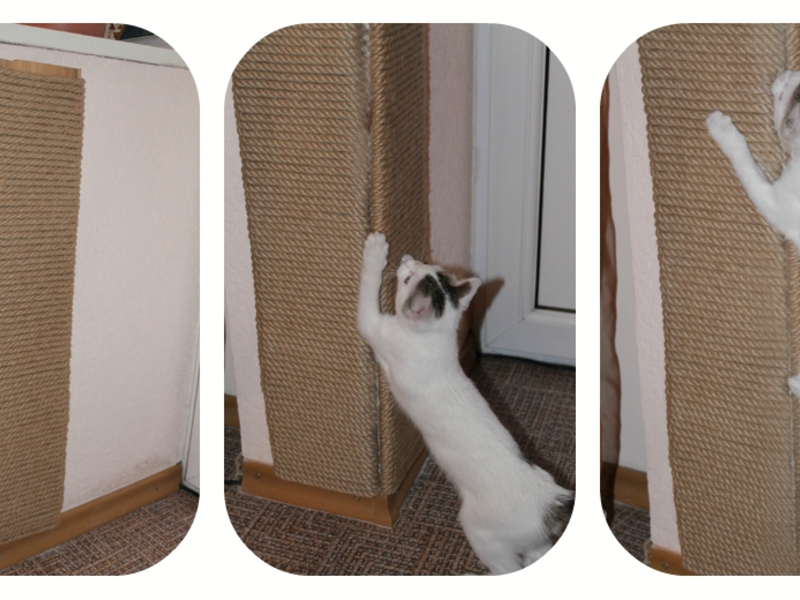
This version of a cat house for sharpening claws can also function as a wall for your pet to climb.
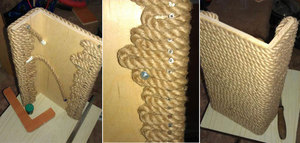
For greater clarity, we'll describe a master class on how to make this device. To make it, you'll need boards that match the width of the door frame. Place them on top. attach thick furniture fabric or twist a ropeOnce the scratching post is ready, it's attached to one side of the door frame. It typically extends the entire height of the doorway. With access to such a device, the cat will be able to sharpen its claws and perform other developmental movements, such as pulling itself up, climbing up, and down the door frame.
The cost of a homemade scratching post
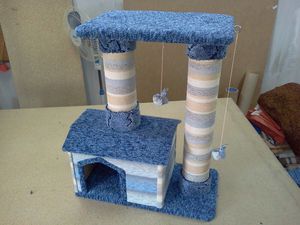 Making a homemade scratching post is very cost-effective, as it costs three times less than buying one from a store. Furthermore, a homemade scratching post outperforms its store-bought counterparts in terms of performance. It boasts improved functionality, stability, and reliability.
Conclusion
Every cat owner knows that their pet regularly has the urge to sharpen its claws. To prevent your pet from damaging your furniture, it's recommended to have a special device—a scratching post—in your home. You don't even need to go to a pet store to find one; you can make one yourself. By following the step-by-step instructions for making this device, you can create one with minimal expense. functional and reliable device For your pet. If the owner is short on time, they can choose simpler scratching posts, which will allow them to save even more.