 Spaying cats involves minor surgery. Therefore, to speed up the recovery process, the animal should be fitted with a special bandage, or blanket, as it's also called.
This device can be purchased ready-made, or you can sew it yourself.
Content
Why is this necessary?
Cat owners facing the issue of spaying for the first time may find it difficult to make a blanket themselves. However, after the procedure, it's important to check with your vet to determine whether your pet needs this type of protection.
In some cases, after spaying cats, the stitches are applied in such a way that a bandage is not only unnecessary but can actually be harmful. In other cases, a blanket serves as a means of protection postoperative suture from such things as:
- microbes;
- fungi;
- dirt.
All this can provoke inflammation of the suture, and this is very dangerous for the cat’s health.
A cat blanket is made of fabric. It's applied after surgery to cover the incisions and promote rapid wound healing. A blanket can be purchased at a specialist store, which carries a wide selection of such items. However, the design is quite simple, and you can sew one yourself, which can save you some money.
Getting ready for work
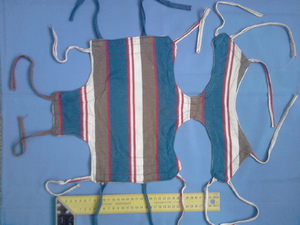 Sewing a post-surgery bandage for a cat is easy for anyone with at least a basic understanding of this craft. The key is finding and correctly position the ribbons for tyingThis will allow you to customize the blanket to fit your cat, regardless of its size. If you make the blanket yourself correctly, your pet will feel comfortable while feeding or sleeping.
When sewing a homemade bandage, it's best to start by taking measurements of your cat's body parts. Otherwise, the finished blanket risks being uncomfortable and ineffective.
The following measurements are taken:
- the length of the cat's body from neck to tail;
- belly from the hind legs to the front legs;
- coverage of the tail and each paw separately;
- the volume of the animal's chest.
Pattern
Once you've taken the measurements for your future blanket, you need to create a pattern using them on paper. When transferring the measurements from paper to fabric, remember to leave enough seam allowance to allow for stitching the edges.
The pom-pom itself can be made of one or two layers, with the latter being denser. It's best to choose durable, fray-resistant fabrics. Remember that the material should also withstand the pressure of a cat's claws and be breathable. Otherwise, the seam may become damp and become infected, which can have serious consequences.
Pattern options
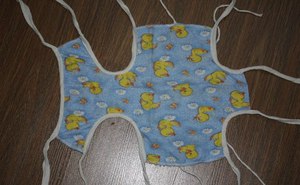
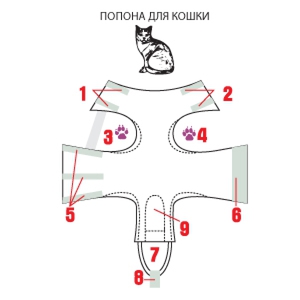 Cutting out a bandage for a cat involves marking and cutting holes For the animal's limbs, according to the measurements taken previously. In some cases, the blanket is cut in the shape of a triangle with an opening at the top for the tail. The long sides of the triangle will encircle the body along the legs. The ends of the fabric are wrapped around the cat's body and pulled out in front. Then they are tied in a knot at the back.
Another option: a bandage with openings for the front paws. The rest of the product will be distributed evenly along the tie or Velcro.
Another modification to the blanket that you can make yourself is to place the cat's paws in small circles, and use a larger one for the head. When wrapping the animal, be careful not to tie the fur too tightly. Also, make sure there's room for normal diaphragmatic movement during this process. This will prevent the animal from having breathing problems.
Clasps
If you plan to sew a blanket for your cat yourself, it's best to use ties or Velcro. However, it's best not to sew on snaps, as cats often unfasten them.
Total number of fasteners on the bandage you should get about five pairs:
- in the neck area;
- in front and behind the front paws;
- in the middle of the cat's belly;
- in front of the hind limbs.
How many layers of material are needed?
It's best to sew the bandage yourself. based on three layers of fabric:
- the top one should be decorative or waterproof;
- the middle one should be made from warm or soft fabrics, it will have an insulating function;
- The inner layer will be close to the cat's body. It is best made from flannel or jersey.
The optimal option for a blanket after sterilization for a cat is two or three layers, stitched edges and tie tapesTo ensure the bandage is as durable as possible, it's best to sew it yourself using cotton.
The ties should be longer, and when you try the blanket on your cat, trim away any excess. This is to prevent the animal from getting tangled. Determine the placement of the cat's paws immediately to avoid disturbing it during the fitting. If there are any wounds left on the animal after sterilization, place a multi-layer bandage under the blanket.
How to properly put a bandage on a cat
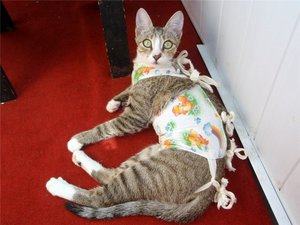 Making a DIY cat harness isn't all that difficult. However, you need to follow all the instructions and apply it correctly.
The cut of the blanket will determine its subsequent effectiveness for your cat. Also it needs to be tied correctlyIf the ties are too tight, the stitches and wounds after spaying will heal slowly and poorly. If they are too loose, they will rub against the stitches when moving, or the cat will try to remove the tie.
To put a blanket on a cat, follow these steps:
- we lay out the product and straighten the ties on it;
- carefully place the cat on top and secure the ties in front in the area of the head and front limbs;
- We tie the back ties in pairs and tie them in the cat's pelvic area.
The order of actions may differ slightly from that given, It all depends on the cut of the bandageBe sure to check that the blanket is securely fastened. Let your cat walk around the room; if it's calm and doesn't try to remove it, you've done it correctly.
Remember, there's no need to constantly remove and replace the bandage on your cat. When you need to treat a scar left after sterilization or change the bandage, simply untie it. However, remember that you may need to change the blanket for personal hygiene reasons.
Animals often dislike this type of clothing. They constantly chew and tear at the bandage, trying to get rid of it. That's why it's important to carefully select the fabric if you're sewing it yourself, ensuring it's durable and pleasant to the touch.
How long should I wear the bandage?
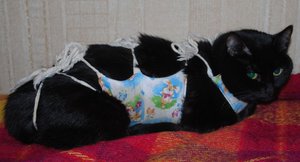 A cat should wear a blanket after sterilization. on average, about two weeksIt all depends on her health and the type of suture applied. Periodically, when necessary, it is changed if it becomes dirty.
When changing a bandage, it should be steamed with an iron. When sewing seams on the body, untie it and carefully fold back the fabric so it doesn't get in the way.
As mentioned earlier, cats generally don't like blankets, and sometimes they manage to remove them. If this happens, carefully inspect the incision immediately. If anything seems wrong, take your cat to the vet immediately.
If everything is fine, put the bandage back on and make sure it fits snugly. Also, try to keep the cat occupied so it forgets it's wearing anything for a while. Be as gentle as possible with it.
Making a bandage yourself isn't all that difficult, but it's not always necessary. They're inexpensive in specialty stores, and factory-made blankets are available. based on non-woven material, has an anatomical shape and good stitching.
Some private veterinary clinics also provide bandages free of charge after the sterilization procedure, so there's no need to make your own. You might just need a second one to replace it.
Whether you make the blanket yourself or opt for a ready-made product, the main thing is to put it on the animal correctly and allow it to recover after the surgery.