It's best not to chain a dog: that's the opinion of serious zoologists. After all, a dog isn't just an animal; it's also man's best friend. How can you say a friend is chained? Indeed, city dogs living in high-rise buildings are practically unaware of the concept of a chain: the most that restricts their freedom is a leash during walks. In private homes, however, dogs on heavy chains are commonplace: historically, dogs not only live in a specially constructed kennel, but are often permanently tied to it.
Still, it's worth recognizing that a chain is an extreme measure. A dog kept on a leash constantly becomes angry and unfriendly, which can eventually affect its behavior toward its owners. Moreover, such a dog isn't a very reliable guard dog: after all, while leashed, it won't be able to fully control the movements of thieves or other intruders within the yard. Therefore, modern dog trainers believe that chaining a dog is a temporary measure, and if necessary, the animal should be gradually acclimated to the leash, rather than kept on it permanently.
Content
How to chain your dog without stress so it doesn't whine
There's no point in chaining a dog to stop it from whining: this won't improve its comfort or peace of mind. The stress the animal experiences from unexpected confinement can be so intense that the whining not only doesn't stop, but actually intensifies. This is compounded by terrifying howling, barking, and a desperate attempt to break free from the chains. In some cases, attempts end badly: the dog becomes entangled in the chain, sometimes getting its head caught in the noose and dying.
A smooth transition from complete freedom to its serious limitation requires three stages, with each subsequent stage beginning only after the successful completion of the previous one:
- A collar is placed on a young dog and allowed to fully acclimate to it. It's difficult to say in advance how long this will take: a couple of days, a week, or more than a month.
- Gradually acclimate the animal to the leash, attaching it to the collar for short periods of time. Take the dog for walks in this manner, letting it know that this is "normal" and nothing serious is happening.
- If everything goes smoothly, the now grown puppy is finally placed on a chain.
It's preferable, if possible, to use a so-called checkpoint rather than a completely rigid tether. A metal cable with a diameter of 8-10 mm is stretched and securely mounted around the entire perimeter of the protected area, and a two-meter chain is attached to it so that it slides easily along the cable. This option doesn't completely restrict the dog's freedom: it can run around the area, although not in any desired direction.
However, even a checkpoint doesn't allow a dog to be a full-fledged guard, as certain areas of the yard remain inaccessible. The most a dog can do in a dangerous situation is bark loudly, alerting its owner to intruders. A security alarm installed on the fence around the perimeter and on the gates can perform the same role with great success. The alarm doesn't require power (except for powering it), requires no maintenance, and is unaffected by stress. A tethered dog, chasing suspected thieves, or simply hearing the barking of other animals "on the loose," may attempt to jump the fence and become entangled in its own chain, potentially fatally.
Experienced dog trainers believe that even if an intelligent dog is acquired as a guard dog, it should be trained to spend most of its time off-leash. A guard dog should easily distinguish between "friends" and "foes," obey its owner at the first word or even hint, and love and respect them. Of course, this requires a great deal of work and skill, but a well-trained dog can perform guard duties even off-leash. However, even then, it should know what a chain is, but remain loyal to it. Sometimes, especially a large dog, will need to be leashed (for example, during a visit to a guest's house). It must be trained to understand this temporary restriction of freedom and not view it as a betrayal on the owner's part.
Read also: Should I get a second dog?.
At what age is it best to put a dog on a chain?
Putting a dog on a chain as an adult, once it's accustomed to complete freedom, is practically impossible. It will find a convenient opportunity to break loose and run away; the hurt may be so great that it will last forever. A puppy should be accustomed to restrictions at a young age: when it's already sensible but not yet accustomed to complete freedom. For most breeds, this age is between 4 and 8 months, but it's impossible to say exactly, as this matter is so delicate and individual.
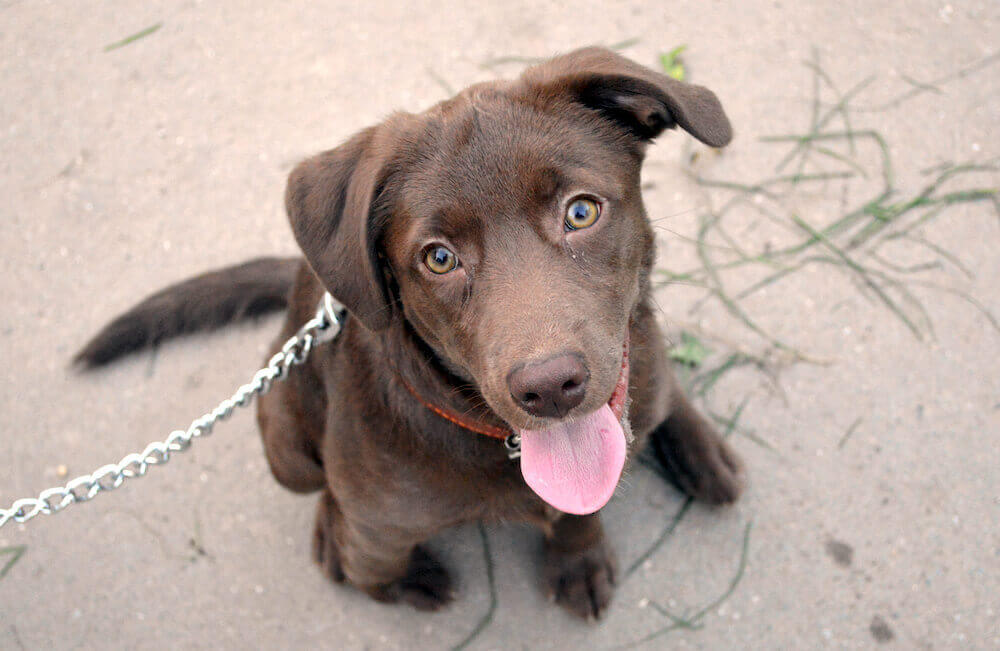
A puppy is usually acquired when it's a few months old. It's perfectly normal for a new owner, having decided their dog will live on a chain, to immediately put a collar on it. At a young age, it's easier to get used to the extra item on the dog's body; some dogs show no signs of being confused by the "acquisition."
Usually, soon you can walk the puppy on a leash, and then it’s time to sit.
But things don't always go smoothly. Even a young animal will start asking to be let out in the first few days. The owner's job during this time is not to break down and not let the puppy off the leash. Often, increasing contact, rewarding the puppy with tasty food, and giving the puppy safe toys with permission to chew on them as much as they want help.
What collar and what chain do you need?
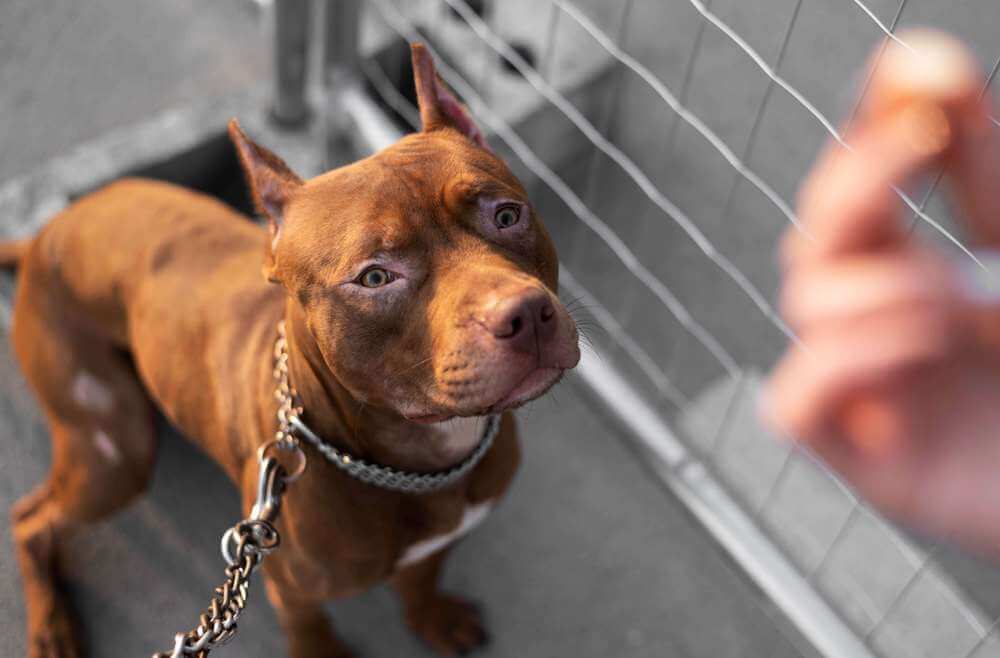
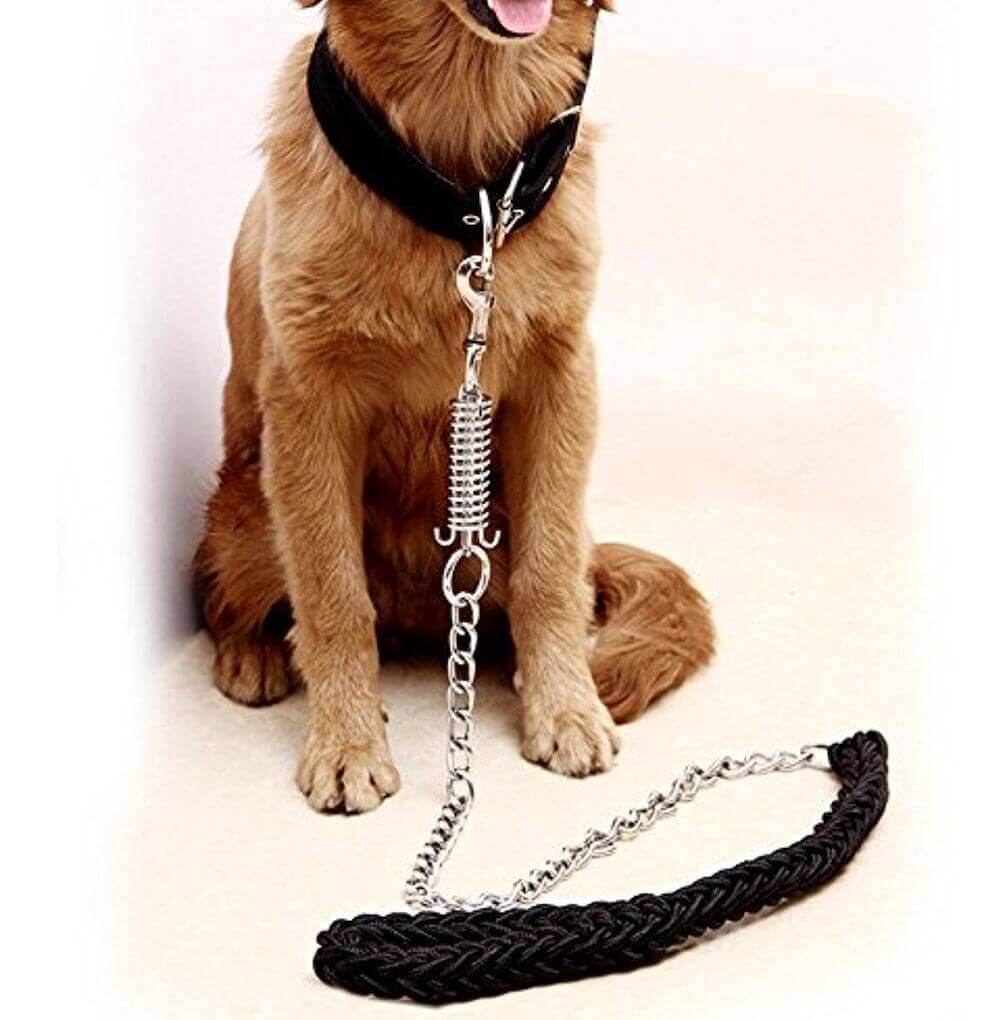
For a dog that is kept on a chain permanently or for long periods, the collar must be chosen especially carefully. It should be wide, made of several layers of leather, have two rows of holes, and a strong ring. Sharp edges should be avoided, and the metal alloys used for individual collar components must be high-quality and non-allergenic. The collar should be adjusted so that two human fingers can fit comfortably between it and the dog's neck.

For chained dogs the following should not be used under any circumstances:
- halters (halti);
- parforces with tenons;
- chokes (half-chokes) in the form of a sliding loop.
The chain thickness depends on the animal's size, or more precisely, its weight. For example, a dog weighing up to 15 kg requires a 3 mm chain, while a 40 kg dog requires a 6 mm chain.
Rules for training a dog to use a chain
There are no clear instructions for training a puppy to use a chain: every dog is an individual.

However, there are a few important points:
- There's no rush. Even a young dog can't be chained up once and for all. Beforehand, the puppy is walked repeatedly around the property on a leash, allowing it to explore, sniff thoroughly, and even chew on things. The time spent on the chain is gradually increased, starting with 10-15 minutes. Initially, the owner doesn't leave the dog's side at all, talking to it, playing with it, and giving it treats. Only after a week is the time spent on the chain in the owner's absence increased to 3-4 hours, or even left alone overnight.
- Skimping on collar quality and chain length is inappropriate. Excessively rough leather causes discomfort, and a short leash creates a feeling of utter hopelessness.
- In addition to a high-quality collar, a clean and dry kennel is essential, possibly even heated in severe frosts. The dog needs shelter from rain, strong winds, and other weather conditions. It's a good idea to lay down a familiar mat in the kennel right away and let the dog eat outside while still untethered.
- During chain training, the puppy's favorite items (especially toys) are essential in the kennel. Needless to say, a bowl of clean water is essential for drinking at all times.
It is considered normal if a dog gets completely used to the chain within 2-3 weeks, and when temporarily released, calmly allows itself to be tied again.
Tips and nuances
Don't blame yourself too much if your dog takes a long time to learn to be chained. While patience is key, you have to accept the fact that not every dog accepts complete confinement, and not every owner has the training skills and knowledge.
Studying other people's mistakes can help in this difficult task, the most common and unacceptable of which are:
- use of brute physical force (it is unacceptable to push a dog into a kennel against its will and forcibly keep it there for a long time);
- talking to the dog in raised tones and especially loud, rude shouts at it during this difficult time;
- putting the dog on a chain immediately after it appears in a new home (or rather, in the yard);
- the use of a low-quality kennel, which causes obvious inconvenience (it happens that the owner does not even notice protruding nails or a leaky roof);
- poor placement of the kennel (for example, with constant exposure to the scorching sun);
- using a collar or chain that is not the right size, or made of materials that are too heavy or rough.
And, of course, the owner's lack of confidence is unacceptable. Excessive pity is inappropriate here: if the dog is already chained and confined to a kennel, it cannot be returned to a residential home.
A dog and a chain aren't exactly the most humane combination, but it's often necessary in private homes. In this case, it's best to train the animal so that it isn't chained constantly, but readily accepts short periods of confinement from time to time. Training a dog to be chained can be difficult; it requires firmness and sensitivity from the owner, training skills, and a love for animals.
Read also: Which dogs require a lot of walking?.