A miracle has happened. Now you're the owner of a tiny, squeaky bundle of joy with a cute little face and funny little paws. Your emotions are off the charts, and your joy knows no bounds. It doesn't matter how many boots and sneakers you eat. You've already forgiven them for everything. No amount of trudging out of a warm apartment in bad weather can compare to the feeling of happiness and the boundless love a dog so generously gives us. For a dog, the most important thing is to have its owner by its side. Our pet's life is completely entrusted to us. How can we protect our four-legged friend from disease? While there's snow outside, there's no reason to worry, as every owner is required to vaccinate their pet against rabies. But with the arrival of warmer weather, every responsible owner begins to think about how best to protect their dog from tick bites, which carry dangerous diseases.
Content
Is a tick bite dangerous for a dog?
Every year, with the arrival of warm spring days, doctors sound the alarm. More and more people seek help at clinics after tick bites. Tick bites are also dangerous for dogs. Ticks can carry diseases that require complex treatment. Even if you seek veterinary help promptly, saving your pet, unfortunately, isn't always possible. The best thing to do is protect your pet from potential problems in advance. Taking care of this in advance will save you from stress and wasting time and money on veterinary clinics later. Therefore, prepare your sleigh in the summer and insect protection in the winter.
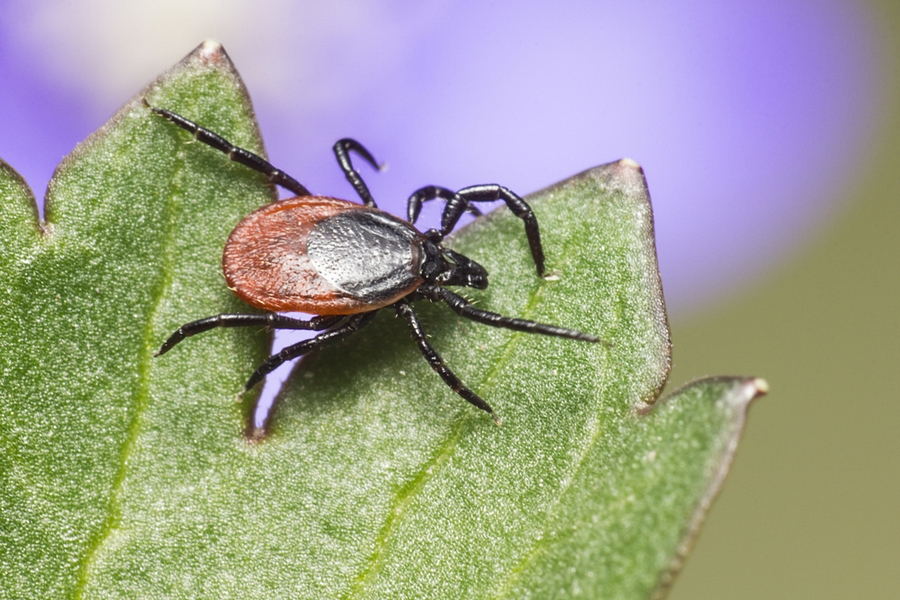
A tick bite can cause dangerous diseases.
Places where ticks are likely to live
Dangerous insects are most often encountered in forested parks, where there is plenty of tall, dense grass, low shrubs, and trees. Ticks prefer to nest in damp areas, such as at the edges of deciduous forests with tall ferns. Ticks do not live in tall trees; adults do not rise above 1.5 meters. They hide in the grass, where they can remain without food for long periods, waiting for their prey.
If you live outside the city or like to take your dog to the dacha on weekends, make sure your property is a tick-friendly haven: you can plant tick-repellent plants (rose geranium, lavender, marigolds) or plants containing a natural poison (pyrethrin), which is detrimental to blood-sucking insects.
These are some types of chamomile: Caucasian chamomile, meat-red (Pyrethrum carneum), pink (Pyrethrum roseum) and Dalmatian chamomile, ash-leaved.
A closely mown lawn and an area cleared of old debris and leaves will also discourage ticks from settling. If ticks are common in your area, consider treating them with chemicals at the beginning of the season.
But when heading into the forest to pick mushrooms and berries, it's essential to take care of both yourself and your family. Pre-harvesting, proper clothing, and mandatory vaccinations for your dog are the keys to a relaxing summer.
Insecticide Plants (Gallery)
-

- The smell of geranium irritates and repels blood-sucking insects.
-

- Lavender, due to its specific smell, has a repellent effect against ticks and other insects.
-

- Flowers repel insects due to the essential oils they contain.
-

- Contains the natural insecticide pyrethrin, which is lethal to ticks and other parasites.
Diseases transmitted by ticks
A tick bite itself poses little danger to a dog unless the tick is infected with one of the possible diseases. In other cases, the consequences of a bite can be quite serious for both the pet and the owner. Some diseases carried by ticks can also be dangerous to humans.
Diseases and their symptoms (table)
| Disease | Symptoms | The danger of infection for humans |
| Piroplasmosis | The most common disease in dogs. It is caused by various species of Babesia, which destroy red blood cells. Symptoms manifest quite rapidly: the dog becomes lethargic, refuses food, drinks excessively, develops yellowing of the mucous membranes, a fever, shortness of breath, gastrointestinal upset (bloody diarrhea), and failure of the heart, lungs, liver, kidneys, and other organs. Urine is typically dark—almost black, brownish, or red. Treatment is complex and, unfortunately, not always successful. Vaccinated dogs tolerate the disease better and have a good prognosis for recovery. | Not dangerous to humans. |
| Borreliosis | Caused by Borrelia. Symptoms appear after 2-3 weeks: fever, stiff gait, swollen lymph nodes, cardiac irregularities, general weakness, apathy, and poor appetite. It often has a chronic course, including joint disease, kidney problems, vascular disease, and more. | Dangerous to humans, causes borreliosis (Lyme disease). |
| Ehrlichiosis | Caused by Ehrlichia. Rickettsia parasitizes cells (platelets, monocytes, and granulocytes). Symptoms appear after 2-3 weeks: debilitating fever, weakness, convulsions, inflamed eyelids, and joint pain. Enlargement of the liver and spleen is observed, increased protein levels in the urine, and decreased platelet and albumin levels in the blood. Weight loss, hemorrhages in the eyeballs, mucous membranes, and skin, nosebleeds, anemia, shortness of breath, blood in the urine, and decreased white blood cell and platelet counts in the blood are also observed. The disease may progress undetected, leading to severe damage to the bone marrow, eyes, joints, liver, and other organs. | Some strains are dangerous to humans. |
| Hepatozoonosis | A parasitic infection. Infection occurs when a tick is ingested. Symptoms appear as the immune system weakens, possibly after several years. Symptoms include fever, eye discharge, weakness, and joint and muscle pain. | It does not pose a danger to humans. |
| Bartonellosis | Fever, hind limb weakness, joint inflammation, anemia, lethargy, drowsiness, weight loss, various cardiac and vascular abnormalities, and eyelid inflammation are common. Nosebleeds, eye hemorrhages, cutaneous vasculitis, pulmonary edema, and meningitis are also possible. Symptoms may not appear immediately, but may take several years to appear. Sudden death without any apparent illness may occur. | Some species of Bartonella pose a danger to humans. |
All of the above diseases have serious consequences for dogs; when chronic, they cause irreversible changes to internal organs, blood vessels, joints, and other organs. Piroplasmosis can only be cured with prompt treatment; if time is lost, saving the dog is virtually impossible. Vaccination against piroplasmosis is essential. While it won't protect your pet from a tick bite, it can be life-saving if infected. The disease progresses more easily after vaccination, and vaccinated animals have a much better chance of recovery.
If you suspect a possible infection, or if your dog's behavior or diet changes, don't wait for it to resolve on its own. Contact your veterinarian immediately and have a PCR blood test performed—this is the only 100% guarantee of a correct diagnosis. Prompt treatment and proper recovery (diet, etc.) will help save your dog's life.
How to tell if your dog has been bitten by a tick
A tick that has bitten your dog won't always wait patiently for you to find it. It could also happen that a well-fed tick falls off on its own, and you might not even suspect a risk of infection. Keep an eye on your pet. Any changes in behavior are cause for concern. If your dog has begun eating poorly or completely refuses to eat, doesn't respond to favorite treats, or drinks a lot, these could be symptoms. If your pet is usually playful and active but now refuses to go for a walk, this is also a warning sign. An elevated body temperature is always a symptom of some illness. A dry nose isn't necessarily the only symptom. In one case, a dog's nose remained wet despite an elevated body temperature. The owners may have missed the tick, overlooking lethargy and loss of appetite, and then, when other symptoms (dark urine, diarrhea, and hind limb problems) appeared, they took it to a veterinarian. Unfortunately, time was lost and it was not possible to save the dog.

If a dog is bitten by a tick, it is necessary to observe its behavior.
The main signs of piroplasmosis
- lethargy;
- refusal of food and treats;
- increase in temperature (the nose may be wet and not hot);
- dark colored urine;
- shortness of breath;
- yellowness of the mucous membranes;
- intense thirst;
- vomiting and diarrhea (often with blood particles).
What to do if you find a tick
After each walk, carefully inspect your dog, paying attention to areas with thin skin where ticks are particularly likely to attach (like the belly, face, and the inside of the paws). If a tick does attach, carefully remove it, being careful not to squeeze it and removing the entire tick (including its head).
How to remove a tick correctly
Old methods of removing ticks using oil won't work, as ticks can survive for a long time without oxygen. Furthermore, the longer a tick remains in the skin, the greater the risk of infection. Various tick removal tools exist, including a special spatula with a slot or a syringe with a loop for grasping. If neither is readily available, you can use thread or tweezers after treating the tick with a parasiticide, such as amitrazine. Apply the solution directly to the tick several times over 10-15 minutes. It may fall off on its own, but if not, removing it will be easier. Using tweezers (or thread), grasp the tick just below the skin and gently twist it until it's completely removed. Avoid removing the tick by hand to avoid infecting yourself, as ticks can carry various infections that are dangerous to humans.
Of course, it would be great to take the tick to a lab for testing, but not every city has such labs, and it's not always possible. Therefore, we carefully monitor our pet and, at the slightest suspicion, rush to get a blood test.
How to help your pet at home
If any symptoms appear, don't wait for it to go away on its own or self-medicate! The risk of losing your dog is too great. Treatment requires serious medications, IVs, and injections. Veterinary assistance is essential. The first step is to take your dog for a blood test. While we wait for the results, we can take some preventative measures.
What can you do at home until the test results are ready and the main treatment has begun?
- The bite site should be treated with brilliant green, iodine or another alcohol-containing antiseptic.
- Prevent your dog from becoming dehydrated: give him small amounts of water frequently, or administer the liquid rectally.
- If the veterinary clinic is very far away and it is not possible to quickly obtain veterinary care, you can administer antiparasitic drugs to the dog (only after a remote consultation with a veterinarian).
Further treatment must be carried out under the supervision of a specialist, as the medications are toxic not only to the pathogens but also to the pet itself. It is important to select the correct medication and dosage, and an individual approach is required for each animal, taking into account its condition, weight, allergy susceptibility, etc. After antiparasitic therapy, veterinarians prescribe hepatoprotectors, vitamins, cardiac support medications, and other medications. Restorative therapy requires patience and constant monitoring. The dog requires a special diet (removing raw vegetables, reducing fat and protein intake, and increasing fermented milk products), a feeding schedule, and regular laboratory tests. The kidneys, heart, and respiratory system should be checked, as some complications are possible after treatment.
Tick prevention in dogs
It's important to understand that it's better to take care of your pet early than to spend hours at veterinary clinics worrying about your pet. Preventing piroplasmosis isn't that difficult: the first and perhaps most important step is vaccination. A vaccinated dog, even after being bitten by an infected insect, will have a better chance of surviving the disease. However, even vaccination doesn't guarantee 100% protection against bites, so when heading outdoors, it's important to use additional protection.
For prevention, external and internal tick repellents are used. Veterinary pharmacies now offer single-dose tablets, long-acting collars, ultrasonic keychains, withers drops, sprays, powders, and shampoos. These products can be classified as insecticidal (acting on the nervous system of insects and killing them, causing paralysis) or repellents (repelling insects). Chewable tablets are systemic insecticidal. The product is absorbed into the dog's bloodstream, killing parasitic insects (ticks, fleas, lice, and even mosquitoes) upon contact with blood during a bite. Collars, drops, and some sprays are non-systemic insecticidal. The product accumulates in the subcutaneous layer and hair follicles, then spreads evenly over the entire skin. Insects are killed upon contact with the animal's skin and fur. Powders, some brands of sprays, and shampoos can have insecticidal or repellent properties (they repel insects). Ultrasonic key fobs, popular today, can also repel unwanted insects.
Ultrasonic tick repellent keychain
A non-chemical tick and flea repellent. The key fob emits an ultrasonic signal, inaudible to the human ear, but irritates ticks and fleas. The panicked insects either flee their habitat or become incapacitated. The signal also prevents larvae from developing from eggs, thereby preventing re-infestation. It poses no danger to animals. The key fob is attached to the dog's collar, and the emitter is aimed at the dog. For proper operation, it is recommended to wear the key fob at all times, removing it only during bathing. The emitter can be placed where the dog sleeps. It is non-toxic and can be used on weakened and elderly animals. The emitter lasts for 9 months.
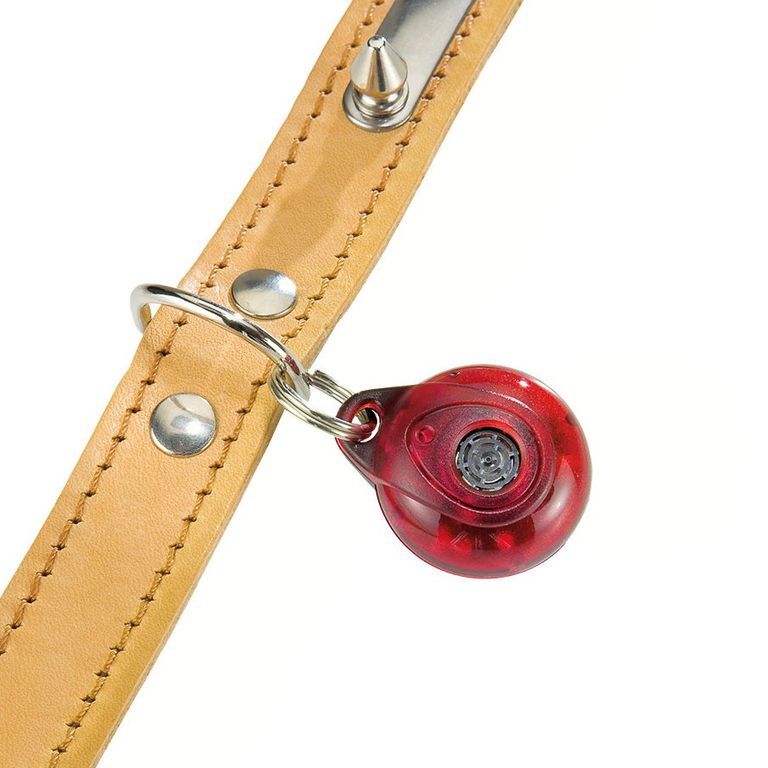
Ultrasound has an irritating effect on ticks, fleas and other insects
Collars
The collar's non-systemic insecticide and acaricide is distributed subcutaneously, killing ticks, fleas, and other insects upon contact with the dog's fur or skin. It offers long-lasting protection. Some manufacturers guarantee protection for up to 7 months with continuous wear. The collar does not fasten securely around the dog's neck. It has a distinctive odor and may cause an allergic reaction. Use restrictions vary depending on the dog's age, allergy sensitivity, and other factors. Sometimes additional protection may be needed, such as treating the paws and abdomen with sprays.
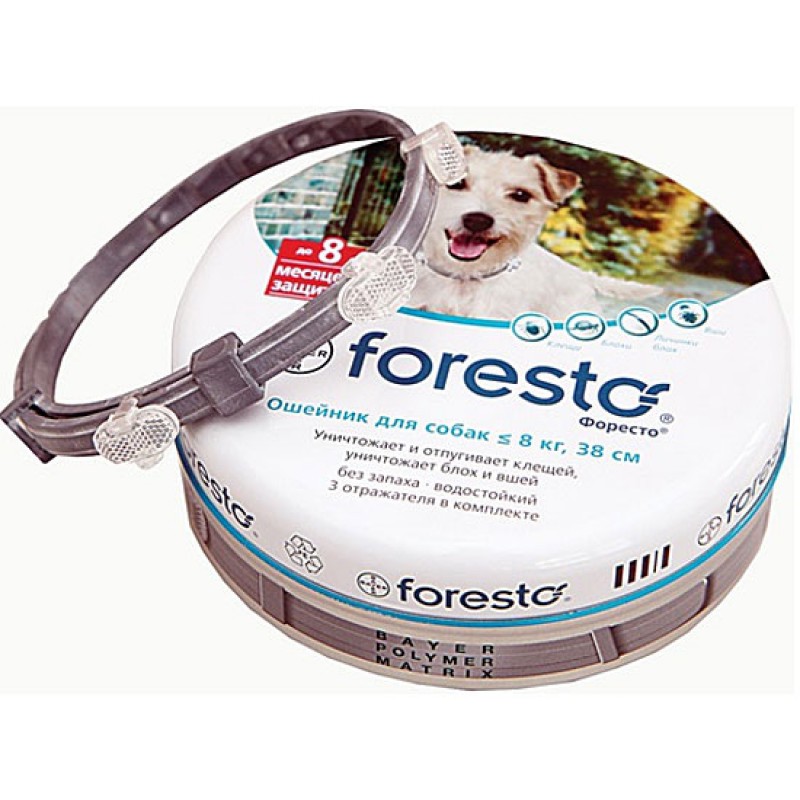
Protects against ticks, fleas, lice and other parasites for up to 8 months
Drops on the withers
These insecticidal acaricidal products have non-systemic action. Apply topically to the withers or areas inaccessible to licking. The average duration of protection is one month. They are moderately toxic and odorless. Avoid contact with small children for two days after treatment. Use on nursing, weakened, or allergic animals as recommended by a veterinarian. Follow the instructions for handling chemicals.
Important! For the product to be effective, a fatty film must form on the skin, ensuring even distribution of the active ingredient across the animal's skin. To achieve this, do not wash the dog for 2 days before and 2 days after treatment.
Popular insecticidal acaricidal drops for ticks (gallery)
-
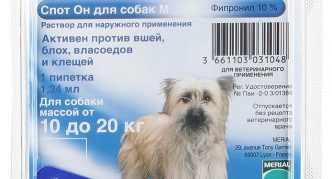
- Apply to the withers, the treatment can be repeated no earlier than after a month
-
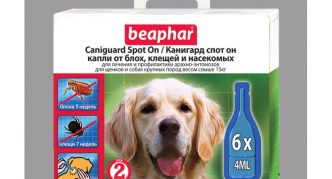
- Will protect your pet for 2 weeks
-
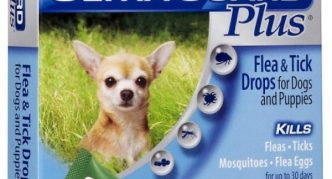
- Reliable protection for a month
-
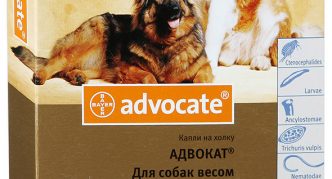
- Effective against fleas, ticks and helminths
-
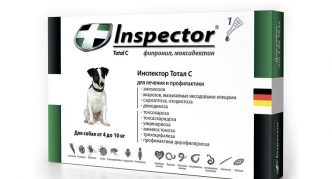
- Broad-spectrum drops with month-long protection against ticks
-

- Insectoacaricidal drops for the withers provide protection for the dog for a month
Safety rules when working with chemicals
When working with chemicals, it is necessary to follow certain rules to avoid possible poisoning.
- use gloves while working;
- do not eat, drink or smoke;
- strictly follow the instructions for use and the required dosage;
- Do not store an opened package (bottle) if not all of the product has been used;
- used vials, pipettes, syringes should be hermetically sealed in a plastic bag and disposed of;
- After treatment, wash your face and hands with warm water and soap.
Spray
Sprays can be insecticidal or repellent. Their effectiveness typically lasts no more than 1 month. Some brands recommend repeat treatment after a week. Repellent sprays are non-toxic and have no restrictions on use. Insecticidal sprays are low-toxic, but some guidelines must be followed during treatment: treat the dog outdoors, apply the product to the coat against its growth, and prevent licking until it dries completely. Can be used on puppies over 8 weeks old. It has a characteristic odor and requires regular treatment during the season.

Insect protection will last for 2 weeks
Shampoo
If your dog is allergic, weakened by an illness, or a small puppy and drops, collars, or sprays aren't available, flea and tick shampoos can help. They contain low levels of insecticidal acaricide, but they work immediately upon application. While bathing can remove parasites, the next time you take your pet for a walk, they can easily pick up fresh ones. These shampoos contain essential oils that repel unwanted insects, but their protection is weak.
Tick repellent overalls
An additional measure to protect your pet from ticks is an anti-tick suit. Simply putting your dog in a suit is not enough to prevent an attack. These special suits are equipped with trapping folds that hinder tick movement and are impregnated with an acaricidal agent that kills the tick on contact. These folds are located on the paws, abdomen, and neck. The bottoms of the pants, the neck opening, and the tail opening are equipped with thick elastic bands, making it difficult for ticks to crawl under the suit. These suits are usually made of cotton (sometimes with synthetic fibers), preferably in light colors. Keep in mind that in the summer, dogs can get too hot and suffer heatstroke. However, for those planning a hunt or mushroom picking trip, this accessory can be useful.

Thanks to its special design, it protects the dog from ticks.
Popular means of protection (table)
The table lists virtually all protective products available at any veterinary pharmacy. Detailed specifications, possible side effects, and instructions for use will help you make the right choice.
| Release form | Name | Manufacturer | Description | Duration of protection against ticks |
| Chewable tablet | Bravecto /Braveсto | MSD Animal Health (Austria) | A systemic insecticide and acaricide. The active ingredient is fluralaner. It is effective against fleas and ticks. It has received positive reviews for the treatment of demodicosis. Upon entering the gastrointestinal tract, it is rapidly absorbed and reaches the bloodstream. It causes paralysis and death of parasites. It begins to work 4 hours after administration. The effectiveness of one tablet is 3 months. It is available in 5 dosages (depending on the dog's weight). It is low in toxicity when used as directed. There are restrictions: do not administer to animals under 8 weeks of age or weighing less than 2 kg. It has a meaty flavor, which animals enjoy as a treat. | 3 months |
| Frontline Nexgard / Frontline Nexgard | Merrill (France) | A systemic insecticide and acaricide. The active ingredient is afoxolaner. It is active against 8 species of mites and 2 species of fleas. It can be used to treat demodicosis. It acts through the bloodstream. Insects die upon biting. It begins to act on fleas within 30 minutes of administration. Fleas are killed within 6 hours, and ticks within 48 hours. The product's effectiveness lasts for 4 weeks. It is available in 4 dosages for dogs of different weights. It is low in toxicity at the recommended dosages. There are restrictions: do not administer to animals under 8 weeks of age or weighing less than 2 kg. It has a beef flavor, which animals enjoy as a treat. | 1 month | |
| Drops on the withers | Advantix | Bayer (Germany) | A non-systemic insecticide and acaricide (not absorbed into the feces). The active ingredient is permethrin. It is effective against ticks, fleas, mosquitoes, and other parasitic insects. It accumulates in the subcutaneous fat layer and acts upon contact with the skin. The tick often falls before it can bite or dies upon biting. It is low in toxicity and safe for pregnant and lactating bitches. It lasts up to 4 weeks. | 1 month |
| Frontline Combo | Merrill (France) | A non-systemic insecticide and acaricide. The active ingredients are fipronil and S-methoprene. It is effective against fleas and ticks. The product accumulates in the subcutaneous fat and is evenly distributed throughout the body. Upon contact with the skin, insects are damaged by nerve damage and die. Fleas die within 24 hours, and ticks within 48 hours after treatment. It is low in toxicity. Protection against ticks lasts for 4 weeks, and against fleas for up to 12 weeks. Safe for pregnant and lactating bitches. | 1 month | |
| Hartz | Hartz Ultra Guard (USA) | A non-systemic insecticide and acaricide. The active ingredient is phenothrin. The product accumulates in the subcutaneous fat layer. It is active against fleas, ticks, and mosquitoes. It takes effect 24 hours after application. Available in different dosages (based on the dog's weight). Protection lasts for 30 days. | 1 month | |
| Canina / Canina Petvital Novermin Spot-on | Canina pharma Gmb (Germany) | This insecticide is a non-systemic repellent (it doesn't enter the bloodstream). It accumulates in the upper layers of the skin and spreads throughout the body. It is effective against ticks, fleas, and other insects. It repels, dehydrates, and suffocates the parasite. It is low-toxic and does not cause allergic reactions. Safe for children and young animals. Repeat treatment weekly. | 1 week | |
| Beaphar Flea Drops | Beaphar BV (Netherlands) | A non-systemic insecticide and acaricide. Effective against fleas, ticks, lice, and other insects. The active ingredient is diazinon. It is low-toxic at the recommended dosage. Provides protection against ticks for 2 weeks and fleas for 3. | 2 weeks | |
| Leopard | Agrovetzashita (Russia) | A non-systemic insecticide and acaricide. It is effective against ticks, fleas, lice, and other insects. It is effective against sarcoptic mange and ear mites (otodectosis). The active ingredients are fipronil, diflubenzuron, and dicarboximide. It spreads over the skin and accumulates in the sebaceous glands. It causes paralysis and death of insects. Available in various dosages. It is low in toxicity. It has some restrictions: do not administer to animals under 8 weeks of age or weighing less than 2 kg. The product's effect lasts 1–2 months. Repeat treatment no more than once a month. | 1 month | |
| Inspector | JSC NPF Ecoprom (Russia) | An insecticidal acaricidal and anthelmintic drug. The active ingredients are fipronil and moxidectin. It is effective against various types of ticks, fleas, lice, intestinal nematodes, heartworms, and others. It is effective against otodectosis, sarcoptic mange, and demodicosis. Available in various dosages (depending on the dog's weight). Treatment is administered once every 4-6 weeks during the season. It is moderately toxic. When administered as directed, it does not cause allergic reactions or side effects. There are restrictions: do not administer to animals under 8 weeks of age or weighing less than 2 kg. Avoid contact with children for the first 2-3 days after treatment. | 1 month | |
| Celandine | JSC NPF Ecoprom (Russia) | An insectoacaricidal antiparasitic agent with non-systemic action. Active ingredients: fipronil and permethrin. Effective against ear mites and sarcoptic mange. Active against ticks, fleas, lice, and other insects. Protection against fleas lasts for 3 months, and against ticks for 1 month. Low toxicity. Can be used on dogs weighing over 2 kg and older, starting from 2 months of age. Keep children away from the product for 48 hours after treatment. | 1 month | |
| Collar | Kiltix | Bayer (Germany) | The insectoacaricide is effective against fleas, lice, chewing lice and ticks. The active ingredient is propoxur, a compound known as flumethrin. Can be used on dogs over 3 months of age. It repels insects and causes paralysis and death when parasites come into contact with the dog's fur. Provides protection for up to 6 months (with continuous use). | 6 months |
| Bolfo / Bolfo | Bayer (Germany) | The insectoacaricide is effective against fleas, lice, chewing lice and ticks. The active ingredient is propoxur. Suitable for dogs over 3 months of age. It repels insects and causes paralysis and death upon contact with fur. It provides protection against fleas for up to 4 months and against ticks for up to 2.5 months (with continuous use). | 2.5 months | |
| Foresto® | Bayer (Germany) | The insectoacaricide is effective against fleas, lice, chewing lice and ticks. The active ingredients are imidacloprid and flumethrin. Can be used on puppies over 7 weeks old. It repels insects and causes paralysis and death when parasites come into contact with the fur. Provides protection for up to 8 months (with continuous use). | 8 months | |
| Hartz | Hartz Ultra Guard (USA) | Insectoacaricide acts on fleas and ticks. The active ingredient is tetrachlorvinphos. Use on puppies over 6 weeks old. It repels insects and causes paralysis and death upon contact with fur. Provides protection for up to 7 months (with continuous use). | 7 months | |
| Beaphar Ungezieferband | Beaphar BV (Netherlands) | A contact insecticide. The active ingredient is dimpilate (diazinon). Effective against fleas, lice, chewing lice, and ticks. Toxicity class: moderately hazardous. Use on dogs over 6 months of age. Protection against ticks will last for 2 months, against fleas – 5 months. | 2 months | |
| Rolf Club | JSC NPF Ecoprom (Russia) | A non-systemic insecticide and acaricide. Provides protection against fleas for 4 months and ticks for 3 months. The active ingredients are fipronil and permethrin. Insects die upon contact with the animal's skin. The product is non-toxic to animals and odorless. It is not recommended for use with other acaricides. Can be used on dogs 2 months of age and older. | 3 months | |
| Leopard | Agrovetzashita (Russia) | Insecticide and acaricidal collar. Effective against fleas, lice, and ticks. Active ingredient: fipronil. Contact with animal skin and fur causes paralysis and death of parasites. It has a distinctive odor and may cause allergies in pets. Protection against ticks lasts for 4 months, and against fleas and lice lasts for 5 months. | 4 months | |
| Celandine | JSC NPF Ecoprom (Russia) | This non-systemic, contact insecticidal collar is effective against fleas, lice, and ticks. The active ingredient is diazinon. It accumulates in the subcutaneous tissue. Upon contact with the animal's skin and fur, it causes paralysis and death of the parasites. Available for different periods of protection: 1, 2, and 4 months. It begins working actively within 2 days of application. It is not recommended for use if other acaricidal agents have been used. Suitable for dogs over 8 weeks of age. In rare cases, it may cause allergic reactions (lacrimation, itching, salivation). | 1 – 4 months | |
| Spray | Leopard | Agrovetzashita (Russia) | A non-systemic insecticidal acaricidal spray against fleas, lice, chewing lice, ixodid ticks, and sarcoptic mites. It is not absorbed into the bloodstream, but accumulates in the epidermis, hair follicles, and sebaceous glands, affecting parasites upon contact. Provides 2-week protection against ticks and 4-week protection against fleas. The active ingredient is fipronil. It is recommended to apply the spray outdoors. Do not allow the dog to lick the product until its fur is completely dry. It has a characteristic odor. It is low-toxic when used correctly. | 2 weeks |
| RolfClub | JSC NPF Ecoprom (Russia) | An insecticidal acaricidal spray based on a unique two-component formula (fipronil and pyriproxyfen). Protects pets from ticks, fleas, lice, and lice. Can be used during pregnancy and lactation. Provides protection against ticks for 1 month. Provides protection against fleas for 3 months. Treatment should be carried out outdoors. Do not allow the dog to lick the product until the coat is completely dry. It has a characteristic odor and is low in toxicity. | 1 month | |
| Beaphar | Beaphar BV (Netherlands) | Repels insects. The active ingredients are a blend of natural oils (needle oil and lavender). They repel fleas, ticks, and mosquitoes. Needle oil has antibiotic, antifungal, and antiviral properties, improves the appearance of the coat, reduces itching from insect bites, and eliminates unpleasant odor. Completely safe. Can be used on puppies from 12 weeks of age, as well as on pregnant and nursing animals. | 1 month | |
| Hartz | Hartz Ultra Guard (USA) | Insectoacaricide acts on fleas and ticks. The active ingredient is tetrachlorvinphos. Kills and repels adult insects. Effects begin 5 minutes after application. Use on puppies over 6 weeks old. It is recommended to apply the product outdoors. Do not allow the dog to lick the product until its coat is completely dry. It has a characteristic odor. Low toxicity when used correctly. | 1 week | |
| Frontline / Frontline | Merrill (France) | This insectoacaricide is effective against fleas and ticks. The active ingredient is fipronil. It is used to prevent flea allergy dermatitis. Do not lick the product until the fur is completely dry. Swimming in water is not recommended for 2 days after treatment. It is low toxic. Can be used during pregnancy and lactation. Repeat treatment no sooner than one month later. | 1 month | |
| Chitstotel | JSC NPF Ecoprom (Russia) | A non-systemic insecticide and acaricide. Active against fleas and ticks; active ingredient: permethrin. Suitable for use by dogs over 2 months of age. Children should be kept away from the animal for the first 12 hours after treatment. Treatment outdoors is recommended. It has a distinctive odor and is low in toxicity. Repeat treatment every 7-10 days throughout the spring and summer season. | 1 week |
Reviews
Reviews from dog owners using various protective products can help you decide which to treat your pet with. Sometimes it makes sense to use several products in combination, unless prohibited by the manufacturer. You can also purchase an ultrasonic key fob or, when going into the woods, treat your dog's paws with a spray. Each owner chooses the most convenient, practical, and reliable option based on their own experience. For some, price will be a priority, for others, ease of use. In any case, the choice is yours. The main thing is to provide your pet with maximum protection from tick bites.
We used this Pettra keychain about seven years ago. It's quite expensive for a disposable one. We didn't catch a single tick that season. That's a plus. BUT! Several times after walks, we spotted these creatures on my fur. It's hard to spot a brown tick on my brown Labradoodle, but a subtle play of light and there it is, alive and well. As the salespeople explained to me, the tick, when exposed to ultrasound, becomes disoriented and "forgets" its purpose. Unfortunately, I consider this method unacceptable, because the dog might drag the dazed tick into the house, where it would recover, leaving anyone wondering who would become its victim.
We have a small dog, a Yorkie. We're afraid to put tick drops on his withers. They say if he licks them, he could get poisoned. So we always put a collar on him. And last year we decided to try a keychain as well. It turned out to be a great thing. If we found ticks, they were just sitting on his fur, not biting into his skin. They probably didn't have the strength. So, not a single one bit him all season. And we have plenty of ticks at our dacha.
Review: OSSO Fashion Anti-Mite Dust Cover - Recommended
Pros: Light-colored fabric allows you to see crawling ticks, and sun protection. No need to spray the dog's fur; you can simply spray the jumpsuit itself. Dries quickly.
Disadvantages: does not provide 100% protection, can get caught on a branch and break.
Dog owners try all sorts of remedies to protect their pets from ticks. Withers drops, sprays, collars, tablets, and sometimes all three, just to be sure. But no single remedy is 100% tick-proof. My dog is 11 years old. He has some stomach and liver issues, and unfortunately, age has its own set of surprises. I stumbled upon this jumpsuit by chance. I bought it. And on my very first walk, a tick was removed from the jumpsuit. It's impossible to miss on the off-white material.
The idea behind the suit is to have a fold of material along the body, on the paws, and around the neck where tick spray is applied. Once a tick gets caught in this fold, it can't escape. I didn't wait to see where the tick would go; I took it off my dog. The fabric is fairly thick cotton. It shouldn't be too hot in the heat, but I don't take my dog for long walks in 30-degree weather. The dog felt comfortable, running, running, and jumping without any problems. Finally, I got to exercise in peace, and the dog got to run free.
After leaving the grove, I inspected the overalls—thank God, I didn't find anything. Of course, I realize that even the overalls won't protect me from ticks, but if you keep a close eye on the dog, you'll definitely spot them crawling. The overalls have a zipper down the back, which seems pretty secure. Elastic bands are sewn onto the chest and under the belly, so the overalls don't hang loose. How does the dog go to the bathroom? I have a female dog, and the overalls just reach the loop at the belly. I was worried about all the urine getting on the fabric—it's fine, just a little splattered on my pants.
I don't know about male dogs, I haven't seen one, but I'm sure there's a hole there. I definitely recommend a jumpsuit. You can also find it under the name "anti-mite duster." P.S. My dog got a lot of mud on my jumpsuit—I barely got it out. I had to soak it in bleach. But then I aired it out. Iron it after washing, otherwise it gets really wrinkled and looks unsightly.
MSD Bravecto Flea and Tick Tablet for Dogs - A Good Alternative to Drops.
Advantages: Easy to give, long-lasting effect.
Disadvantages: None found yet.
My dog contracted piroplasmosis during her first summer. She was treated with drops, but a tick still bit her. We live outside the city, so we had to stop walking in the woods and limit ourselves to our yard, which is certainly not ideal. I bought a Bolfo collar and Frontline drops—these are products that have been tested on cats and haven't brought in ticks. I check them after every walk, and I'm constantly on guard during the walks. The breeder who sold us our puppy suggested trying Bravecto.
Since she treats dogs like children and wouldn't give her dogs a new medication without first studying it and talking to veterinarians, I agreed almost without hesitation. Of course, no one denies the negative effects of this medication on the liver, but piroplasmosis has much worse consequences, so of two evils... you know what I mean. That was a year ago. Last year (2015), we didn't have piroplasmosis, even though there were a lot of ticks. This year, we also gave her a pill in the spring (in April, when the ticks were out in droves), and we're planning to give her another one in August. Our dog, who weighs 35 kg, was given it both separately and before meals. She didn't notice any side effects.
Inspector Total Tick Drops for Dogs – Keeps Your Dog Safe for a Whole Month
Pros: The dog is safe for a whole month
Disadvantages: None
As soon as the snow melts outside, you need to protect your dog from ticks. Especially since my dog is white, and ticks are known to cling to white things. We've probably tried everything. This year, the veterinarian recommended Inspector Total C. I was sold on the fact that it also deworms. I looked it up online and couldn't find any contraindications. The instructions are long and daunting. This product is prescribed for both dogs and cats. There are so many different diseases listed that I don't even remember them all. I bought it as a tick repellent. It's a small sealed pipette with a clear solution. You cut the tip off the pipette and pour the contents onto the dog's withers. That's it. After applying this solution, my dog feels great. There were no changes in her behavior or health. This solution lasts for one month, just like other preventatives.
Review: Bayer Foresto Flea and Tick Collar - Very Dissatisfied!
Pros: Maybe there are some, but I didn't notice any.
Disadvantages: Obvious
I bought this "miracle collar" a month ago. My coworkers recommended it; they'd been buying it for years. I read about it and decided to get one for my four-month-old husky. I figured, well, since it's so expensive, it must be 100% effective. After every walk, I'd pick 2-3 ticks off my puppy's fur (even though the instructions say Leso also works as a tick repellent).
Two days ago, my little husky became lethargic. I won't go into detail about the symptoms of piraplasmosis—my puppy got sick. When we got to the vet, he removed a tick that had already sucked blood from behind the dog's ear, practically next to the collar! The tick was alive and very mobile. I'm completely disappointed with this collar! All it did was ruin my puppy's health and waste my money!
Review: Bayer Foresto Flea and Tick Collar - Good Tick Protection
Pros: Good protection against fleas and ticks, waterproof, odorless, long lasting
Disadvantages: Price
I really like the Foresto collar and decided to leave a review. When I was looking for a tick repellent for my dog, I learned that some products kill ticks only after they bite, while others repel them. The ticks, when they get into the dog's fur, become inactive under the influence of the product and fall off before they can bite. The Foresto collar was recommended to me at the veterinary clinic, and I bought it right away because it works as a deterrent. No ticks have been found while wearing it; I put it on my dog in early spring and forget about it until fall. Although I've removed ticks from her a couple of times, they were unattached and barely moved. I've tested the collar several times, even after bathing her. She tolerates it well. The only drawback is the high cost, but in my opinion, it's worth it and has been trouble-free all season. I recommend it.
Bayeg Advantix withers drops for dogs against fleas and ticks are an excellent and effective remedy!
Advantages: Kills fleas instantly
Disadvantages: price, reduced efficiency in rainy weather
Today's review is about Advantix drops, an excellent flea and tick repellent for dogs. These drops protect dogs from fleas, ticks, mosquitoes, and midges. I live in a private home, and I simply can't live without a large dog in the yard! Unfortunately, dogs living outdoors constantly have problems with fleas, and in the summer, they can also acquire ticks. Because of this, my loving and caring husband, worried about our pet, scoured the internet, weighed the pros and cons, and finally decided to buy these drops. I should point out right away that they're not cheap, but I just couldn't bear to watch our dog suffer. The veterinary pharmacy didn't have this product, so I had to order it online.
When we received our order, we didn't hesitate to apply it to the dog's withers, as directed. By evening, we saw the full effect: there were no fleas, and any remaining fleas were completely dead. The product itself is designed to last for four weeks; it should be applied to the dog's withers using the dropper tube in dry weather for best results. Having fully confirmed its effectiveness, we now exclusively buy Advantix for our pet.
Tick bites can be very dangerous for our pets and can even be fatal. Timely prevention and vaccination are crucial. Some owners skip vaccinations to avoid putting their pets at risk, not realizing that complex medications can cause far more harm in the event of an infection than a vaccine or topical injections. Vaccinations are a must! Choose reliable and comfortable protection for your friend. Don't skimp on loyal and selflessly loving pets who joyfully greet us after work and take our favorite chair as soon as we get up for a second... May our pets be happy and healthy, delighting us every day with their joyful barks and happily wagging tails.