 There are five basic commands every dog should know: "stay," "sit," "heel," "come," and "lie down." These commands allow you to communicate your wishes to your dog, making communication with them much easier. If you teach your dog these basic commands well, you'll lay the foundation for more advanced training and help build a good relationship with your pet.
Content
List and training of basic commands
How to teach a dog to sit?
Begin training with the "sit" position. Sitting is a form of politeness in dogs. This is a natural movement, which demonstrates a desire to “wait” or a lack of aggression.
 Stand directly in front of your dog. Your energy should be assertive but calm. Get the dog's attention by catching its eye. While saying "(name), sit," hold a treat over its nose.
- To see the treat, the dog will need to lift its head, which will cause its bottom to sit down.
- The goal is to teach the dog that the signal phrase "sit" means it is time to calm down or concentrate on the owner.
- By learning this command, the dog will learn to understand that when it needs something from you, or when you are busy with something, it is better for it to sit and wait.
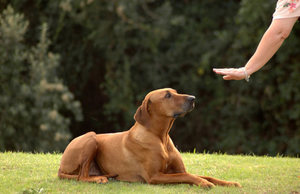 Stand directly in front of your dog. Your energy should be assertive but calm. Get the dog's attention by catching its eye. While saying "(name), sit," hold a treat over its nose.
When the animal sits down, needs to be praisedAs soon as your pet sits, praise him with the phrase "Good job!" and give him a treat. The goal is to create a connection between the action, the treat, and the praise.
Replace treats with signals and hand gestures. Once your pet has learned the verbal command, stop assisting them with this action and introduce the desired signal with a hand gesture. Typically, the "sit" position is indicated by a bent elbow with a straight palm facing up. Before giving the "sit" command, first make a fist, raise your arm, bent at the elbow, and open your palm. palm up.
Repeat until your pet consistently obeys. This will take some time, especially when training a stubborn or adult dog. But don't give in. A healthy relationship requires your pet to be under your leadership. This will be safer for the dog and will make your life together easier.
How to teach the "place" command?
There are certain commands that can literally save a dog's life, and "stay" is one of them. Keeping your pet safe from dangerous situations and other unpleasant situations can be easily accomplished with the "stay" command.
A puppy has an innate instinct to understand the need to stand still if he is frightened, and the mother gives him corresponding strict signalThis is an instinctive behavior, so teaching the "stay" position early on should help you with this command and your puppy's obedience.
Begin training from a sitting position. When your pet sits, stand so the dog is on your left, facing the same direction. This position will become the place where the dog should remain.
Grab your dog's collar and give the command "(name), stay!" You should do this while holding your open palm in front of the dog's face, but without touching it. Your fingertips should be pointing upward, and your palm should be facing the dog. Wait a few seconds. If the dog stays put, praise and reward it.
If your pet tries to get up, say "No!" and repeat the entire process. First, give the command "sit" and then say "place"Continue doing this until the animal starts to sit still, for at least 10 seconds, and then praise it.
Gradually increase the time the dog must remain in place. Once the dog has mastered the command, you can begin increasing the duration of the command along with the distance you move away from the dog. If your pet stands up, return to the original "sit" position and repeat all steps until you can move freely while performing the "stay" exercise.
You also need a phrase that releases the dog from the "place" position, for example, the phrase "come to me" or "okay"This way you will let the animal know when it can move.
How to teach a dog the "lie down" command?
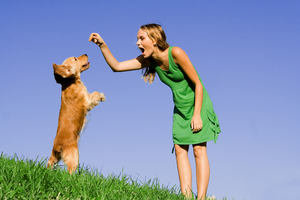 The "lie down" command is usually combined with the "stay" command and is a more forceful command. The "lie down" position forces the animal to complete whatever it was doing before the signal was given, so this command is essential for behavioral control.
Start learning the position from the sitting position. While saying the phrase "(name), down!", hold one hand above the dog's head, with your palm facing the floor. Holding a treat in your other hand, slowly lower that hand toward the floor, keeping it relatively level. close to the animal's body.
When both elbows are on the floor, say "Good!" and give the treat. This will create a connection between the completed action and receiving the treat.
Repeat the command sequence several times. Repetition is the key to training and reinforcing exercises. The goal of training is to get your dog to follow commands, regardless of what it's doing at the time, as long as it hears the appropriate signal from you. This way, you can always effectively and quickly stop your dog's unwanted behavior.
As with training any command, when a dog makes mistakes or does not follow instructions, start all over againPlace the dog back in the sitting position and follow the necessary steps.
How to teach a dog the "come to me" command?
Train your dog to come when called. This is done using the "come" command. As with other basic training, begin with the "sit" position.
Gently pull the animal toward you, saying the command, "(name), come!" You should use a more encouraging tone of voice than the other commands, as you want to make the animal want to come to you. Supplement the command with a gesture to show the dog what you want.
Lure your dog to you with a treatAfter showing your dog what you want and giving the verbal command, place the treat at your feet and point to it. After a certain amount of time, simply pointing at your feet will be sufficient.
Motivate your pet with praise. When your pet approaches, praise it with the phrase "Good!" Pet it, showing satisfaction with what it just did for you.
How to teach a dog the "heel" command?
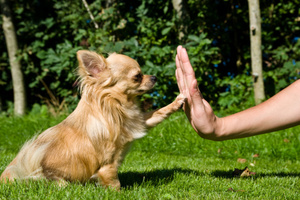 This command is often the most difficult to teach. But many dogs can learn it if you're consistent. Teaching your dog to walk beside you will save your back from strain, your dog's neck and shoulders from the collar, and a sense of pride in both of you (though, for the dog, this isn't important).
The dog may want to be in a natural position and sniff everything around, while tugging you in different directions. You need to show the animal that there are certain times for exploring the environment, and also times when it shouldn't.
Place your dog in a sitting position. Attach the leash to the dog's collar and place it in a sitting position next to your left leg, with both of you facing the same direction. This is the classic position for a dog to sit next to you.
Always place the animal on the left side to avoid confusion.
Give the "heel" signal. Say the phrase "(name), heel!" while stepping forward with your left foot. Your dog will either hurry after you or resist. Either way, gently pull him on the leash and repeat the phrase "heel."
Encourage your dog to stay close to you. If it moves away too much, pat its thigh and say "heel" again. Use the same phrase constantly.
Correct inappropriate behavior. When your dog moves forward, calmly say, "No, (name), heel." If necessary, tug on the leash. When stopping, always stop with your left foot and command, "(name), sit." If your pet tries to move forward again, gently pull it by the leash and force it to sit next to your left leg, commanding "sit."
- If the animal gets a little out of control, stop and sit it down next to you, praise it, and start again. You should always guide the dog in your position, not try to adjust to it. Adjusting to the dog's position will ultimately result in a submissive and trained owner.
- You must train your dog to behave in a way that eliminates the pressure of the leash, except when correcting its position. Otherwise, your dog will constantly tug. Correct with gestures and voice, and use the leash only when the animal doesn't obey.
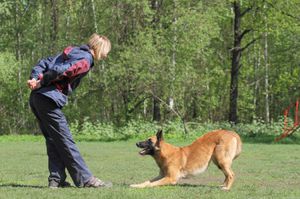 If the animal gets a little out of control, stop and sit it down next to you, praise it, and start again. You should always guide the dog in your position, not try to adjust to it. Adjusting to the dog's position will ultimately result in a submissive and trained owner.
Praise the dogIf she's successfully staying close. You can offer some encouragement when your pet walks near you, but keep your voice low so as not to distract the dog. Once she consistently responds to verbal commands, begin to maintain silence for longer periods and use the command only to correct her.
Train your dog to sit at every stop. When you're ready to stop, do so with your left foot and say the command, "(name), sit." After a few repetitions, you won't need to say the "sit" command anymore. Your dog will learn that stopping with your left foot is the signal to stop and sit.
Practice commands only using sign languageWhen your dog consistently responds to the verbal command "heel," suddenly begin moving and stopping with your left leg, without a gesture or verbal command. Also, while your dog is sitting next to your left leg, occasionally begin moving with your right leg. The dog will attempt to follow you, but in this case, you need to give it the command "stay" and walk around the animal to its original position, with the dog on your left.
Alternate starting with the left leg and simultaneously giving the "heel" command, with starting with the right leg and giving the "stay" command. After a while, you can randomly alternate between right and left legs, reinforcing with the necessary "stay" or "heel" commands. Once you've fully mastered these commands, you can work harmoniously together, no matter where you are.
Recommendations from dog handlers
Experienced dog handlers recommend the following:
- Conduct the first training sessions at home or on a leash outside in a quiet place to avoid distractions. Once your dog has confidently followed commands, conduct the training in other locations so that he learns to obey you regardless of distractions.
- Dogs enjoy rewards and are generally highly motivated by them. For example, the first time your dog sits on its own, give it a belly rub or a treat. Once your dog associates sitting on command with the reward, it's more likely to do so the next time.
- Never make training sessions so difficult that your dog finds them fun. Otherwise, it may no longer want to participate.
- It's best to start training your dog from puppyhood, but adult dogs are also easy to train. However, in this case, it may take a little more time to break the animal of bad habits.
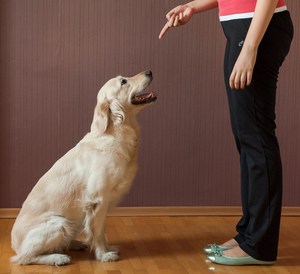 Conduct the first training sessions at home or on a leash outside in a quiet place to avoid distractions. Once your dog has confidently followed commands, conduct the training in other locations so that he learns to obey you regardless of distractions.
Naturally, before training an animal at home, there are many things to consider: gender, age, breed of dogFor example, it's believed that teaching the "Attack" command is much easier with a four-month-old puppy, especially a female one. Teaching a dog commands is quite a labor-intensive process. It's often easier to entrust the task to professionals.