Parrots come in all shapes and sizes, but budgerigars are the most common pet. These small, yet noisy and friendly birds can become not just a friend, but a member of the family. One of the first questions new feathered friend owners ask is: how to tame a parrot? While shy, loud, and brightly colored, these pet birds quickly adapt to a new home and family, they don't readily lend themselves to being handled.
How to train a budgie to be handled if it is afraid
"Tame parrot" isn't just a catchphrase. These pets are quite friendly and considered sociable and outgoing. To tame a budgerigar, you first need to earn its trust and allow it to fully settle into its new surroundings. After all, these birds are quite shy and unsociable.
Gaining access to a colorful friend is unlikely if you frequently touch the cage, much less disturb the parrot. The bird's owner must be patient, consistent, and, crucially, regular. The budgie, in turn, needs to feel safe and connected. A friendly relationship is the key to quick and reliable contact with the bird.
To establish a relationship with a budgie, follow these steps, and taming the bird will not be a problem.
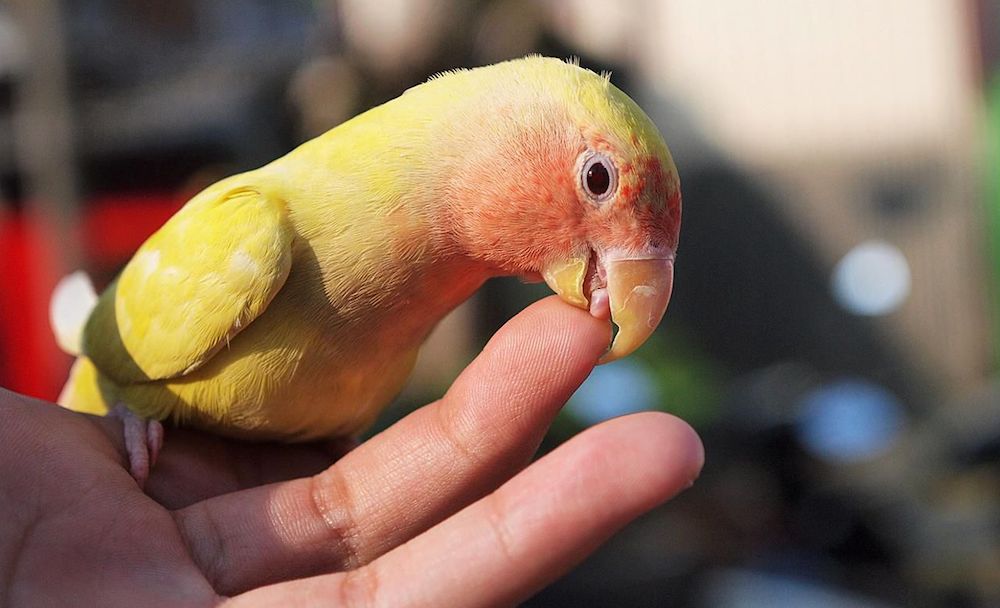
The easiest and most effective way is to patiently wait for your pet to get used to it and try to treat your feathered friend with his favorite treat from your hand.
Read also about diseases of budgerigars.
Step one: trusting a tame parrot
After purchasing and bringing your bird into your home, it's often frightened and stressed. At first, the parrot isn't tame: it's completely unprepared for contact. In this state, the bird will never approach your hands—even if you were promised otherwise when you bought it.
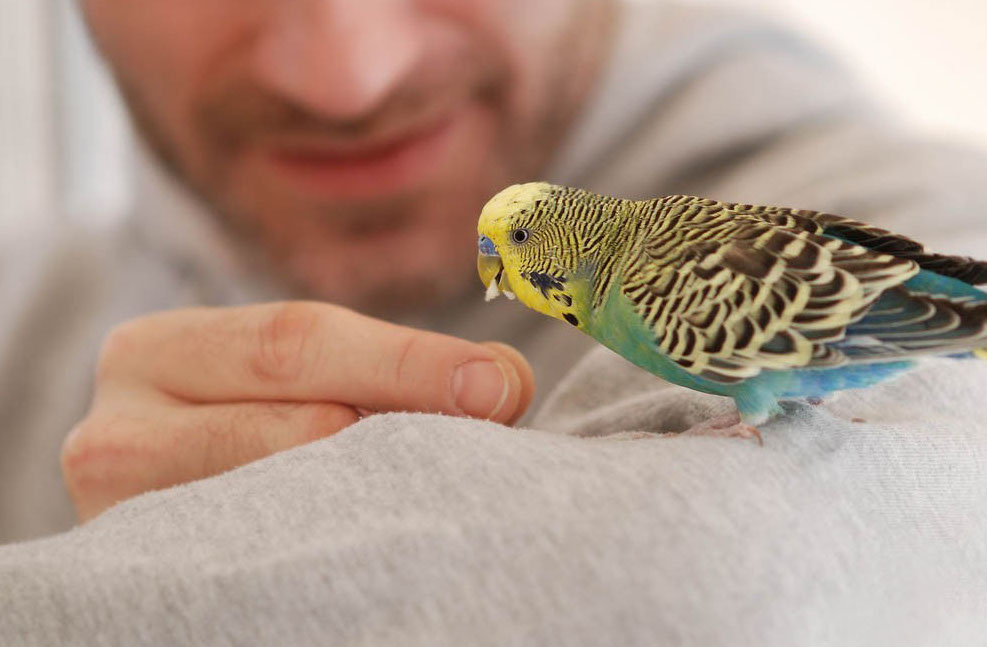
This is how the owner should behave:
- We allow the bird to get used to the environment and interior - we leave the cage in the quietest and calmest place in the apartment.
- Don't scare the bird! Don't make any sudden movements and under no circumstances try to put your hands in the cage or touch the parrot—otherwise, the introduction won't happen.
- We place the cage next to us more often when we are busy with something, and talk to the budgie in a quiet, calm voice.
- We try to offer a treat from our hand - chumiza or a favorite food made from seeds and grains.
- Don't be intrusive! If the bird tries to move away from your hand, becomes fearful, and retreats into a corner, it's best to stop. If the parrot is interested but fearful of your hands, don't insist on contact, but don't remove your hand either.
- Once your bird has settled in, it will become interested not only in its new home, but also in its surroundings, and will begin to chat and become more active.
Now's the time to offer something tasty to your bird right through the cage bars. If it seems interested, you can begin taming it.
Step two - taming the bird
Once your bird feels more confident, gets used to you, and becomes more trusting, the adaptation process has begun. Be sure to consider your bird's mood!
- We lower our hand with food into the cage – this should interest the bird.
- We repeat the attempt to “feed by hand” every day, even several times a day.
- The parrot should feel that you are an equal member of the “flock”, and not perceive you as an enemy and a danger.
- During the taming process, your parrot will attempt to jump onto your finger, just like it would on a branch. Avoid sudden movements to avoid scaring your feathered friend! If your bird agrees to perch on your hand, don't escalate the situation by trying to pick it up, grasp it, or squeeze it in your palm. Always leave it free to move!
- Once your feathered friend has trusted you, perches on your finger, and coos, you're only halfway there. Your parrot needs to get used to this kind of "friendly interaction." Gently stroke its feathers and speak to it tenderly. Eventually, the bird won't need any more food—tame budgies naturally crave companionship.
- Try offering your pet a tasty treat through the cage door. This will not only build trust, but also interest in your relationship and the environment around you.
- We try to bond with the budgie daily. We repeat this step-by-step process several times a day until it becomes completely accustomed.
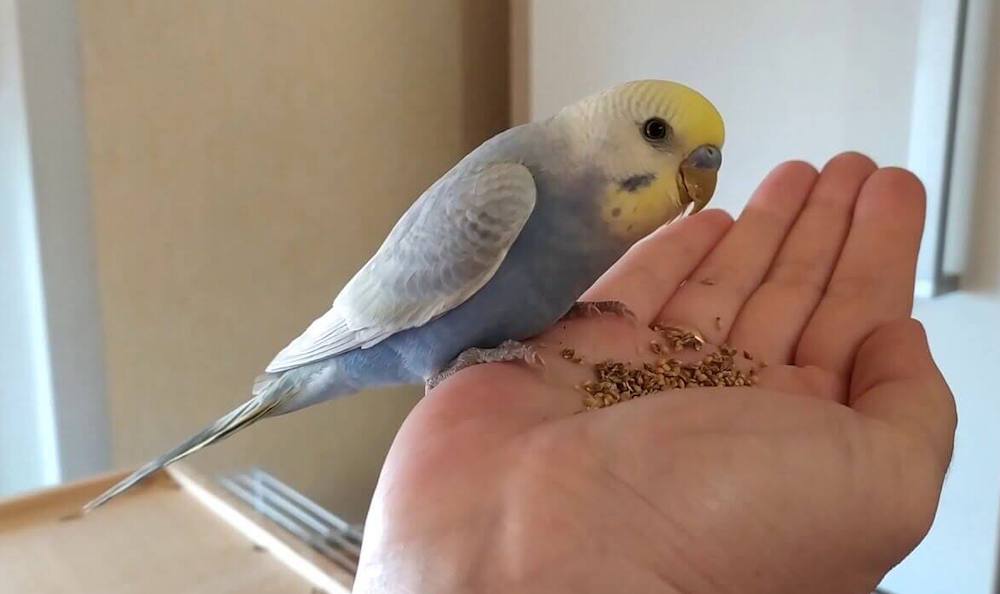
- If you want to pique your bird's interest outside the cage, gradually move away from the cage—one step, then several steps—while pouring some seeds or millet into your palm. Your parrot will certainly become interested. And in the future, it will begin to fly out of the cage with curiosity, landing directly on your hand to explore your palm for a treat.
Once trained, a budgie will happily interact with its owner, peck at food, and coo on your finger. Once the bird feels safe in your hands and you can engage it in something, it becomes clear that parrots aren't just friendly, but sometimes even annoying. A tame bird will sit in your hands for hours!
What not to do
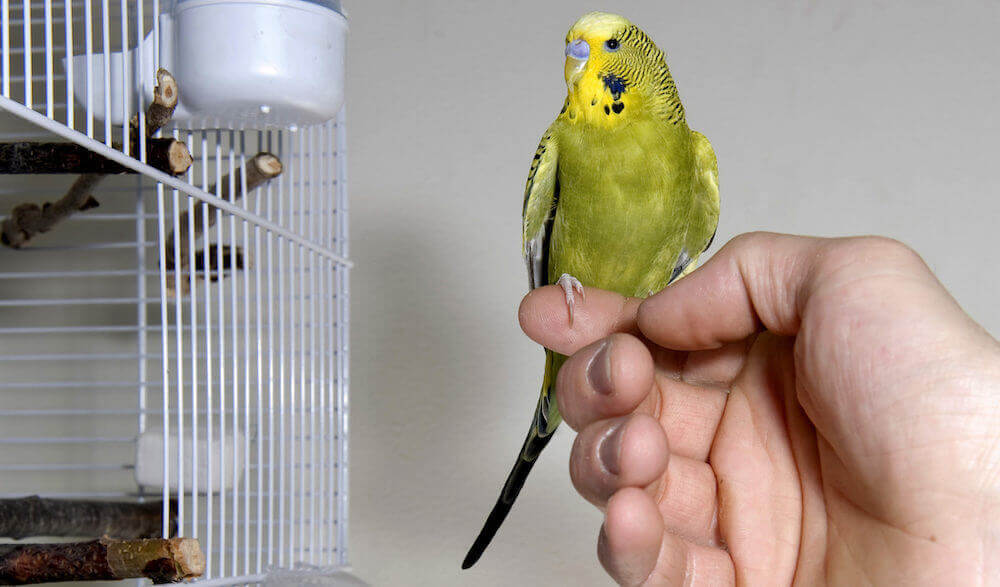
Let's figure out what you shouldn't do if you're planning to tame a parrot:
- First of all, it's not recommended to be pushy—trying to grab a frightened bird by the tail, catching it with your hands, or trying to force it against the cage. Any coercive action will hinder our ability to tame the bird.
- If your parrot pecks your finger, don't show any negative emotions. This will scare your pet away, and it will take a long time to establish contact.
- To prevent your bird from flying away, never clip the wings of a budgie - this can cause injury to the bird.
- If your parrot is frightened by something, stop the process. Resume the process when it's ready to interact.
- Don't allow tame parrots to sit or walk on the floor—it's dangerous to their pet. You could accidentally step on the bird.
Read also about Caring for a pet parrot at home.
Tips and nuances
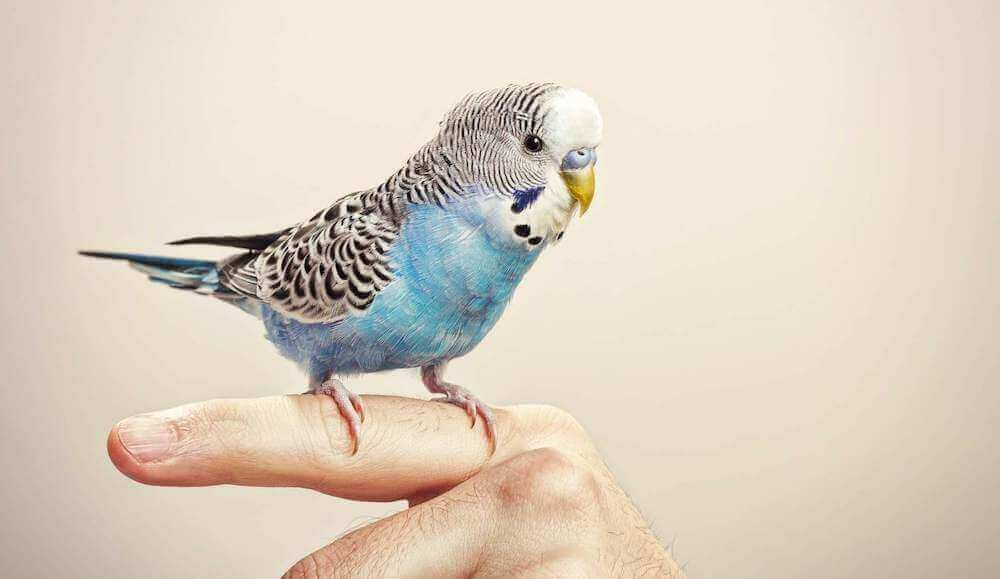
Listen to the experts' advice. Taming your bird will become easier and, most importantly, faster:
- The older the parrot, the more difficult and lengthy the taming process.
- You can start handling your bird as early as two months of age. You'll see for yourself how receptive and aware your feathered friend is.
- Experienced parrot taming gurus recommend removing the bird's feeder from the cage at night. In the morning, you can offer the bird millet directly from your hand. Obviously, this won't inspire confidence in the parrot on the first day, but if the situation repeats, it's sure to try your treat.
- The owner's hands should not have strong odors (tobacco, perfume, spices) - this will scare him off.
- For parrots, sounds play a huge role in habituation - remember this!
- You need to talk to a tame parrot gently, quietly, you can even hum something - this is very attractive to birds.
- Be careful when your bird is outside its cage. Make sure it doesn't get tangled in your hair, fall behind a cabinet, or fly out an open window.
Budgerigars are very sociable creatures. They enjoy spending time outside their cage, perching on your shoulder or head. With patience and perseverance, and with proper training, you'll soon become true friends. A tame parrot is a far cry from the shy and intimidated bird you bought at the pet store. Communicating with a tame and well-behaved bird will be a joy for its owner.
Read also about the chirping of budgerigars.