Regardless of a bird's behavioral characteristics, friendships with pet birds vary. Parrots can display both friendly and aggressive behavior—not only with humans but also with their fellow parrots. This shouldn't be attributed to the bird's dislike or affection. Such behavior is typical in certain situations. Let's find out how to stop a parrot from biting, build trust, and tame your pet once and for all.
Gaining the bird's trust
Budgerigars are quite docile and easily adapt to new owners. Even an aggressive and sometimes timid parrot will eventually become friendly and approachable. After all, earning the trust of these beautiful feathered creatures isn't always that difficult. It's easiest to acquire a truly loyal companion if you adopt a parrot very young. However, there are times when a bird behaves aggressively, unruly, or deliberately tries to peck.
Whether it's a defensive reaction from a feathered friend or an ambitious way to intimidate, no one wants to lose trust and get bitten by their own winged pet.
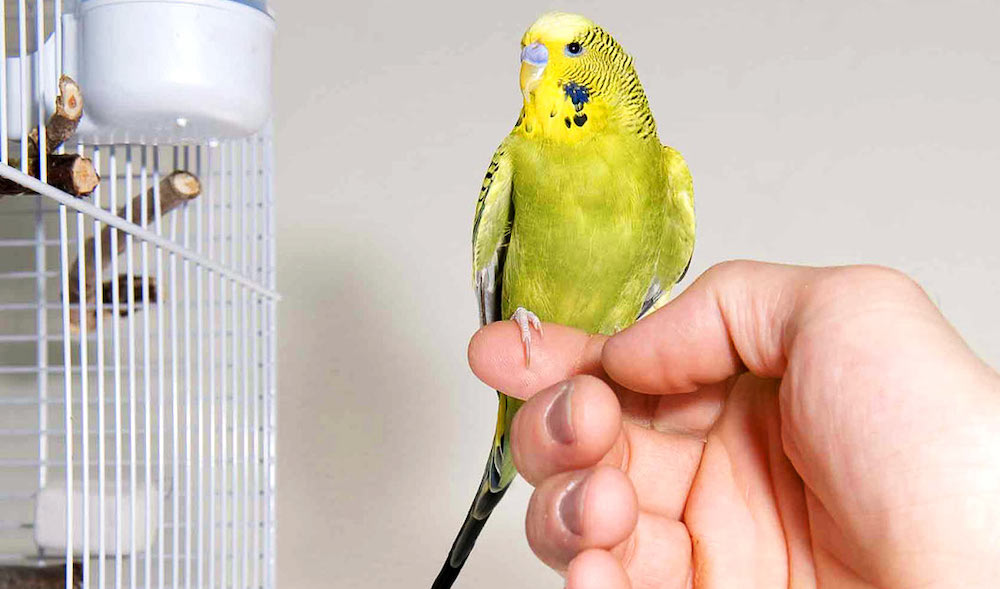
Here's what might be causing this behavior:
- Puberty is one reason why a budgie may exhibit aggression. In this case, it's temporary.
- If a bird feels a lack of attention, an attempt to peck will not only be a way to attract attention, but also a way to assert itself.
- Molting. During this time, the bird experiences stress. Aggressive behavior isn't always justified, but it's a manifestation of anxiety, agitation, and irritability.
A budgie may also behave this way early in the morning if it's woken up at the wrong time, or if feeding is done too late. This is often due to dissatisfaction.
Budgerigars are social birds, and winning their love and affection isn't difficult. But it takes time, patience, and, most importantly, reciprocity.
It is necessary to find out the reason for such behavior and develop an algorithm for behavior in an unpleasant situation.
How to tame a parrot: hand-feeding
Trying to tame a parrot with treats encourages the bird to position itself correctly and teaches it to respond appropriately to your hands and your intrusion into its "personal" space. After all, parrots most often become aggressive if their owners try to do anything inside the birdhouse, touch its food or toys.
Your bird needs to get used to your hands and feel your friendly attitude. Experienced parrot owners often recommend starting with spoon-feeding and then trying to feed it by hand.
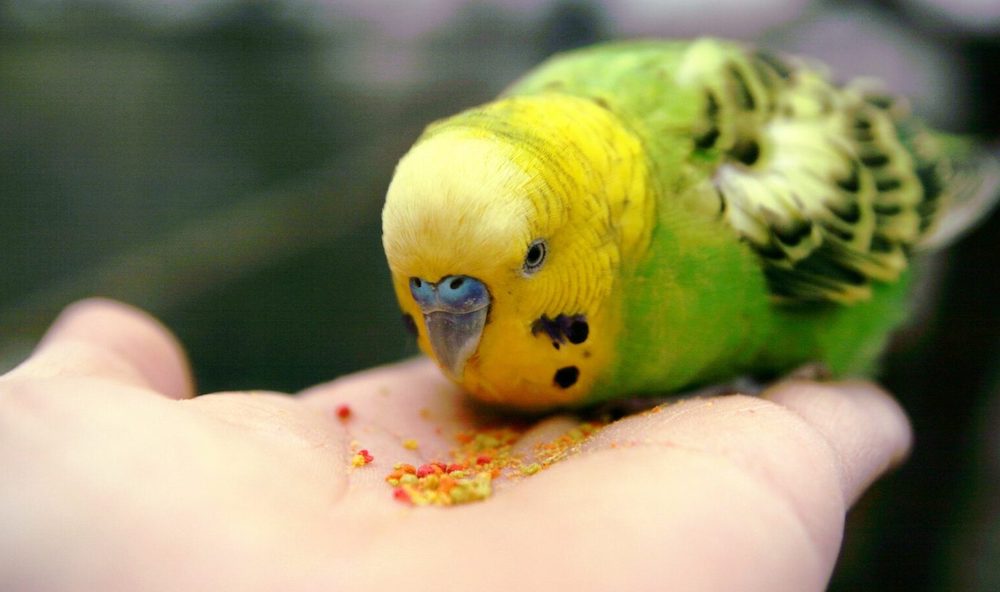
We reward with treats
One common piece of advice from bird experts: always, or at least initially after introducing your parrot, reward it with its favorite treat for not biting you. Even if you've simply tried to change the water or rearrange the toys inside the cage. Millet, seeds, chumiza—any treat your pet loves will evoke a wealth of positive emotions and make it docile.
We teach to sit on a finger
The parrot must learn to react to hands without pain:
- Be calm and do not make any sudden movements when trying to train your parrot to sit on your finger.
- Speak peacefully and quietly.
- Try to give your pet the opportunity to get used to your hands – conduct training sessions daily.
- When trying to bring your finger closer to the bird, lightly stroke the chest and legs of your feathered friend.
It is best to tame your parrot during the day, not in the evening. Don't rush with hand training – take into account the bird’s mood.
We find out what he doesn't like and what makes him bite.
You can't change your pet's personality, but it's quite easy to simplify your relationship with the bird. Whether a parrot bites depends not only on the pet's mood and personality, but also on the situation and circumstances.
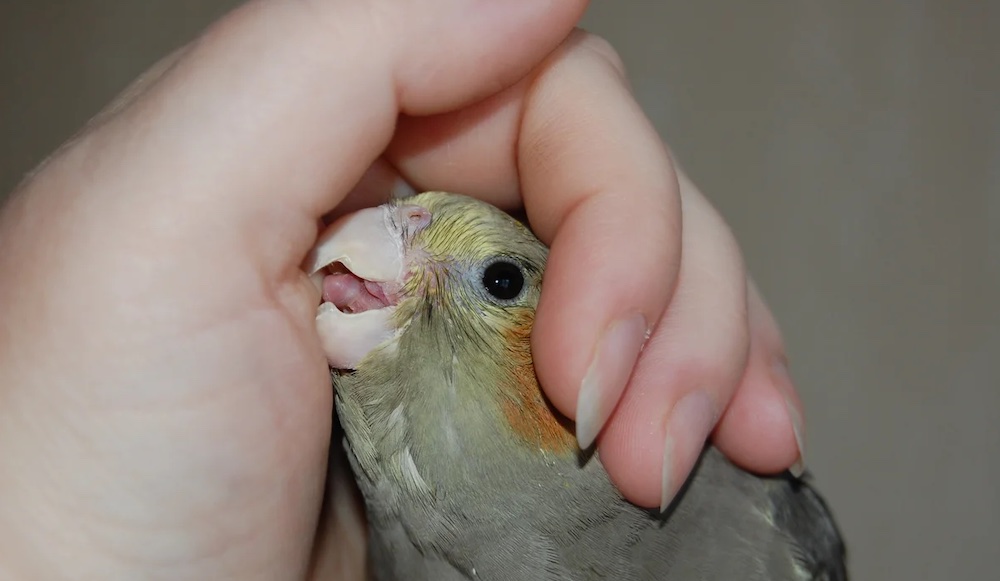
Biting is not always aggression, it is also a way of communication.
- If a parrot bites in its cage, it's a normal defensive reaction; the bird is protecting its territory. You can distract the bird with various wooden toys—then it can bite to its heart's content without causing harm. Wood and high-quality wooden toys are a must for any parrot.
- The bird may behave in a frightening manner and rush into the owner's hands if the owner puts his hand into the cage and tries to take food - this is a defensive reaction.
- Birds can especially often injure their fingers and hands during the breeding season (when laying eggs).
- A bird may be defending itself when hostility has become an acquired trait. For example, if you acquired the parrot as an adult, and its previous owners didn't show it the love and care it deserved (perhaps by swiping at it, throwing things at it, or yelling loudly).
- Young parrots may bite when trying to interest or explore the world around them.
Read also, How to give a parrot medicine in its beak.
How to stop a parrot from biting your fingers: helpful tips
How to teach a parrot to be docile, tame its temperament, and get a friendly friend instead of a bully?
- First of all, experts recommend using a commanding voice to "reprimand" the bird if it bites. Socialization of parrots allows them to respond appropriately and consciously to their owner's tone of voice. This behavior teaches the parrot to respond to commands. Over time, the bird will reward its owner by responding to the word "no"—it won't do anything that would provoke a raised voice or your anger.
- Respect your bird. Don't intrude on its "space" or encroach on its territory unnecessarily. It's perfectly normal for a parrot to show aggression when its owner tries to clean its cage, touch its toys, or remove its food—biting is also a common defensive reaction.
- Give freedom—let the bird fly sometimes. This is the foundation of equal friendships.
Another very important aspect is the bird's quality of life. Proper living conditions, close to natural ones, definitely help avoid such unpleasant situations.
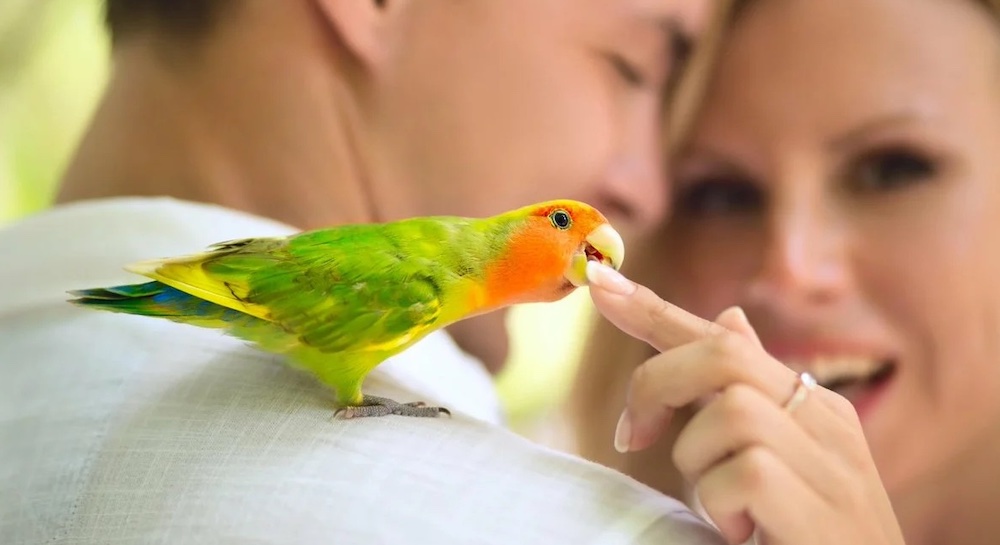
What not to do
Parrots dislike harsh voices, sounds, and screams. Swearing at a bird won't get you anywhere. Nor will it improve the situation with unruly behavior.
If a bird bites your finger:
- Don't swear! You can't show aggression;
- Don't scream! It might scare your pet;
- do not wave your hands in response or drive the bird away;
- Don't try to "punish" your parrot by turning off the light or covering it with a cloth. Your feathered friend won't understand this;
- Don't flick a bird's beak in retaliation for "inappropriate" behavior or wave your finger in front of its head. More often than not, this doesn't change the situation at all, but rather provokes the animal.
- If your parrot is acting up, simply leave it alone for half an hour – it will calm down. A change of scenery and distraction (like placing the cage by the window) also help.
Please note that during puberty, you should not hold or pet the bird, as this will cause an aggressive response, as it would towards a partner.
Remember: a parrot doesn't bite without a reason. It's the owner's job to identify and eliminate the cause of the aggression.
In the future, avoid compromising situations - negativity does not appear on its own, it is the pet's response to an irritant.
Develop a friendly relationship with your feathered friend. Don't cut off or reduce your interaction with your parrot, and don't stop training even if it's pecking and making noise. Love is all-powerful. You'll soon appreciate your bird's affection and its desire to be closer. Patience, persistence, and, of course, a treat will help you build a truly peaceful and friendly relationship. You'll soon be able to wean your parrot off your fingers.
Read also about toys for parrots.