 Along with dogs, cats, and fish, budgies are very popular pets. These colorful and playful birds will make a worthy addition to your home. Learn how to care for them in this article.
Content
General information about budgerigars
These birds are native to Australia, where they are found everywhere except the coast and northeastern forests of the continent. They live in semi-desert and steppe regions, within which they constantly migrate. The only exception is the nesting season. The population size of these parrots in the wild is influenced by climate conditions and food availability. Famine and drought often cause population declines. Agricultural lands and man-made reservoirs provide the birds with a constant source of food and water.
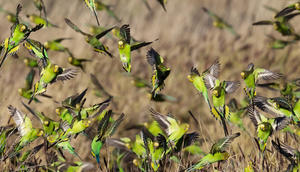
They live in flocks of 20 to several hundred individuals. In natural conditions, budgies feed on seeds. Various plants and, very rarely, insects. These parrots nest during the Australian rainy season. They build nests in tree cavities, primarily eucalyptus trees. Sometimes, they may use stumps and fallen tree trunks for this purpose.
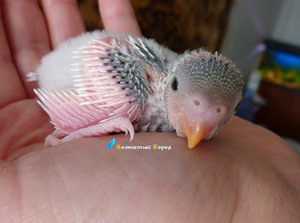
Into the nest the female lays 5 to 12 oval white eggs, which the female incubates for 16 to 21 days. During this time, the male becomes the breadwinner. The eggs hatch into completely naked and blind young, who gain their sight by the tenth day of life. A month later, having fledged, they begin to leave the nest.
How to choose a parrot?
To the choice of a bird we need to approach this quite seriouslyThis is what determines how long your parrot will delight you with its company and how healthy it will be.
When purchasing a feathered friend, you should consider:
- The animal's age. Ideally, a chick should be 5-6 weeks old, as it adapts more quickly to its new home.
- Appearance. A healthy parrot's feathers are clean, smooth, and shiny. The feet should have straight, flawless claws, and the beak should be dry and clean.
- Activity within the cage. A healthy chick is very energetic and active. If it sits huddled in a corner with its beak buried in its feathers, its health is questionable.
Male or female?
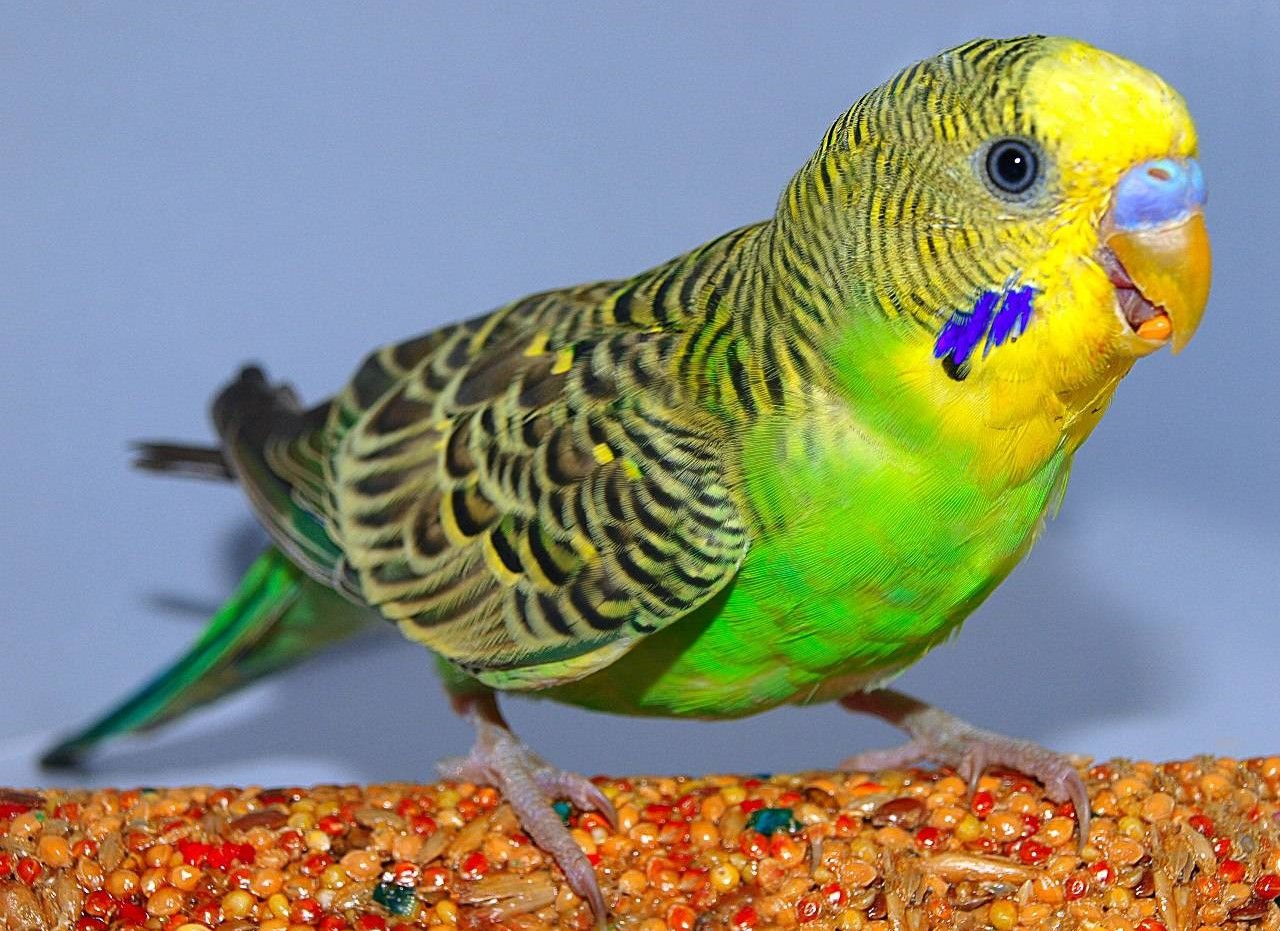
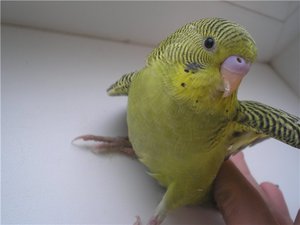
 Determining the sex of budgerigars does not present any particular difficulties. Cere (area above the beak) In males, the color is blue, while in females, it is gray or light brown. This characteristic makes it possible to almost infallibly distinguish between the sexes of these birds.
The younger the individual, the paler its cere and plumage.
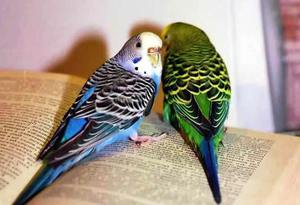
You should know that these animals become very attached to their ownersSo, if you don't have enough time to spend with your pet, consider getting a pair. Some people keep more than one budgie at a time.
Maintenance and care
Selecting a cell
When choosing a cage, you should take into account that it the area should allow the bird to fly from place to placeA budgie will feel comfortable in a house that's at least 60 cm (H) by 80 cm (W). However, it shouldn't be overcrowded with toys or other equipment. The house should be easy to clean, as this will need to be done quite often. Keeping budgies outside of a cage is strictly not recommended!
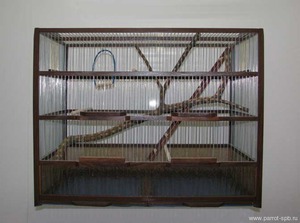 It is essential to put it in a cage install a bathing container, which is appropriate for the bird's size. The parrot should have easy access to it. It's best to choose a watering hole that can be attached to the cage bars and filled with water from the outside.
As for the perches, preference is given to natural wood, except for eucalyptus, rose, and oak. They must be securely fastened to prevent injury.
The parrot will be happy with special toys. (bells, ladders, balls), but to avoid excessive cluttering of the free space of the cage, there should be no more than two or three of them.
Light mode
It is the key to the health and comfort of birds. Optimal daylight hoursA parrot needs 12 hours of light in the summer and 14 hours in the winter. Sunbathing is beneficial in the summer, and in the winter, lighting should be as close to the solar spectrum as possible. Darkness is essential for healthy sleep, preventing stress reactions, and stimulating the immune system. Covering the cage with a lightweight cloth at night will help your parrot get used to falling asleep immediately after dark.
Air humidity
This is also an important requirement and should be between 60–70%. Dry air is not good for your pet's health. Therefore, humidifiers should be used during the heating season.
The temperature regime must be monitored Quite strict. The optimal room temperature for a budgie should be between 23–25 degrees Celsius. During hot weather, provide access to fresh water to prevent overheating. A basking lamp is recommended for keeping the budgie warm during cold weather. Heaters should be avoided, as they dry out the air too much.
To ensure your budgie feels comfortable, it's essential to provide proper care for its habitat. Clean the cage morning and evening. Avoid using synthetic detergents. Simply rinse it under running water, then scald it with boiling water and wipe it dry with a clean cloth. Periodically, the budgie's habitat can be wiped with a chamomile or wormwood infusion.
The feeder and waterer should also be washed daily. The feeder should be open, as a closed feeder can trap a parrot. If severely stressed, the animal could die.
What does a budgerigar eat?
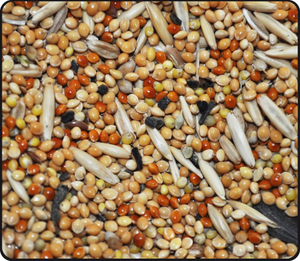 Feeding your parrot is also an important part of its care. Its diet should be varied and balanced. However, millet should be its main component, as these birds are seed-eaters. To ensure that your budgie doesn't have any problems with its gastrointestinal tract, it should be fed grain in a specific percentage: 50% yellow, 25% white, and 15% red millet. It should also contain 10% hulled oats. It's best to buy specialized grain mixes for budgies at pet stores.
- Green;
- Vegetables;
- Berries and fruits;
- Minerals.
To enrich the body with vitamin E, you should periodically give your pet sprouted grain.
Green: During the warmer months, your parrot should be fed lettuce, dandelion, plantain, and clover. Radish and carrot tops are also acceptable. Before adding greens to the cage, rinse them thoroughly with warm water. In winter, sprouted oats, which you can grow yourself in a box on the windowsill, are a good choice for green food.
Care must be taken to ensure that the parrot does not eat the leaves and flowers of indoor plants, as they may be toxic to it.
Vegetables Budgies should eat vegetables year-round. They are a source of beneficial nutrients and rich in vitamins. They love carrots, which are rich in carotene. They can also be given cucumbers and tomatoes, bell peppers, fresh zucchini, beets, and radishes. They also eat various types of cabbage: cauliflower, cabbage, and broccoli. Vegetables should be scalded with boiling water before feeding.
Berries and fruitsThe food you feed your parrot should be fresh and clean. Suitable fruits include apples, grapes, bananas, peaches, raspberries, strawberries, and cherries. In the summer, you can treat your pet to melon or watermelon. It's best to avoid feeding exotic fruits.
From time to time, you can give your pet boiled porridge: wheat, barley, buckwheat and others.
MineralsTo replenish minerals and calcium, budgies should be given chalk and cuttlefish (a derivative of cuttlefish skeleton), which can be purchased at any pet store.
There should always be clean drinking water in the drinking bowl so that your pet can drink whenever he wants.
Reproduction and breeding of budgerigars
If you take proper care of your pets, they will easily delight you with their offspring.
These birds reach sexual maturity at four months.m, but they don't become ready to breed until they're one year old. It's best to let the pet choose its own mating partner.
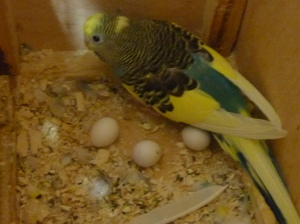 The room temperature should be +20–24 degreesA special plywood house with a hinged roof should be placed in the cage where the birds are intended to mate and breed. This is necessary to keep an eye on everything that happens inside. Medium-sized sawdust should be placed on the bottom. The pair should be provided with sufficient food and water.
Soon After mutual courtship, the female lays eggs The mother hen lays two-day-old eggs (there can be up to eight of them in total) and begins incubating them for two to three weeks. During this time, the male regurgitates food and feeds her. The hatched chicks are completely hairless and blind. After they hatch, you should periodically carefully peer into the nest. It's best if the young mother doesn't notice your actions. She feeds the chicks with a secretion secreted from special glands.
After 35–40 days, the fledged chicks begin to leave the nest box. Although the parents continue to feed them, seed should be sprinkled on the floor of the cage for them. It's best to place the fledglings in a separate cage to prevent them from being accidentally injured by the adults.
What illnesses do parrots get?
In the wild, budgies are extremely rarely susceptible to illness. However, in captivity, these birds may experience health problems. Here are some of them:
 Tracheal mites - the main symptoms of this disease are: coughing, frequent difficulty breathing, restlessness, regurgitation of eaten food.
- Scabies mite – a sign of this parasite is holes in the cere area. The animal becomes nervous and tries to scratch itself with its beak and paws. This unpleasant condition can be eliminated by treating the parrot with a special solution, available at pet stores.
- Helminths are worms that parasitize the bird's intestines. Infection occurs through the ingestion of their eggs in food. The bird rapidly loses weight and becomes lethargic. The parasites can be seen in the parrot's feces. Treatment is possible with the help of a veterinarian.
- Colds occur in birds due to drafts or low temperatures. The parrot sneezes, coughs, and may have mucus discharge from its beak. The conjunctiva of the eyes often becomes inflamed. This condition can be treated by keeping the parrot warm.
- Gastrointestinal disorders are most often caused by poor-quality food or feeding errors. Symptoms: the bird is lethargic, apathetic, and sits at the bottom of the cage. Stools are frequent and loose. To restore digestive function, feed your parrot easily digestible food and B vitamins.
- Injuries can occur due to careless handling of your pet. A parrot can injure itself if the cage floor is made of bars. It can also become a victim of attacks from other pets (cats, dogs). If your parrot is injured, do not attempt to repair the injury yourself; take it to the veterinarian.
- Staphylococcus aureus (staph) is transmitted through contact with an infected animal or through food. The parrot loses its appetite and drinks excessively. Arthritis and seizures may develop over time. Treatment is with streptomycin or tetracycline, added to the water or food. To prevent reinfection, the parrot's cage should be thoroughly cleaned.
 Tracheal mites - the main symptoms of this disease are: coughing, frequent difficulty breathing, restlessness, regurgitation of eaten food.
Providing your pet with comfortable maintenance and care, you will be able to enjoy his company for a long 12 – 15 years.