In winter, many birds suffer from food shortages, and caring people often feed them by scattering food on balconies or in specially installed feeders. Birds find it especially difficult to find food during icy conditions and snowdrifts—food availability in the wild decreases, making it more difficult to find, and their need for food increases in such extreme conditions. Furthermore, daylight hours are shorter in winter, giving birds much less time to search for food than in summer. Birds rarely suffer directly from the cold (their plumage helps them), and food is needed to maintain body temperature.
But simply feeding your birds whatever you have around the house is a bad idea. They're not picky eaters and will eat almost anything you put in their food—and not every food is good for them. In this article, we'll discuss how to feed birds without harming them.
How and where to hang a bird feeder in winter
If you have an open (non-glazed) balcony, you don't need a bird feeder; just sprinkle food on any horizontal surface. The birds will soon notice it and peck it, then start coming back for more.
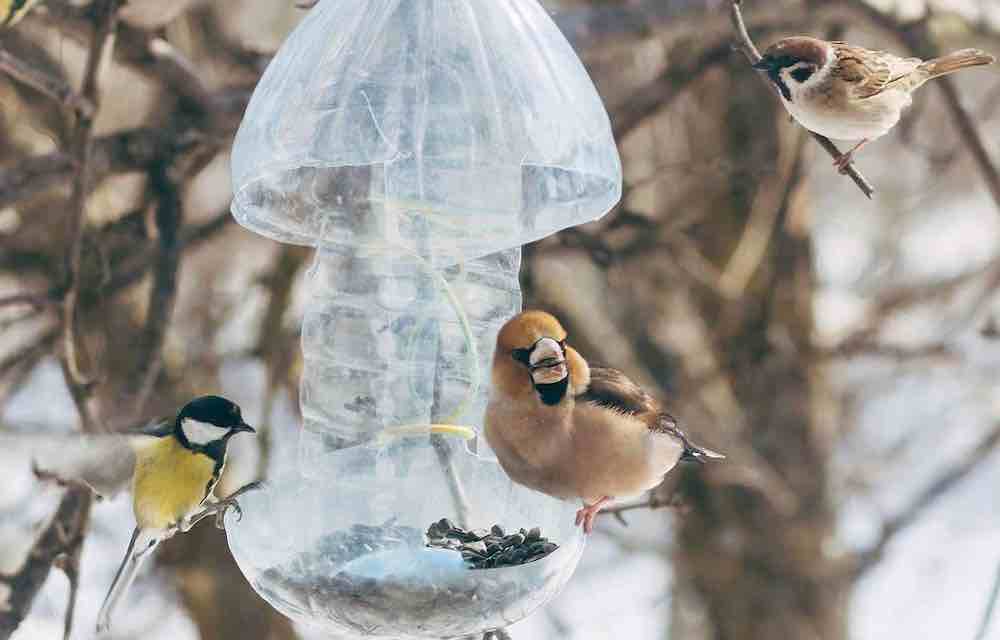
Keep in mind that each bird species has desirable and undesirable foods—we'll discuss this in more detail below. Tits and sparrows are the most common birds that flock to the "feeding" zone, while pigeons, bullfinches, nuthatches, jays, robins, woodpeckers, and other birds are less common.
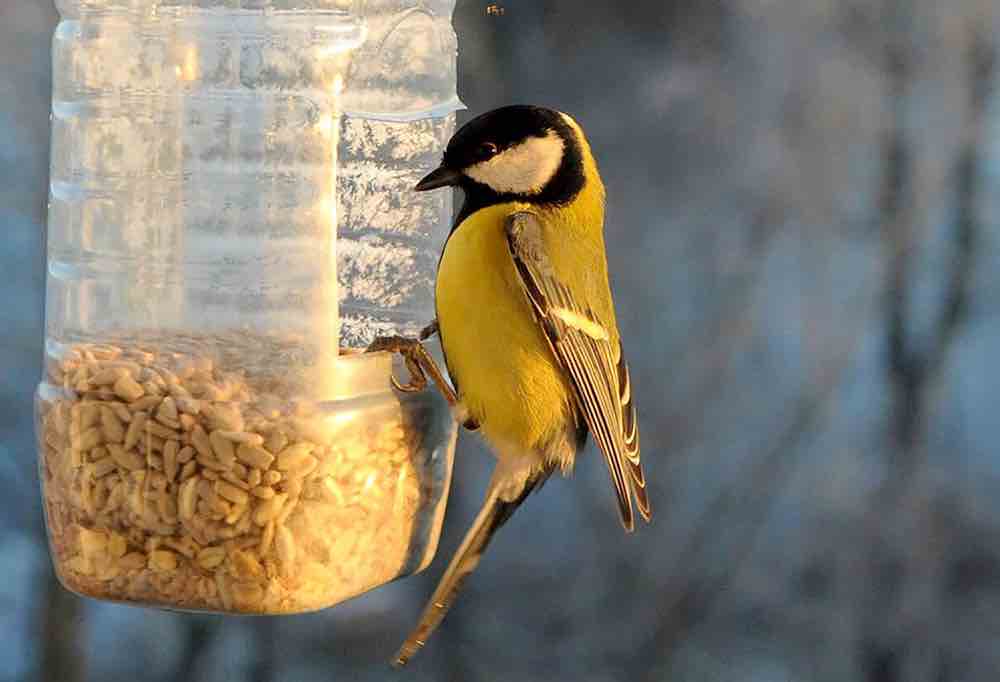
Bird feeders are most often made from wood, or, more quickly, from plastic bottles, or, less commonly, from cardboard or tin cans. There are diagrams online for creating a true masterpiece, but they're not necessary—just take any suitable container and poke a hole of the desired diameter in it.
They should be hung in trees, high enough to be out of reach of cats, dogs, and other animals. If you live in a private home, it's recommended to place the feeders away from residential buildings, as the birds will leave behind waste.
In addition to regular bird feeders, you can also use regular rope. You can string large food items (berries, pieces of meat) onto them and hang them on branches.
Read also, Is it worth buying pigeons?.
What you can feed them and what you absolutely cannot
Most often, birds are fed with various cereals.
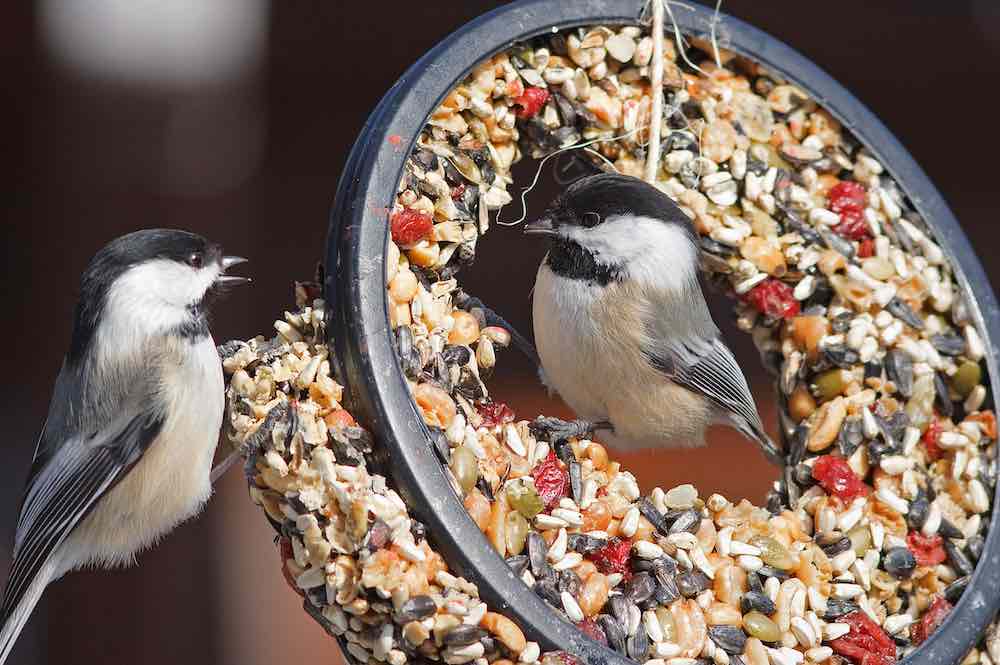
In addition to wheat, you can put the following in their feeder:
- oats;
- rolled oats (flaked);
- pearl barley;
- millet;
- corn;
- oatmeal.
All of these grains can be fed raw or lightly boiled (until half-cooked). Seeds, especially sunflower seeds, are also very beneficial for birds—they are nutritious and high in calories due to their high fat content. Seeds should be unroasted and unsalted. Pumpkin and/or watermelon seeds can also be added to the birds' diet, but they are too large for birds—they need to be crushed first.
Birds also eat the seeds of other plants (such as quinoa, maple, ash, nettle, horse sorrel, and burdock). While these are impossible to find in winter, they can be collected in advance and stored until frost sets in. Birds also eat acorns, peanuts, hazelnuts, and some berries, such as rowan and hawthorn. These can be collected in season and dried.
In addition, birds will not refuse finely chopped apples or carrots.
Birds eat more than just plant foods; they also need animal protein, which can be obtained, for example, from dried insects, meat, lard, tallow (chicken, beef, etc.), and bacon rinds. Fat should not be given in its pure form, but mixed with any type of grain. The exception is butter—you can add a small piece to the feeder. The key is not to overdo it: although fat is essential for birds, too much can lead to health problems.
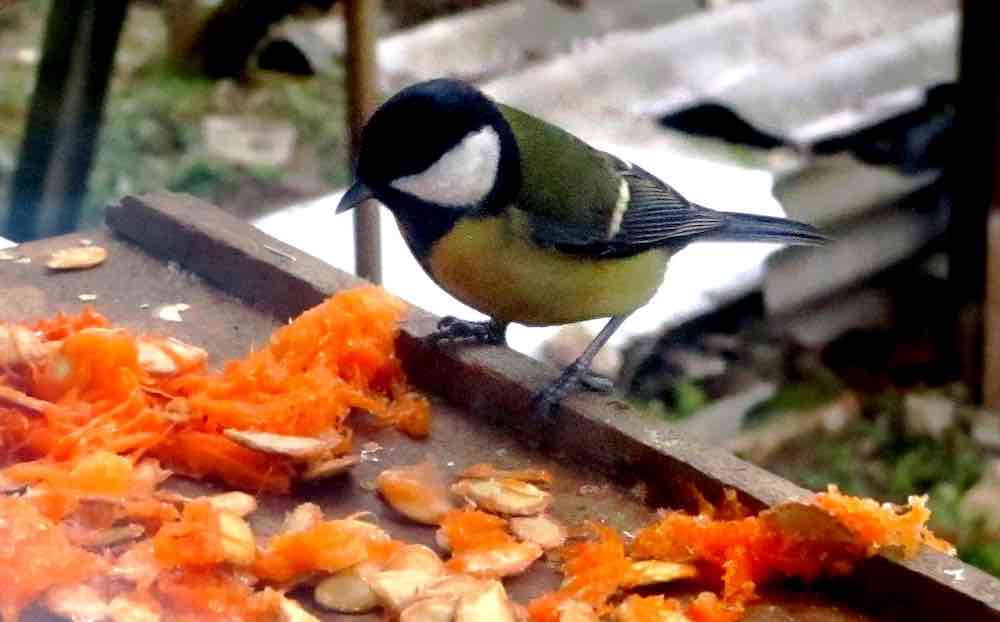
Birds also love crumbled white bread (just not very fresh or rich). Fresh bread is too heavy for birds' stomachs. You can give it plain, or make so-called "bird pie" by mixing bread crumbs with sunflower seeds. This mixture is soaked in vegetable oil and placed in the freezer, then hung on a string.
You can also mix the bread with cottage cheese or with a boiled, finely chopped chicken egg (including the shell).
Birds should not be fed:
- black bread;
- millet;
- any fried food;
- food "from the common table";
- food with added salt and spices;
- potatoes (raw or boiled);
- almonds and plum, cherry, and apricot pits
rice; - canned food;
- any stale/moldy food.
Salty food is prohibited because birds lack sebaceous glands. Salt can only be eliminated from the body through the kidneys, which places a significant additional burden. In extreme cases, excess salt can even lead to the death of the animal.
Millet is prohibited because it lacks a husk, so it quickly oxidizes outdoors or in a feeder, accumulating toxins and bacteria. Black bread is prohibited because it causes fermentation in the stomach.
Raw potatoes contain a bird poison called solanine, and boiled potatoes contain too much starch, which is harmful to birds.
Almonds and the pits of cherries, apricots, and plums contain hydrocyanic acid, which can cause poisoning in birds, even in small doses.
Rice swells in the stomach, which causes discomfort for the bird. And canned food contains too much salt, spices, other additives, and preservatives.
Read also about the kingfisher bird.
Tips and tricks: what ornithologists recommend
Here are a few more important things that ornithologists advise considering:
- When choosing food, it's important to consider the bird species. Magpies, crows, and other large birds are omnivorous, but others have preferences. For example, pigeons thrive on oatmeal, sunflower seeds, white bread crumbs, wheat, oats, millet, barley; even rice is acceptable. Sparrows thrive on similar foods, plus mealworms; millet is especially good for sparrows. Jays thrive on bread, peanuts, acorns, nuts, and watermelon seeds. Bullfinches thrive on watermelon and melon seeds, hawthorn, rowan, and maple seeds. Woodpeckers and tits prefer suet, while waxwings won't peck at seeds.
- To get the bird to come to the feeder regularly, it is enough to put food there for 4-5 days in a row.
- Accustoming birds entirely to your food is dangerous, especially for forest birds. Your primary goal should be to feed them, not just to feed them. If the feeder is always full, they'll become lazy and won't be able to find it on their own. Furthermore, you might forget or go away, leaving the birds hungry. Feeding them once or twice a day at the same time is sufficient, ideally before sunset, so they don't go hungry at night.
- A monotonous diet, especially one high in fat, is harmful to their body.
As you can see, feeding birds in winter is not difficult: with your help, they will survive this difficult time. However, it's important to understand that you shouldn't feed birds anything and everything, or give them table food—there is a list of strictly prohibited foods, and each bird species has its own taste preferences. In addition to plant-based foods, birds also benefit from protein foods—meat, cottage cheese, boiled eggs and shells, lard, and dried insects. Never overfeed your birds, as this can cause them to lose the ability to forage for food on their own.
Birds should be fed sparingly, at specific times, before sunset, and, if necessary, in the morning. For this purpose, you can use feeders located high up in a tree and string large pieces of food onto ropes or directly onto branches.
Read also about the most dangerous birds for humans.