Crayfish are kept in aquariums far less frequently than fish. It was only about 50 years ago that interest in these unusual exotic pets arose, and the first enthusiasts began breeding these arthropods at home. They are becoming increasingly popular every year, just like their relatives, shrimp.
Keeping crayfish requires providing them with a spacious aquarium, food, and a little time. Crayfish are fascinating to watch: they build mounds and small hills, burrow into gravel, and hide in algae and rocks. This article will explore the nuances of their care in more detail.
Peculiarities of keeping crayfish at home
Crayfish are arthropods that naturally inhabit Central, South, and North America, Madagascar, and New Guinea. They live in stagnant or slow-moving waters, hiding among driftwood or burrowing into the sand.
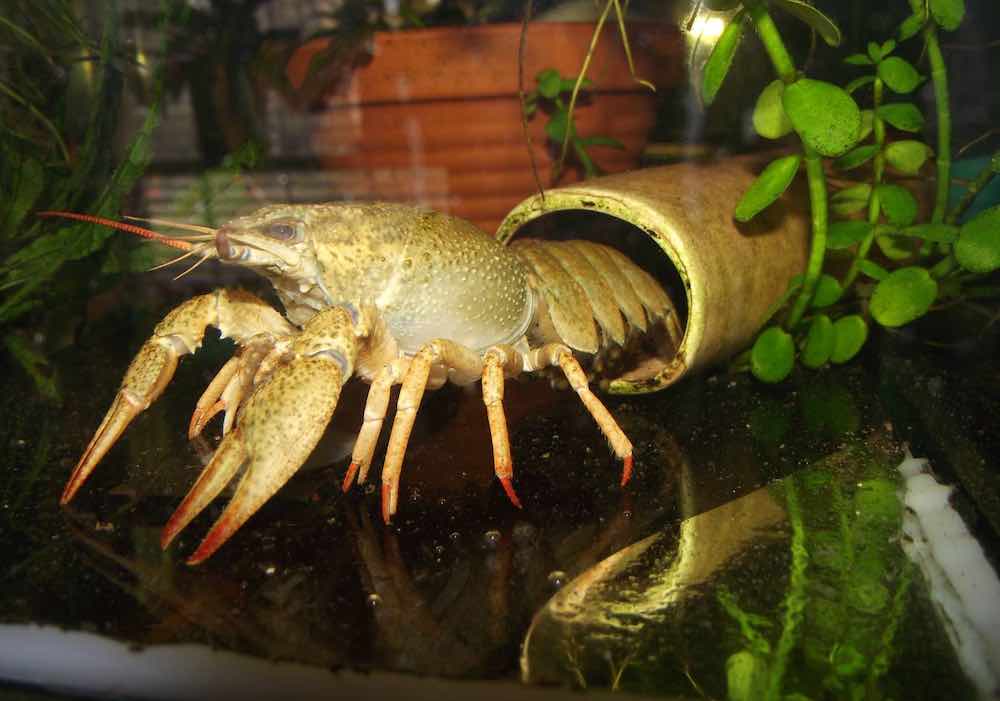
Their body consists of two sections: the abdomen and a large cephalothorax, covered by a carapace (a hard shell), beneath which the main organs are located. The crayfish's primary sensory organs are located at the front: movable eyestalks and short and long antennae (organs of sight, touch, and smell). Five pairs of walking legs attached to the cephalothorax serve as the crayfish's organs of locomotion. Crayfish also have jaws and maxillipeds for capturing and holding food.
The length of the crayfish depends on the specific species - a minimum of 5 cm, a maximum of up to 30 cm in length, and the color can be red, blue, marbled, orange, and more - depending on the diet and environmental conditions.
You can buy crayfish at a pet store, although some people find them in ponds and transfer them to aquariums. Most crayfish are inexpensive. Start with just one and learn how to care for it properly. Generally, caring for a crayfish isn't too difficult.
What do crayfish eat?
The advantage of crayfish is that they are true "aquarium cleaners." These animals are omnivorous and can consume a wide variety of foods: algae, vegetables, all types of fish food, and even dead fish. However, feeding them natural food is not recommended, as it doesn't contain the full range of nutrients and can also degrade the water quality.
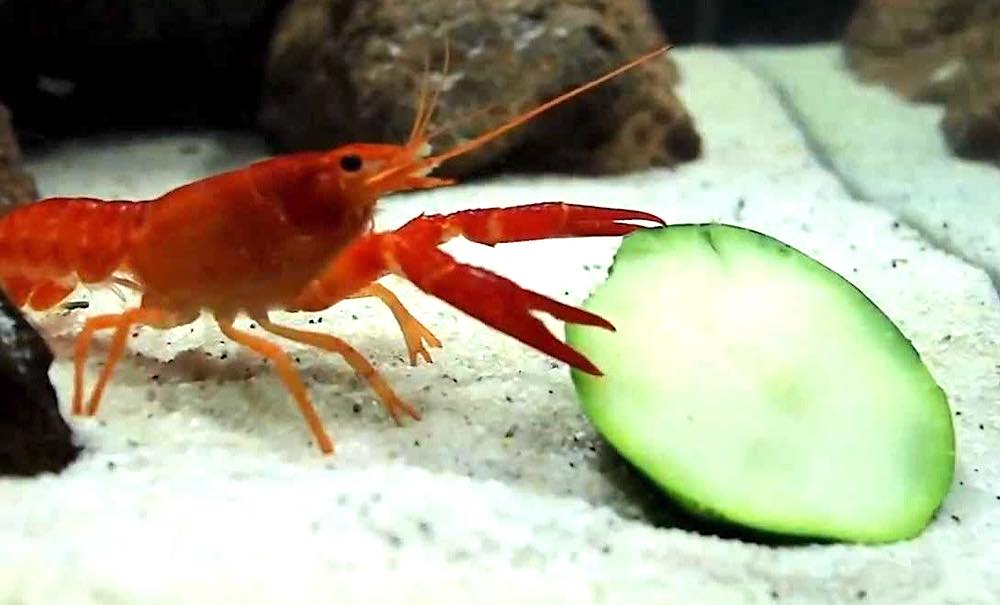
The best option is a specially formulated pet food, specifically designed for crustaceans, with all the vitamins and minerals. A well-balanced diet is the key to good growth and proper shedding.
Moreover, high-quality dry granules can retain their shape in water for a long time and keep it clean.
Additionally, dried leaves—of alder, oak, Indian almond, and other plants—should be added to the crayfish's diet. These are placed on the bottom, where they act as food and also release tannins, which are beneficial for the crayfish.
Don't overfeed crayfish: usually two pinches of food per day is enough for one crayfish. Otherwise, their shell will weaken. One to two small pieces of vegetables are also recommended. It's best to feed crayfish in the evening. After feeding, remove any leftover food from the aquarium to prevent it from decomposing. If there are multiple crayfish, the amount of food should be increased.
Read also, Why do fish die in an aquarium?
Conditions for keeping crayfish in an aquarium
When choosing a crustacean aquarium, consider the species and size of the animal. For example, a 40-liter tank is sufficient for dwarf crayfish (such as the Mexican dwarf), an 80-liter tank for a medium-sized crayfish, and at least 100-liter tanks for larger breeds (such as the Yabby). The tank must have a lid, otherwise your pet will simply escape. A compressor with a tube or an air pump is also necessary to prevent the crayfish from suffocating. A built-in filtration and aeration system is also highly desirable. Opt for sponge or tube filters, as the arthropod can become stuck in undergravel filters.
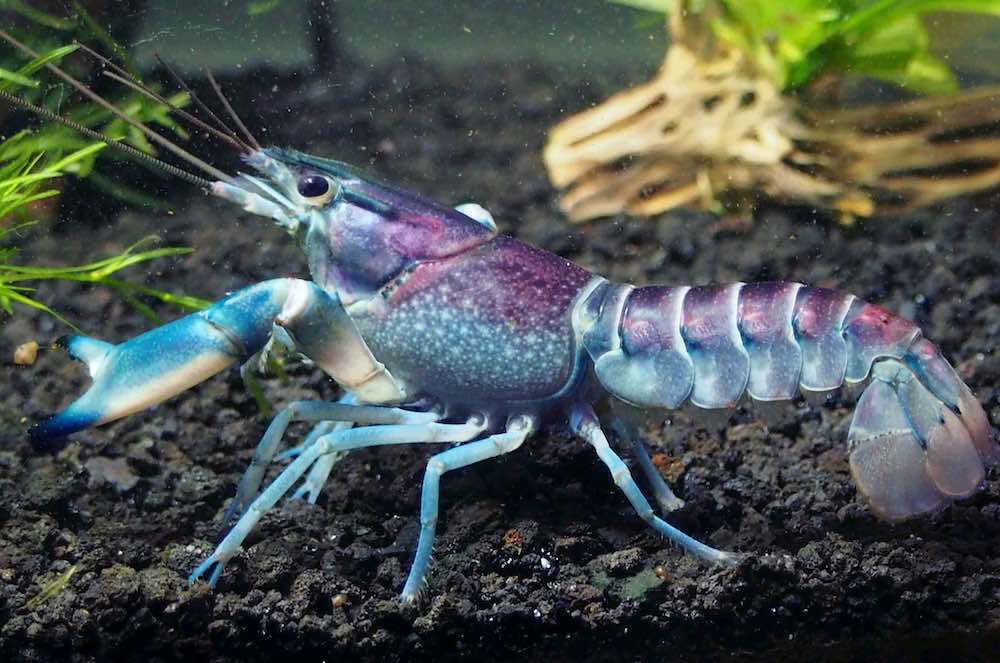
Avoid purchasing an aquarium with a heater, as arthropods prefer cool, freshwater temperatures of 21–24°C (70–75°F) and a neutral pH (approximately 7.0). A special pH monitor can be purchased to monitor the pH.
Choose low-rise aquariums with a large bottom area, as the crayfish will be bottom dwellers. They love to dig, so it's best to place small pebbles (2-3 mm in diameter) on the bottom. This will provide comfort for the crayfish during molting and prevent it from "muddying the water." The aquarium lighting should be moderate, as crayfish prefer darkness.
Water needs to be purified At least once a week, as crayfish produce quite a lot of waste. You should drain a quarter to half of the water and gradually replace it with clean water. If you don't have a filter, you should clean the aquarium at least twice a week.
Seashells and other foreign objects in the aquarium are unnecessary, as they contain minerals that can alter the pH. However, you can add algae, rocks, and small pieces of plastic pipe, which will provide play areas and hiding spots, which crayfish love so much. This is especially important during molting. Plants are highly recommended.
Aquarium crayfish: pros and cons, breeder reviews
According to owners, crayfish are trouble-free pets. Provided they aren't overfed and the water temperature and pH are maintained at the right level, they won't cause any problems, and observing the lives of these arthropod inhabitants can be quite fascinating. The only thing that might raise questions is the molting process, which occurs in adult animals approximately every six months. During this time, it's best to leave the animal alone and even avoid feeding it. It's best not to remove the shed shell—they'll eat it after the molt is complete.
How long does cancer live at home?
Most crayfish in captivity do not live long - 2-3 years, but with proper feeding and care they can live up to 3-5 and even 7-8 years.
Tips and nuances
Advice from experienced breeders;
- Be sure to cover the aquarium to prevent your pet from escaping. Crayfish are curious creatures and can climb the sides of the aquarium. Also, carefully check and seal all openings where the arthropod could escape. If the animal escapes from the water tank, it will die of dehydration within a few hours.
- If a crayfish escapes and you catch it, don't immediately return it to the aquarium. Use a container of water that completely covers the crayfish and leave it there for a while to allow its gills to become accustomed to the water. Otherwise, the crayfish may drown in the aquarium.
- It's not advisable to keep more than one crayfish. Several individuals can coexist if they are of the same species. And they must be given sufficient space. Otherwise, territorial wars are inevitable.
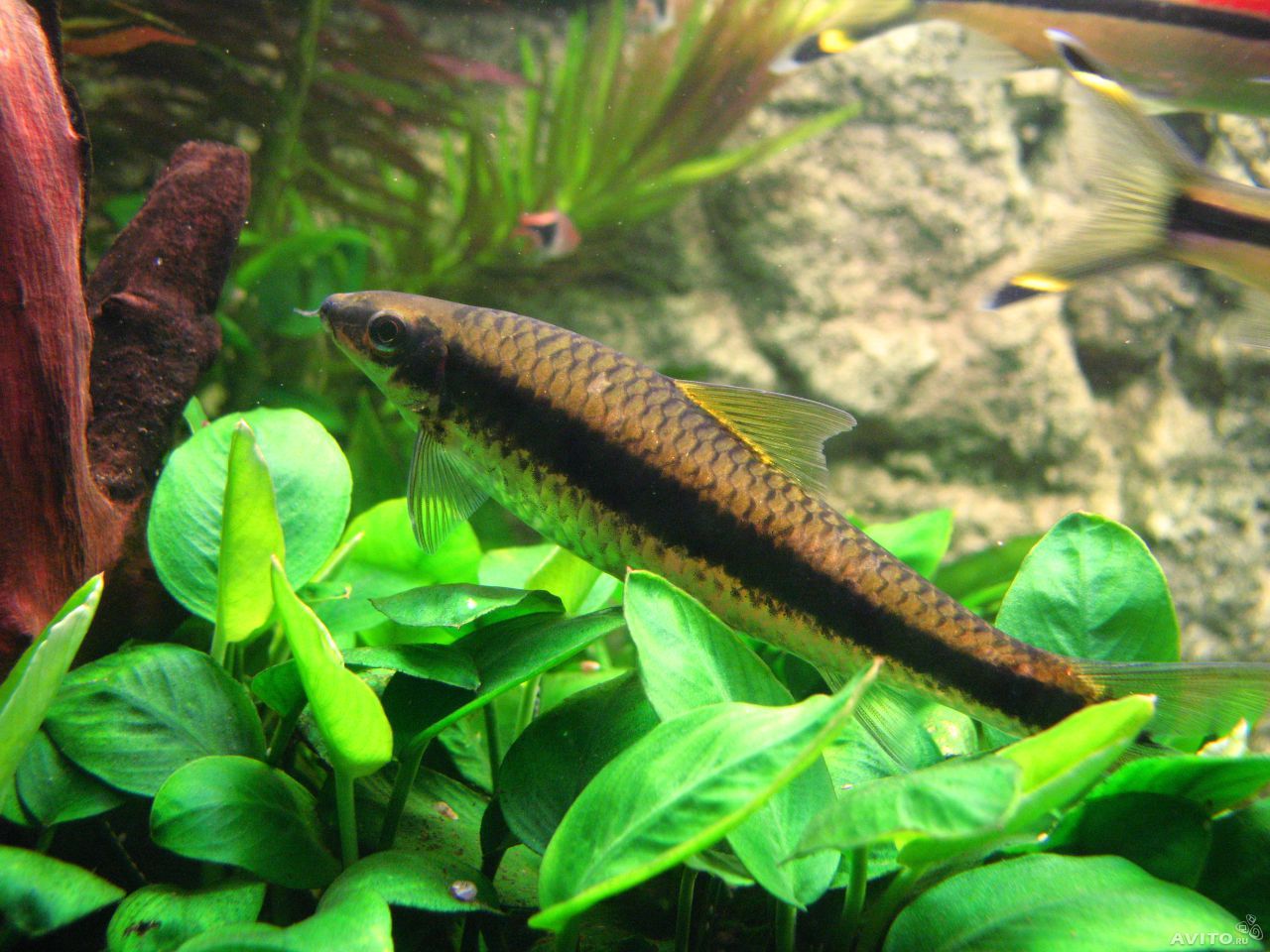
- Although crayfish get along well with fish and other aquarium pets, they need to be provided with peaceful companionship. Occasionally, crayfish can be aggressive, although catching agile fish is difficult—they are too clumsy for that. Therefore, they most often attack sick fish that have sunk to the bottom. Crayfish are not particularly dangerous to healthy fish, but some "neighbors" may attack them, such as catfish and large cichlids. This can end badly for both the attacking fish and the crayfish.
- During molting, the crayfish requires special conditions. Do not touch the shed shell or disturb the animal; it does not need food during this time. When molting begins, you can add a few drops of potassium iodide to the water.
- If this crayfish was raised in captivity, do not remove it from the aquarium or release it into the wild unless absolutely necessary.
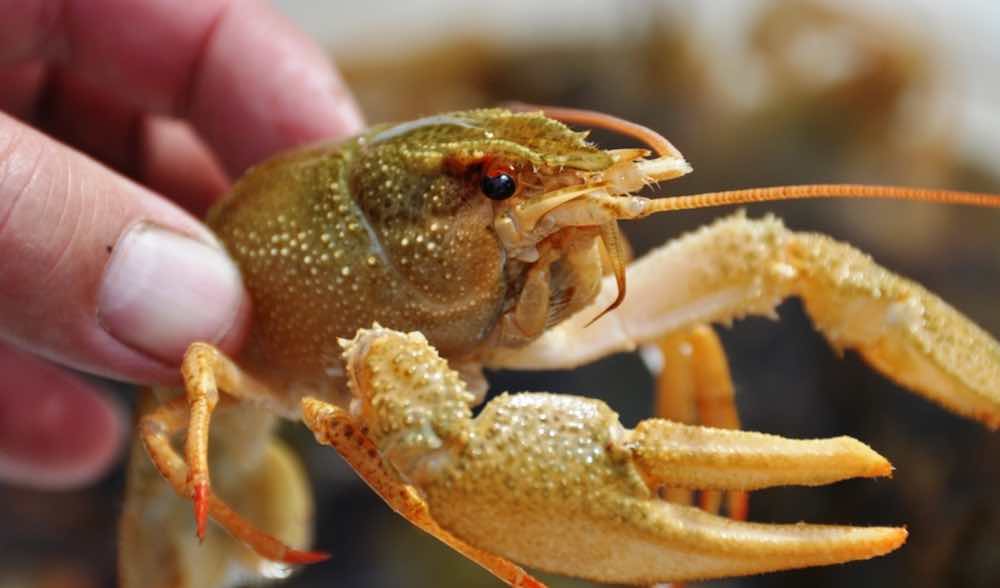
- If you're picking up a crab, the correct way to grip it is from underneath, under the claws. This way, it won't bite you.
Crayfish are unusual but very interesting pets. Their life in an aquarium is fascinating to watch, and they don't cause much trouble for their owner. The main thing is to choose and set up the aquarium, provide safe companionship, feed the crayfish properly, and clean the tank regularly.
Read also about the most unpretentious aquarium fish.