Aquarium fish are often kept as a stress reliever. These fish should be small, fairly peaceful, and undemanding. The Siamese algae eater is one such option. To learn the proper conditions for keeping it and what it needs to thrive in your aquarium, you need to study the species' characteristics in more detail.
Content
A Brief History of the Siamese Algae Eater
The Siamese algae eater (Crossocheilus siamensis) is a small freshwater fish belonging to the carp family. These fish resemble corydoras catfish in appearance, but are unrelated. Aquarists often use the abbreviation SAE (Siamese algae eater). Algae eaters are peaceful and unpretentious. Sometimes they are kept to clean the aquarium of excess algae.
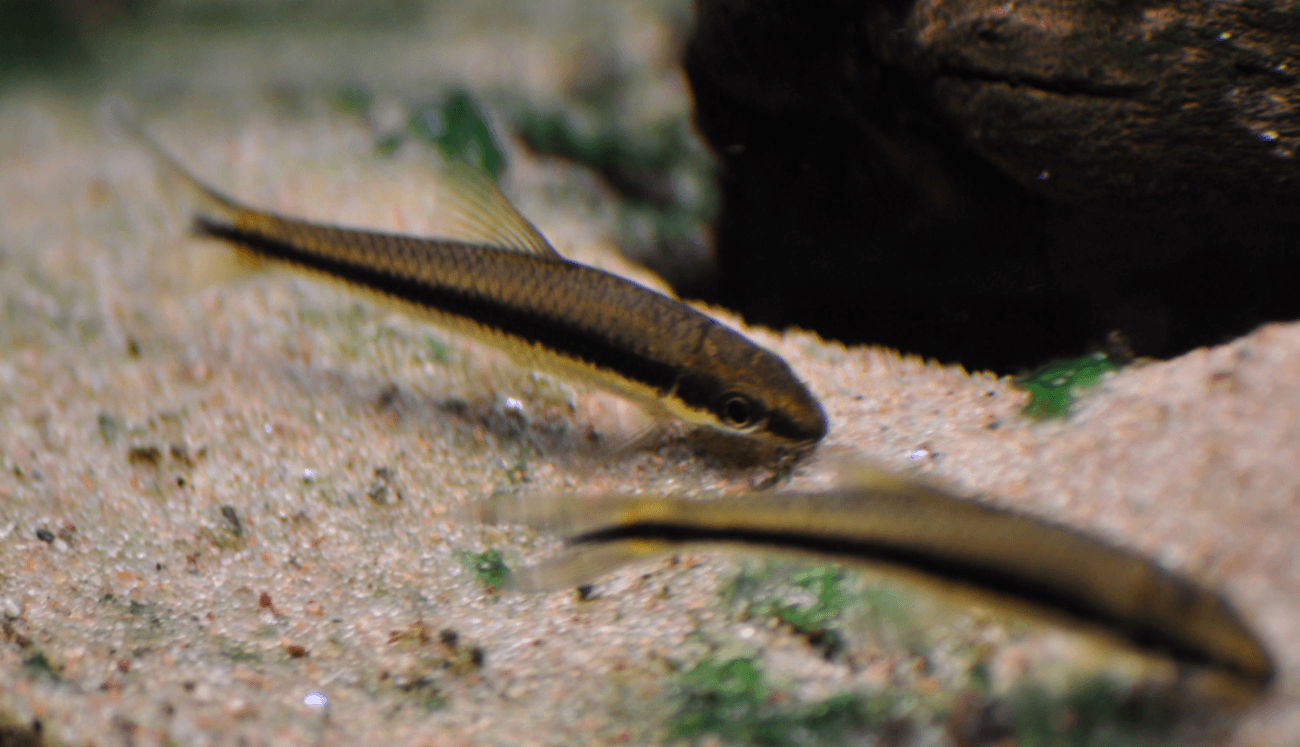
Siamese algae eaters often rummage along the bottom in search of small algae suitable for consumption.
Siamese algae eaters are virtually impossible to breed at home, but they are easy to keep. Typically, the SAE sold in pet stores are brought from fish farms or caught in the wild. Hobbyist aquarists don't know exactly how spawning occurs or how to properly ensure this process.
Siamese algae eaters originate from Southeast Asia (Indochina, Vietnam, the Malay Peninsula, etc.). In the wild, these fish prefer streams with rocky bottoms. In such areas, rocks and driftwood become overgrown with algae, which the fish feed on. Siamese algae eaters prefer shallow bodies of water with clean and relatively clear water. However, during spawning season, schools of algae eaters seek out murkier and more secluded areas. During droughts, the fish migrate to more flooded areas.
The Siamese algae eater was discovered in 1931.
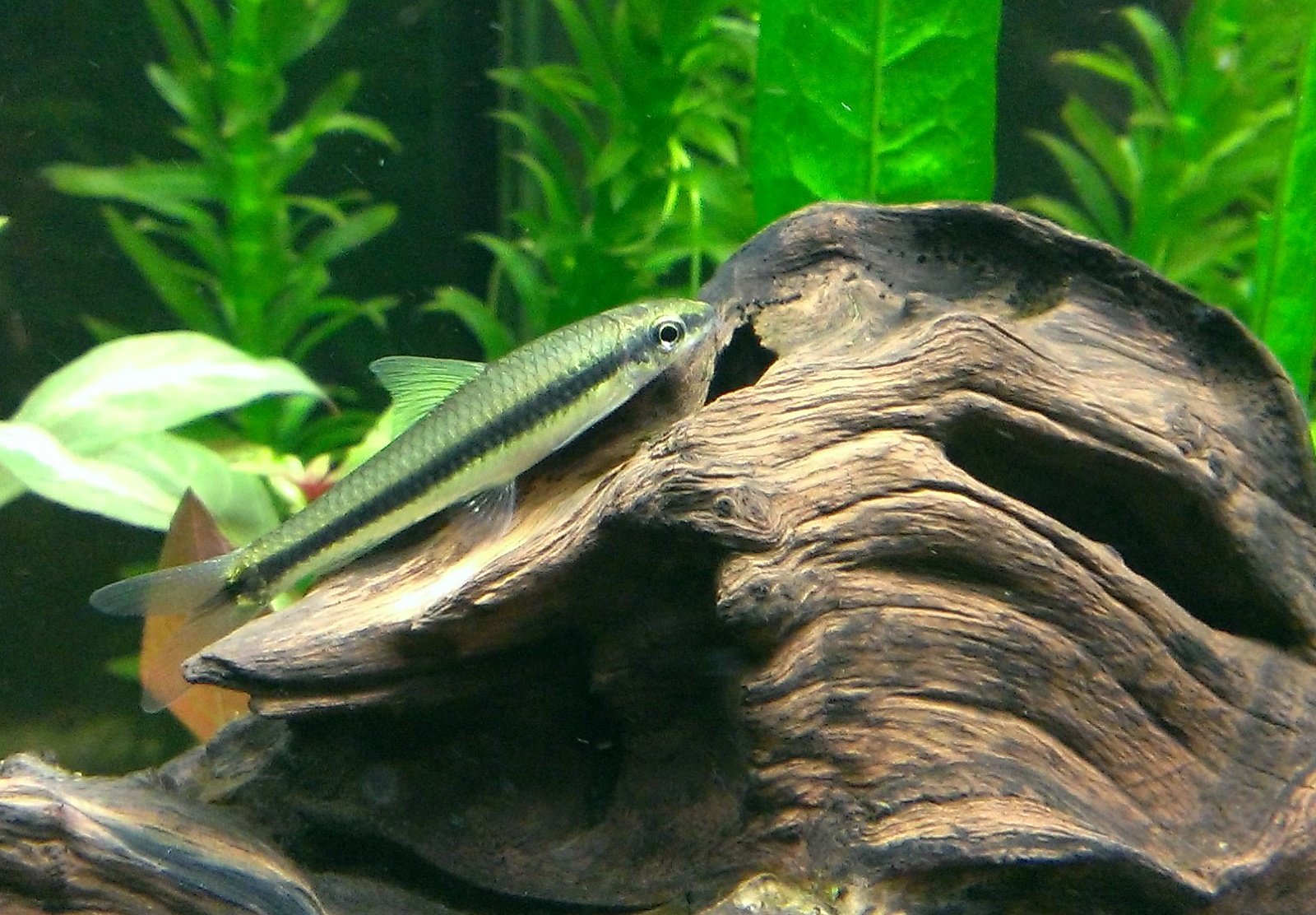
Siamese love driftwood and other algae-covered aquarium elements.
Siamese algae eaters are currently very popular among aquarists. However, they aren't always kept as pets. Sometimes, Siamese are kept specifically for aquarium cleaning.
Description of appearance
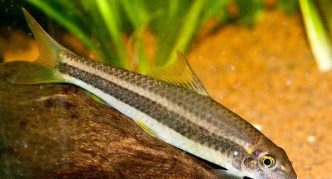
The fish has an elongated grey body. Along the body there is a horizontal dark stripe with jagged edges. It ends at the very end of the tail. The back is darker than the belly. The dorsal fin is triangular. The fins of Siamese fish are practically colorless (without any iridescent hues). Near the mouth of the fish are thin barbels. When swimming, they are pressed against the body, becoming virtually invisible.
Siamese fish reach a body length of 15 cm and typically live up to 10 years. However, in aquariums, these fish don't always reach their maximum size. In a medium-sized aquarium (up to 100 liters), they can reach up to 10 centimeters. There are no significant differences between males and females (except for body shape). Males are graceful, elongated, and slender. Females are slightly shorter, with rounded bellies, and slightly wider.
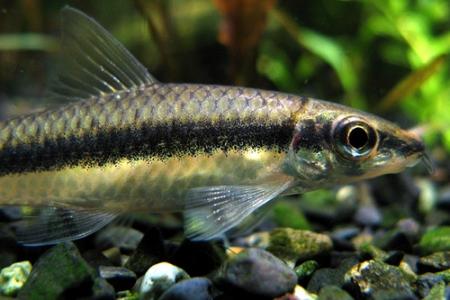
When at rest (without movement), the Siamese cat's whiskers hang down.
Siamese algae eater and false Siamese algae eater
The algae eater is often confused with the false Siamese. This is a striped garra (garra taeniata). These fish are very similar in appearance (color, body shape, and size). However, there are several differences. It's important not to confuse these fish, as their intended purposes may be different. Garras can also eat algae, but not as intensively. Furthermore, they are unable to cope with thread algae (due to the structure of their mouths). Therefore, if you have a problem with the parasitic algae called black beard algae, a garra is not for you.
Table: Comparison of the Siamese algae eater and the striped garra
| Distinguishing features | Siamese algae eater | False Siamese algae eater |
| Length of the strip | To the end of the tail | To the edge of the body |
| Number of antennae | 1 pair | 2 pairs |
| Antennae arrangement | On the strip | Below the strip |
| Color of scales | On the back there are scales with a barely noticeable brown border | Monochrome |
| Color of fins | Grayish, almost transparent | Yellowish |
Pet store salespeople often confuse similar fish and keep them in the same tank. An aquarist might buy a Siamese as a "tank cleaner" and end up with a Garra. Therefore, it's important to examine photos of both fish and remember the differences.
Photo Gallery: Siamese and Garra
-
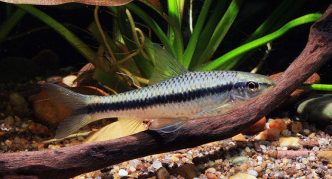
- If you look closely, you can see that the stripe on the Siamese algae eater's body extends to the edge of the tail.
-
- Above the dark stripe on the body of the striped garra there is another one - pale pink
-
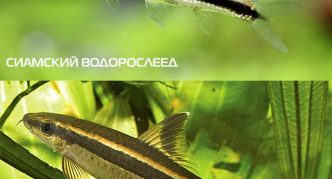
- The Siamese algae eater and the banded garra look similar, but they can still be distinguished.
Features of maintenance and care
Siamese require spacious aquariums (100 liters or more). These fish are easy to care for, but it's crucial to ensure their conditions are as close to natural as possible.
Water parameters
The aquarium should be warm (24–26°C) and relatively hard (up to 20 dH). There should be some water movement (not fountains or bubbling, but a gentle current). Bright lighting is essential. Lighting promotes algae bloom (as in the natural environment). The aquarium bottom should be lined with boulders, rocks, sand, or fine gravel. A piece of driftwood can be added as a decorative element, and its surface will become overgrown with algae colonies.
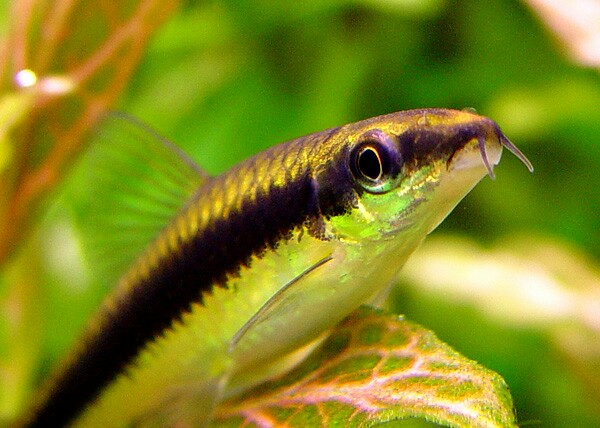
The algae eater's mouth is designed in such a way that it can clear algae from any snag.
Algae eaters feed on algae, so the aquarium should be richly planted. There's a common misconception that the greener the water, the better for the Siamese. In fact, this shouldn't be done. Fish of this species are accustomed to running water, and accumulated organic waste can negatively affect the health of Siamese. Partial water changes are needed once a week. Typically, one to two-thirds of the total water volume is changed. The bottom can be cleaned of waste with a syringe. A filtration system can also be installed. Incidentally, such a device can simulate a current.
SAE are jumping fish, so you need to prevent them from jumping out. To do this, lightly cover the aquarium, leaving only a small opening for air flow. You can also cover the water surface with the broad leaves of large plants (the leaves will act as an obstacle).
I have four algae eaters. They don't bother the fish, only me (meaning they start nibbling my hand when I put it in the tank). They usually move around the tank as a group, quite actively grazing the plants. They're very active, sometimes even too active. Once, when the lid was open, one of the algae eaters jumped out of the tank and over the back wall (the 400-liter tank is against the wall). I thought it was all over, but it actually managed to jump out from behind the stand!
Video: How an algae eater searches for food
Feeding rules
Since the algae eater is a herbivorous fish and in its natural environment feeds only on algae and phytoplankton, it should be fed similar food. These can be plant-based foods in flakes or granules. You can also feed your pet pieces of vegetables and greens:
- zucchini;
- spinach;
- cucumber;
- apples;
- dandelion;
- blanched peas.
Food is finely chopped and parboiled, and zucchini and peas can even be lightly boiled. Algae growing in the aquarium or growing on boulders and driftwood can become a delicacy and an additional food source. Some Siamese will eat the leaves of other plants in addition to algae. Therefore, it's important to approach the decor carefully. However, this usually happens at a young age; over time, algae eaters lose interest in "foreign" plants. If you feed your Siamese properly, they won't bother other plants. However, if their diet lacks fiber (found in vegetables), they may damage certain plants that aren't intended for human consumption:
- Java moss;
- duckweed;
- water hyacinth;
- Christmas moss, etc.
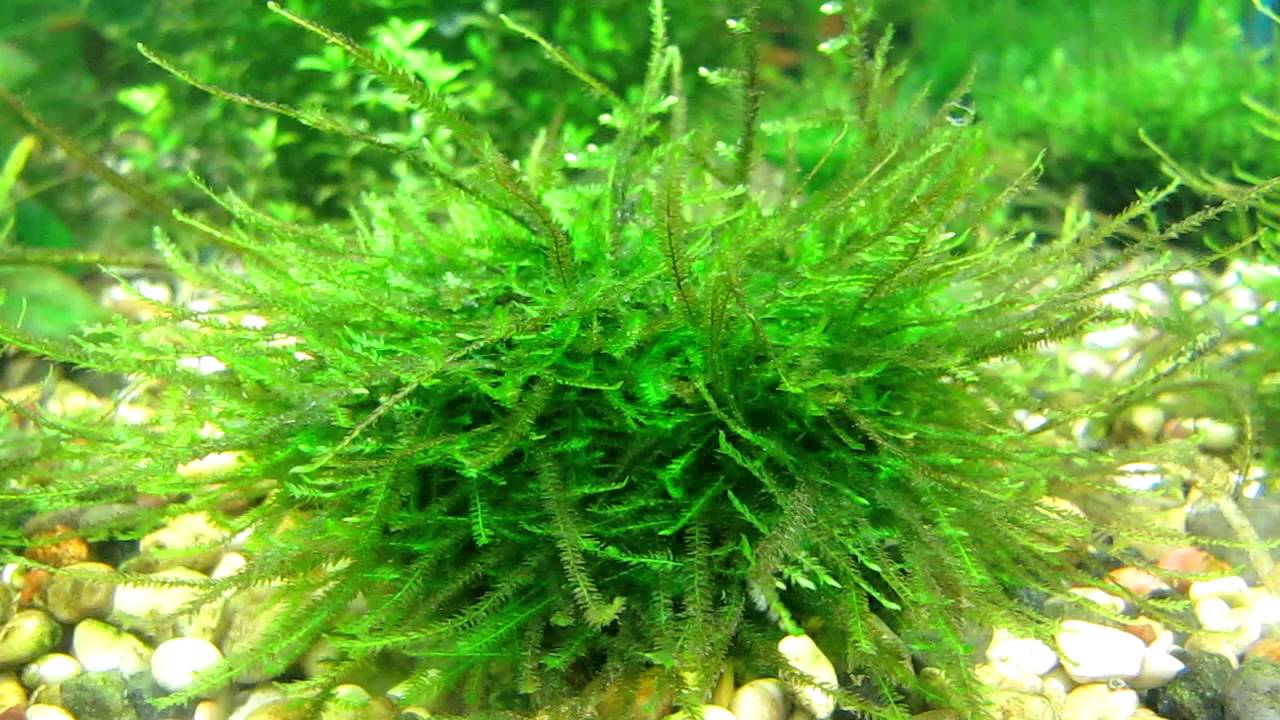
SAEs find moss attractive because it is easy to pinch off pieces.
Compatibility with other fish
Siamese fish have a very calm nature, so they get along well with other non-aggressive fish. It's important that the different breeds are of comparable size. If a school of algae eaters lives in an aquarium, the strongest individual will be the leader in a large family. It's important to have 6-8 fish in a family. If there are fewer individuals, the weakest fish will be bullied by the stronger ones.
Neighbors - Sumatran barbs (a school) and a large male angelfish, and a gyrinocheilus.
Keep 2-3 males (no more) in the same aquarium, as dominance struggles may arise between them. Although the Siamese is a relatively small fish, it is very active and may even play with larger fish (such as cichlids). This can lead to conflicts that will harm both fish, so aquarists keep algae eaters in a separate tank. It is not recommended to keep Siamese with Labeo. Their cohabitation will inevitably end in conflict.
Video: An algae eater swims with a school of guppies.
What parasite does the Siamese algae eater fight?
SAE combat black beard algae (Audocinella). Audocinella is a parasitic algae. Black beard cannot be destroyed by other fish.
An aquarist friend recommended getting some algae-eating fish, which I did. I bought a couple of tiny ones. At first, the fish showed no interest in the black beard, and I thought nothing would come of it. I barely fed them for two weeks. And then it happened! They started eating the algae. At first, timidly and hesitantly, then more and more actively. They were munching it off the branches of the crinum right before my eyes. Within a month, there was no trace of the black beard in my aquarium. These fish are simply wonderful!
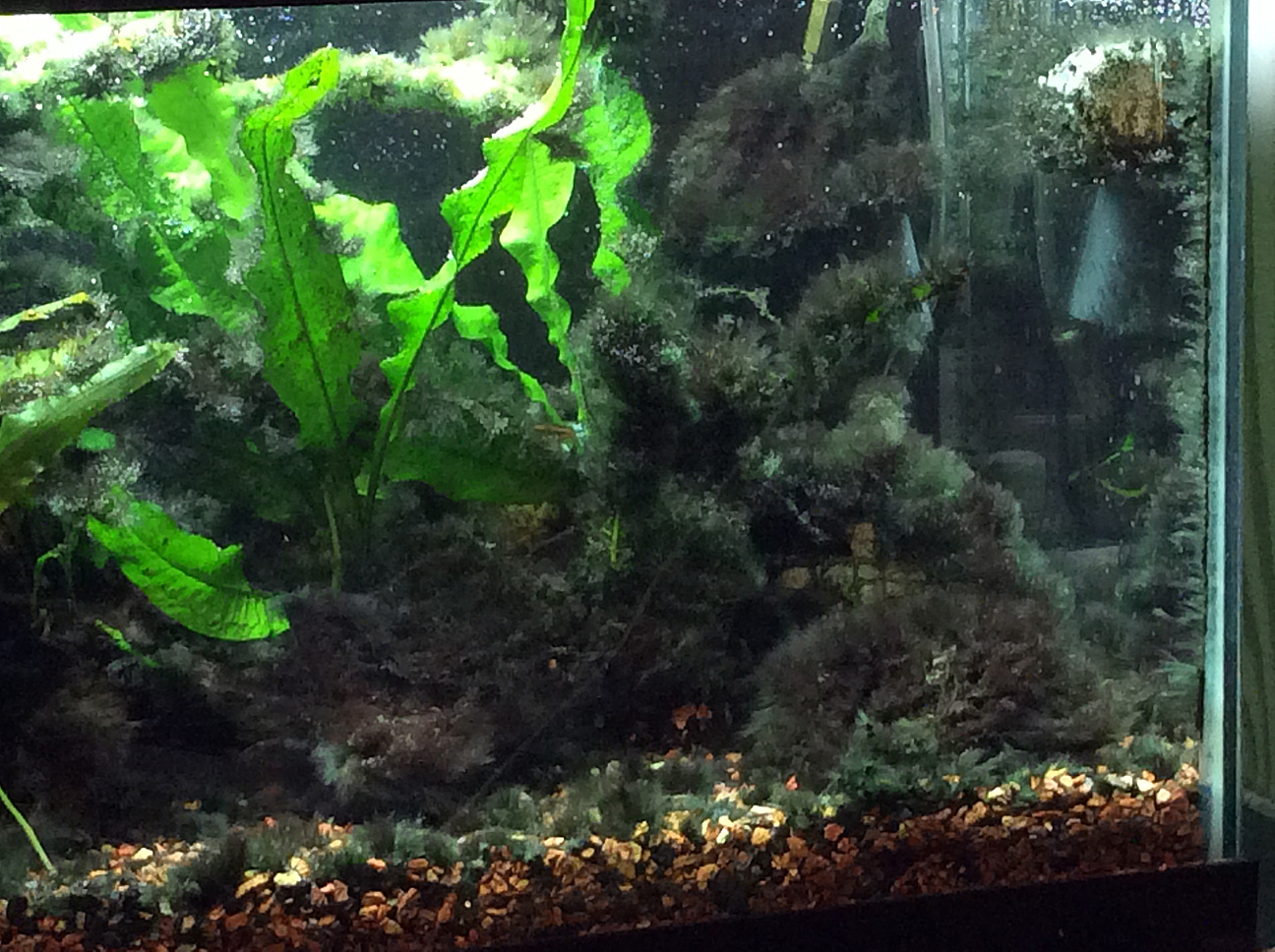
It's very difficult to completely remove a black beard (you can't do it without SAE)
Black beard algae growth begins with the appearance of barely noticeable threads on aquarium elements. Over time, the parasite can infest the entire tank. Three to four SAE fish can clear a 100-liter tank of this algae in a month.
Breeding
In Russia, breeding Siamese algae eaters has not yet been learned. Siamese algae eaters are unable to reproduce in captivity. Fish farms breed them, but carefully guard the secret of their production. There is an opinion that fish farmers and ichthyologists use special hormonal drugs for reproduction, but this is not certain.
However, for SAE enthusiasts, buying a few fish won't be a problem. One fish costs 20-50 rubles. They can be purchased as juveniles and "raised" for up to ten years.
Siamese algae eater diseases and treatment methods
Various types of fish diseases can appear depending on several factors:
- the aquarium is neglected (the water is cloudy, heavily polluted with organic waste, etc.);
- fish live in water with unsuitable composition;
- the aquarium is insufficiently or poorly equipped (not enough light, no shelters, etc.);
- fish compatibility is not taken into account;
- Pets are offered inappropriate or spoiled food, and their diets are incorrect.
One way or another, violation of the basic rules for keeping fish leads to a change in their condition. If the owner notices something wrong in time, there's a chance to fix the situation. Otherwise, the fish could die.
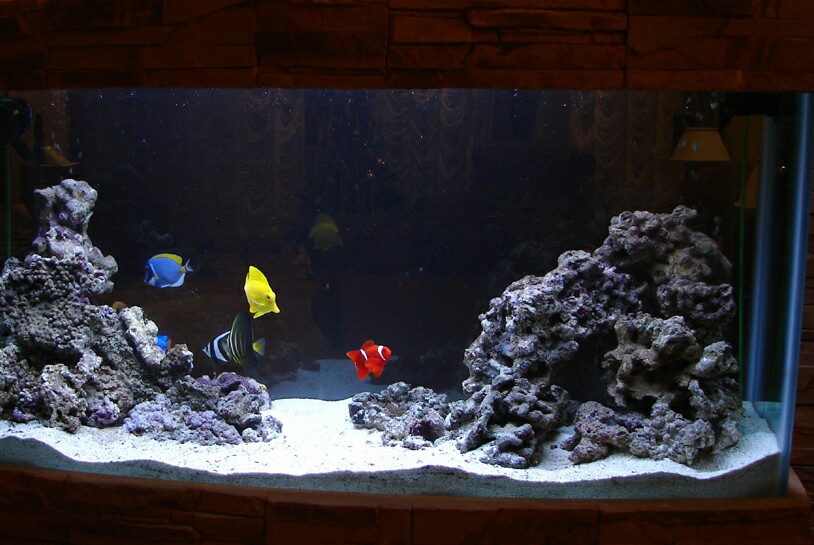
Siamese algae eaters can die in an algae-free aquarium.
Symptoms
Some fish diseases can be identified by their symptoms. Even an inexperienced aquarist can notice the main symptoms:
- the eyes become bulging or “glassy”, the pupil is cloudy;
- a light “fluff” appeared on the scales, the pores on the head became much larger;
- whitish or yellow feces;
- profuse mucus secretion;
- worms hanging from the anus;
- disc-shaped organisms appeared;
- small black worms appeared;
- white or black spots (dots) appeared on the fish’s body;
- the tail and fins are frayed and crumbling;
- red veins are visible;
- fins are pressed against the body, torn or split;
- the color has faded, spots have appeared all over the body;
- the mouth or base of the fins turns red;
- there is a white coating on the eggs;
- bloated abdomen;
- the scales are sticking out, ulcers have appeared;
- the stomach has sunken in or bloating has appeared;
- severe weight loss;
- behavior change.
If your Siamese exhibits any of these symptoms, you need to take immediate action.
First, you need to ensure all maintenance conditions are met. If the aquarium is properly set up and furnished, you need to test the water. It may contain levels of hazardous substances (ammonia, nitrites, etc.) that exceed the permissible limits. All actions must be taken immediately, as the fish can become ill and die within a couple of hours. After this, you can try to identify the disease. The most common fish ailments are the following:
- protozoan infection (e.g. ichthyobiasis, etc.);
- parasitic infestation (larnaea, gill crustaceans, etc.);
- fungal and viral diseases (lymphocytosis, iridovirus, etc.);
- non-infectious diseases (chlorine poisoning, hypoxia, etc.);
- bacterial (dropsy, Pseudomonas aeruginosa infection, etc.).
If the fish rubs its entire body against various objects, shakes and secretes a lot of mucus, it may be infected with protozoa. To prevent this, you need to treat (for example, boil) each new item. New fish and algae should be kept in a separate aquarium for 15-20 days (quarantine). If you can't protect your Siamese from infection, you need to treat all the aquarium inhabitants. For this, you'll need copper sulfate. Dissolve it at a ratio of 0.2 grams per 1 liter of water.
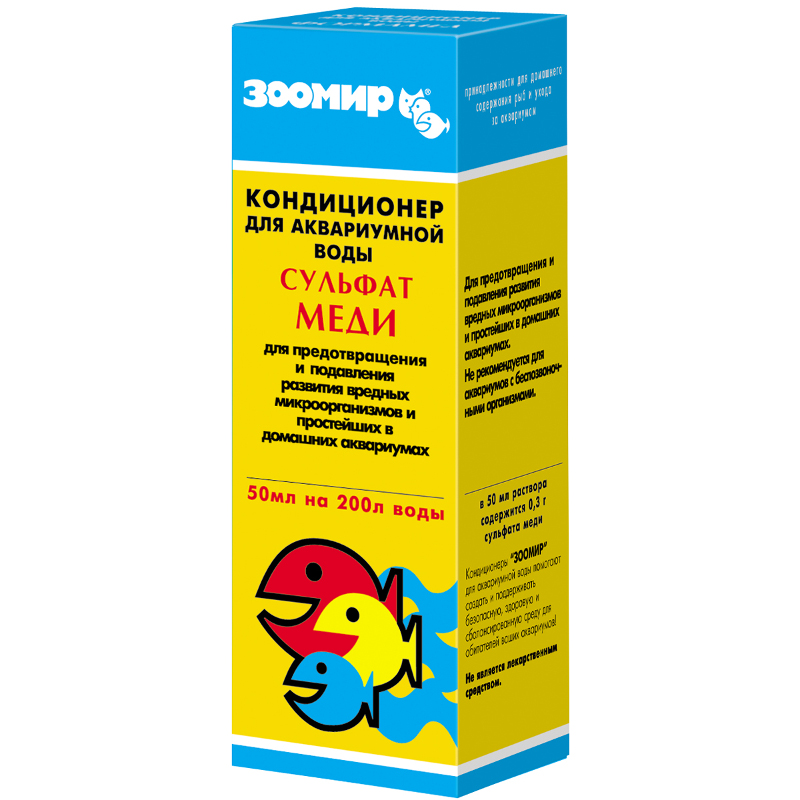
Copper sulfate can be purchased at any pet store.
You can't leave copper sulfate in the aquarium forever. You can increase the water temperature (by 1–2°C) to encourage the protozoa to leave the fish's body (this will make them more susceptible to the copper sulfate). After a couple of days, the water will need to be changed. These changes can cause hypoxia in algae eaters, so during the treatment (and for a couple of days after the water change), you'll need to increase aeration (air saturation).
If an SAE has parasites, it will try to scrape them off on rocks, driftwood, etc. Light greenish threads and mucus may hang from its gills. You can treat the fish for parasites with potassium permanganate. Dissolve potassium permanganate at a ratio of 2 milligrams per liter of water. Place the infected fish in this solution for half an hour. This procedure only needs to be performed once. However, preventative measures can also be taken. Antiparasitic medications are available at any pet store.
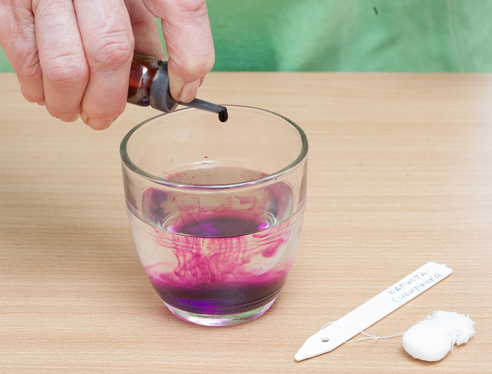
Potassium permanganate can help combat parasites in Siamese algae eaters.
If you see “fluff” or “cotton wool” on the fish’s body, it is a fungal disease (such growths can appear on open wounds). In fact, fungal spores are always present in the aquarium and feed on organic waste (feces, dead plant particles, etc.). Fungi colonize wounds because the fish's immune system is weakened. This can occur for various reasons (unfavorable conditions, stress, etc.). The immune system also tends to fail in older Siamese.
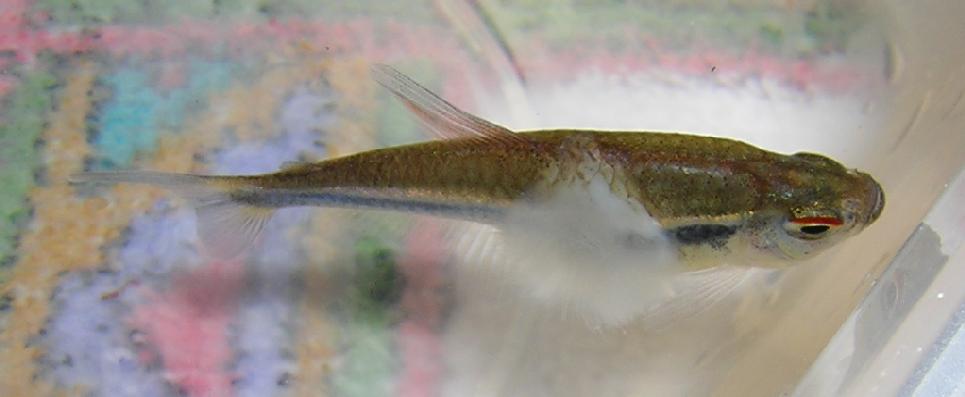
If there are fluffy growths on the fish's body, treatment must be started immediately.
A healthy Siamese with a strong immune system is not susceptible to fungal attacks, so it's important to carefully monitor the aquarium and its living conditions. If you can't protect your fish from fungal infections, you'll need to go to a pet store and purchase a special treatment. You won't be able to rid your fish of the fungus on your own. The treatment you purchase must meet several requirements:
- phenoxyethanol content in the product;
- the ability to add medication to a common aquarium without having to remove the fish;
- The medicine should not affect (or have minimal effect) on the chemical composition of the water.
One of the most serious diseases in fish is tuberculosis (mycobacteriosis). The bacteria can only be introduced into an aquarium by introducing an already infected fish. An infected fish can be identified by symptoms (poor appetite, bulging eyes, weight loss). Fish infected with tuberculosis hide. Sometimes, the body of an infected fish becomes deformed (changes shape). Siamese fish are not very susceptible to mycobacteriosis, but a weak immune system cannot guarantee the prevention of infection.
There's no foolproof cure for this type of fish, but many aquarists aren't willing to part with their pet. In this case, the fish should be immediately moved to a separate aquarium. If the disease isn't too advanced, an antibiotic may help. This medication (for example, Kanamycin) can be purchased at a pet store. Sometimes veterinarians recommend a vitamin B6 solution. Dissolve one drop in 20 liters of water (3 drops for a 60-liter aquarium). Apply the solution once a day for a month. The problem is that mycobacteriosis is difficult to treat and dangerous to humans. Therefore, if none of these methods help, the fish is euthanized. The aquarium owner should take certain precautions. Avoid placing bare hands in the infected aquarium if you have cuts or abrasions (rubber gloves will help).
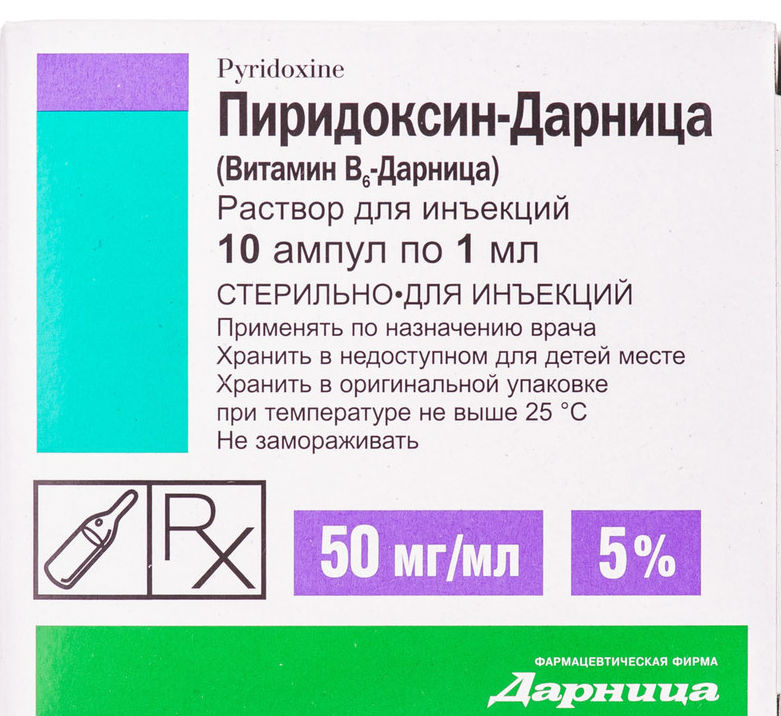
An algae eater suffering from mycobacteriosis can be saved using a vitamin B6 solution.
Another serious illness that can affect SAE fish is Pseudomonas aeruginosa infection. The causative agent is Pseudomonas. This disease can progress in fish without any obvious symptoms. These bacteria can be present both on the surface of the fish's body and inside it. The presence of the bacteria can be detected using phosphates. If dissolved in the aquarium, they will produce a yellowish glow. If the owner hasn't detected the infection, the infected fish will eventually develop symptoms:
- ulcers in the mouth and on the sides of the body;
- dark spots of irregular shape all over the body.
To avoid this disease, you need to carefully monitor the aquarium conditions. If your Siamese is healthy and has a strong immune system, it won't be affected by this bacteria. If your fish does become ill, you can try to treat it. Add chlortetracycline to the main aquarium (4 times a day for 7 days; 1.5 grams per 100 liters of water). The sick fish should be quarantined in a separate tank. There are two ways to combat the bacteria in your fish:
- methyl violet in a proportion of 0.0002 grams per 10 liters of water;
- potassium permanganate in a proportion of 0.5 grams per 10 liters.
In the first case, the fish should be kept in the solution for four days; in the second, for half an hour, but the procedure will need to be repeated. You can also combine these methods. For example, use methyl violet in the quarantine tank and make separate baths with potassium permanganate (in a bowl, jar, etc.). If you have any doubts about identifying the disease or the appropriate treatment, consult a specialist.
The Siamese algae eater is a small fish with a gentle nature. It feeds on algae and plant matter. Siamese algae eaters are gray with a single black stripe along their body. Algae eaters are easy to care for in an aquarium, but if certain care guidelines are not followed, their immune system may be weakened, leading to illness.
 Svetlana
1 comment