 Keeping aquarium fish is a fascinating and enjoyable pastime. Watching them calms you, helps you gather your thoughts, and restores your spirit. Once you've purchased an aquarium, questions arise: which fish should you start with? What do they look like, and what are their characteristics?
Content
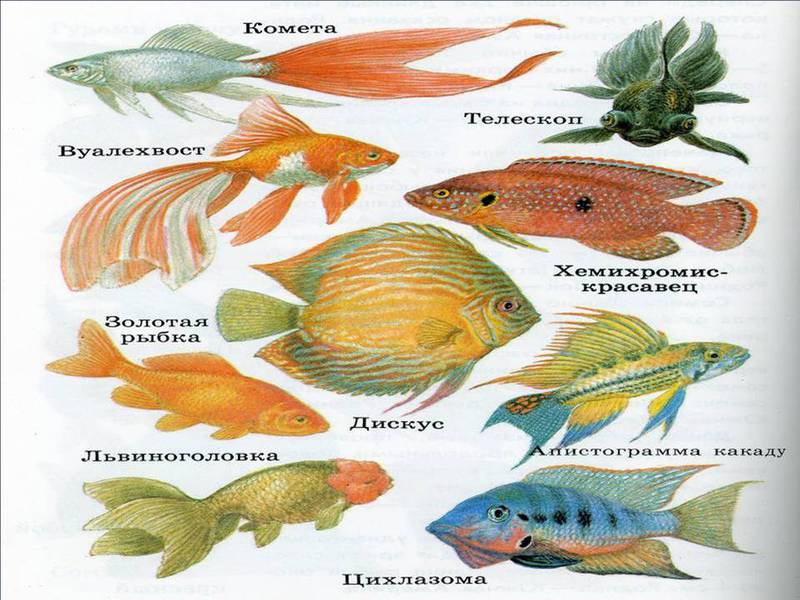
Photos and names of aquarium fish for beginners
Beginner fish should be low-maintenance and easy to care for. Caring for the aquarium and its inhabitants should not require experience, knowledge, or qualifications. The following families of fish are suitable:
- labyrinthine,
- viviparous,
- carp,
- catfish,
- cichlids.
Let us dwell on the description of only a few species and specimens.
Labyrinth fish
They got their name from the fact that they breathe ordinary air, the oxygen from which is absorbed in a special labyrinth in the fish's body. no need for a compressor, and can be transported in a pocket, wrapped in a wet cloth. Commonly used ones are:
 cockerels,
- gourami,
- lalius,
- macropod,
- coliseums,
- Betta Picta.
 cockerels,
Cockerel
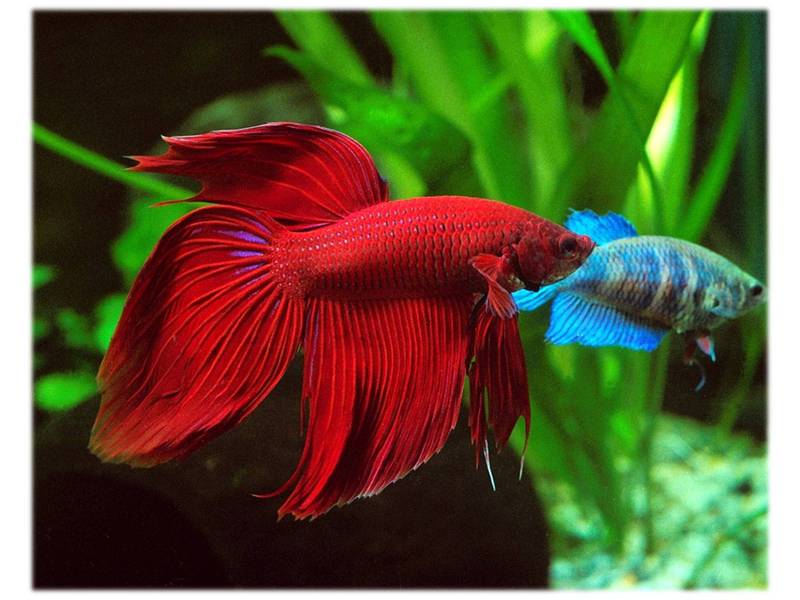
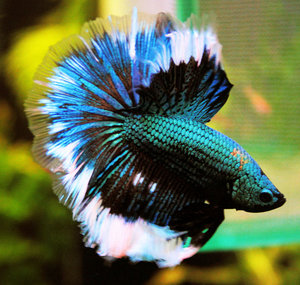
The fish is 4-5 cm (rarely up to 10 cm) and is especially beautiful when its fins are fully spread. It comes in a variety of colors, becoming more vibrant when excited or during spawning. Females are more modest in both coloration and fin size. Rightfully so. It's called "fighting"It is very aggressive towards its own reflection, rivals, and other fish, and may fray its fins. It reacts violently to the arrival of a female or even a water change. It is an unpretentious fish, suitable for temperatures up to 28 degrees Celsius, but can tolerate temperatures as low as 18 degrees Celsius. It can tolerate an aquarium volume of at least 5 liters per specimen.
Growling gourami
This fish breaks the main stereotype - it can talk. More precisely, it can make sounds reminiscent of chirping or croakingThe noise of the group truly resembles a growl. The silhouette of these fish, reaching 7.5 cm in length, vaguely resembles a shark. Their coloration ranges from brilliant blue to greenish, and sometimes even golden-brown. Two or more dark streaks running along the body are an indispensable attribute. The fins, which are wide and rounded, with arrow-shaped tips in males, are also dotted with spots. The ventral fins are filiform.
This aquarium fish has a very calm, sociable, schooling and slightly timid behavior. Eats any food, but prefers something floating on or near the surface. It requires a temperature of 24-28 degrees Celsius, a 15-liter tank per 1000 liters of water, and plenty of plant life.
Live-bearing fish
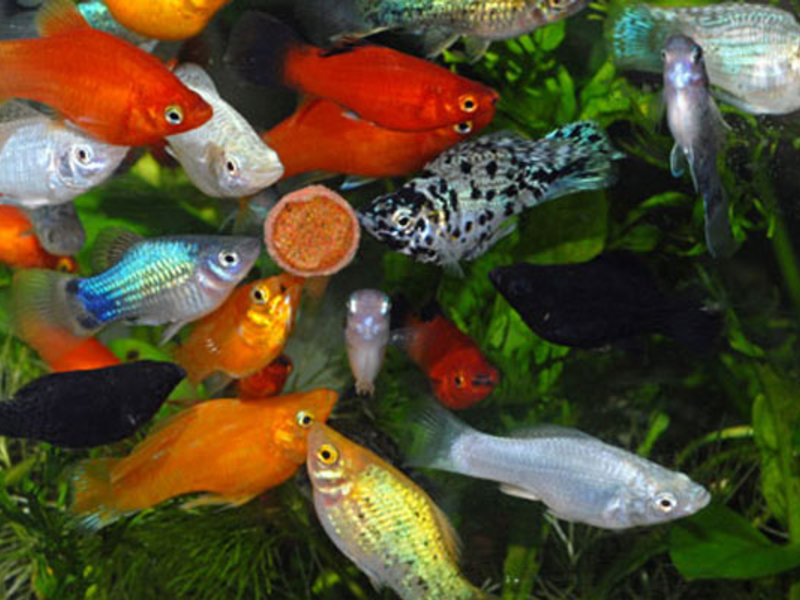
The very name "viviparous" indicates that these fish differ from most others in their method of reproduction and the birth of their offspring. As a result of mating, fertilization of the eggs occurs in the female's abdomen, from where they hatch as fry. Moreover, once the female receives the sperm, capable of reproducing offspring up to 8 timesThe following species are often found in aquariums:
- guppies,
- mollies,
- swordtails,
- platies,
- Ameki.
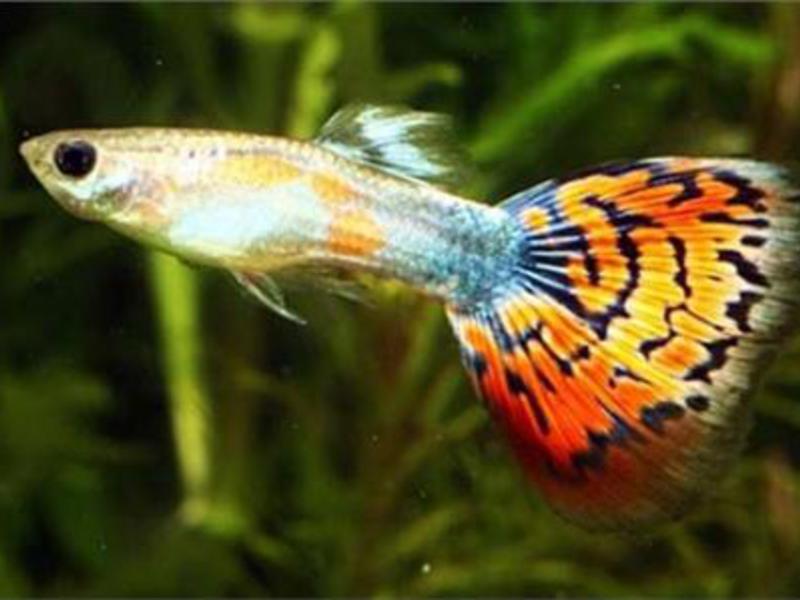
Guppies
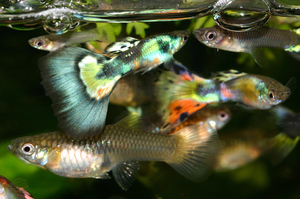
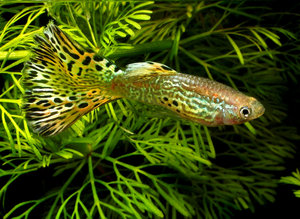
 Perhaps the most easy-to-care-for fish, males boast a huge variety of colors, patterns, iridescence, and magnificent, veil-like tails. Size 2-4 cm, while the inconspicuous females are always larger, reaching 7 cm. These are sociable aquarium fish that do not tolerate long periods of solitude and are susceptible to attacks when kept with other, more aggressive fish species.
They love natural light. They thrive in 2-3 liters of space per pair and can even reproduce in these conditions. Temperature ranges from 18-30 degrees Celsius. They prefer live food, but will also eat plant foods.
Swordtails
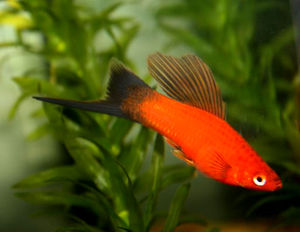
Live-bearing fish, named for the shape of its tail. Its lower tail is greatly elongated and pointed, resembling a sword. This is a purely male characteristic of the mature male. The coloration of these fish, which reach 10 cm (excluding the tail), varies from light olive to light brown, with a black edge to the sword. Females are typically larger and can reach 12 cm, but have a paler coloration. In groups of fish with a limited number of males, cases have been observed of females transforming into males, with a corresponding growth of the sword.
They are peaceful with other fish of similar size, but can be aggressive toward smaller fish and those with bushy tails. They thrive in temperatures of 22-26 degrees Celsius. They feed on almost any food, preferring any meat dishes, but will also accept plant foods, and tolerate long periods without feeding.
Predatory aquarium inhabitants
It's worth noting that the term "predatory" refers to fish that often exhibit an aggressive nature and mostly feed on meat. A distinctive feature of such aquarium fish is their intelligence and complex social behavior, due to their readiness to hunt and greater territoriality. These include not only bloodthirsty fish, but also a significant number of fish that exhibit this behavior only at certain times or under certain circumstances. Their species include:
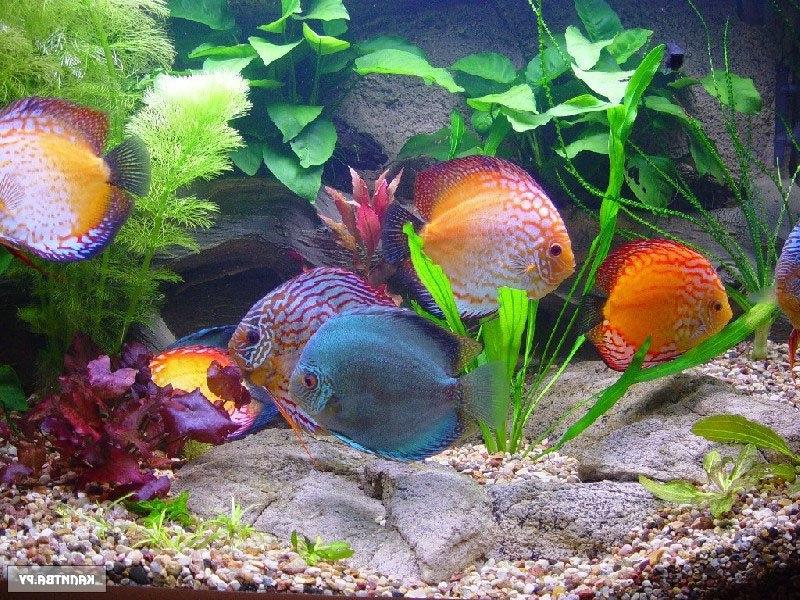
- cichlasomas,
- cichlids,
- Labeotropheus,
- bunocephalus,
- archerfish,
- piranhas.
 cichlasomas,
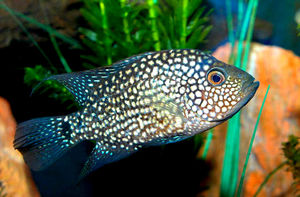
Cichlasomas
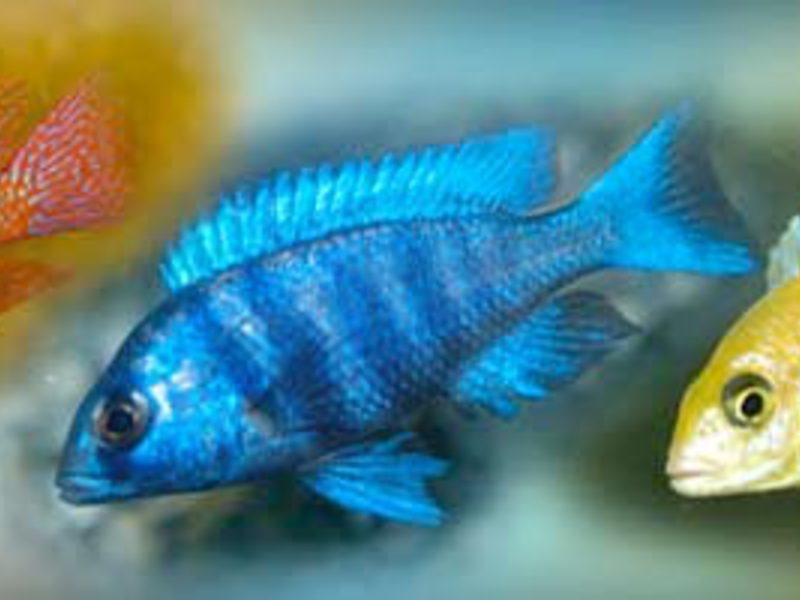
This unpretentious, strong and agile Aquarium fish that exhibit a character that dictates their specific needs. They have a laterally compressed and vertically widened body, with a large mouth and bulging eyes. They range in color from solid to multicolored, from striped to spotted, with brighter colors in adequate lighting. Males develop a frontal fin with age. The dorsal and pelvic fins of this fish curve toward a wide tail and end in elongated processes. Males reach 10 cm, while females are 2-3 cm shorter.
They do not tolerate the company of smaller fish, and will destroy them. This necessitates their separate housing or a larger aquarium. Form permanent pairs, require a separate territory for themselves and jealously defend it, especially during spawning and raising of fry, which they literally walk and drive home every day for the period of growth.
Cichlids are able to recognize their owners and feed from their hands, but they can bite painfully if a person encroaches on their nesting territory. Plenty of caves, shelters, and firmly anchored algae are desirable for the comfortable maintenance of these fish. Being virtually omnivorous, they require at least 70% of their diet to be meat and protein. The required temperature range is 24-28 degrees Celsius.
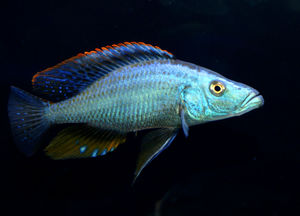
Long-snouted cichlid
 This fish is sometimes called the knife cichlid because of its very elongated, pointed bodyThe head, with a protruding lower lip, takes up slightly less than half the length, reaching 12 cm in males and up to 10 cm in females. The coloration is silvery, with a blue or greenish tint, with golden-orange spots at the tips of the dorsal and anal fins. Females have a coloration closer to olive.
This predator is quite calm, but likes to pounce on shiny objects, and when attacking other fish, on their eyes. Males are polygamous. they need a haremIf he only has a couple of females, he'll constantly pester them. Activity can be reduced by increasing the tank size and the number of females, as well as by providing plenty of hiding places and only adding faster and larger tankmates.
During spawning, these fish jealously guard the nest. The female carries the fry in her mouth for several weeks during the entire incubation period and until they are strong enough to feed themselves. Cichlids require a variety of live or frozen meaty foods; some hobbyists even feed them small fish. They require a large aquarium, over 200 liters per family, with a temperature of 24-28 degrees Celsius.
The smallest aquarium inhabitants
In a large aquarium they will be unnoticeable, but in a small one it may not be so easy to maintain a regular microclimate, since small fish are often very demanding in terms of maintenance conditions. It is preferable flocks of 8-12 specimensTo make aquarium life interesting for both the fish and their owner. These include:
- dwarf tetraodon,
- pygmy catfish,
- rosbory,
- green city,
- torch epiplatys,
- badis scarlet,
- Endler's guppies,
- panther danio,
- barbs.
 dwarf tetraodon,
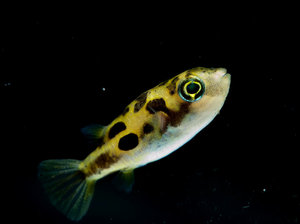
Dwarf tetraodon
This is a small, four-toothed predator, up to 2.5-3 cm in length. It has a yellowish coloration with irregularly shaped dark spots on its tadpole-like body. Mature males are more colorful and sometimes have a dark stripe on their abdomen. Bulging eyes move independently of each other.
Like many small fish, they are quite shy, but like all predators, they are quite intelligent. They are intently interested in what's going on outside the glass and, when a person appears, may beg for food, making a deliberate display. An interesting characteristic of their reaction to fear is to inflate themselves into a ball two to three times the size of their body.
They hunt snails, worms, mollusks, and juvenile shrimp, hovering over their prey for long periods, choosing the right moment. They require a diet of mostly shellfish, live or frozen, to wear down their teeth. They are relatively peaceful with tankmates, but will definitely nibble on those with large tails. Temperature 23-27 degrees in an aquarium with 15 liters of water, part of the space in which has dense greenery and shelters.
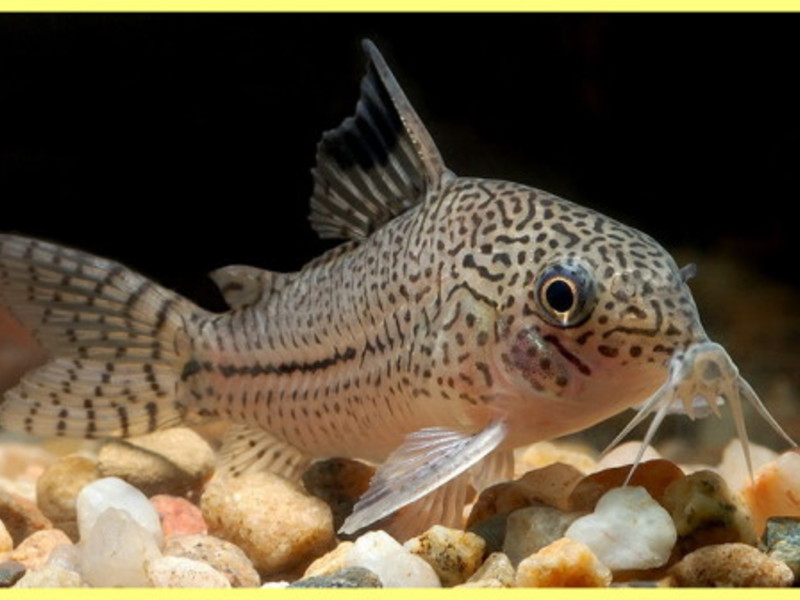
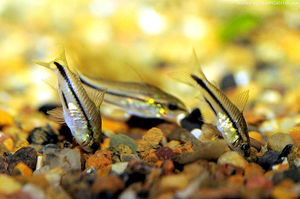
Pygmy catfish
 The Pegme Corydoras aquarium fish attracts with its elegant and discreet appearance. Its grayish-olive elongated body has flared sides, a dark back, and a stripe running from the nose to the tail. The corners of the mouth have small barbels. Females reach up to 3 cm in size, while males reach up to 2.5 cm.
The fish is peaceful, curious, and easygoing, with a sparrow-like shoaling habits that can sit in a row, settling on a snag or leaf, and then dart off to another spot to find one of their own. They are more active and confident. when containing 10 or more specimens, with at least two males per female. They love to rummage around near the bottom, engrossed in their food, and will eat anything they can fit in their small mouths. They thrive in an aquarium of at least 40 liters (100 gallons), with 6-12 fish per school, and a temperature of 24-26 degrees Celsius (75-80 degrees Fahrenheit).
Strawberry rasbora
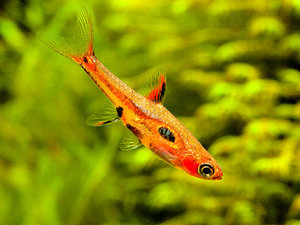
Sometimes you'll hear the name "Strawberry Boraras" and related variations. There's no difference; they're the same bright red fish, 1.5-2.0 cm in body size, with a dark, oval-shaped spot on each side, reminiscent of a berry scar. Females have a paler coloration and can reach 2.5 cm in length, with a smaller, round spot.
 This timid, fussy and very active fishThey prefer to stay in a school, so for natural and comfortable behavior, it's best to keep 7-10 specimens. They thrive in a densely planted aquarium with a bottom lined with dry leaves, which mimics their natural environment and makes it easier to observe them against a dark background. These fish eat all protein and frozen foods, but as insectivores, they prefer live and small foods.
They thrive even in aquariums larger than 10 liters for a school of 8-10 fish, but they thrive and reproduce in larger quantities. The ideal temperature is 23-28 degrees Celsius.
The underwater world is vast and diverse; it's impossible to describe all its splendor in a single article. We've only scratched the surface. We've lifted the veil of mystery on just a few of the fish kingdom's inhabitants. Anyone can embark on this path of observation and discovery by joining the ranks of aquarists.