An aquarium will be a delight to the eye and a beautiful addition to your home only if you keep it clean. Many people are put off by the need for regular cleaning, but that's a shame: if you keep your "home pond" looking its best, cleaning it won't be a chore. In this article, we'll share secrets for making aquarium maintenance simple and time-saving.
How often should you clean your aquarium?
The frequency of cleaning the aquarium depends on several factors:
- Volume of waterThe smaller the capacity, the more frequently cleaning is required.
- Number of fishIdeally, there should be one medium-sized fish per 1 liter of water. Large fish require 2-2.5 liters of water. An overcrowded aquarium should be cleaned more frequently.
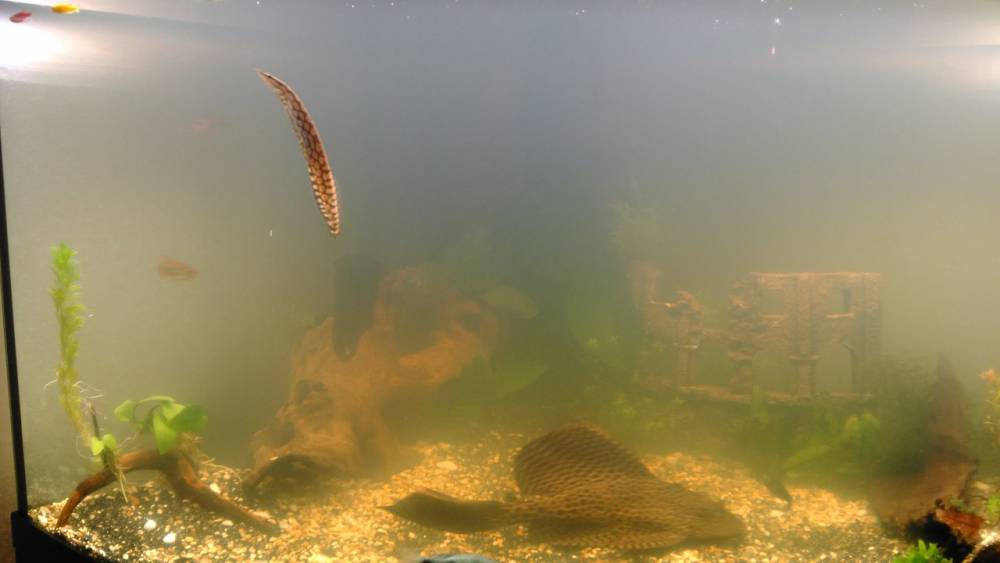
- Presence of plantsIf there are no plants in a pond, food remains and fish waste quickly accumulate in the soil.
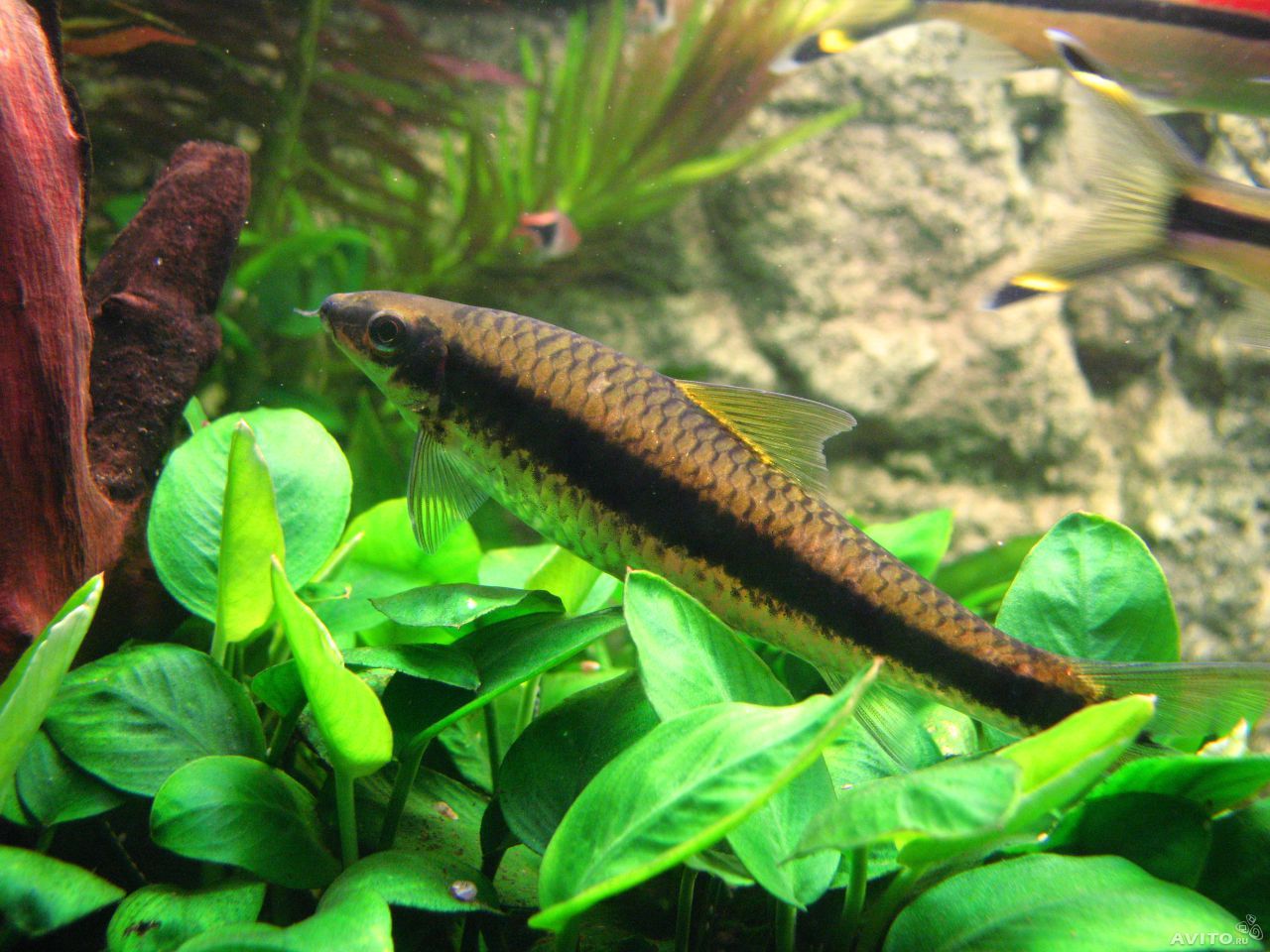
- Presence of snails and small crustaceansSnails and shrimp eat leftover food and clean the bottom and walls of the aquarium. Cleaning can be done less frequently.
- Availability of special filters and water purification systemsSpecial filters through which water circulates allow the frequency of cleaning to be reduced to once every few months.
A small aquarium (10 to 30 liters) should be cleaned at least twice a month. Aquariums over 40 liters can be cleaned once a month. Larger tanks over 100 liters with a low fish density can be cleaned once every 2-3 months.
Aquarium cleaning tools
To clean the aquarium you will need:
- Silicone hose.
- Bucket or basin.
- Scraper.
- Vacuum pump.
- Prepared water.
Sequence of actions
- A few days before cleaning the aquarium, fill a bucket with tap water and let it settle.
- Cleaning begins with washing the decorations. Remove all decorations from the water, rinse thoroughly under the tap, and let them dry.
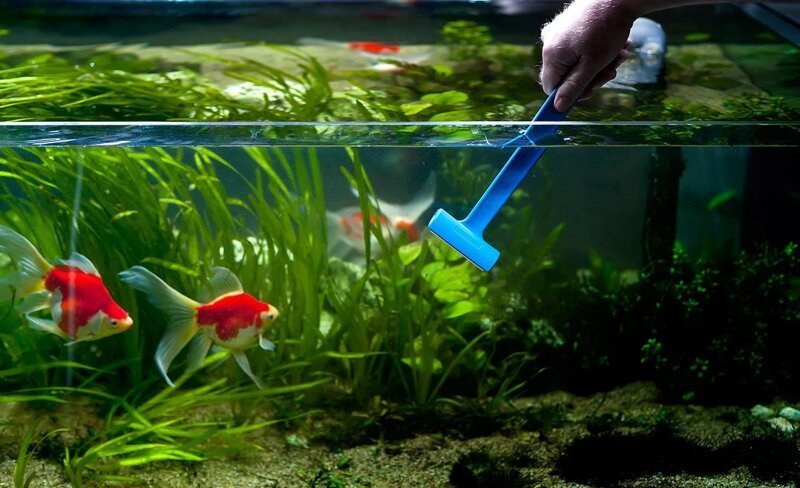
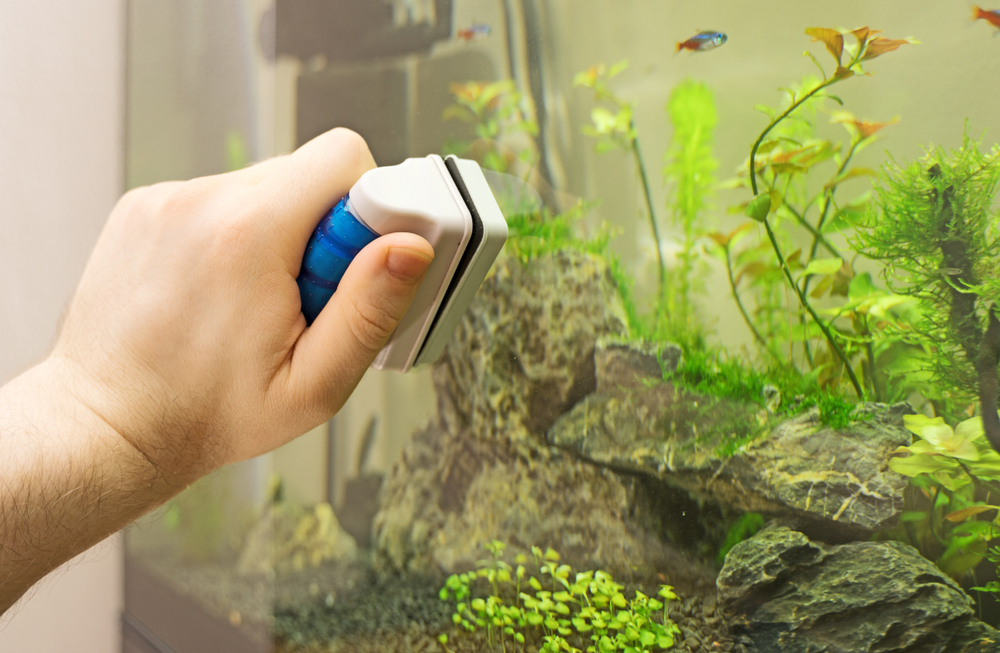
- Next, use a metal scraper to clean all the glass. Be careful around the joints, as this could damage the silicone and ruin the aquarium.
- The next step is to rinse the plants. Food particles and fish droppings often accumulate on the leaves. Remove the plants from the soil and rinse the leaves directly in water.
- Next comes the substrate. Take a pump and create a vacuum. Carefully, without disturbing the fish, move the suction part along the bottom. If you don't have a pump, you can use a silicone hose. Light particles will be sucked into the hose, but the substrate will remain in place. Drain the sucked-out water into a prepared bucket or basin. You can drain no more than a third of the water at a time.
- After the main cleaning, remove the filter, disassemble it, and rinse it in the drained water. Wring out the sponge thoroughly.
- Now you can add settled water and plant all the plants. Level the soil. Turn on the filter. After a few hours, the water in the aquarium will become clear.
Top 5 helpful tips on how to clean your aquarium less often
- Don't overfeed your fish. Strictly adhere to the recommended amount and feeding times. Excess food quickly decomposes in the water and pollutes it.
- Use only high-quality food. Periodically rotate live and dry food to ensure your fish always have a good appetite.
- Get some bottom-dwelling snails. They'll loosen the soil and eat any leftover food.
- Rinse the filter under the tap once a week. This will help it perform better.
- Pay attention to the pond's lighting. There are special lamps that prevent algae growth and bacteria from spreading. Daylight from a window across the street will accelerate pollution.