Training a dog to obey commands isn't easy. Therefore, it's best to start early—specifically, at 5-6 months. At this age, puppies are still absorbing information like a sponge, but they're also well-versed in intonation and the need to respond to their owner's requests. Teaching the "no" command to a younger dog is easier than teaching it to an adult. Even the cutest, most obedient, and intelligent pet should know this command. This will make life easier for both dog and owner. Let's look at how to train your pet.
How to teach a dog the "no" command. The differences between "no" and "no"
Contrary to popular belief, "No" and "No" are completely different commands. The former is an absolute, categorical prohibition, a distraction that focuses attention on the next command. It is given in a sharp, raised voice. The dog's reaction should be unambiguous. This is usually followed by a prohibitive or recommendatory command—a call, a taboo, or a command to act.
The "No!" command also prohibits, but more leniently; after it, don't expect another accompanying command. Pets often react similarly to both prohibitions and behave cautiously. However, the former serves to prevent unwanted behavior at a specific moment. However, "No" doesn't always strictly prohibit an action, only strictly restrict it.
If we use both commands, we must first say “No”, and then “No”.
At what age should you start training a puppy?
Experts recommend starting puppy training at 4 months of age. The ideal time is after 5-6 months, when the dog no longer views interaction with its owner as a game, is responsible for every command, and responds quickly. How can this be achieved? Most often, when training dogs to obey certain commands, dog trainers always reward them with their favorite treats to reinforce the result.
Here are the basic rules:
- You shouldn't start training before 3 months, as puppies at this age are not yet psychologically ready.
- Disobedience should not cause negative emotions in the breeder.
- Praise and even rewards are the main motivating factors for the correct perception of any command.
- One person should train the dog to respond objectively to voice and behave appropriately. This way, the dog will develop these skills more quickly.
But by the time training is complete, any family member can use “No!” – and the dog should perceive it correctly.
"No" is a basic command every dog should know. The sooner they learn it, the better. This simplifies training—by 3-4 months, a puppy will be able to avoid hot food and won't pick up leftovers or trash. Responding to the "No" command is a sign of obedience and sanity.
How to teach a puppy or adult dog the "no" command
The "No" command is used in cases of aggression, noise retaliation, or the desire to pick up trash in the street. It's also useful if the dog is causing damage—whether it's furniture, garden plants, a car, shoes, or digging under a fence.
How can you make your pet understand that owners should and will limit it in such cases?
- Start with the simplest thing - choose a forbidden object and hone your skill on it.
- Don't overdo it - you can't ban everything.
- Look for contact – the pet must feel a compelling reason for the owner’s reaction.
- Do not force, but be firm and persistent in teaching prohibitions.
- Don't start training your dog to respond to the "no" command with food, as it will be difficult for your pet. But be sure to reinforce this skill later.
- Reward your four-legged friend, but be consistent. Your dog needs to learn to respond to your voice. Only when the behavior is correct should you try offering a treat.
- Dog trainers recommend using a prong collar.
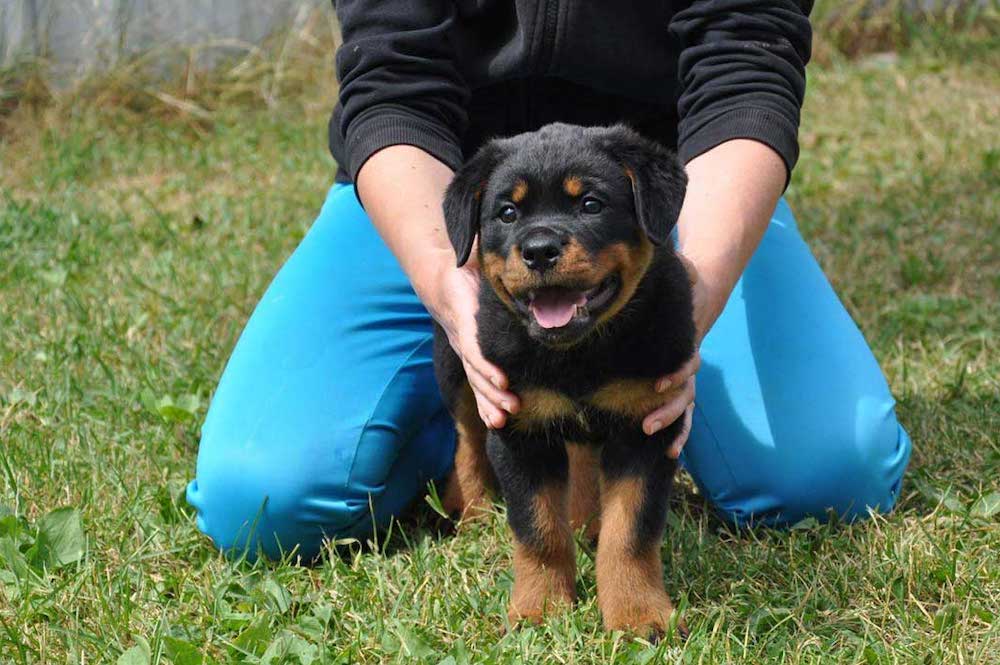
And remember, any dog breed can respond well to training. If something goes wrong, it could be because the time and place were wrong, or you didn't consider your pet's age, or even their mood and surroundings.
Read also about 4 Commands Every Dog Should Know.
Step one: introduce the team
To help the dog understand the task, experts advise placing prohibited objects along the pet's route. Naturally, the animal must respond correctly to your categorical command:
- At first, while practicing this skill, put a leash on your dog.
- If the dog tries to grab a forbidden object, immediately give the command.
- If there is no reaction, repeat it not immediately, but after some time, alternating with other demands.
- If the dog doesn't respond to "No," try again in the same sequence, but more firmly: jerk the dog's leash sharply when it tries to grab the forbidden object. Do this firmly, but without unnecessary emotion or anger. This is especially important for puppies to avoid stress and maintain a stable psyche.
- If your pet does everything correctly, praise him; this reinforces the skill.
Step two: reinforce the skill on walks
Is your four-legged friend already familiar with the "No" command? Try reinforcing this training skill: vary the route, test your pet's reactions at different times and in different environments, and practice several times a week. Dogs tend to quickly forget if they aren't honed through long-term training.
Experts also advise continuing training without a leash, changing the prohibited items, and not neglecting the restrictions. You can't persistently restrict your pet's behavior and then allow it later. This will prevent the skill from being reinforced.
What not to do when training a dog
When training a dog, don't expect it to instantly adapt to a command. This takes time. "No!" is a difficult request, despite its straightforward nature.
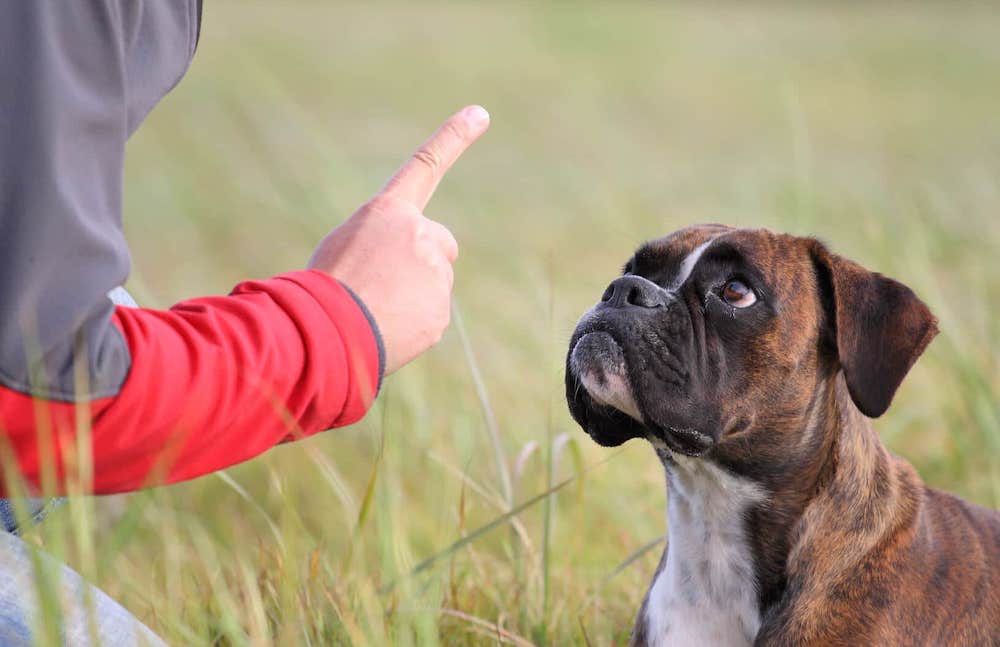
Training a puppy begins with accustoming it to its name and the requests “Come” and “Sit.”
- During the training process, do not scold or punish the dog.
- Your response to behavior and commanding tone will set the pace of the training process. "No" is an immediate, stern command; if you react too late and your dog switches to the "no" command, it's your fault.
- Don't use "Ugh!" too often, don't replace "No" with this phrase.
- Use time-out during training to give your puppy a rest.
- Don't keep your dog in fear. If you can't hone your dog's reaction to a restraining order, he gets angry when the leash is pulled, and he's not always obedient, it takes practice.
- It's not recommended to practice "No!" when training dogs in response to people or other animals. Dog trainers consider this inappropriate. During a dog fight, it's best to separate them and not wait for a response.
Read also, How to teach a dog the "Lie Down" command.
Brief conclusions
Train your dog to obey the "No" command with good intentions and consistently, demonstrating your superiority, but without deviating from the principles of equality.
Dogs are especially sensitive to intonation:
- If you need to train an adult dog to accept a categorical no-no, it's difficult and time-consuming, but entirely possible. It all depends on how loyal, trusting, and cooperative the dog is.
- Basic training isn't just about negative commands. When you begin training, teach your dog to "analyze" and distinguish between commands. Otherwise, your pet will react solely to the owner's behavior and the harshness of his voice.
- Start training in a quiet, one-on-one environment, so your puppy will be collected and respond appropriately to your requests.
- If you can't get your four-legged friend to obey commands, don't give up and don't stop training. Consult a specialist.
If your dog still doesn't respond well to the "No!" command, tug and shorten the leash, doing so firmly and without emotion. Since dogs always sense tone, they'll soon learn to understand the commands correctly.

It just takes time. And don't resort to physical force—it won't elicit the right response. If your dog already masters other commands, you won't have any problems with this one—just be patient.