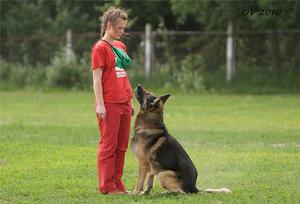
"Down" is one of the most basic commands dogs can learn, along with "sit," "stay," and "speak." Learning to do so helps establish a bond between the animal and its owner. It's best to start teaching a puppy this command no earlier than three months of age.
When training, various methods can be used, including rewards (treats, verbal praise) and coercion (pressure on the withers). Training can be done outdoors or indoors; the main thing is that the environment is clean and the dog is not distracted.
Method one: training a puppy with a treat
Perform this exercise while your dog is sitting or standing. Take a treat and hold it toward your dog's nose, letting him nibble on it. Your palm should be facing down, otherwise the dog might snatch the treat from your hand. Say "Down," and then gradually lower your hand with the treat in an arc down and forward. The easiest way to get to the treat is to lie down, which is the command you gave. When this happens, give the treat to your dog and reinforce your success with praise.
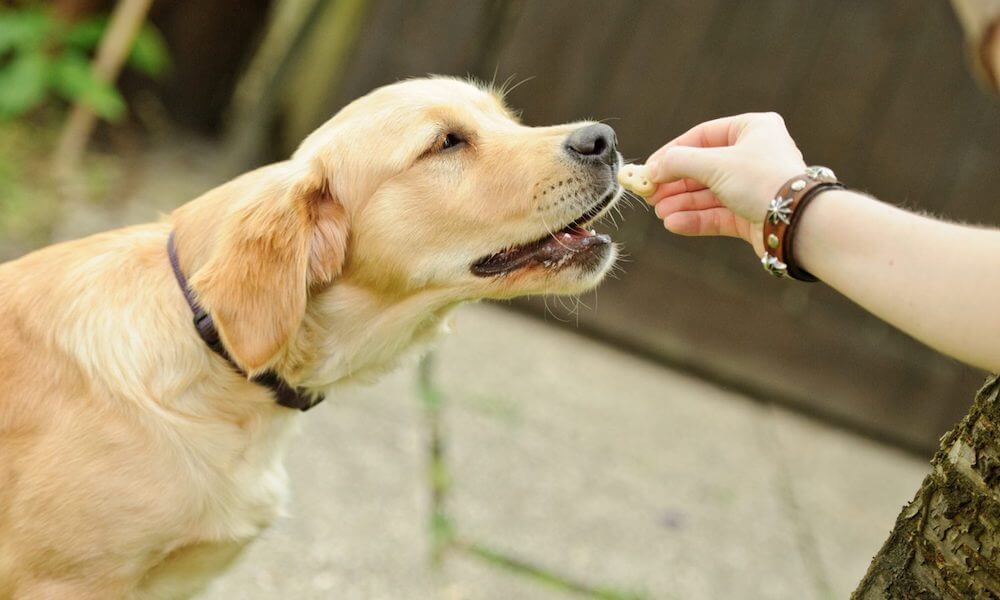
If your dog doesn't understand and tries to get to the treat in another way, be patient. Don't give it the food until it finds the right way and lies down on the floor.
Repeat this maneuver several times, moving your hand further and further from the starting position, until you achieve success. Be sure to repeat the command verbally. Focus on the verbal command so that it becomes associated with the need to lie down, regardless of whether you have a treat or not.
Over time, move further and further away from the animal, repeating the gesture and the "lie down" command. The dog should remain in a lying position.
As the skill is mastered, you can change the environment or add stimuli (strangers, unfamiliar sounds, etc.) to develop a clear reflex. This way, the dog will learn to obey the command in any environment, not just in a specific place and under certain circumstances.
Read also: A list of basic dog training commands.
The second method is with a hook
If you're dealing with a stubborn adult dog and prefer a more aggressive approach, you can try the undercut method. Place your left hand on your pet's withers and grab them under their front legs with your other hand. Then, press down on their withers with your right hand, giving them a gentle tap (this is called undercutting). Praise them and let them lie down. Let them remain in this position for 5-10 seconds, then release them. Don't release them immediately or hold them in this position for too long.
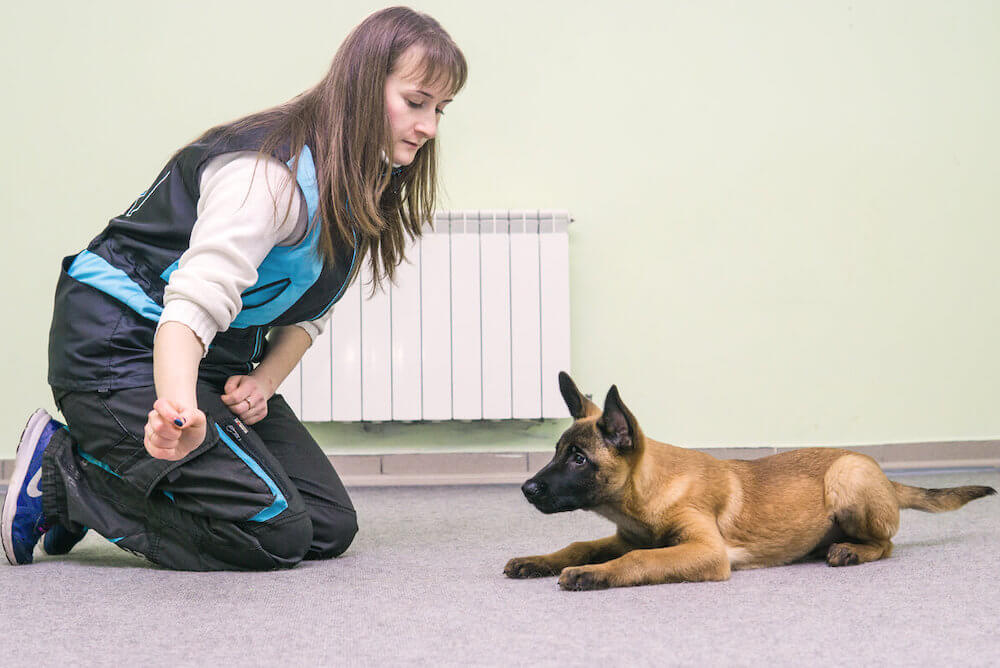
It is very important to help the dog take the correct position - the body should be straight, not slumped, and the front legs should be extended.
Teaching a dog commands using gestures
In addition to verbal commands, dogs understand gestures well. It makes sense to add gestures not right away, but only after your dog has already learned to follow the command.
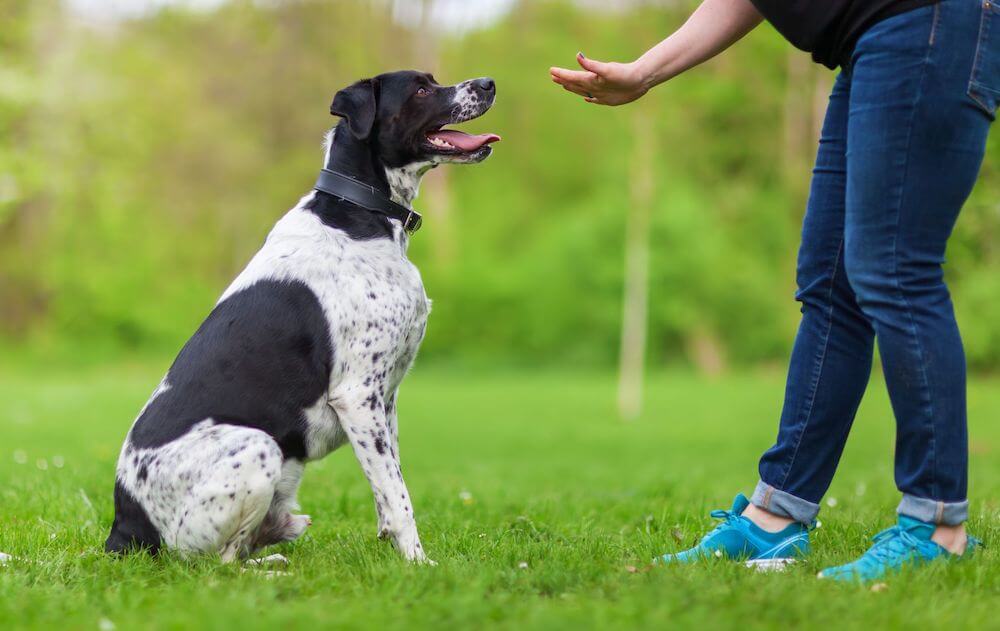
Here's what the gesture for the "Lie Down" command looks like:
- starting position: raise your right hand up, palm up;
- lower it down to the hip. At the same time, the dog should also lower itself;
- If your dog is a breed that is easy to train, it is quite possible to teach it the "lie down" command by first using your voice, then adding a gesture, and finally using only gestures.
Read also, How to scold a dog correctly so that it doesn't get offended.
Mistakes in dog training
It is very important not to make mistakes when teaching your dog commands.
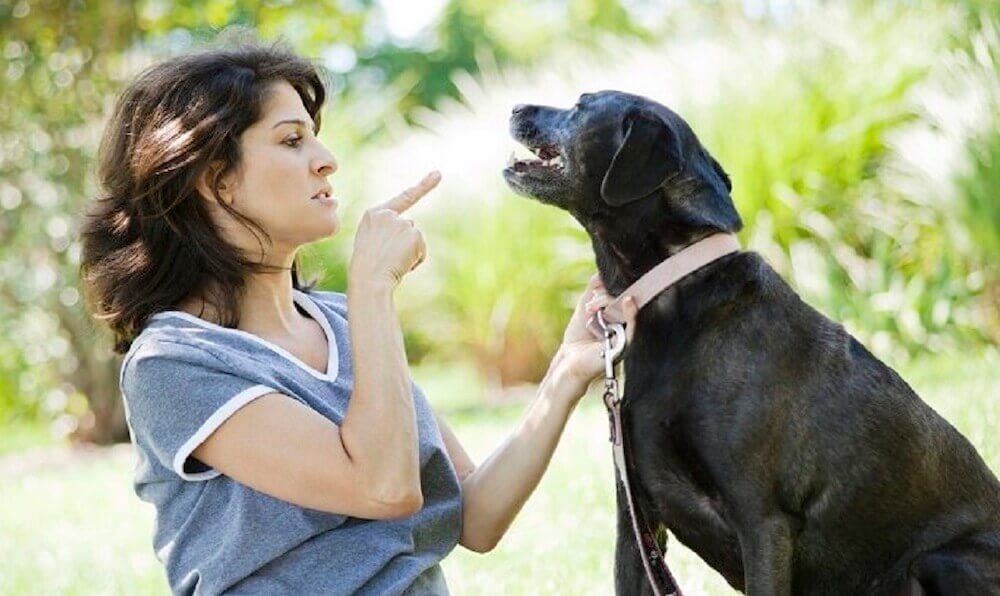
Here are the most common mistakes:
- Bad food as a reward. It's important that it's a favorite treat that your dog is truly interested in. Consider your dog's preferences and offer them what they like best.
- The voice is too rough. Remember that even though you're training your dog, it's still your friend, and you shouldn't put too much pressure on it. Everything should happen in a peaceful environment—that's the only way to achieve complete mutual understanding.
- Using a gesture first, then a voice command. First of all, you must use your voice.
- Multiple repetition. It's best to say "Down" once per approach. It's okay to repeat it again, with a firmer tone. Don't repeat this command multiple times.
- Rushing or delaying the treat. Give your dog a treat only when it hasn't fully completed the "Down" command or when it has already begun to stand up. Even if you have to put it back down, it's important to praise and reward it only when it's down.
- The absence of a command that signifies the end of the exercise. Praise alone doesn't mean the dog can stand up. Make a release gesture when you allow the dog to stop performing the command, say "Walk" or another word, and demonstrate with gestures that it's okay to stop.
- Training a tired dog. Avoid choosing a time when your dog is tired or in a bad mood. Training will be fruitless, but there's a good chance of ruining your relationship.
- Tightening up the exercises. If you overdo it and drag out the training session too long, your dog may become bored. Therefore, it's a good idea to take breaks for play, rest, and practicing other commands. If your dog becomes distracted, slow, or reluctant to follow commands, it's time to take a break.
- Pronouncing the command in different words. If you choose the word "lie down," don't confuse it with the commands "lie down" or "lie down." Stick to the chosen word, as your pet doesn't speak Russian and won't understand all the variations.
- Using a leash. Sometimes owners try to force their dog to lie down using a leash. But this can end up stressing the dog. Furthermore, in this situation, the dog won't begin to think about the command and won't learn to make the decision to lie down on its own.
- Training several commands at once. Do not move on to the next command until your pet has mastered this one.
- Inflated expectations. Don't expect your dog to learn a command after just 3-4 repetitions. Assess your pet's abilities and skills realistically and create a realistic plan. If you're dealing with a difficult-to-train breed, a puppy, or a dog that has never been trained before, they won't learn the command right away.
Read more about 4 typical mistakes when training a dog.
Brief conclusions
When training a dog, it's important to maintain a positive attitude and be patient. Different dogs need different amounts of time to master a skill, but if you follow the instructions, you'll definitely succeed over time. A dog can be considered trained only when it can obey the "Down" command anywhere, and on the first try. The animal should remain down until you release it.