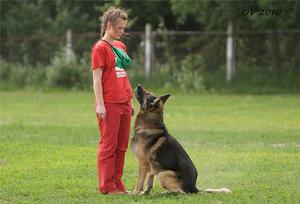
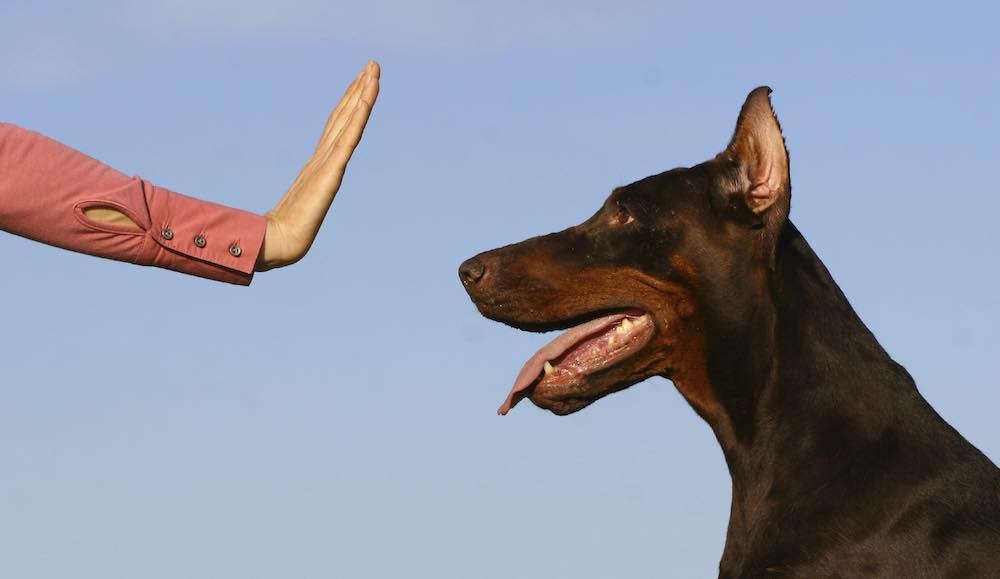
Almost every breeder and dog owner wants to teach their pet basic commands. The "Heel" command is a sign of trust, devotion, and visible obedience. But no matter how much we want to rush the process, teaching a four-legged friend to hear and obey requests is only possible from a certain age. Puppies under 7-8 months are not psychologically and emotionally prepared to properly perceive verbal commands. For young children, any request is associated with mischief and a fun game. Therefore, don't expect your puppy to respond appropriately and accordingly to a call to action.
Moreover, experienced dog handlers believe that "Heel" isn't a basic command. First, the animal must learn to respond to its name, return to your heel, and become accustomed to a leash. These are all signs of obedience. Once you've tamed your pet's character, you can try more complex commands, such as "Heel," "Sit," "Fetch".
Content
When can a puppy be taught the heel command?
At a young age, puppies are unable to correctly perceive intonation. They also fail to respond appropriately to requests, as any request is interpreted as a way to attract attention, a call to play, movement, and motivation for communication. Therefore, it's not until 8 months of age that puppies learn to follow commands. It's at this age that young dogs are ready to accept their owner's requests, begin to take training seriously, and respond appropriately to any reward.
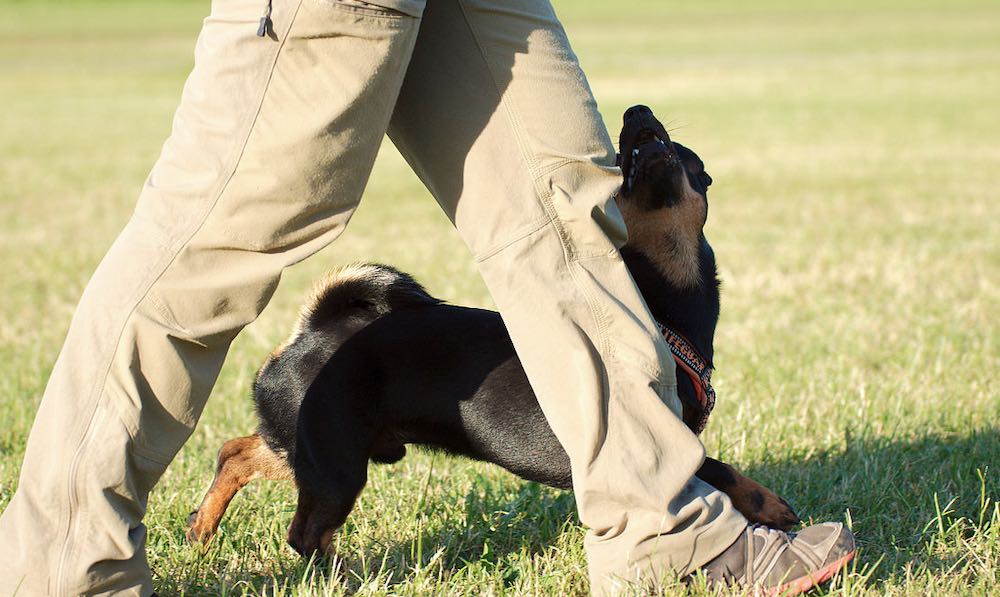
If you teach your dog the "Heel" command, in the future your pet will be able to always follow your path and be obedient on walks, as well as:
- It won't lose its bearings if you turn, go to the side of the road, or stop.
- Learn to adapt to your walking pace.
- Will be able to move safely near roads with heavy vehicle traffic.
- He will begin to behave softly, non-aggressively and obediently among strangers, including among animals.
But in any case, the "Heel" command is always useful for service and guard dogs—it ensures total control. You'll be able to cross the road and walk in crowded places without any problems, even with a muzzle. React appropriately when meeting other dogs—dogs of all sizes and ages often lose control when meeting others of their own kind. The "Heel" command always comes in handy here.
What do you need to train a dog?
It is important to remember that teaching the “heel” command when training a dog is essential to keeping your pet under control in a crowd.
The training process should take place in a calm environment so that the dog is not distracted by extraneous sounds, clearly perceives the owner's requests, and acts in a coordinated manner:
- It is necessary to train the dog to obey a command only after it has learned to move calmly both on and off a leash.
- Train your pet to move parallel to your legs. If your dog can cover a distance of several meters symmetrically to your movements, that's already an achievement.
- When you begin training your dog to walk next to you on a leash, try to do it without jerking the leash or raising your voice, so that the dog perceives everything naturally and without constraint.
- As a reward, prepare pieces of offal or dry food. Small portions are convenient for training your dog to obey commands.
- It is better if your four-legged friend is slightly hungry, rather than just fed.
To achieve results, you will need to do everything gradually and consistently, without changing the frequency of classes and the step-by-step rhythm of actions.
Algorithm for teaching a dog the command on and off the leash
A favorite treat will help train your dog to come, setting the right mood. You can use food or rub your palm with a treat and use a decoy (smell) instead of food to encourage behavior. We'll try conducting the first few training sessions on a leash, but tugging or using force is not recommended.
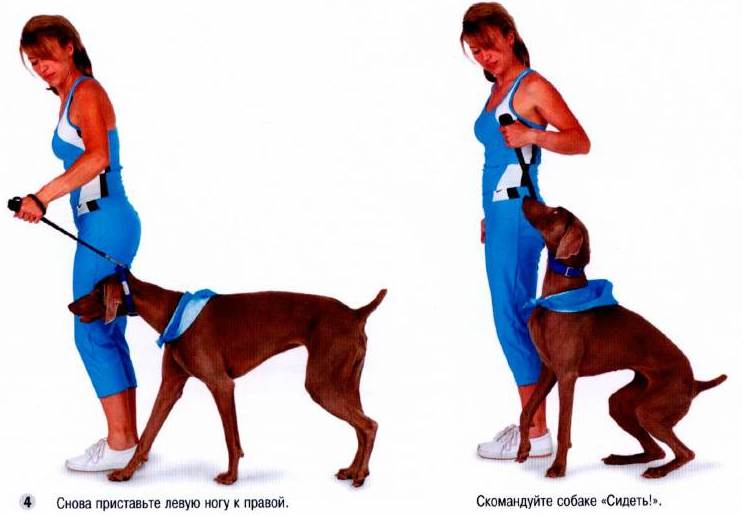
A leash is a conditional connection and a means of controlling an animal, no more than:
- Hold a treat in your hand or hold your palm with the scent in front of your pet's nose and slowly lead it in the direction you and your four-legged friend should go.
- Motivation for a dog is the familiar, enticing scent of food. Even if a hungry dog doesn't grasp the meaning of the action the first few times, it will involuntarily follow the treat (or its scent).
- The first step is to guide the animal to the correct "at your leg" position. Once the dog learns to walk beside you (follow your hand) without being distracted or responding to extraneous sounds, calling is an excellent start to the training process.
- Next, the dog must not only take the correct position (posture) for a fragrant reward, but also be able to follow the owner.
- The "Heel" command requires moving forward next to your left leg. Now we'll try to teach the dog to walk next to you. We'll also use the coveted piece of food to achieve this goal.
- The final step is to learn to walk along a complex path, turn off the path, walk in circles, stop, and then start again. This requires experimenting with different movement patterns: walking with stops and turns, and unplanned changes in path.
Be sure to reward your pet if it has mastered the next step of the command and learned to stop and go without being asked, responding only to the call “Heel.”
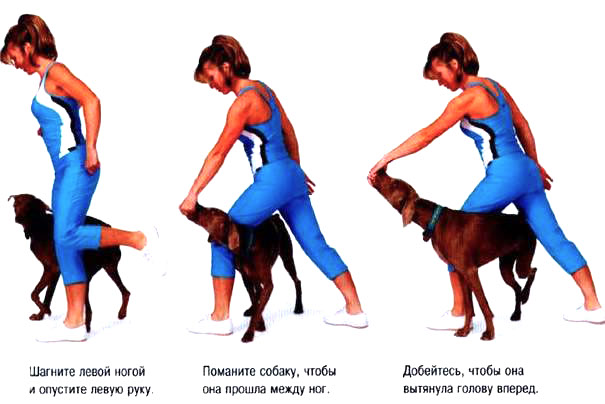
Later, challenge your dog to perform the desired command without a treat; simply holding your hand in the direction of movement is sufficient. The training is completed when the dog can calmly begin, continue, and stop at your feet promptly, solely on the trainer's command.
Read also, How to teach a dog the "No" command.
Errors and problems in learning
It is important to control your own movements and not jerk the leash before the command has been given.
Maintaining a tight leash during training is a crucial aspect for beginning trainers. The dog should be able to distinguish between a restraining tug and a free leash walk.
You should only begin practicing the off-leash command once your dog can respond to your request skillfully and without hesitation, but under your strict control:
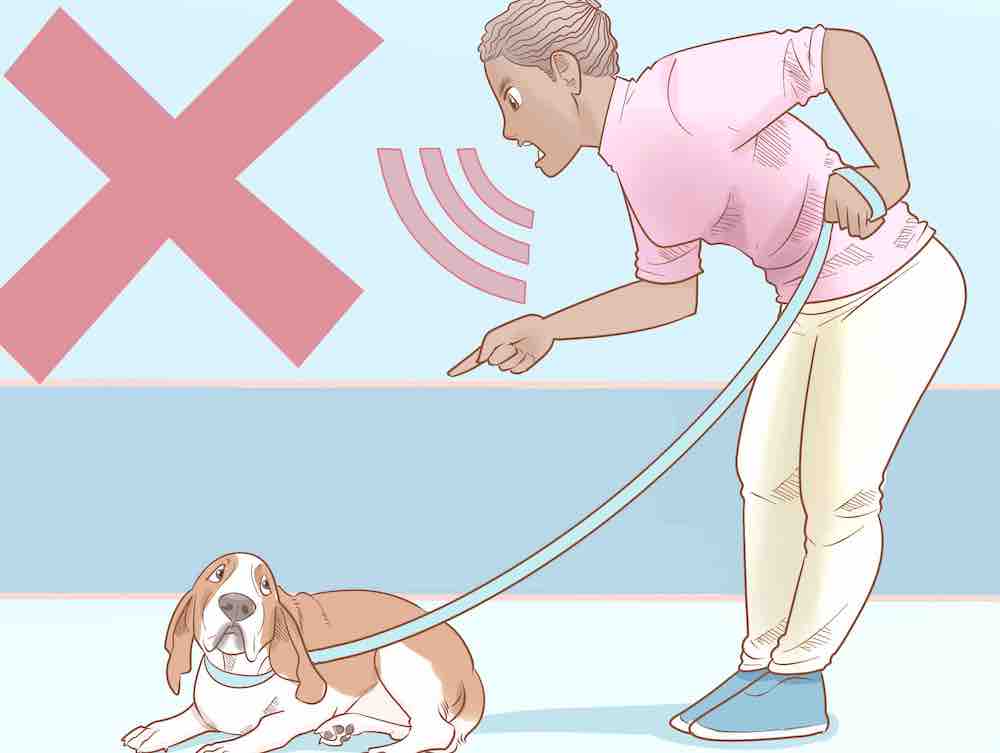
- Watch your tone and make eye contact with your pet frequently. Raising your voice can make your pet feel guilty and perceive any actions as punishment, regardless of whether you use treats as rewards. Intimidation will never reinforce the behavior.
- Don't disorient the animal by abruptly changing direction. It's enough to develop the skill of responding to the "Heel" command in various situations (moving, stopping, changing trajectory) without resorting to unusual situations.
- Proceed consistently, reinforcing each stage of training.
- You must not abuse the command or mislead the animal.
- Deviating from the set course doesn't mean failure. The dog may react to strange sounds, be confused, and initially not understand the command. Therefore, we train the dog to walk alongside regularly, consistently, without coercion, and rely on the dog's mood.
A tired four-legged friend is completely unprepared to receive adequate information. It's clear that the animal won't be able to correctly follow all commands.
Praise, thank and be sure to reward your dog.
Brief conclusions
Work with your dog confidently and avoid distractions. It's best to conduct training at the same time every day:
- Your pet's personality and preferences play a huge role in achieving results. Sometimes, replacing food with a toy reward is more motivating. Your four-legged friend doesn't always respond well to a treat.
- A dog that's been walked and run around a lot is much more trainable. Otherwise, the animal will perceive the entire event as a walk, which will reduce its focus on fulfilling requirements. Start training in secluded areas, gradually moving to areas with distractions, passersby, and near highways. Then your dog will respond appropriately to the "Heel!" command in any situation.
- For training adult large dogs, a prong collar with curved prongs (parforce) is acceptable. This is a temporary control method. Once your pet learns to respond appropriately to requests, switch to a regular collar. Only then can you attempt to train your dog to the "Heel" command without a leash, once you're confident your dog won't escape or attempt to harm passersby.
Progress the command only as you master the skill, take your time, and be consistent. Take training seriously, dedicate time to training regularly, reward your dog, and praise it often—after all, these are not only your achievements but also your pet's. And most importantly, be patient and persistent. Then you will succeed.
Read also: list of basic commands for training.