A pet isn't just love and positivity. Owners often enjoy playing with their pets when they're young, but a completely different "relationship" develops as the dog matures. Every dog owner wants their dog to be obedient, smart, and diligent. Big and small, plush and smooth-coated, kind and feisty—all require not just basic care, feeding, and walking, but also training. Training is training. A trained dog has learned to follow commands, responds obediently to them, and responds appropriately to requests, regardless of mood or instincts. Surely you want such a four-legged friend too?
One of the most basic commands a dog must perform is "fetch." This code name means "bring." The ability to retrieve a thrown object and return it to its owner is highly valued. While this is a playful exercise, it's also an important task for service and hunting dogs. Training and execution depend on the dog's temperament, the owner's skills, and, most importantly, on the relationship between the dog and the trainer.
Content
When can a puppy be taught the fetch command?
It's recommended to begin training your dog to retrieve at 7-8 months of age. Some trainers continue training after a year or more. In both cases, the key requirements are the dog's knowledge of the basic commands "Come," "Heel," and "Sit."
Why shouldn't you train your dog before 8 months?
- Training a puppy too early should be avoided due to the puppy's potential for playfulness. It will perceive itself as dominant and demand that you chase it and take the retrieved object.
- This mood will negatively affect the animal's training.
- Young animals are not yet physically strong, and they may get injured during training, which will discourage them from learning commands for a long time.
Read also, How to teach a dog the No command.
What is needed for training
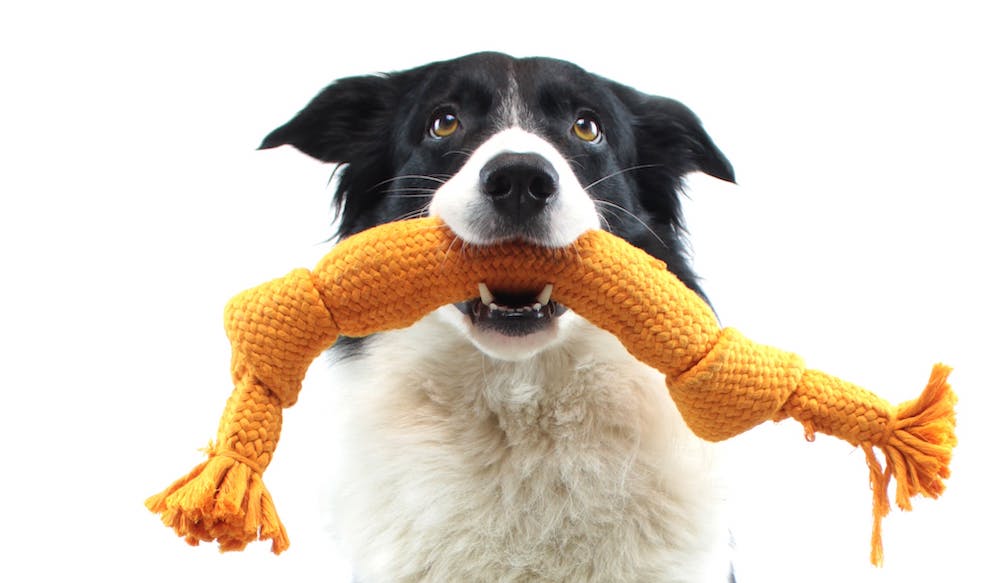
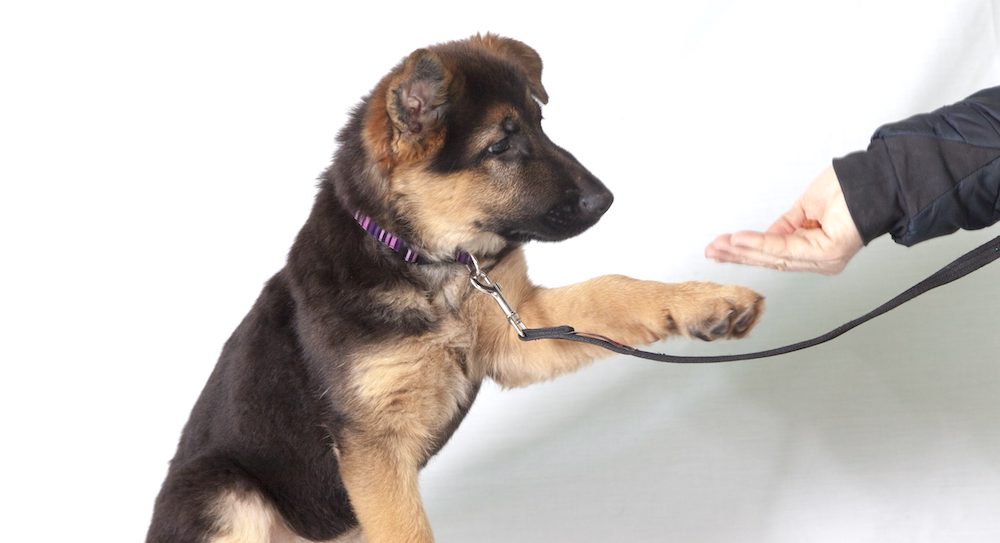
For the initial training stages, it's best to use a wooden or rubber stick, or a piece of rope or cord 40-50 cm long. This length is necessary so that the trainer can grasp the retrieved object by one end, and the dog by the other, without interfering with each other or causing injury. The stick's diameter should be chosen so that it fits in the dog's mouth without causing discomfort.
Requirements for items most often used for training:
- The retrieve item should not emit strong odors and should not be chemically treated or dyed. These factors can negatively impact the animal's health and well-being.
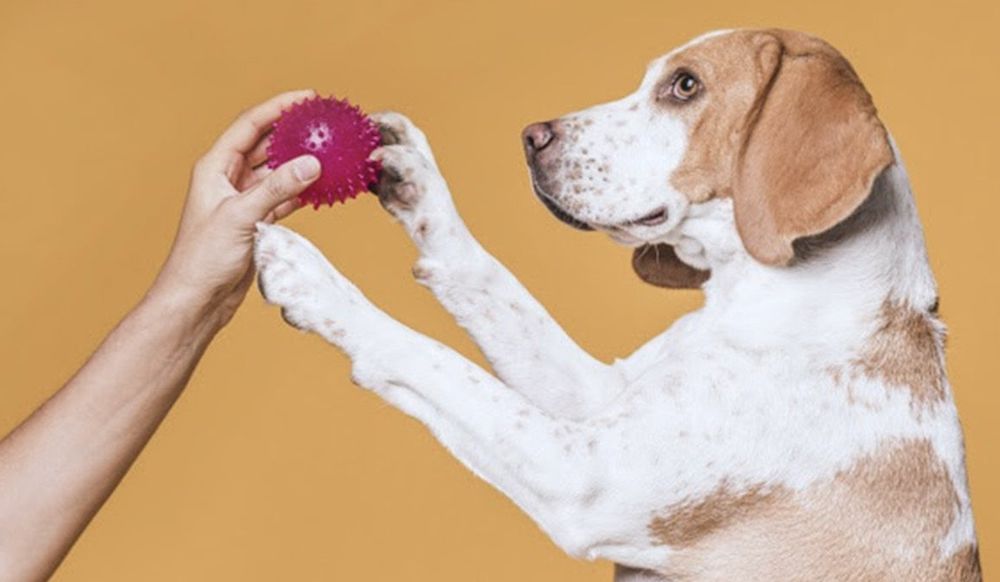
- To reinforce the skill, rubber balls, wooden dumbbells, and other safe objects that can fit into the animal's mouth can be used.
- The equipment for executing the command should not include iron objects, toys, or food.
- Training should not be done with items covered with long fur, lint, or feathers. These can make dogs feel uncomfortable.
Command learning algorithm
Step-by-step training is guaranteed to deliver results. Where do I begin?
- First of all, it is necessary to get the pet to take the offered object in its mouth on the command “fetch”, and to return it to the trainer on the command “give”.
- We select a training location. Initially, this could be a room in your apartment, then a site anywhere without distractions.
- Place the animal at your left leg, hold the leash in your left hand, and hold the fetch equipment in your right hand. Give it a stick (in this case). If it refuses, try engaging it through play.
- When the dog takes the stick in its mouth, give the command "fetch" and praise it. Sometimes the dog is uninterested and responds sluggishly. In this case, pull the stick toward you, which will tighten its grip. If the pet clamps its jaws tightly, praise it and repeat the action.
- The next step is practicing the "Give" command. To do this, take the stick from the animal, command "Give," and give the pet a treat.
When a dog doesn't want to take an object, place a stick in its mouth and apply gentle pressure for a split second. Then immediately praise and give a treat.
Once the animal has learned to grasp a stick, it must be able to move with the object in its mouth. To do this, the pet, carrying the chosen implement, must walk a few meters next to the trainer, after which the command "Give" is given. After successfully completing the command, the animal is praised and given a treat. If the animal refuses to move with the stick, the command "Sit" is given, and the act of carrying the object is repeated.
The next stage of training is picking up the stick from the ground and handing it to the owner:
- The dog is seated. Its attention is drawn to a stick and it is thrown within its line of sight.
- They throw a stick and command "Fetch."
- The animal is led on a leash towards the thrown object.
- Once level with the object, the command “Fetch” is repeated.
- If the dog does not understand what is required of him, draw his attention to the stick.
- When the pet takes the stick in its mouth, the trainer needs to walk next to it a few steps, give the command “Give”, take the stick and give it a treat.
Once the dog gets used to it and clearly follows the command, the task becomes more difficult.
But you should proceed to the next stage only after the previous one has been consolidated:
- The dog is seated, the object is thrown, but the fetch is given a few seconds later. The pet is not allowed to run for the stick before then.
- The trainer approaches the retrieved object together with the dog.
- Having consolidated the result, you can demand more: the trainer gives a command, but remains in place.
- As soon as the animal takes the stick, they say, “Come to me.”
- The dog comes up, sits down at the left leg and places the object on the ground.
- Over time, all the calls used are replaced by one: “Fetch.”
Read also about the "Lie down" command.
Mistakes and nuances in training
How to start training your pet correctly, avoid psychological trauma to your four-legged friend, and achieve excellent results?
There are some things that are important to know in advance.
During training, trainers may make the following mistakes:
- The dog is not encouraged.
- The number of repetitions of exercises is increased too much, resulting in the dog losing interest in the exercises.
- Don't take breaks between exercises.
- They proceed to the next task without reinforcing the previous one.
- Allows you to perform a command without a leash without working the required amount of time with a leash.
- Allow the dog to play with the retrieved object for longer than the allotted time.
Give your animal freedom, but within the rules you've created. And don't forget about hierarchy—the owner is always right.
Peculiarities of training
This command is developed from a young age, and training is done as a game. When training a dog, don't rush it: if the dog isn't interested, the training is postponed.
Sometimes an animal will play with a stick but won't give it to its owner. In this case, wait until the pet is done playing. Then, pick up the stick and wave it in front of its muzzle. When it grabs the stick, give it the command "Give" and take it away, then hand it back to the dog, repeating this process several times.
During the initial training, avoid the presence of external stimuli that could distract the pet.
More complex options for bringing and giving items
Over time, use different objects and different training locations. This is necessary to hone the fetch and retrieve skills and ensure that the dog follows the command in any situation.
- First of all, the retrieving equipment is changed, making it heavier and more awkward. For example, this could be a pole over two meters long.
- Then, the training location is changed. This could be a hilly area, a site with tall grass, and various distractions (people or animals).
- They select more difficult weather conditions (snow, rain), and also conduct training in the dark.
- But the most challenging part is working in open water. The retrieved object is dropped into the water, and the dog must find it and hand it back to its handler.
- You can also use edible items and ensure that the animal brings them to the owner undamaged.
To teach a dog to bring slippers, follow these steps:
- Try to interest the dog in the slippers and let him smell them.
- Then, wave the slippers in front of the animal's face. When the four-legged friend is tempted to grab them, hide the slippers behind your back—and repeat this several times.
- Throw the slippers a few meters away and give the command "slippers" or any other keyword. If the dog isn't familiar with the "fetch" command, lead it on a leash to the slippers and draw its attention to the object.
- After this, the trainer should insist that the pet take the slippers in its mouth. Lead it to the place where the slippers were thrown and say "give." The dog should unclench its jaws and leave the slippers in front of you. Be sure to reward it with a treat.
After extensive training, reinforce the command without a leash. You don't need to follow your dog either. After a while, your dog will perform this command without much difficulty.
If your pet is familiar with the "fetch" command, it makes the job much easier. The slippers act as the retrieved object. The command is "fetch" "slippers." Over time, the word "fetch" should be dropped and only the word "slippers" should be used.
Brief conclusions
Fetching a dog has a positive impact on both its physical and emotional health. Most active animals perform this command with great joy and enthusiasm. For active pets who need daily exercise and running, fetching is a solution to this problem and also relieves the owner of additional physical strain. Fetch is part of general obedience training. Every service dog should perform this command with high marks.
For hunting breeds, this is an essential part of training. For puppies, any command is more of a prank and a game. But for an adult dog, it's a way to curry favor and earn trust. Training a dog is generally not difficult. Patience, mutual respect, and a true friendship between owner and pet are the three keys to achieving excellent results.
Read also: list of mandatory commands for training.