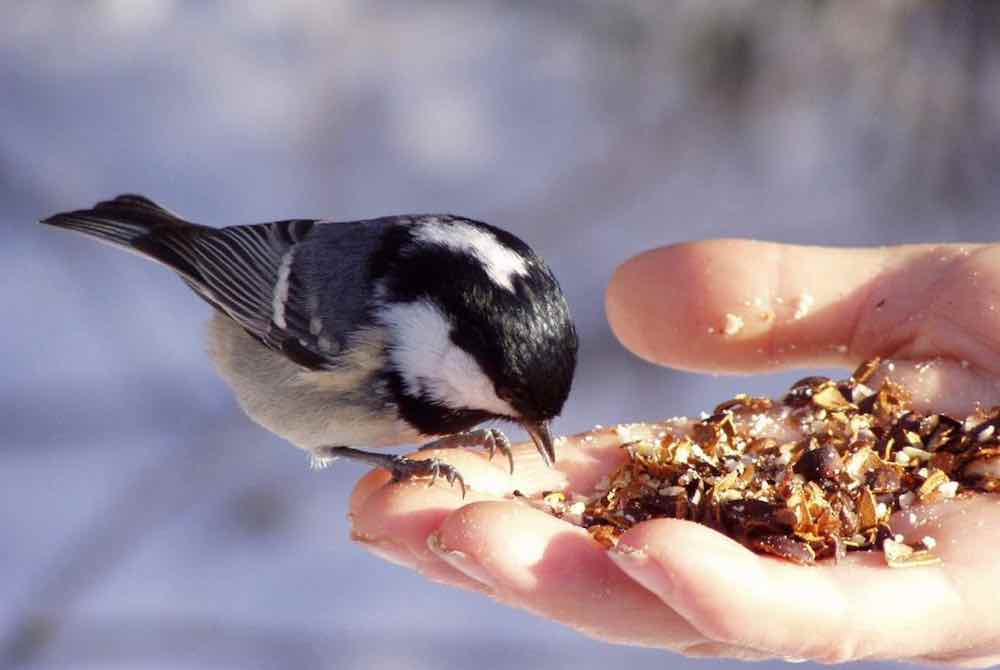
Squirrels in city parks should be fed sparingly during winter, but it's difficult for these furry creatures to survive entirely without human assistance during the cold season. After all, the daylight hours are very short; the abundant food found among the trees in summer is absent, and the animals' energy expenditure increases in the cold. Forest animals prepare for winter well in advance, building up large stores of berries, fruits, nuts, and pine cones. They also find some food in the winter forest itself.
In city parks, there are far fewer opportunities for this: after all, there are not many fruit trees or seeds from cones there.
Human-organized feeding will help urban squirrels survive the winter, but not just any food can be given to them. Some foods considered delicacies by humans are highly undesirable and even harmful to these furry creatures. Before giving squirrels a treat, make sure it will only benefit them.
Content
Treats for squirrels in the park – what to feed them in winter
The best treats for squirrels at the park are prepared food brought in advance. It's absolutely not a good idea for a person to accidentally spot animals in the park and then rush to the store to buy a treat for them. Such a spontaneous impulse will likely only harm the squirrels. After all, in the cold, the animal might not realize what you're giving it and might take potentially dangerous food: who knows what the manufacturers of store-bought nuts contain! Additives may be harmless to humans, but harmful to small animals.
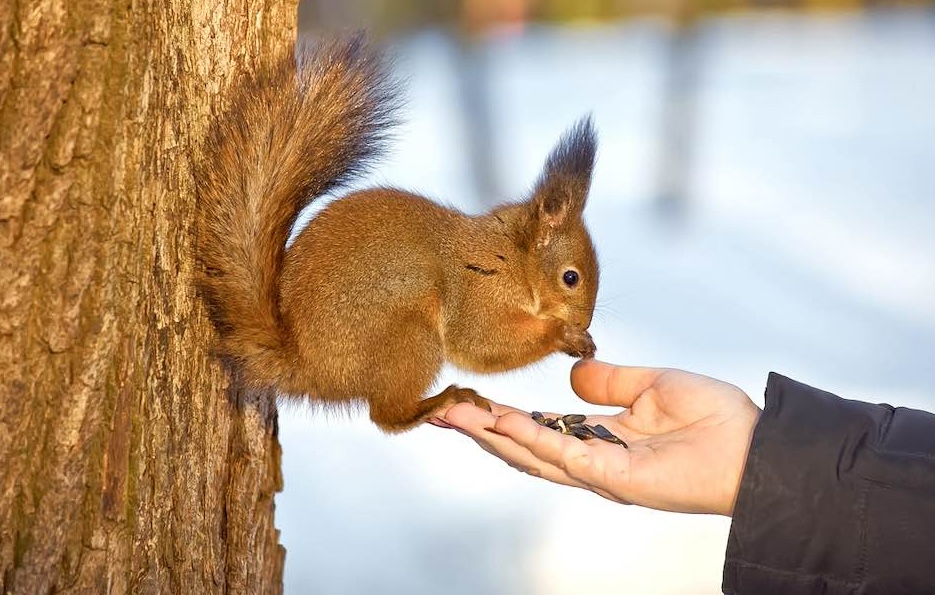
In summer, squirrels are well-fed without humans, although they often accept treats from them. When going for a walk in the spring, you can take young shoots of garden plants (currants, apple trees, plums, etc.). In winter, however, this is not possible. Therefore, people most often opt for nuts or seeds. And even here, it's not that simple: the treats should not be roasted, and especially not flavored with sugar or salt. Both nuts and seeds are beneficial to squirrels only if they are raw.
Moreover, not every nut is suitable. For example, almonds contain toxic substances, and peanuts (which are not actually nuts) often cause intestinal problems in animals due to their excessive fat content. The seeds of many fruits (cherries, plums, etc.) are also toxic, although frozen berries and fruits themselves are a wonderful treat.
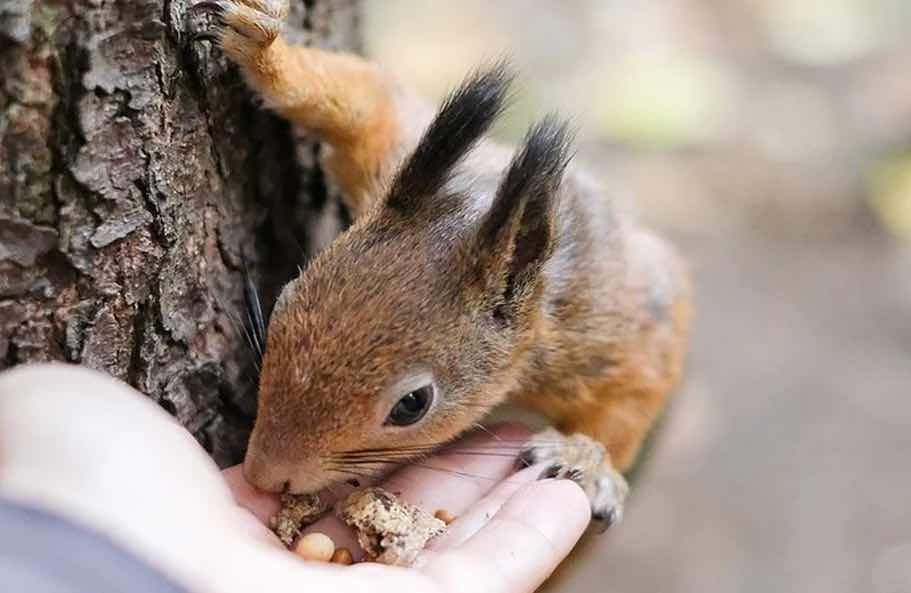
Squirrels living in parks are generally unafraid of humans and readily accept food from the palm of your hand. However, this doesn't mean they're tame: no handling is permitted. Even an attempt to pet them can be considered a threat, and it's fortunate if the treater only gets a bite (squirrels carry serious diseases, including rabies). Another important note: giving a treat doesn't mean adopting one.
Park squirrels should not be overfed (and they are fed by more than one or two people a day); they must retain their working instinct to obtain food independently.
The list of treats permitted for squirrels is quite long. They devour some with great relish, while others they only eat out of hunger. In any case, bringing food from home to the park that won't harm these furry creatures is quite easy: it's sure to be found in any kitchen cupboard. This:
- Nuts. They can be considered the staple diet of animals in the wild, unassisted by humans. Therefore, they're the number one treat in the park, too. But not just any nuts. A few hazelnuts and a dozen pine nuts are best. Walnuts are also suitable, but just one is quite enough: after all, the park is quite crowded, and many will bring something with them. Should I shell the nuts first? A squirrel will certainly happily eat shelled nuts, but don't deprive it of the opportunity to demonstrate its natural ability: let it shell itself, otherwise it'll get out of the habit!
- BerriesIn winter, these are dried or frozen foods, and the list of permitted ones is impressive: lingonberries, cranberries, strawberries, blueberries, raspberries, rose hips, rowan berries, etc. Grapes, as well as cherries and plums (although, by and large, they are not really berries) are also included in this list. Quantity: 2-5 pieces per donor. However, when collecting a bag of stone fruits (cherries, plums) at home, you should first remove the pits, which contain toxic substances. Even a person can eat just a few kernels from plum or apricot pits without harm, but how much lighter is that than a squirrel?
- FruitsIt's easy to find any fruit in the winter, even fresh, but dried apples or pears are just as good for squirrels. They'll also eat peaches, apricots, bananas, tangerines, persimmons, and so on. Dried fruit is also good, but homemade is better (store-bought dried fruit may contain unhealthy additives). Keep in mind that a large apple or a whole banana is overkill: 2-3 slices are sufficient.
- Vegetables. They're also good raw or frozen, but the list of vegetables suitable for squirrels isn't that long. These include squash (zucchini, cucumbers, and pumpkin), carrots, corn, and various types of cabbage (except white cabbage). Fresh leaf lettuce is also good.
- Sunflower seeds (must be raw)This is 3-4 pumpkin seeds or a dozen sunflower seeds. It's best not to feed domestic squirrels exotic foreign treats like sesame seeds.
- MushroomsBoth fresh and dried are good, and most edible species are permitted. The best are porcini mushrooms, butter mushrooms, aspen mushrooms, saffron milk caps, and russula. Since champignons and oyster mushrooms are now mostly farmed, often in unknown conditions, it's best not to feed them to squirrels. However, they enjoy munching on the birch mushroom, chaga. However, squirrels often find it easier to find it on trees than humans.
Dried fruits deserve a special mention. While apples and pears are safe for squirrels, dried apricots, prunes, and raisins should be given with caution. This is due to the specific drying process for these fruits: they are often treated with chemicals, such as sulfur dioxide, glycerin, and sometimes the finished product is coated with a thin layer of invisible preservatives. Unconventional treats include small pieces of boiled egg and unsalted pork fat: squirrels happily devour these foods, but excess fat is harmful to their digestive tract.
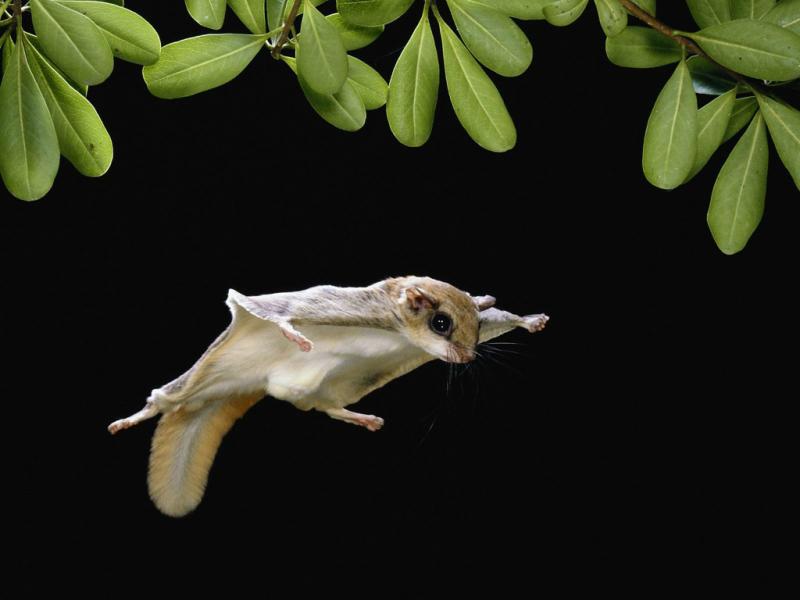
Read also about the flying squirrel
What you shouldn't feed
Squirrel treats at the park are quite varied, but even considering the healthy options, it's clear that they're often transformed into unhealthy treats during processing. In addition to the fruit pits and peanuts mentioned above, zoologists strongly advise against feeding squirrels many other foods. The list of prohibited treats is arguably even longer than the list of permitted ones. And the most extensive item on this list is many foods commonly consumed by humans. Avoid bringing any fast food to the squirrel park. Fried and smoked foods, alcoholic beverages, sausages, seasonings, etc. are prohibited.
You shouldn't feed squirrels foods that might seem harmless or even desirable to the uninitiated. They can cause stomach upset, gas, intestinal blockages, and so on.
These are, for example, traditional human food products:
- Bakery products and all flour productsWhite bread and products made from wheat flour (including cookies, gingerbread, and even crackers) are particularly dangerous. These foods cause intestinal fermentation.
Dairy products. Both fresh milk products and fermented milk products (cheese, cottage cheese, etc.) containing lactose are harmful to proteins. - Chocolate, candiesExcess sugar is harmful to the heart, and various additives in confectionery products can have unpredictable effects.
- Dry pet foodIt is made specifically for dogs, cats, and hamsters, but is not suitable for squirrels.
- Potatoes, turnips: They cause bloating.
Other harmful foods include ready-made dry snacks (crackers, pistachios, chips), as well as complex ready-made meals consisting of many ingredients (though, after all, no one is going to feed a squirrel homemade soup!).
Read also about quail nutrition
Tips and nuances
Squirrels aren't always fed by hand in the park, so making feeders for the red-tailed creatures seems like a good option. Sometimes, residents of private homes living near the forest also set them up. However, a feeder is a double-edged sword. Squirrels quickly become accustomed to them, and once such feedings have begun, they should become regular. Furthermore, feeders should be cleaned before introducing new food, including removing any remaining old food (it spoils quickly in above-zero temperatures).
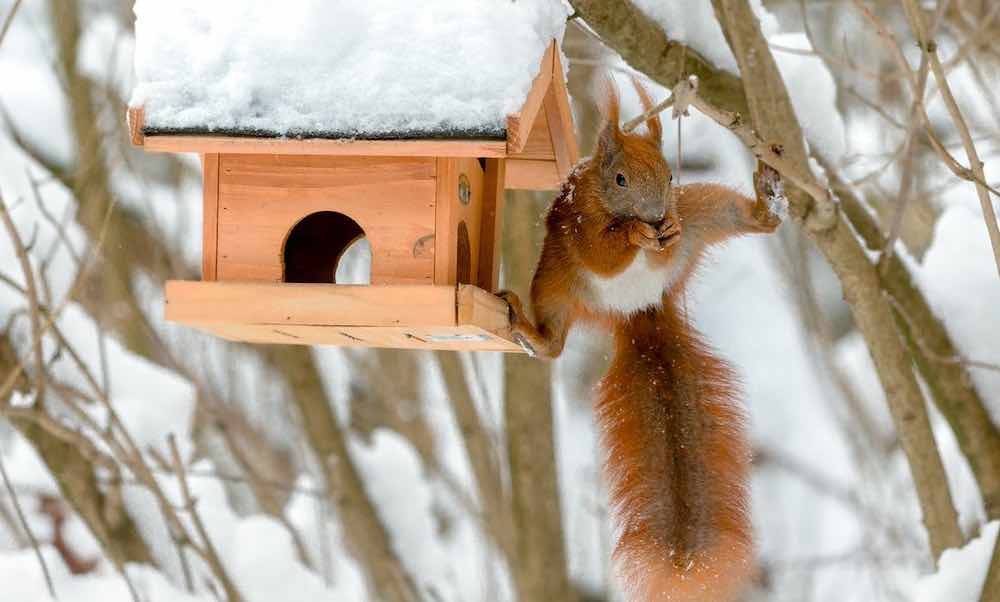
The simplest feeder is a cardboard kefir bag or a plastic bottle: cut off enough to accommodate a treat, making it accessible to the park's furry visitors. Of course, if you have the time and skill, you can make a more substantial feeder out of wood, or if you're feeling generous, simply buy one at the store.
It is important that the feeder has sides, a canopy and is sufficiently strong.
The feeder is hung so that it's easy for a person to put food in it and for the squirrel to retrieve it. This means its location is on one of the lower branches of the tree.
Squirrels have virtually no enemies in parks. In winter, the greatest danger is freezing temperatures, which deprive the animals of food sources. Humans can help the animals survive the winter, but they should not harm them by unknowingly feeding them something they should never eat.
Read also about hedgehog nutrition