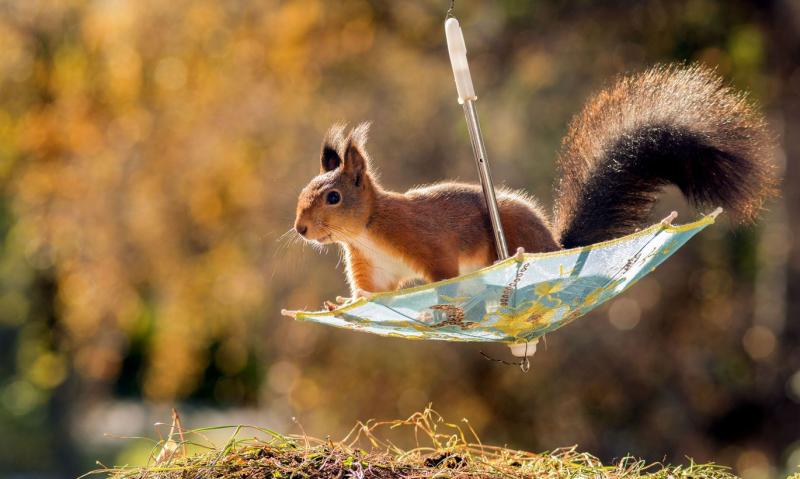
The flying squirrel is a small and very cute creature with huge round eyes and a long, fluffy tail. With an average body length of 13 cm (although some species can reach up to 40 cm), the tail is usually at least 10 cm long. In the wild, these amusing animals live in North America, as well as in Asia and European forests; they usually live in pairs.
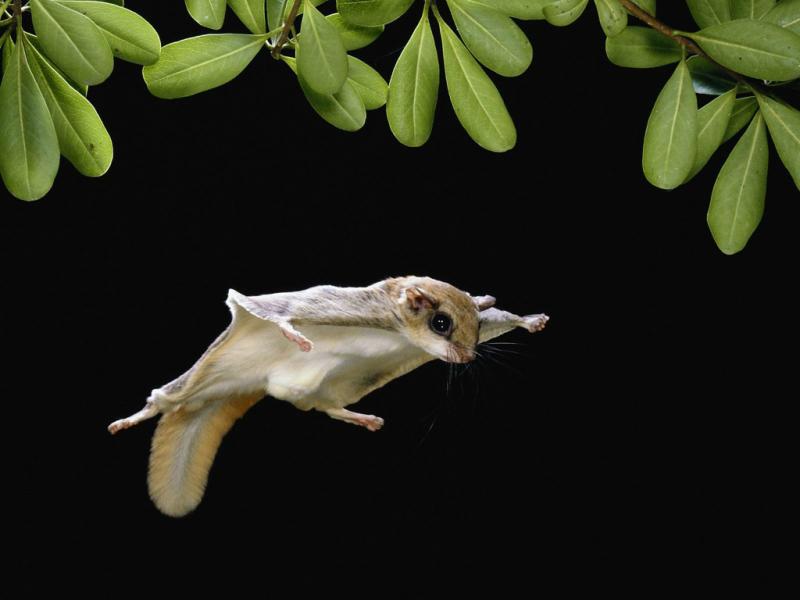
Although this squirrel is called a "flying squirrel," strictly speaking, it doesn't fly; it simply leaps long distances—about 50 cm. During the jump, the animal spreads its fold of skin (a large, fur-covered membrane between its forelimbs and hindlimbs) and dives, as if on a parachute. Its tail is used as a rudder.
Flying squirrels are arboreal animals that primarily live in trees, descending to the ground occasionally to forage for food (berries and mushrooms). They also obtain some of their food from trees (insects, young bark, etc.).
Flying squirrels are attractive not only for their cute appearance: their attachment to their owners makes them excellent companions. However, keep in mind that they are active and nocturnal animals.
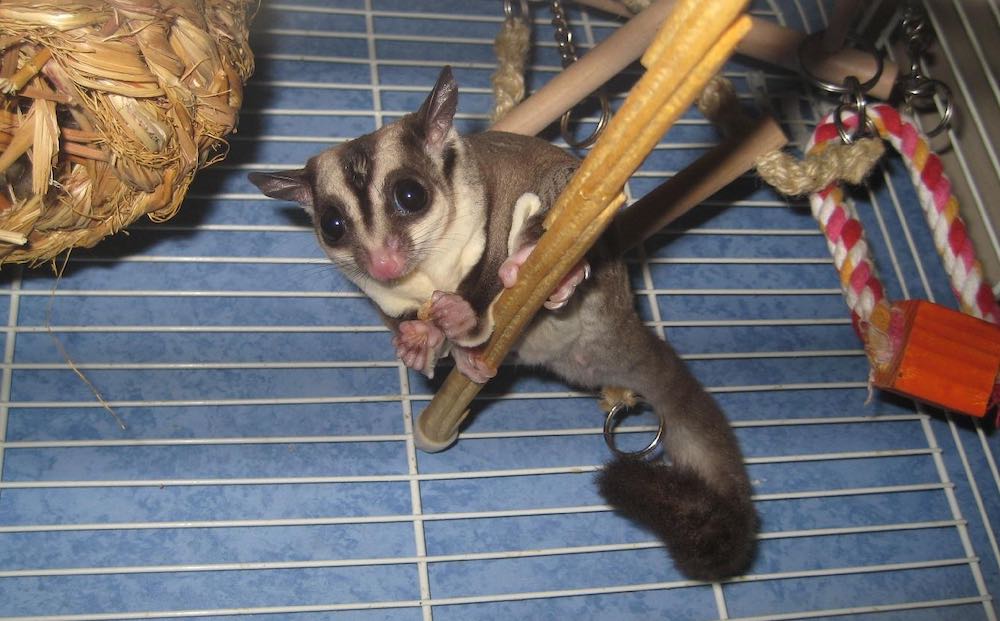
In recent years, flying squirrels have become popular as pets. The silvery-blue Australian flying squirrel (also known as sugar gliders) is the most common choice, although yellow and brown varieties are also available. They are also sometimes called sugar squirrels due to their fondness for sweets.
Flying squirrel at home - the advantages and challenges of keeping a flying squirrel
The benefits of keeping a flying squirrel at home:
- They have a kind, forgiving nature. A squirrel can become your companion.
- This pet can get along with hamsters, chinchillas, and rabbits. However, avoid keeping it close to cats.
- Flying squirrels are interesting to watch (especially if you have a pair or a group of animals).
- No odor (the animal grooms its fur on its own).
But there are also disadvantages:
- The animal is nocturnal and makes a lot of noise at night: it barks, barks, hisses or whistles, demands food, games and communication.
- Flying squirrels can relieve themselves mid-flight; this is not a skill they can be trained to perform. Males also frequently mark their territory, especially if you keep them in a cage.
- Danger of living next to cats or large birds.
- There's a danger to children—if handled carelessly, the animal may scratch or bite. Therefore, only adults should handle the pet.
- Difficulties in developing a diet for the flying squirrel.
Read more about the different species of this animal.
Nutrition and care
Flying squirrels need comfortable conditions as close to natural as possible: a large enclosure or even a separate room is necessary, as these squirrels are excellent runners and jumpers. A cage of at least 1 m³ is sufficient, but in this case, it is essential to take your pet for a walk every day. Keep in mind that when outside the enclosure, the animal should not be left unattended, as it may endanger itself and cause a mess.
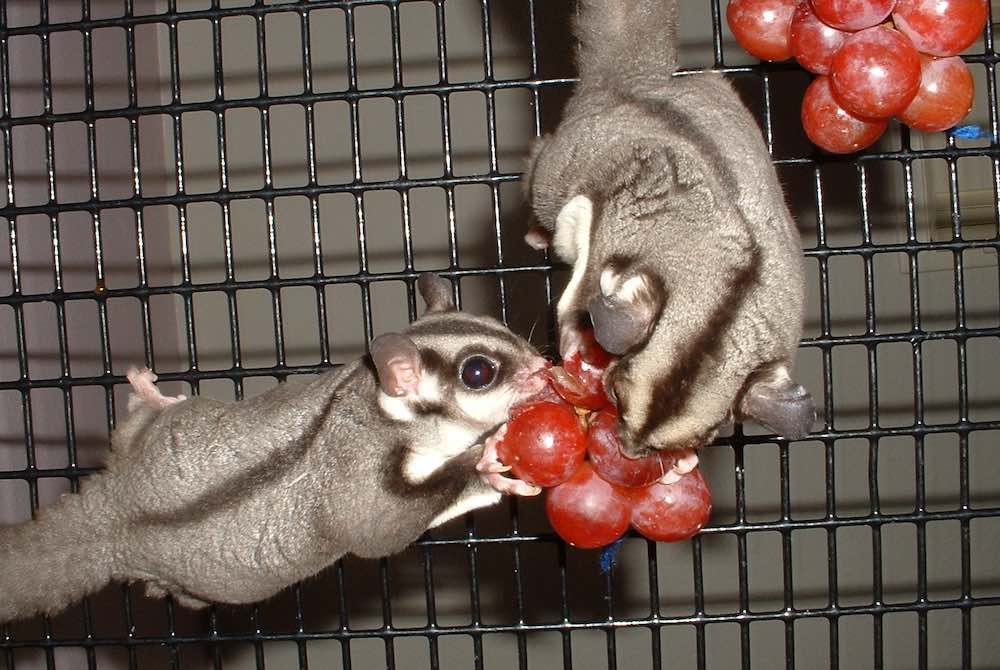
Therefore, a squirrel enclosure is considered a safer option. Ideally, a built-in squirrel enclosure (floor-to-ceiling) should be installed in an alcove or dimly lit corner. Be sure to install a secure latch or lock.
The enclosure or cage should have several hollow log houses—these pets love to change homes, and they'll use at least one for storage. You can hang a fabric hammock there, but be prepared for the squirrel to tear it apart with its teeth. Rope ladders and ropes can also be placed inside. The cage should also be stocked with fur, moss, and hay—the animal will fill its house with them itself. And, of course, food and water bowls are essential.
Flying squirrels also need companionship, so they are often purchased in pairs. The owner can replace the "partner" only if they are willing to talk and play with the squirrel at any time. Without companionship, the squirrel may become depressed: lethargic, refusing to eat, and even lethargic.
Regarding nutrition, 70% of the animal's diet consists of plant foods, primarily fruits (watermelons, melons, apples) and vegetables (seasonal cucumbers, zucchini, carrots, cabbage), while the rest consists of grains and muesli, as well as protein foods (beetle larvae, grasshoppers, mealworms). The latter can be replaced with boiled eggs, cottage cheese, or chicken fillet. Occasionally, you can give your pet a little honey, a couple of nuts, and dried fruit (except prunes).
How long does a flying squirrel live at home?
The lifespan of a flying squirrel in the wild is typically 5-6 years. However, in captivity, this lifespan can be roughly doubled, reaching 12-13 years, and sometimes even 16-17 years. To achieve this, it's important to provide your pet with high-quality care and nutrition.
Read also about the most unusual animals.
Tips and nuances
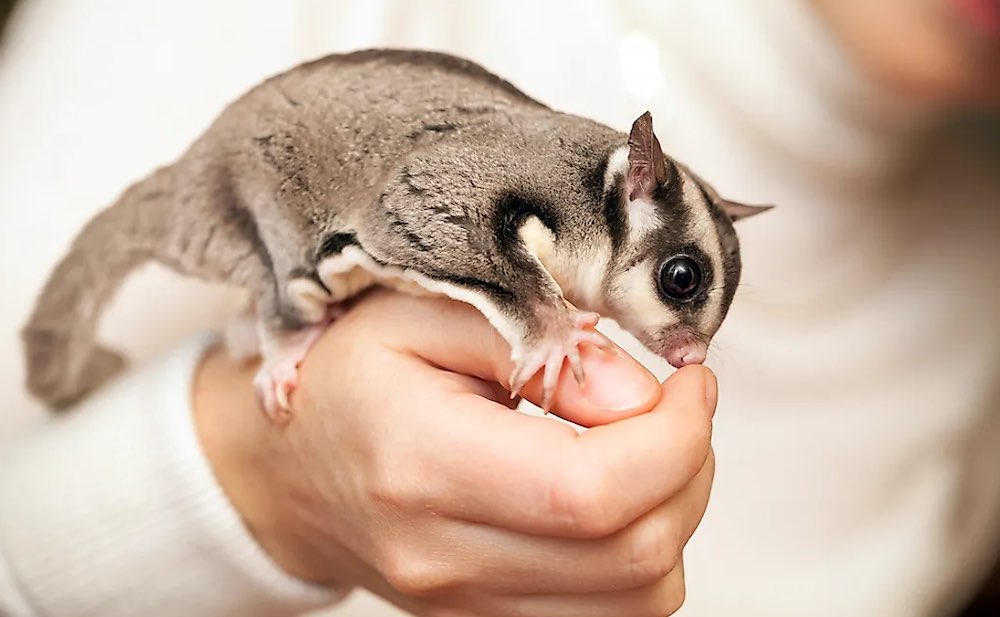
Here are some important nuances of keeping a flying squirrel:
- Keep in mind that this animal will likely quickly become accustomed to and attached to its owner. Like most other animals, squirrels can recognize their owner by scent. However, if perfume or any unfamiliar, strong scent is used, the animal may not recognize the owner and may become aggressive.
- Flying squirrels normally make a chirping sound, but when very irritated or frightened they may purr or make other sounds.
- Males have glands containing a pungent, musk-like fluid, which they use to mark their territory. But you don't necessarily need to buy a male—flying squirrels can live in same-sex pairs or groups.
- The fur of this animal, despite its visual appeal, is not particularly valuable. This is because the fur is very difficult to process, and it is not particularly durable.
- This pet does not require vaccinations or deworming medications.
- The maximum recorded length of a squirrel's jump-flight is 80 meters.
Caring for flying squirrels isn't particularly difficult. However, the main challenges are that, firstly, this animal requires constant attention, and secondly, it's nocturnal and unlikely to allow its owner a peaceful night's sleep.
Read also about an unusual animal - the jaguarundAnd.