The flying squirrel is an unusual animal that attracts human attention with its astonishing method of locomotion. It can navigate between trees using the webbing between its feet, which acts as a kind of "parachute."
Content
What does a flying squirrel look like?
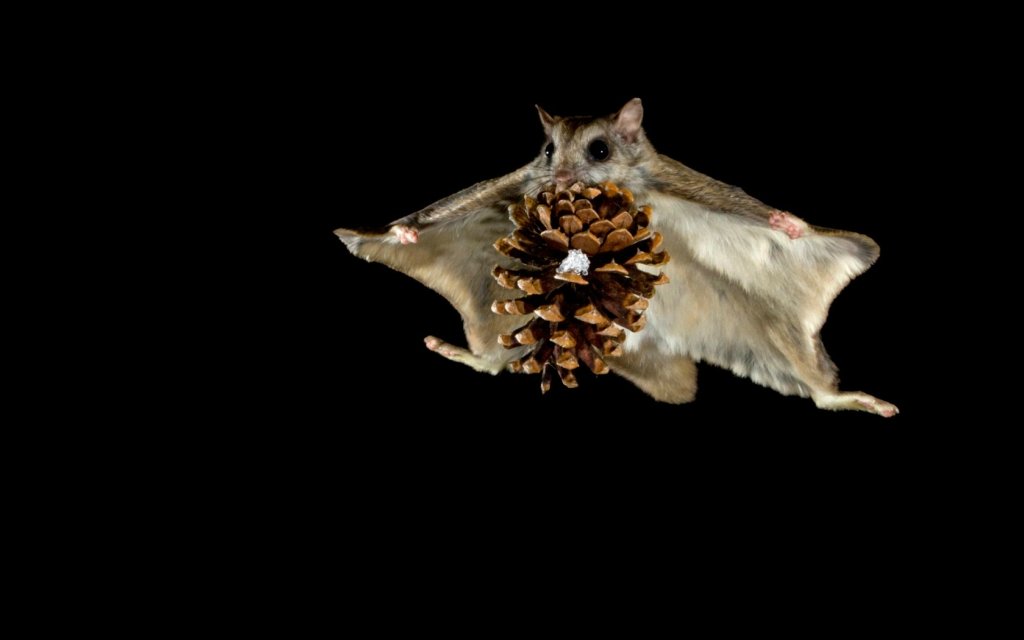
Flying squirrels are able to carry food during their flights.
This unusual little animal resembles a short-eared squirrel, but what distinguishes it from the common and familiar animal is the webbing between its front and hind legs. The webbing is a rigid fold of skin, reminiscent of a parachute. It is supported at the front by a small bone extending from the wrist.
Of course, flying squirrels can't fly in the classic sense of the word, like a bird. However, thanks to the folds of their skin, flying squirrels can hover in the air and navigate between forest features. If an animal decides to jump from the top of a relict pine tree, rising several tens of meters above ground level, it can cover a distance of up to sixty meters in the air. Flying squirrels are capable of not only moving in a straight line, but also weaving between tree trunks and branches, constantly changing direction. A strong tailwind makes this task easier for the animals. During flight, they use air currents to help them reach their destination.
The animal is somewhat smaller in size than its common counterpart. Males reach seventeen to twenty-one centimeters in length, while females are usually smaller. The tail varies between nine and twelve centimeters in length. This is an important organ for flying squirrels, as it allows them to change course in flight and dive in mid-air, acting as a kind of "rudder." It is long, flat, and very fluffy.
An adult squirrel weighs between one hundred fifty and one hundred eighty grams on average. Its small, rounded head is topped with short, rounded, tuftless ears. The animal is characterized by large, expressive eyes, which allow it to navigate perfectly both day and night. The fur around the eyes is black. Sharp and tenacious claws serve as a kind of "fingers" for flying squirrels, since thanks to them the animals can move freely along trunks and branches, even upside down. Claws help the animal to land.
The flying squirrel is covered in dense, fluffy fur that protects the small animal from freezing temperatures, which is crucial during the harsh northern winters. The animal's fur is a distinctive light gray color with a yellowish tint, allowing the squirrel to hide in the forest for long periods. This coloring allows the animal to blend into its surroundings and remain undetected by its natural predators. The abdomen is white and yellow.
Main types
The flying squirrel belongs to the Sciuridae family and the Diprotidae order. There are approximately ten known species of flying squirrel, differing in appearance and habitat. Seven of these are found in Russia: the Yakut, Central Siberian, Sakhalin, Ussuri, Anadyr, West Siberian, and Semipalatinsk varieties.
Australian flying squirrel
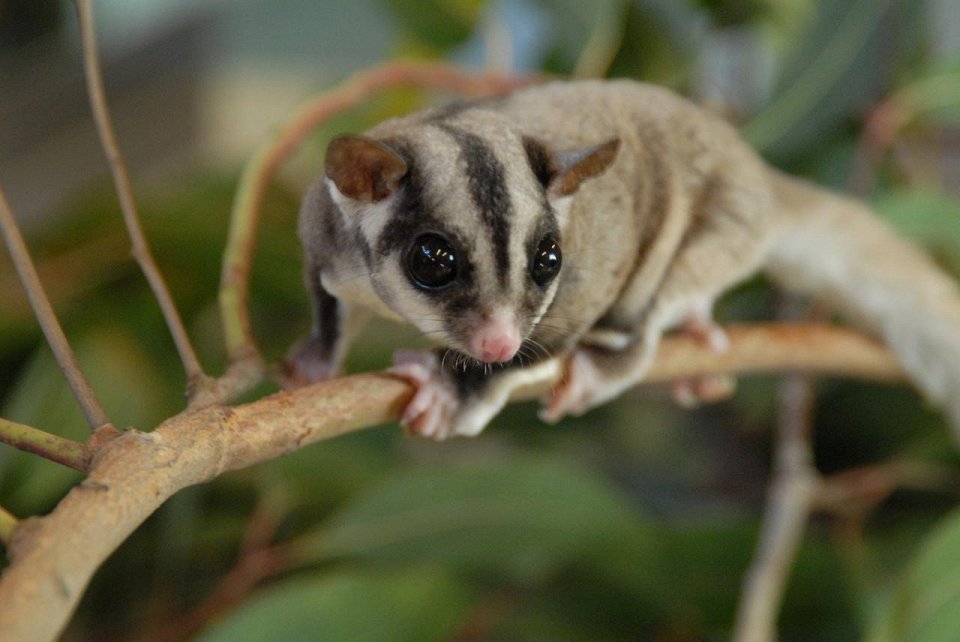
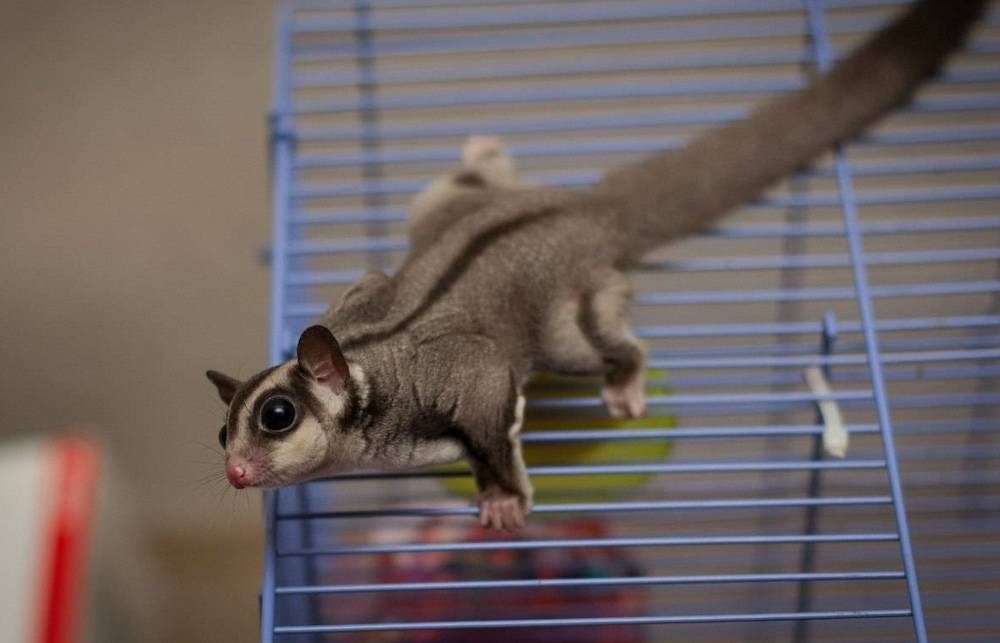
Another name for the Australian flying squirrel is the sugar glider.
It lives in Australia, as its name suggests. It makes its home in eucalyptus forests, as it enjoys feeding on the sap of these plants and acacia trees. Australian flying squirrels are the most commonly kept pets.
Many animals suffer at the hands of people operating on the black market. Most often, these adorable flying squirrels are shipped to other countries, violating all manner of transportation regulations. In Australia, there are rescue centers for flying squirrels that have suffered at the hands of cruel human activity.
Siberian
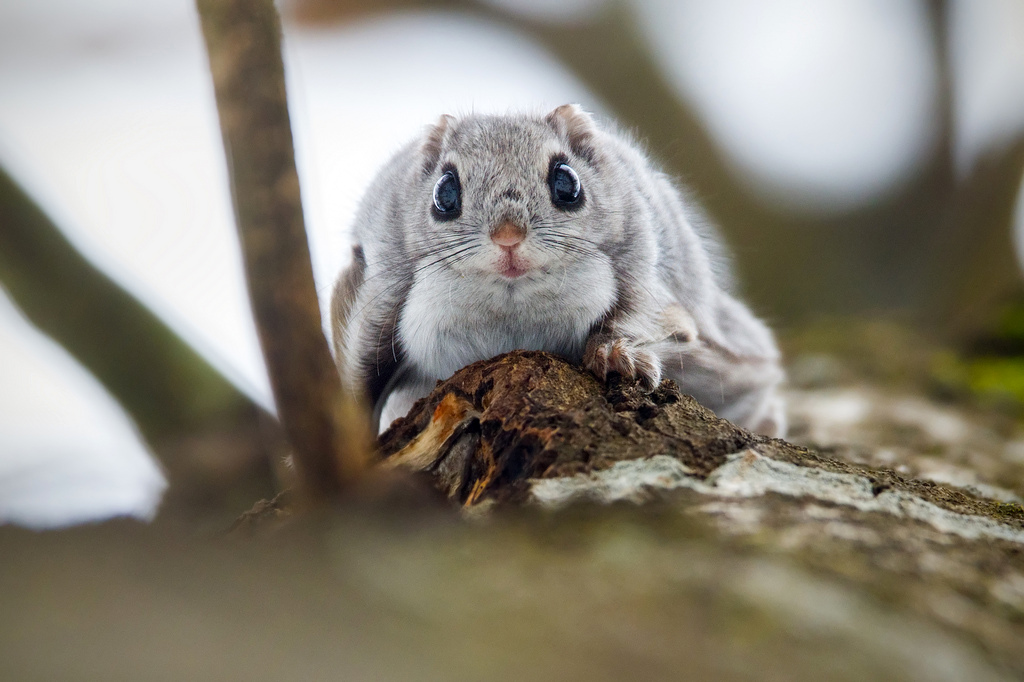
The Siberian flying squirrel is considered one of the cutest animals.
Siberian squirrels inhabit Europe, Asia, and India. Despite the harsh Siberian climate, they do not hibernate but remain awake throughout the winter, feeding on food stored during the summer. However, flying squirrels can hibernate for several days and remain asleep throughout this time. Many animals do not survive the cold winters for one reason or another, and their numbers are steadily declining.
Japanese
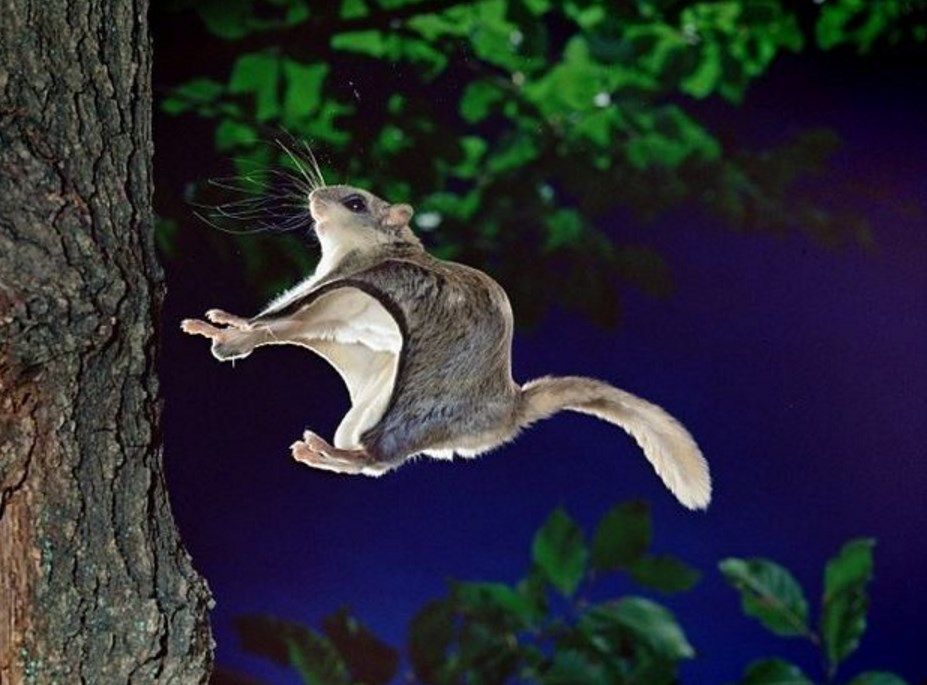
The Japanese squirrel is almost indistinguishable from the Siberian squirrel in appearance, the difference lies in its habitat.
The Japanese variety of flying squirrel is considered the cutest. In Japan, the animal is called "momonga." It lives on the islands of Kyushu and Honshu, where large areas are covered by evergreen mountain forests. It builds nests in the hollows of mighty pine trees or other conifers. The animal lines its nest with moss and lichen to keep its naked young warm in the absence of its mother.
Habitat
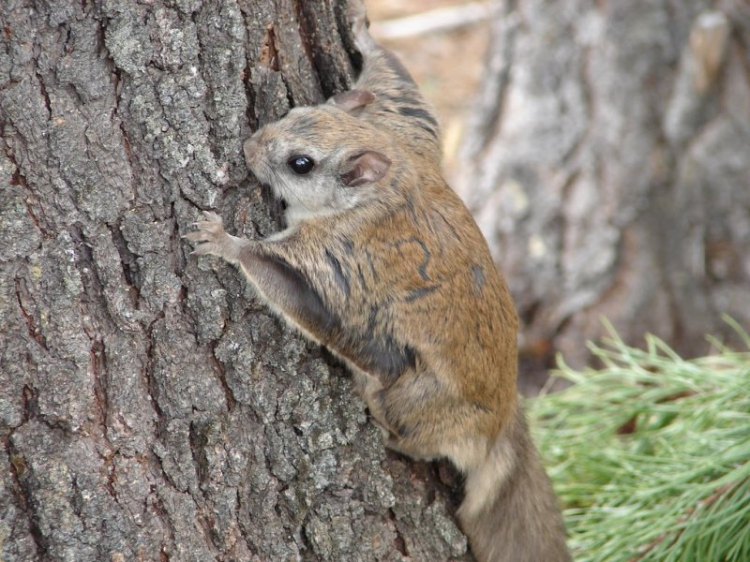
Flying squirrels not only move through the air, but also climb trees.
The flying squirrel is found in Australia, Japan, Mongolia, Indonesia, Finland, New Guinea, Northern Europe, the Americas, and Russia. It lives in forests with aspen, cedar, birch, alder, and coniferous trees. It is most often found in moist birch or alder forests. Flying squirrels are also found in high-altitude areas, but only if the trees there are tall.
Lifestyle and duration
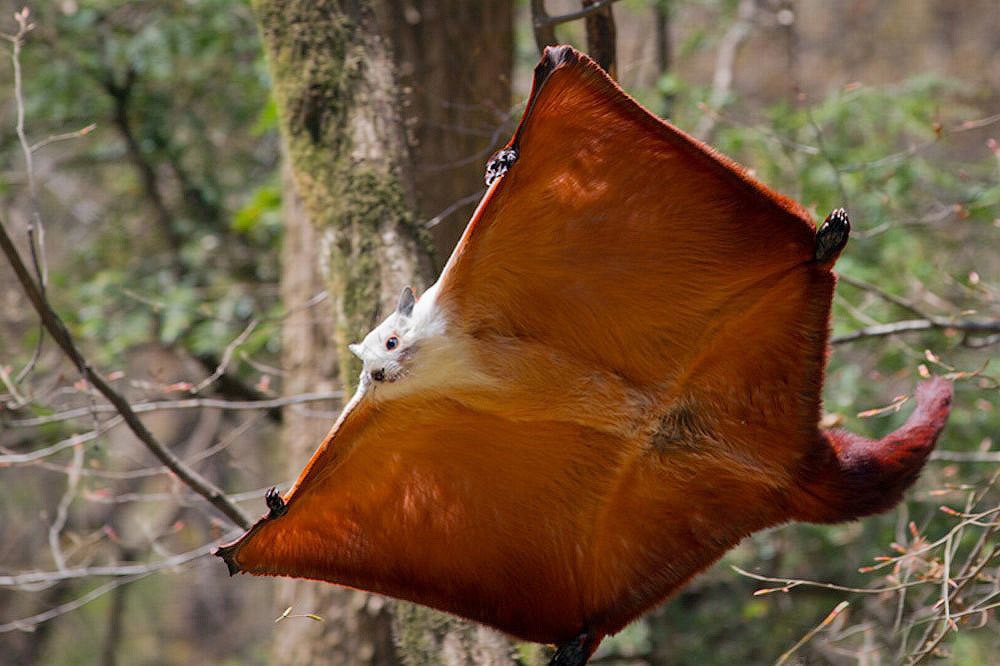
It is rare to see a flying squirrel in flight during daylight hours.
In the wild, flying squirrels are nocturnal. As soon as dusk falls, the animals emerge to forage for food. Each has its own plot of land, occupying several hundred square meters. This is the area within which a squirrel can forage for food. During the day, it's virtually impossible to see animals in the forest. Only nursing females and young animals, who are curious enough not to hide too much from prying eyes, are so active.
Adults are extremely cautious, spending very little time on the ground, trying to slip by undetected by predators. Flying squirrels' natural enemies include coyotes, eagle owls, ferrets, and martens. Thanks to their distinctive coloring and excellent vision and hearing, these animals successfully evade predators.
If a flying squirrel spots a human in the forest, it quickly climbs to the top of a tree and clings tightly to the trunk. Two hours before sunrise, the animal retreats to its nest, where it awaits the return of darkness. It makes its home in a high-lying hollow tree. Sometimes it settles in the nests of large birds or occupies a nest built by a red squirrel. In rare cases, a flying squirrel may settle in an abandoned birdhouse located near a human dwelling. A crevice in a rock can also serve as a secure home.
Most often, one nest serves as a home for two flying squirrels at once. Sometimes you can observe them living in small communities consisting of several individuals. The flying squirrel is a non-aggressive animal and is calm towards other animals that pose no threat. A nursing female may display a degree of aggression when protecting her offspring. With the onset of winter, the squirrel does not hibernate but remains awake, remaining in the nest and consuming its extensive food supply. In the wild, the animal lives up to six years.
Nutrition
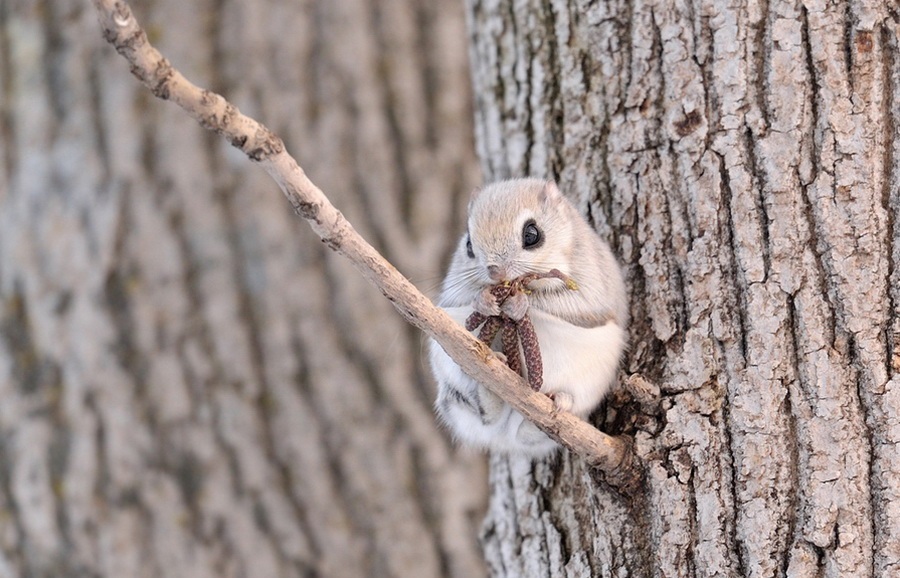
Alder and birch catkins are a real treat for the flying squirrel.
The flying squirrel's diet consists primarily of plant matter. It feeds on shoot tips, pine nuts, tree buds, and conifer seeds. In the summer, other foods are added to the little animal's diet, which makes its menu more varied: the squirrel happily eats mushrooms and berries. Aspen, maple, birch and willow are suitable as food - the animal gnaws on young bark, which has not yet had time to become thick.
Scientists suggest that the animal's diet is not limited to plant foods, and that it may also feed on eggs and chicks.
The animal's complete diet depends on its habitat. For example, squirrels living in the northeast feed exclusively on larch buds when winter arrives.
In the fall, the animal begins to stockpile food, bringing only storable food to the nest. The flying squirrel does not store mushrooms and berries, as it knows these provisions will spoil quickly. In addition to catkins, buds and shoots can be found in the squirrel's nest cavity in winter. The bark of coniferous trees provides the animal with the necessary vitamins and enzymes required for active life. Minerals are especially necessary because in winter the animal does not hibernate but remains awake.
Reproduction
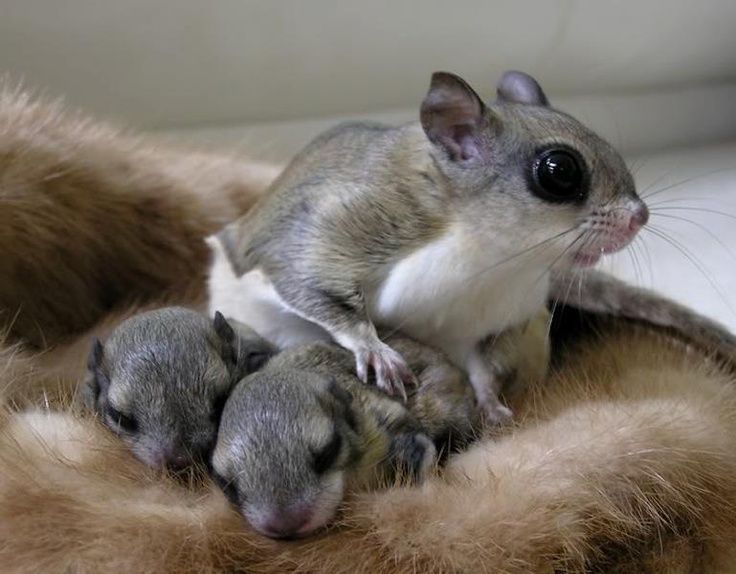
The fur on the cubs appears 2-3 weeks after birth.
Little is known about the reproductive habits of flying squirrels, as this animal has been understudied due to its stealth and agility. Mating season begins in mid-spring. Females are pregnant for about a month, after which tiny pups of no more than four are born. The babies are born completely naked and blind. Their eyes open as soon as they are two weeks old.
During the first month of their lives, baby squirrels feed on their mother's milk, gaining strength to explore the world on their own. The mother keeps her cubs warm every day, staying close to them most of the time, as the babies can freeze due to their lack of fur. Once the cubs are two months old, they transition entirely to the adult flying squirrel's diet. In midsummer, the grown squirrels learn to "fly" and navigate their surroundings. After mastering these skills, the offspring leave their parents' nest for good.
Population and protection
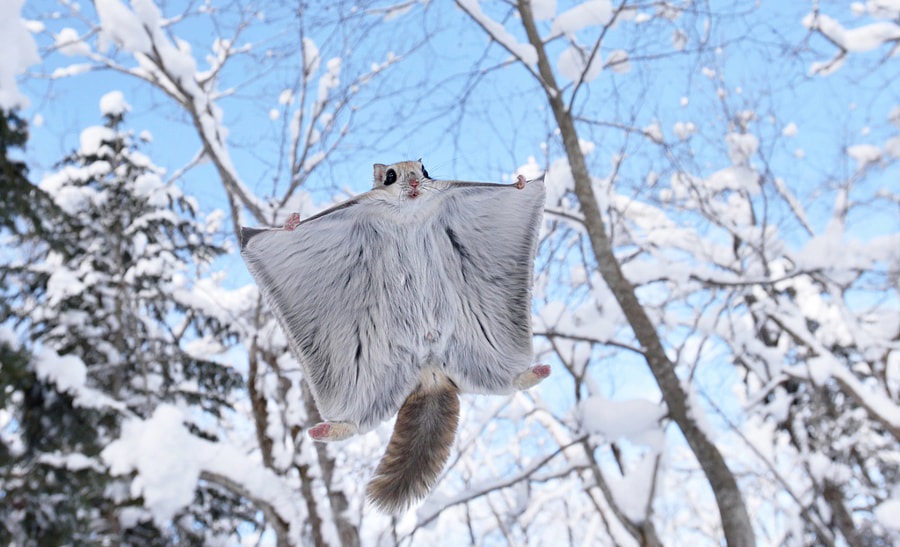
In order to survive the winter peacefully, the animal needs to stock up on food and make a warm nest.
Despite their active reproduction, flying squirrels are protected by public organizations and are listed in the Red Data Books of various countries and regions. Many animals do not survive harsh winters, and many young perish due to various other circumstances. As a result, flying squirrel populations in various habitats are declining.
Home care
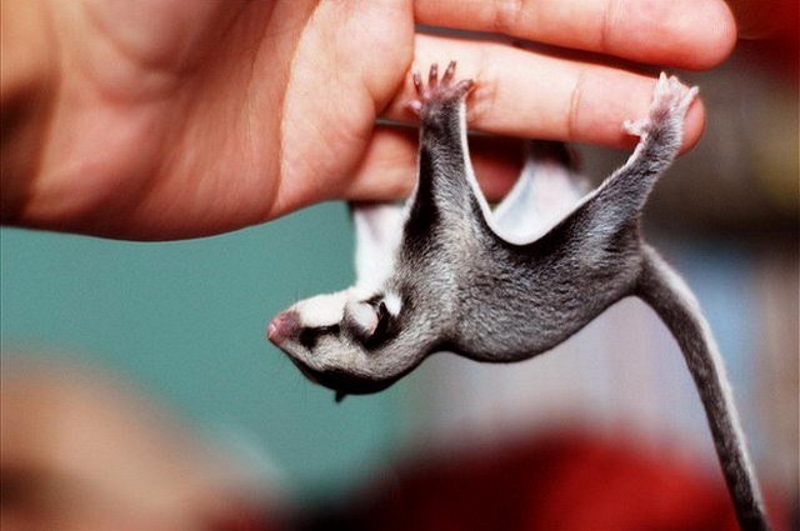
Flying squirrels quickly become tame and get used to their owner.
Nowadays, there is a trend to keep a flying squirrel as a pet. This is a highly questionable undertaking, since the squirrel is not one of those animals that is adapted to life in captivity. But if an animal does end up in an apartment, it needs to be provided with the most comfortable living conditions possible.
Flying squirrels are social animals, so they cannot live alone; they are always kept in pairs. They form strong bonds with their owners, requiring them to spend a lot of free time playing and interacting with them. Baby squirrels are adopted at approximately two months of age, when they are able to feed themselves. During the first few weeks, babies need to be hand-fed so that they get used to their new environment. Despite the fact that flying squirrels are nocturnal animals, they are able to adapt to human wakefulness in order to communicate with their owner.
It's recommended to keep the squirrels in a special plastic carrier for the first couple of weeks, and then move them to their permanent home. The future habitat for flying squirrels requires careful planning. They choose very large, high enclosures with plenty of space to ensure the animal feels as comfortable as possible. A nest is installed inside, allowing the animal to hide from prying eyes and rest.
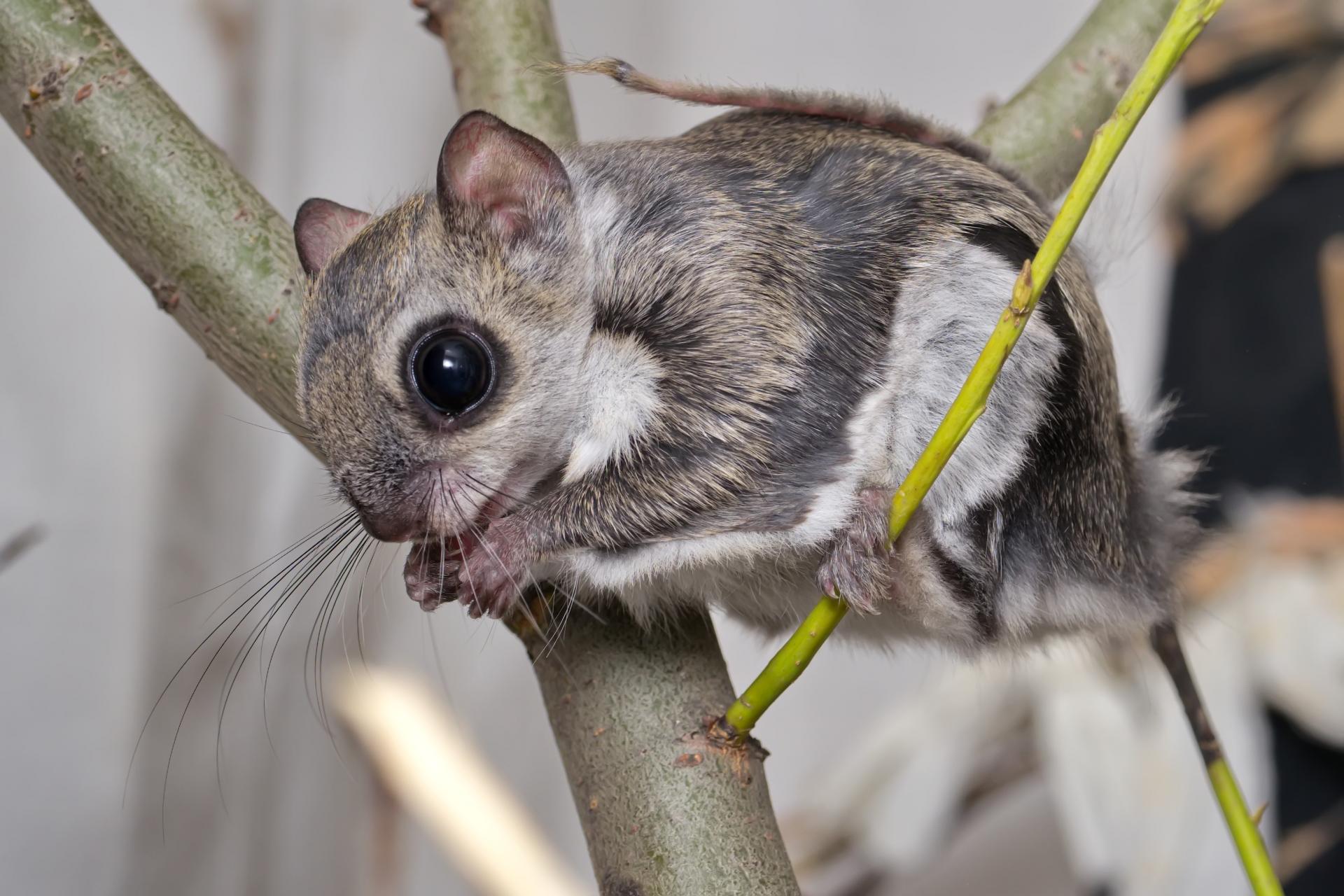
It is important to make the conditions of the enclosure as natural as possible, then the flying squirrel will feel calm and quickly get used to the new place.
The enclosure is cleaned daily, and the nest twice a week. A thick branch of alder, elm, or oak is placed inside the enclosure, and a wheel can be installed to help the squirrel maintain its shape. The floor of the enclosure is covered with sawdust or wood pellets, available at pet stores. Plenty of "building material," such as dry grass and moss, should be placed in the enclosure so the squirrel can construct its own nest.
When flying squirrels are kept at home, their diet differs from their regular menu in the wild. The animals are given mealworms, crickets, larvae, caterpillars and other insects, whereas in the wild they feed mainly on plant-based foods. The animal is offered a daily serving of natural juice or nectar. A pet squirrel's diet includes honey and chopped vegetables and fruits.
The water in the bowl is changed daily to prevent the accumulation of pathogenic bacteria. A salt rock is placed next to the water so the flying squirrel can nibble on it and obtain essential minerals and salts. If feeding animal food is not possible, it can be given cottage cheese and yogurts without fat, preservatives, or flavorings.
Every day the flying squirrel needs to fly and jump, so it needs to be let out of its enclosure.
The room should be free of objects that could injure this nimble little creature. When getting a flying squirrel, keep in mind that you'll need to dedicate an entire room to it.
Flying squirrels should not be kept in the same home with other rodents or snakes. In captivity, with proper care, flying squirrels can live from nine to thirteen years.
The flying squirrel is an amazing animal, distinguished from other animals by its unique ability to navigate between trees. It is listed as endangered, so people must protect it from human cruelty and possible extinction.