 Novice poultry farmers who decide to raise quail at home should know that achieving the greatest success is only possible with proper feeding. From the very first days of life, young birds require a specific feeding regimen and supplements with vitamins.
In this article, we'll discuss the specifics of feeding quail at home to ensure they lay eggs well.
Content
Nutritional characteristics of chickens
For young animals up to three days of age You need to drink plenty of fluids, which must be provided in sufficient quantities. The water should be boiled, slightly warm, and with a small amount of potassium permanganate added. It is recommended to give chicks a weak solution of potassium permanganate to drink throughout the first week of their life.
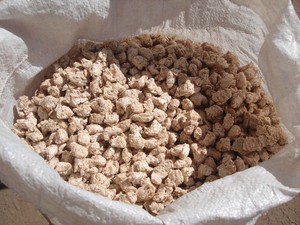 Up to two weeks of age feeding quails at home there may be two options:
- The easiest way to feed quail is with a special starter feed. It contains all the nutrients and vitamins needed for quail, and it doesn't spoil as quickly.
- It is much cheaper for the poultry farmer and the best option for the chicks is to prepare the feed yourself.
Composition of feed for quails
The diet of young animals depends on their age:
- During the first week of life, quails are given boiled and ground quail eggs with the shell;
- For two-day-old birds, 2 grams of low-fat cottage cheese, mashed through a sieve, are added to the feed;
- Three-day-old young quails should receive fresh greens in the form of chopped yarrow, nettle, dandelion, onion;
- on the fourth day of life, more cottage cheese is added and the amount of eggs is reduced;
- By the end of the first week, the chickens' diet should include boiled fish, millet, ground wheat, grated carrots and cottage cheese.
It is recommended to feed quail at least 5-6 times a day. To prevent pathogenic bacteria from growing in the feeders, they should be emptied of any remaining food and washed after each feeding.
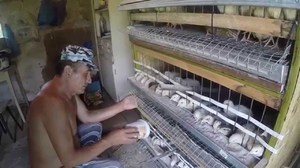 It is recommended to feed quail at least 5-6 times a day. To prevent pathogenic bacteria from growing in the feeders, they should be emptied of any remaining food and washed after each feeding.
Two-week-old quail are fed a high-protein compound feed four times a day. Young quail are between two and four weeks old. increased amounts of protein are requiredDuring this time, they should be given shells and gravel, which improve the birds' digestion.
Basic food for quails
To quails They carried better at home They can be fed with commercially produced compound feeds. Currently, these are available in several varieties:
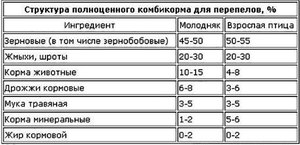
- PC-4, PC-6, and PC-2.2 are compound feeds consisting primarily of grains. Sixty percent of this feed consists of equal parts barley, wheat, and corn. Thirty percent consists of protein in the form of lysine, feed yeast, fishmeal, and sprat. Phosphate, salt, and chalk account for 5%. These types of compound feed may contain additives such as seashells, bran, and wheat flour. They are primarily suitable for adult birds.
- Compound feeds PK-1 and PK-2 are composed of wheat, corn, salt, and chalk. Their protein base is bone or fish meal and soybean meal. These are inexpensive and simple feeds. For an adult quail, twenty-seven grams of one of the described feeds per day is sufficient.
- PC-5 consists of corn, animal fats, fish meal, wheat, soybean meal, or sunflower meal. It necessarily contains mineral supplements such as chalk, phosphate, and salt, and at least 35% protein. Grain accounts for 60% of PC-5, and minerals account for 5%. Lysine is a mandatory ingredient. With this composition, 30 grams of this feed per quail per day is sufficient.
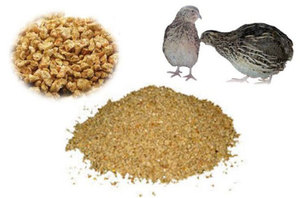 Compound feeds PK-1 and PK-2 are composed of wheat, corn, salt, and chalk. Their protein base is bone or fish meal and soybean meal. These are inexpensive and simple feeds. For an adult quail, twenty-seven grams of one of the described feeds per day is sufficient.
One bird requires approximately one kilogram of compound feed per month.
Preparing compound feed at home
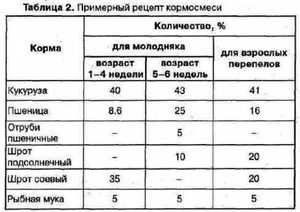
Experienced poultry farmers preparing feed for quails according to their own recipes. They are based on grains, to which whole vegetables and fruits or their peelings are added.
The recipe for complete quail feed is quite simple. To prepare it, you'll need:
- 1 kg of crushed wheat;
- 400 g corn;
- 100 g barley;
- 1 tsp bone meal;
- ½ tsp unrefined vegetable oil.
 Received The mixture can be fed to birds in dry form Or dilute with water to form a porridge. Minced fish or meat, or cottage cheese, can be added to the feed as a source of protein. You can also add one teaspoon each of salt, chalk, and shell rock. This mixture will be enough for one bird for six weeks. It is recommended to feed the birds at the same time three or four times a day.
To ensure that quails lay eggs well at home, the components of the feed must be varied.
Vitamins in quail nutrition
In pet stores or at the market You can buy special vitamin-rich food For quail or laying hens, these foods contain various vitamins. In this case, you'll need to feed the birds according to the instructions. If you can't find these, you can buy regular multivitamins at a pharmacy, grind them up, and add them to the quail's feed.
Anyway the bird needs additional nutrition from time to time Vitamin D2 – 3000 IU per quail per day or D3 – no more than 1000 IU per day.
Quail obtains mineral substances from eggshells, chalk, ground seashells, and small gravel with a fraction of no more than 2–3 ml.
 Vitamins can also be consumed with fresh herbs, which quails really enjoy. They'll appreciate finely chopped grass such as goutweed or chickweed, sprouted oats, and grated ripe apple or carrot. However, overfeeding hens with fruit and grass is not recommended. They may stop laying eggs or produce very small eggs.
It is necessary to ensure that unhulled oats do not get into the quails’ feed. Especially This is relevant for birds., living in the same house with any ornamental birds. Unhulled oats can cause gastrointestinal problems in quail, which can lead to death.
Seasonal feeding
Particular importance must be given to feeding quails at different times of the year.
IN summer period Vitamins can be obtained from the garden in the form of green fodder. Chopped cabbage and beet leaves, alfalfa flowers, nettles, clover, lettuce, and spinach will help birds digest their food and absorb nutrients. Earthworms can be used for protein.
In winter additional sources of minerals and vitamins areSprouted oats, millet, wheat, and green onions are added to the feed. Since fresh grass is unavailable at this time of year, dried alfalfa, clover, and nettles can be prepared in the summer and fed to the quail during the winter.
Feeding laying hens
The feed of adult quails should consist of 25% crude protein. On egg laying hens A deviation in either direction can occur. Excess protein leads to the production of double-yolk eggs that are unsuitable for incubation. A protein deficiency affects the quality and quantity of eggs laid, which are often pecked by birds.
When feeding layers with industrial compound feed PK-1, they It is recommended to add protein productsThis could include soy, boiled fish, or cottage cheese. Two grams of these products are required per bird. If quail are fed a grain mixture, 12 grams of protein ingredients are added per bird.
 To ensure that the females lay eggs well, they are fed with grain mixtures. overfeeding is not recommendedOnly vitamin-rich foods can be fed in unlimited quantities. Laying hens should be fed sparingly, strictly adhering to the prescribed dosage. To better visualize the required amount of feed for a female, it's enough to visually increase the size of her crop by 2-3 times.
A single quail consumes approximately nine kilograms of feed per year. Feed consumption can increase due to low temperatures or long daylight hours, as well as improper diet formulation.
Features of feeding males
You should feed quails Seeds of cereals and weeds. Don't forget about animal protein in the form of cooked fish, various insects, and larvae.
Normally, males need 5-7 grams of grain per day. you can treat yourself to poppy seeds and add cooked, chopped legumes. Twice a day, it is recommended to feed them protein sources, including bone meal, ground meat, fish, ant pupae, mealworms, etc. During the summer, when less energy is expended in the heat, the frequency of protein feedings can be reduced.
Quails will happily eat fresh cabbage, beets, turnips, carrots, boiled potatoes and various chopped greens. Don't forget about gravel, which improves digestion., sand, or crushed shells. You can feed quails special food for males or even parrots. However, some foods contain large amounts of salt, which can be toxic to birds. Therefore, it is important to check the ingredients before purchasing.
Quails love to rinse their beaks after they get dirty, so the water in their drinking bowl needs to be changed at least twice a day.
Feeding quails is entirely up to the poultry farmer. It doesn't matter much whether they feed them homemade or commercially prepared feed. The main thing to remember is — For quails to lay eggs well, their diet must include a sufficient amount of protein and grains.