 Quail farming has recently become the fastest growing branch of the home farming industry. This is because the cost of keeping and feeding this species of bird can yield a good profit. Quail are also prized for their eggs, which are a treasure trove of vitamins, minerals, and other nutrients. A small number of quails can even be raised in an apartment.
Content
The benefits of quail farming
Breeding quail at home can yield not only eggs but also dietary meat. It is recommended for those suffering from tachycardia, pneumonia, tuberculosis, asthma, diabetes, arrhythmia, and cardiovascular dystonia. Since quail meat is hypoallergenic, it is given to young children when they first begin to eat solid food.
In addition, poultry farming has other advantages, which include:
 profitability of cultivation;
- high return on investment, since quails mature three times faster than rabbits and twice as fast as ducks;
- the benefits of eggs;
- high egg production;
- unpretentiousness in maintenance, cultivation and feeding;
- the presence of resistance to various diseases, which excludes their treatment, and, therefore, antibiotics and other drugs do not accumulate in the eggs;
- the need for minimal space for keeping and breeding birds.
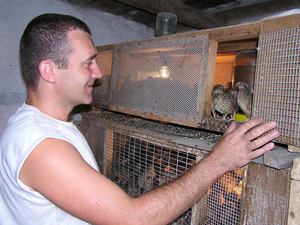 profitability of cultivation;
Supermarkets readily buy quail meat and eggs, so breeding this bird can become a profitable family business.
Keeping and caring for quails at home
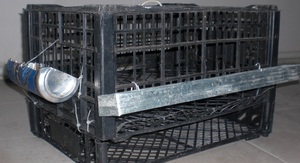
Start off You can breed quails not only at home, but even in an apartment. It's a great idea to have a summer cottage where you can keep the birds in the summer. It's best to raise them in cages, which have several requirements:
- The cage frame must be made of metal or galvanized mesh.
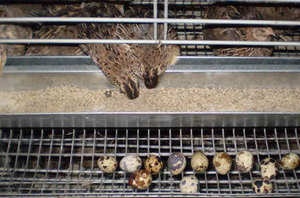
- The gaps between the bars should be large enough to allow the bird to easily insert its head through the bars when feeding. To maintain cleanliness and save space, feeders are placed outside the cage.
- The home is equipped with two trays. One is for droppings, and the other for eggs. This is crucial, as without a tray for droppings, the eggs can become contaminated and infected.
- The cage height should be at least 20 cm, as quails can jump. A lower cage could injure the bird.
- The cage floor should slope slightly toward the back wall. This will allow the eggs to roll down and remain safe and clean.
When choosing a cage, keep in mind that five birds require at least 0.1 square meters of surface area. However, birds will lay eggs even in smaller cages.
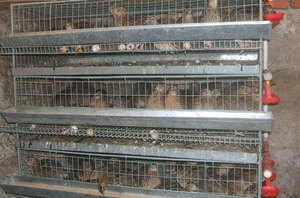 Wood shavings or sawdust should be placed on the floor of the cage. The litter is changed regularlyDon't allow it to become heavily soiled. Birds should be bathed weekly in wood ash, which has medicinal properties and helps rid them of skin parasites.
To increase egg production, you can increase the daylight hours for quail. In this case the female will produce two eggs dailyBut don't get too carried away. The bird needs time to rest, otherwise it will become aggressive. If you don't plan to breed quail, you can raise only females. They will still lay eggs successfully. Many breeders sometimes keep males simply because they enjoy watching the courtship behavior of male quail.
Conditions of detention
To save space at home cells can be placed one on top of the otherOptimal conditions for keeping birds are:
- The temperature in the room where the birds will be kept should be between 16°C and 25°C. The optimal temperature is considered to be between 20°C and 22°C.
- The room should have good ventilation and air humidity at 60-70%.
- The optimal daylight hours for laying hens are between 17 and 20 hours. Under these conditions, they lay eggs well. Therefore, lighting is essential.
- Cages should be cleaned regularly to completely remove waste.
- Feeding must be properly organized. It's not recommended to overload the feeder. Birds won't know their limits, will overeat, and become overweight. As a result, they'll stop laying eggs.
- Near the cages, it is necessary to exclude irritating factors such as loud sounds and sudden movements.
Fast-growing young animals require more space for their full development and survival.
Features of keeping quails in winter
In winter at home temperature fluctuations may occur and humidity. You need to make sure these changes are invisible to the birds. This is fairly easy to do for birds living in an apartment or private house. However, when keeping quail in a summer house during the winter, you need to start taking care of them in the fall. To achieve this, the room must be insulated.
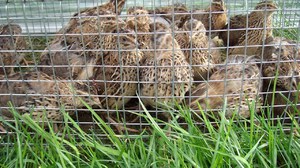 Bird cages for winter should be chosen with only the front section made of wire mesh. Plywood or wood on the sides and back will retain heat better.
It is also necessary to take into account the fact that young quails have denser plumage, so they tolerate the cold better. Many poultry farmers increase stocking density during the winter, which allows the quail to keep each other warm.
To maintain humidity You can place a bucket of water next to the cage Or hang a wet cloth. This is especially useful in apartments with central heating.
Birds in winter consume a lot of energy on heating, so their diet at this time of year needs to be more nutritious. To achieve this, they are fed protein-rich foods, and vegetable oil is added to the grain or compound feed.
What to feed quails?
Many quail breeders who have been keeping quail for a long time feed their pets commercially prepared feed. This is a balanced diet that includes mineral supplements, protein, and vitamins. Using this type of feed makes caring for the birds much easier.
You can prepare a diet for quails yourself. Experienced Poultry farmers have developed their own recipes for compound feed and use them successfully. The main component of the bird's diet is grains. To prepare a complete feed, you will need:
- mix 100 g of barley with 400 g of corn;
- add ½ teaspoon of unrefined oil and a teaspoon of flour;
- Add one teaspoon of salt, chalk and shells to the mixture.
This amount of mixture is enough to support and feed one quail for six weeks. The feed can be diluted with water or used dry.
As a source of trace elements necessary for birdsVegetables, fruits, or their peelings are added to the diet. These should be cooked and mashed to a pulp. Care must be taken to ensure that large particles do not enter the birds' food, as they could choke and die.
 As a source of protein you can use minced fish and meat, cottage cheese. Eggshells and greens provide mineral and vitamin supplements. In summer, quails' diets are enriched with fresh cabbage, beet leaves, alfalfa and clover flowers, nettles, lettuce, and spinach. Green food should only be finely chopped. This promotes proper digestive function and improved nutrient absorption.
During the winter, sprouted grains such as millet, wheat, and oats are added to the feed as additional sources of vitamins and minerals. Green onions can also be included in the diet.
When keeping quails feeding should be done three times a day, preferably at a strictly defined time. Birds, especially growing chicks, should be given plenty to eat. Adults should receive most of their food at the last feeding. This should include grain, which is slowly digested.
Features of feeding laying hens
Nutrition of female quails must be balanced and contain sufficient amounts of vitamins and microelements, fats, proteins, and carbohydrates. Their diet should include a high amount of crude protein (up to 26%), which influences the number of eggs laid. Crushed eggshells, a source of calcium, should also be added to the feed. A laying hen consumes 25-30 grams of complete feed per day.
Fattening poultry for meat
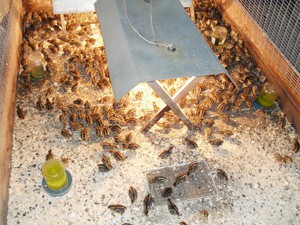 Selected for fattening for meat quails are housed in cages With solid walls. Males are kept separate from females. Feeding is introduced gradually. The birds' diet is increased in fat and corn. It may consist of broiler feed (80%) and peas boiled for half an hour (20%).
The transition to a new diet lasts four days. Gradually the amount of old feed is reduced, and it is replaced with a new one. Quails are fattened for meat for four weeks. During the final week, the feed amount is increased by 8%. Birds ready for slaughter should have breasts with a good layer of subcutaneous fat and weigh at least 160 grams.
Quail Breeding Tips and Videos
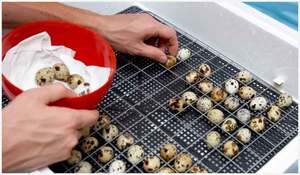
Breeding poultry at home you should start by purchasing an incubator, as domestic hens do not sit on eggs. The incubation period is 17 days, during which the eggs must be evenly heated on all sides. If the incubator does not provide this, the eggs are turned manually at least four times a day. The eggs should be set fresh, and no more than six days should have passed since they were laid.
The quail chicks hatch together within 4-6 hours. The last chicks to hatch It's not recommended to leave them. They rarely survive, often get sick, and cause a lot of trouble later on. Although the babies weigh only 6-8 g, they are active from the first days. They look like a little yellow lump with two brown stripes on their back.
Growing young animals
Once the chicks hatch and are completely dry in the incubator, they are moved to a box with holes and high sides. The top is covered with gauze and put in a warm place with an air temperature of 36 C-38 CChicks should be kept in a box until they are 14 days old. During this time, the chicks should have access to food and water. The box itself should be cleaned regularly. Chicks also need lighting.
When introducing quail chicks into the cage, be careful. A sudden change in temperature can kill the quail, so reduce it gradually.
Feeding the chicks
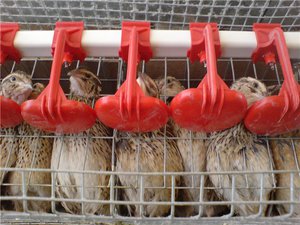 In the first four days the young are fed finely chopped eggs, which are poured into a wide, flat bowl. On the fourth day, corn and cottage cheese are introduced into the diet. To make this easier, you can use special chicken mixes, which are sold in specialty stores.
For a full-fledged diet consisting of compound feed For chicks, young birds are transferred to a brooder on the eighth day of life. On the twenty-eighth day, quail are fed a feed formula for adult birds. From birth, young birds should be provided with warm water. It's best to give them water from automatic drinkers that are free of debris. It's recommended to boil the water first. You can watch the video for more information on raising quail.
To reduce the risk of various diseases, quail are given chloramphenicol (chloramphenicol) during their first days of life. They reach full maturity by 8-9 weeks of age. Hens begin laying eggs at 50 days of age.
Breeding and Keeping quails is a good alternative to chickens and ducks To provide the family with healthy, natural products. With proper housing and care, the birds can produce a significant amount of produce, with any surplus profitably sold at market.