Aquarium decor implies adding any items that enhance the home's water feature without compromising the living conditions of its inhabitants. Modern aquaristics is a serious endeavor, utilizing the latest advances in science and technology. Even the profession of aquascaper has emerged, but home hobbyists decorate their aquariums using their imagination and available resources. It's important not to overdo it with the addition of extraneous items to ensure that your home aquarium remains a comfortable home for your fish and other inhabitants.
Aquarium decoration: what materials are appropriate and undesirable for decorating a home pond
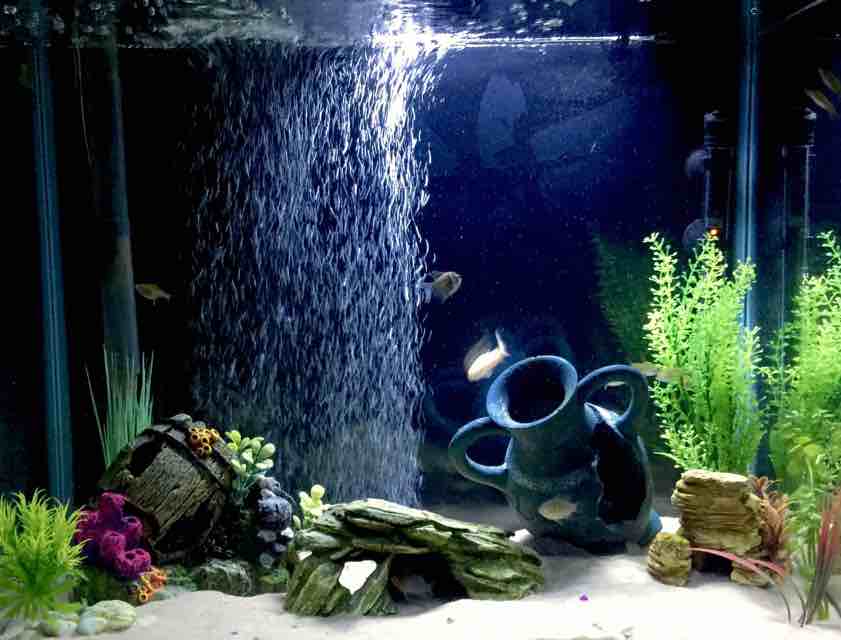
Decorating an aquarium is a responsible task: when decorating, it is important not only to satisfy your own desires but also to avoid harming the underwater inhabitants by introducing toxic materials.
The following are used in aquarium design:
- metal objects;
- glass products;
- natural objects of organic origin;
- ceramics;
- stones and other rocks;
- artificial materials (rubber, synthetic polymers, including foam).
Not everything on this list is harmless to fish; there are also undesirable items: these are materials that can interact with water and negatively change its chemical and biochemical composition.
If used improperly, the following may cause harm:
- PlasticsConventional polyethylene or polystyrene do not react with water or the impurities it contains. However, this cannot be said of most polymers used by some companies to produce household items and even children's toys, especially the paints used for them. Therefore, only plastics labeled as safe (marked with a triangle of three arrows) are permissible for aquarium decoration.
- Ceramics. Most natural clays are safe for fish, but even here there are exceptions: some minerals contain water-soluble lead compounds. Glazed items are even more dangerous: many paints and glazes are made with toxic substances.
- WoodAlthough seemingly a completely natural material, it still harbors dangers. Wooden objects must be treated before being placed in an aquarium. For example, various driftwood found in forests or swamps is considered a fashionable decoration. However, preparing them requires long-term soaking in salt solutions and boiling to remove hazardous substances; otherwise, the water's composition may change significantly.
- Shells and coralsAlthough these items originate from natural bodies of water, their presence in a freshwater aquarium can be detrimental. They gradually release calcium ions, alkalizing the water. While this pH change is insignificant in a large natural body of water, it can be fatal in a small aquarium.
- Sand from the beachTo use it as aquarium soil, it requires several days of treatment, with periodic water changes and boiling. The essence of the treatment is to remove impurities accumulated in the sand from people and animals walking on it.
- Sharp objectsSharp glass or even colored stones with sharp edges are inappropriate in an aquarium: fish often injure themselves by swimming near them or playing with them.
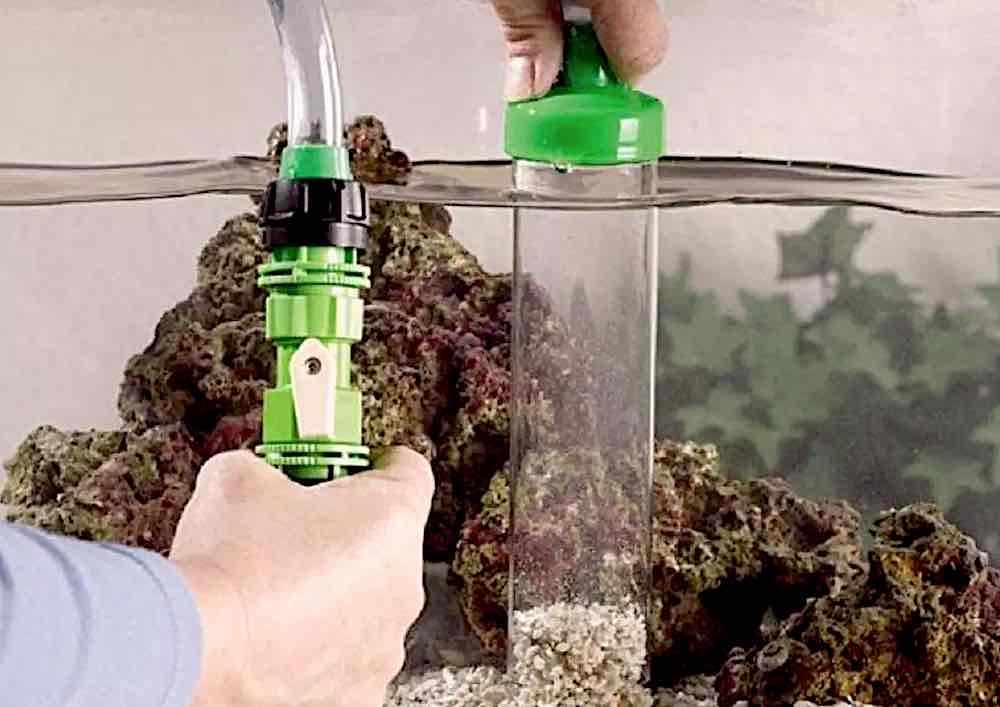
Only place any objects in the aquarium if you are absolutely certain they are safe. This includes the owner's hands, if they contain creams or other cosmetics, and aquarium maintenance supplies. Even a gravel hose can change the water's composition; furthermore, fish will taste it.
Anything that can decompose in water should not be introduced into the aquarium. It's a well-known rule: fish should be given enough food so that it is completely consumed within 10-15 minutes.
Read also, How to properly clean an aquarium.
Back wall decoration, lighting
Decorating an aquarium begins with its exterior. The frame is carefully polished and painted, but the design of the rear window is also crucial. It is often painted on the outside or inside, as completely transparent windows make viewing fish against a wallpapered backdrop unappealing. It has become fashionable to apply ready-made images to the rear wall—laminated films with painted rocks, underwater reefs, and other objects. Artificial images of plants or shells are especially common in aquariums stocked with very large fish: live plants are not always present in these aquariums, as cichlids, for example, often uproot them. However, if the rear window is left unpainted, it will become overgrown with natural algae within a couple of months and become opaque.
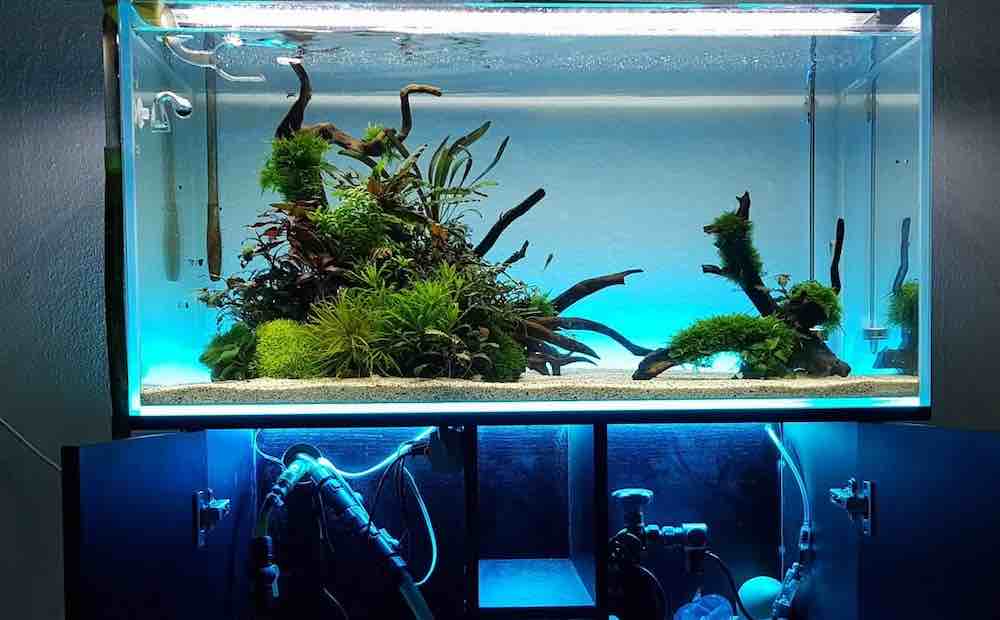
Without artificial lighting, it's very difficult to ensure a healthy life for fish and plants in a populated aquarium. In addition to incandescent or LED lamps, phytolamps with various emission spectra are now used. These not only promote the intensive growth of aquarium plants but can also alter the visual effects and highlight the characteristics of certain fish species.
Rocks and soil
An aquarium's substrate is an essential element. Fish waste settles on the bare bottom, and when their fins move, it immediately rises and pollutes the water. Even a "bare" substrate makes the aquarium cleaner, but in more than 90% of home aquariums, exotic plants are also added.
The following is used as soil:
- coarse sand;
- fine gravel;
- artificial (glass) pebbles.
When choosing a substrate, a tradeoff is made between beauty and naturalness, striving to combine these two principles. However, artificial substrate materials are not the best choice. As in natural bodies of water, biological balance requires the presence of beneficial microorganisms in the water, and these prefer to be found near a natural substrate such as sand or pebbles. Fine gravel is more convenient in terms of ease of maintenance, but some fish live directly in the sand or burrow into it when spawning. Therefore, before choosing a substrate, it is important to carefully study the characteristics of individual fish. In any case, the substrate should be thoroughly washed before placing it in the aquarium, and if its origin is in doubt, it should be boiled.
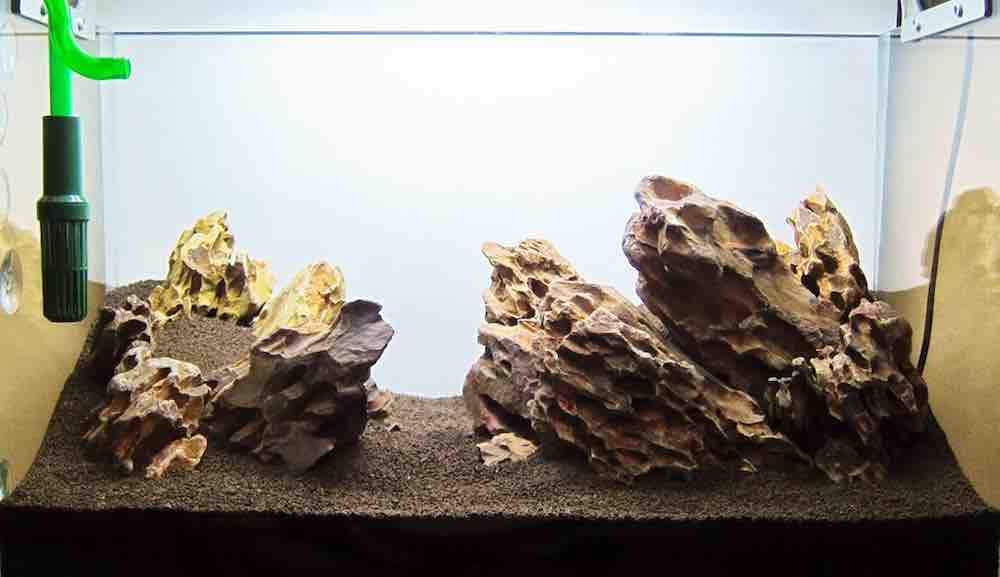
Large rocks, either randomly or arranged in a specific pattern, serve as aquarium decoration. They can be either natural or artificial.
The best are considered to be:
- granite;
- quartz;
- shale;
- pebbles polished over time.
Like the substrate, rocks are thoroughly washed and disinfected beforehand. Marble, limestone, dolomite, and even crushed shells are highly undesirable in an aquarium, as they increase the water's pH. And, of course, large rocks should be placed away from the glass.
Read also: DIY driftwood.
Aquatic plants
Veteran aquarists believe that an aquarium without plants is not an aquarium. Some hobbyists don't stock their ponds with fish at all—the plants themselves often look just as impressive. However, an aquarium is primarily kept for the fish, and it goes without saying that they find life without plants uncomfortable. Aquatic plants provide a source of oxygen, a refuge for fry, and a natural filter. They also serve as a decorative element to the aquarium.
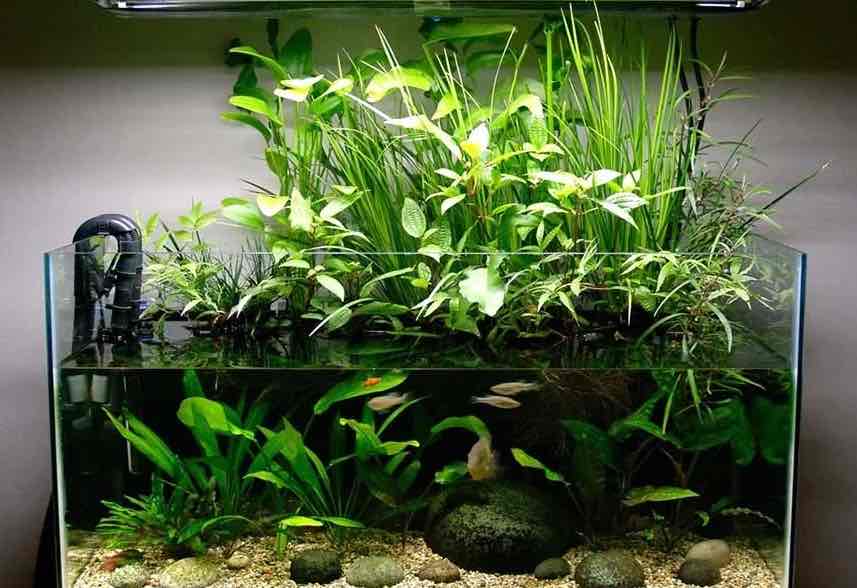
Among the plants, the most popular are the unpretentious ones:
- Vallisneria;
- Riccia;
- glitter;
- hornwort;
- Elodea;
- Java moss;
- pistia.
More experienced aquarists always include varieties of Echinodorus and Cryptocoryne, and few can manage without Ludwigia, an interesting plant with reddish undersides. In aquariums with aggressive fish that uproot plants, artificial versions are often placed.
The classic layout is to plant the largest plants near the back wall, with shorter ones closer to the front glass, but leaving some swimming space for fish nearby. However, each owner is free to arrange the plants as they see fit. They can be used to conceal or decorate equipment (heaters, filters), or to combine plants with driftwood and other decorative elements.
A modern aquarium is more than just a vessel for fish and snails; it's considered a part of the home's decor. Using natural and artificial elements, you can create all sorts of landscapes, both realistic and fantastical. It's important, however, not to overdo it and harm the aquatic inhabitants.
Read also, Why do fish die in aquariums?.