A budgie's cage is its permanent home, as not all owners let their birds fly around the room, and if they do, it's rarely and for short periods. Therefore, choosing the right cage (shape, size, material, and interior design) ensures comfort for the pet, maintaining activity and health, and, consequently, peace of mind for its owner.
Sometimes a parrot is kept alone, but like most birds, it prefers to be in at least a pair, and preferably in a flock. Naturally, when kept in a group, cage requirements change, primarily in terms of size.
While half a century ago you had to build a bird's home yourself, today stores offer a variety of cages, and to choose and set them up correctly, you only need to consider a few obvious rules.
Content
What types of cages are there for parrots?
A parrot's cage is located in the living room, so when choosing one, you have to consider not only the bird's comfort but also the aesthetics of the apartment. There are exclusive cages with unusual shapes, reminiscent of all sorts of geometric shapes and even monumental buildings (I've seen a cage in the style of Stalin's skyscrapers). However, ornate shapes are more likely a sign of bad taste, and regular round or rectangular cages with a flat or convex roof are easier to clean.
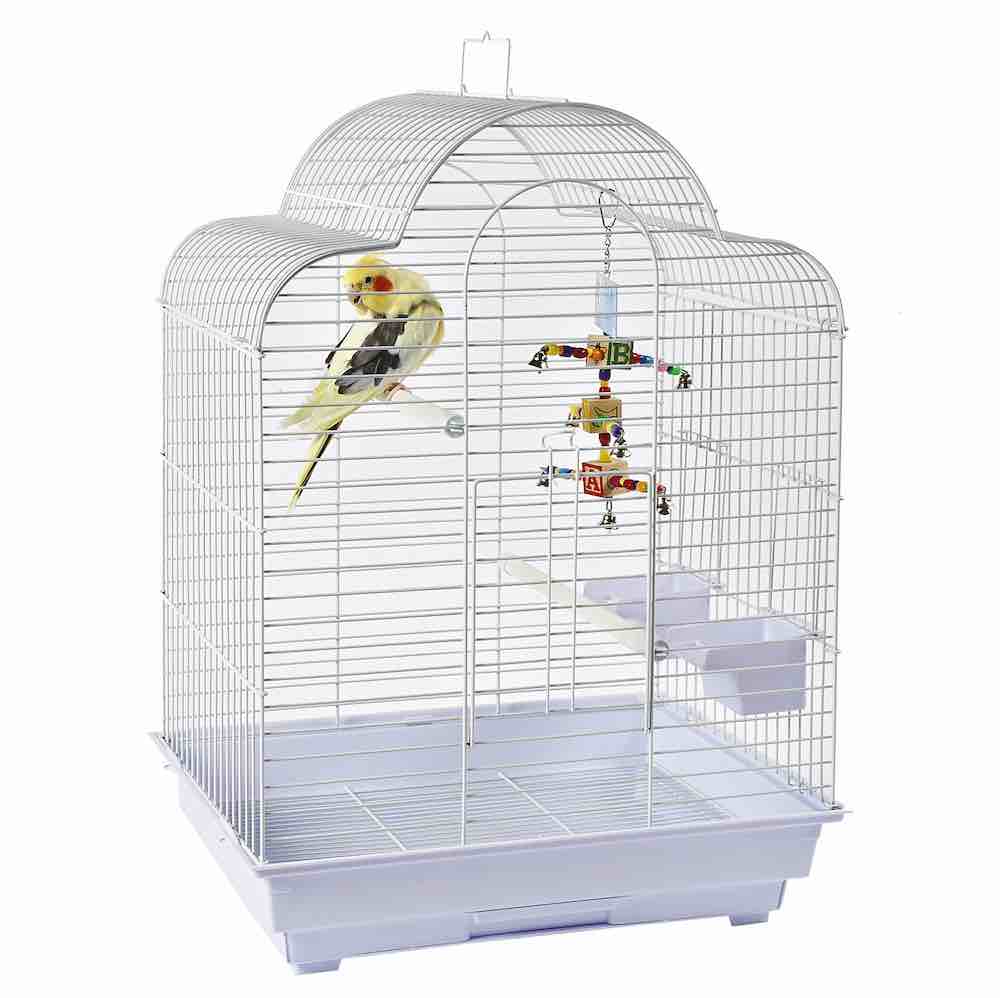
It's important that the cage be comfortable for the bird and provide safety. Round, and especially oval, cages are less ideal: they make birds feel confined, as they also need a "secluded corner." The optimal shape is a parallelepiped, meaning even the roof shouldn't be semicircular.
A cage is a form of confinement that limits a parrot's freedom. To ensure that confinement is not too burdensome, the home should be spacious, allowing the bird to stretch out, flap its wings, and at least fly a short distance. When perched on a perch, the parrot's tail should not protrude through the bars or touch the floor. A separate discussion is required if the couple plans to hatch chicks: a nesting box or birdhouse will also be required. Here, we will only discuss cage requirements for keeping parrots, not for breeding.
Minimum required dimensions
Choosing the right cage isn't just about the shape (the simpler, the better) but also the size. It's rare to keep a dozen parrots in a small city apartment; more often, they're limited to one or two. It's important to create conditions that prevent them from constantly tempting to leave their cage. A stressed bird won't survive long: it will try to escape, which will result in disaster or illness.
If it will be frequently let out to fly around the room, the cage can be small. Otherwise, if the parrot is destined to be confined its entire life, the cage should be made more than spacious: the pet's activity requires an outlet, and the simplest solution is to allow for intensive movement within the home.
If we consider the minimum living space requirements for humans, it becomes clear that the minimum cage size for a parrot won't provide it with comfort, but it will allow it to exist at least to some extent. It is considered that the minimum acceptable space for a single budgie is 40 x 25 cm (16 x 10 inches) and 45-50 cm (18-20 inches) high. A larger cage should be purchased at the earliest opportunity. The cage must be equipped with a door: preferably one that opens to the side and is large enough to allow the owner's hand to easily reach in and safely remove the bird if necessary. A secure lock is essential (parrots are intelligent birds and can easily open simple latches).
Optimal size
A home that is too spacious will crowd out the owner, so options where 2-3 cubic meters of space in the house are allocated for birds are perhaps not very natural, although there are also real aviaries that allow free flight.
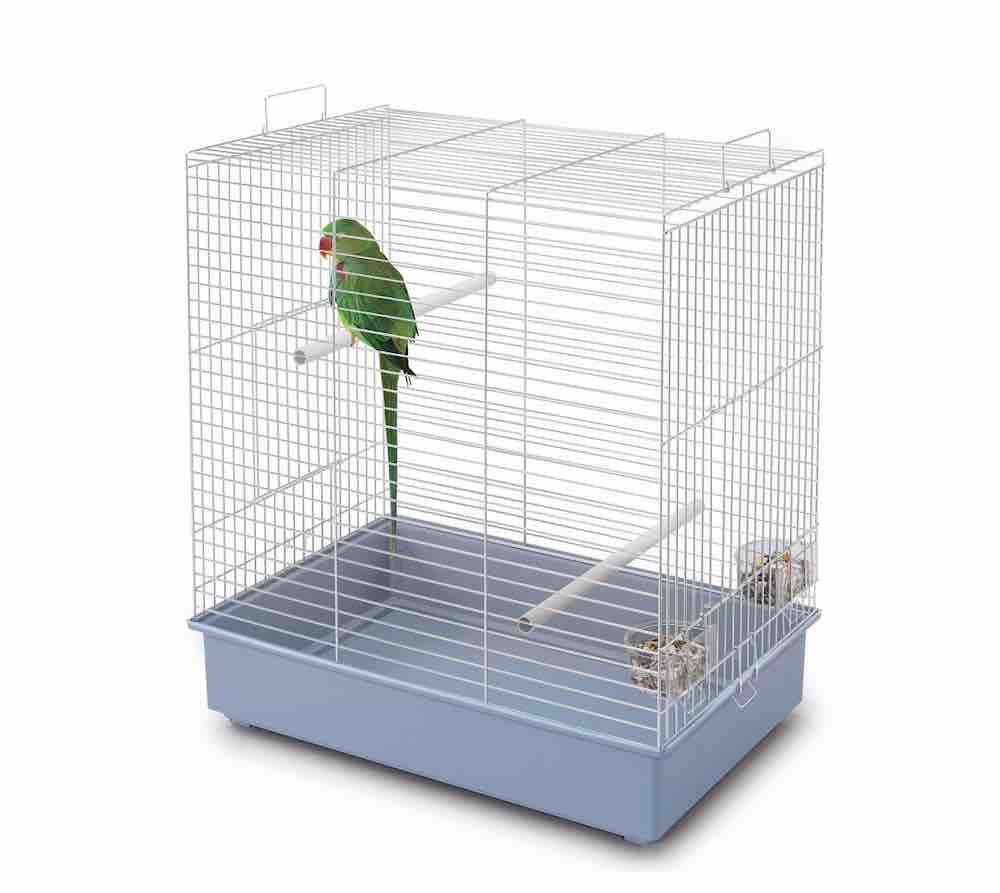
The optimal cage sizes for parrots are considered to be:
- for one 50 x 45 x 60 cm;
- for a pair 85 x 40 x 75 cm;
- For four or more birds, the dimensions increase proportionally.
In addition to a permanent cage, you'll also need a transport cage (not for relocation, as sometimes a bird gets sick and needs to be taken to the vet). This cage shouldn't be too small; even in it, the parrot should be able to spread its wings.
Read also, Why does a parrot lose feathers?.
Cage material
When choosing a cage material for a budgie, it's important to remember that this tiny creature has an exceptionally strong beak: anyone bitten on the finger by a budgie even once will remember it for a long time. With its beak, the bird will chew on anything it wants, including the cage bars. Therefore, the choice of materials is limited.
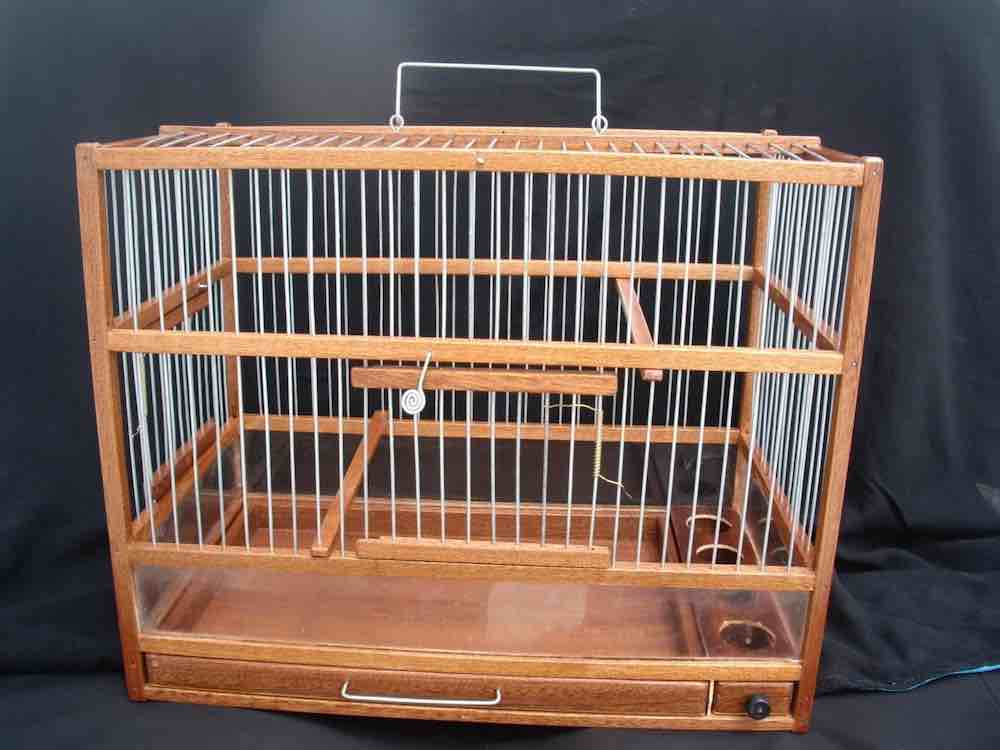
The cells are made from:
- TreesA safe, environmentally friendly material. However, a parrot can make a hole in the wire mesh if it's too eager to fly around the room. Furthermore, wooden surfaces often harbor pathogens and rapidly multiply. Cleaning them is difficult, as water quickly swells the wood. Therefore, a wooden cage is a good, albeit temporary, option.
- Metal (Steel coated with non-toxic paint or powder coating is also good; aluminum is also good.) The best option is if the manufacturer is a reputable company that can be trusted to use safe materials. These cages also contain some plastic parts, the quality of which also directly impacts the pet's health (not all polymers are harmless or sufficiently hard).
- Prutyev Galvanized or copper-plated. The worst option: these metals easily oxidize, and birds chewing on them gradually become ill.
Since "reliable manufacturer" is an ambiguous concept, the best material for rods is considered to be stainless steel coated with stainless steel.
Interior design
Just as it is important for a person to have the right contents in his apartment, a bare cage is not yet a home for a bird.
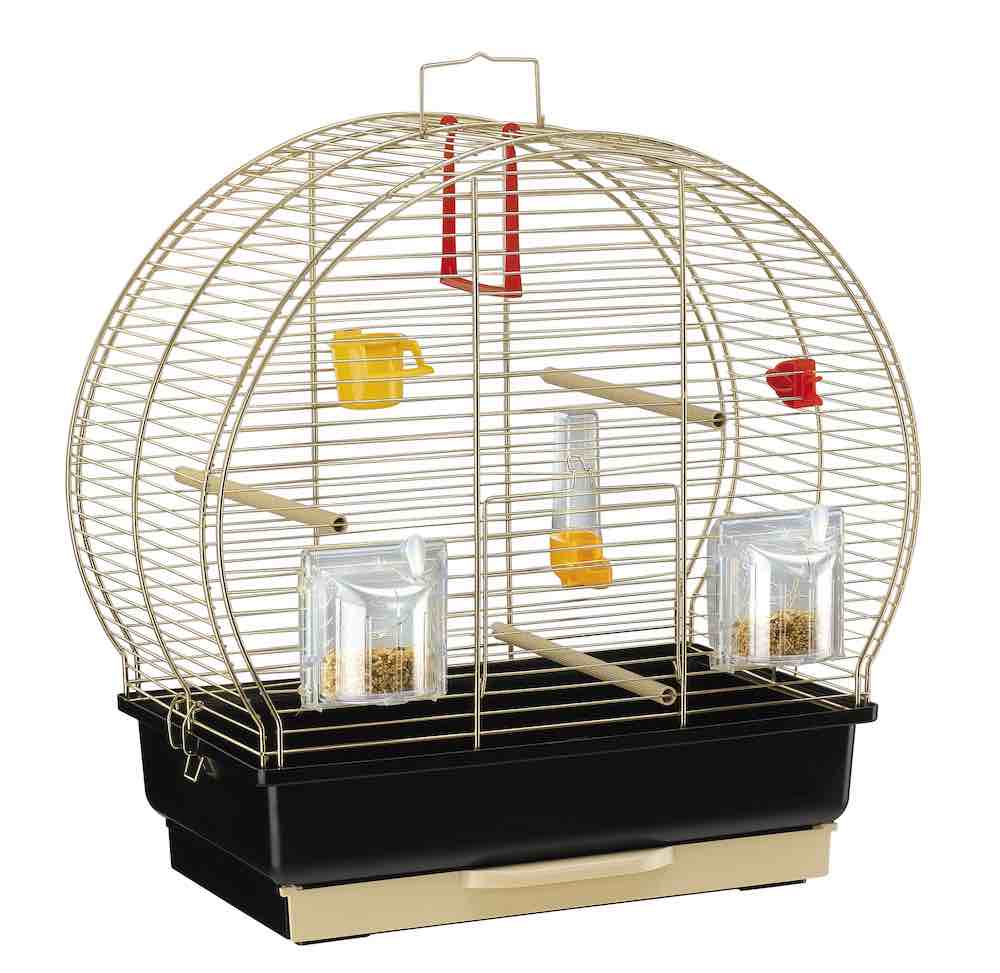
It requires a number of important items and accessories:
- PerchesThe birds will perch on them. The best materials for perches are hardwood or volcanic pumice, although safe plastics are also acceptable. The number of perches and their placement depend on the size of the cage, the number of birds, and their disposition. To keep the wooden perches intact, twigs of softer wood (preferably apple, plum, aspen, or linden), pre-soaked in boiling water, are placed in the cage.
- FeedersThey come in indoor and outdoor, wall-mounted and floor-mounted varieties. There's also a "hopper" option: as the feeder empties, the feed automatically flows out of the hopper. It's not very convenient to have just one feeder for even one bird, let alone several.
- Drinking bowls. Parrots drink water frequently. Open containers quickly become contaminated with dirt and need to be cleaned several times a day. It's better to buy closed models.
- Bathing. During the warm season, parrots love to splash around in the water, for which purpose a special bathing vessel is placed or hung on the wall for them.
- Stone made of minerals As a feed supplement. To avoid confusion regarding the ingredients, it's best to purchase it from a reputable pet store.
Read also about toys for parrots.
To keep the cage clean, it's worth purchasing a model with a pull-out tray. It doesn't need to be lined with anything, just washed periodically. However, trays are most often made of plastic, which is difficult for birds to navigate.
Therefore, most owners cover the bottom with available materials:
- clean white paper (not newspapers with printing ink!);
- sand (the downside is that it flies all over the apartment);
- sawdust (the problem is the same, but birds like to gnaw on them);
- with a special wood filler.
Caring owners often place all sorts of toys, swings, ladders, and bells in the cage. It's important that these are made of safe materials and don't overly clutter the home.
Tips and tricks for choosing the right cage
It is necessary to choose not only the cage itself, but also the place where to place it.
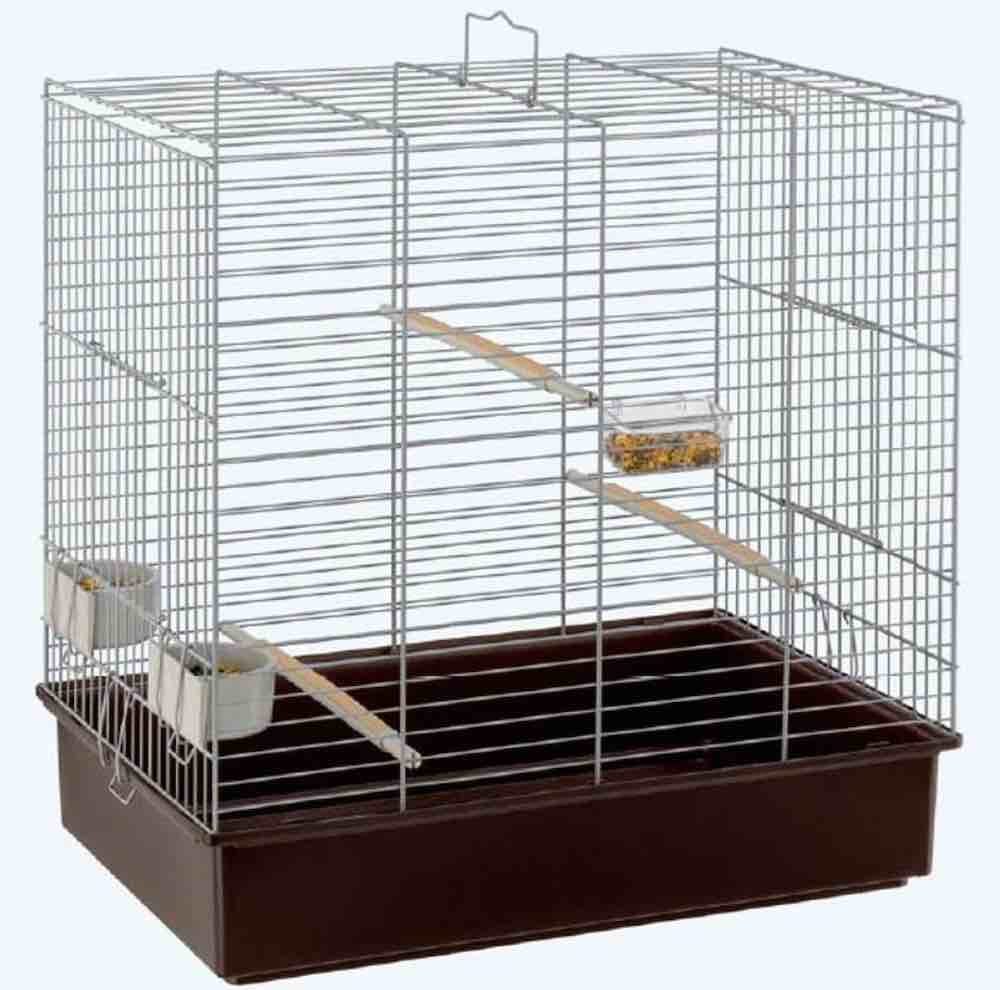
The criteria are not complicated:
- it is placed at the owner's eye level;
- there should be people in the room as often as possible;
- the cage is placed against the wall;
- drafts, proximity to a heating battery or television are unacceptable.
A kitchen or windowsill is a poor choice. The room temperature should be 24-25°C. Lighting doesn't need to be adjusted, but at least 10 hours of daylight are required in winter. To prevent disturbing the parrots' nighttime rest, the cage should be covered with a light-proof, breathable fabric in the evening, around 9:00 PM. The curtain should be removed during the day.
Owners often place a mirror in the cage of a solitary parrot. There's nothing wrong with this; the bird enjoys interacting with its reflection, but the mirror shouldn't be in the cage all the time.
Read also, How to teach a budgie to talk.