Scorpions are ancient venomous insects that often inspire fear. However, many species are quite feasible to keep at home, and the popularity of these unusual pets is growing each year. You can keep one of the following species at home: Hadogenes, Hottentotta, Pandinus, and Heterometrus. However, be aware that scorpions pose a certain danger—their stings are venomous and can cause pain, allergic reactions, and, in rare cases, death.
Scorpions represent the class Arachnida, A type of arthropod. They are considered among the most ancient inhabitants of Earth: there is evidence that scorpions appeared on our planet as early as 400 million years ago.
In captivity, they can typically live for four to five years. To maximize this lifespan, it's necessary to create a microclimate similar to their natural environment and provide them with proper care and nutrition. We'll discuss how to do this in this article.
How to choose a terrarium for your home
The housing and care requirements for scorpions are almost the same as for tarantulas. The first step is choosing a terrarium for your home. Scorpions need to be isolated, as they are aggressive and can even destroy their "neighbors." Up to four individuals can be kept in a single terrarium, but only if they are fed regularly—otherwise, conflicts are inevitable.
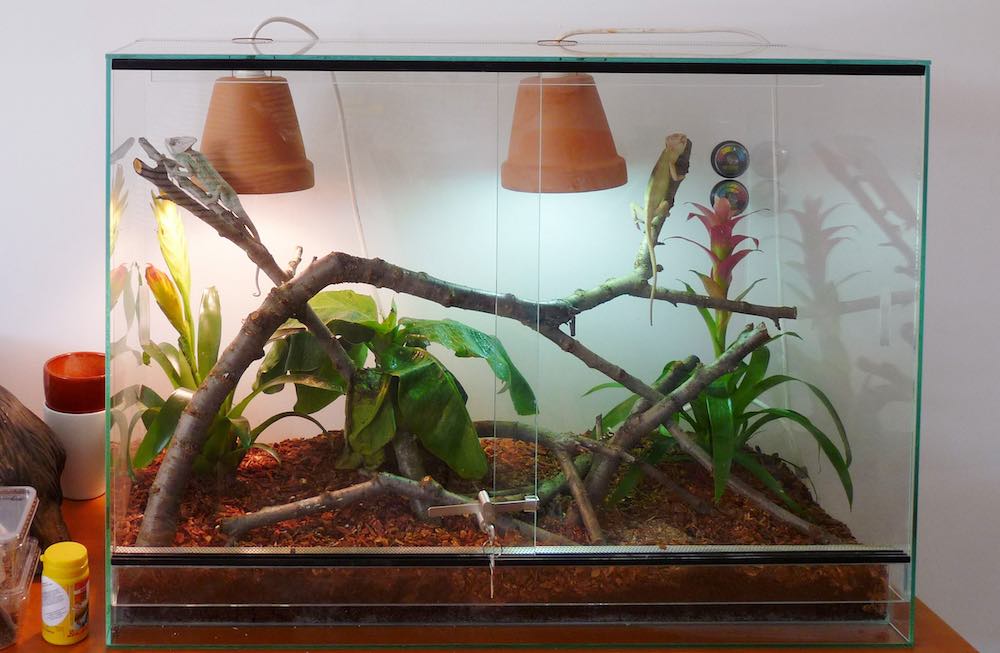
So, you will need a horizontal glass terrarium, at least 30 x 30 x 20 cm in size, although there are much larger tanks available.
Basic dimensions of the terrarium:
- length - at least twice the length of the scorpion's body;
- height - not less than body length;
- width - one and a half body lengths.
A terrarium can be purchased or made. It should be placed in a dark area, as bright light can harm scorpions. Moonlight lamps are used inside to create a semi-dark environment suitable for these pets. A heating source should be installed in one corner, and a humid environment should be provided opposite it.
The terrarium should contain rocks and branches. These must be treated for bacteria, fungi, and parasites. A 5-10 cm layer of substrate should be placed on the floor to allow the scorpion to dig burrows, create shelters, and create refuges. The substrate should be moisture-retentive and well-ventilated: moss, peat, compost, and even coconut shavings are commonly used for this purpose. A mixture of 75% compost, 15% sand, and 10% orchid bark can be used. Regular soil is not suitable for scorpions. The substrate should be changed every 3 or 4 months.
If you've chosen a scorpion that naturally lives in the desert, you should use sand as the substrate. Alternatively, you can place a hollow log, a house, or other shelter in the terrarium.
Domestic Scorpion - Nutrition and Care
A pet scorpion is an independent creature that doesn't require constant supervision. Caring for them is very simple. Scorpions rarely eat: adults about twice a week, and young ones 3-4 times. Overfeeding them is harmful. In the wild, a mature scorpion can go without food for over a month.
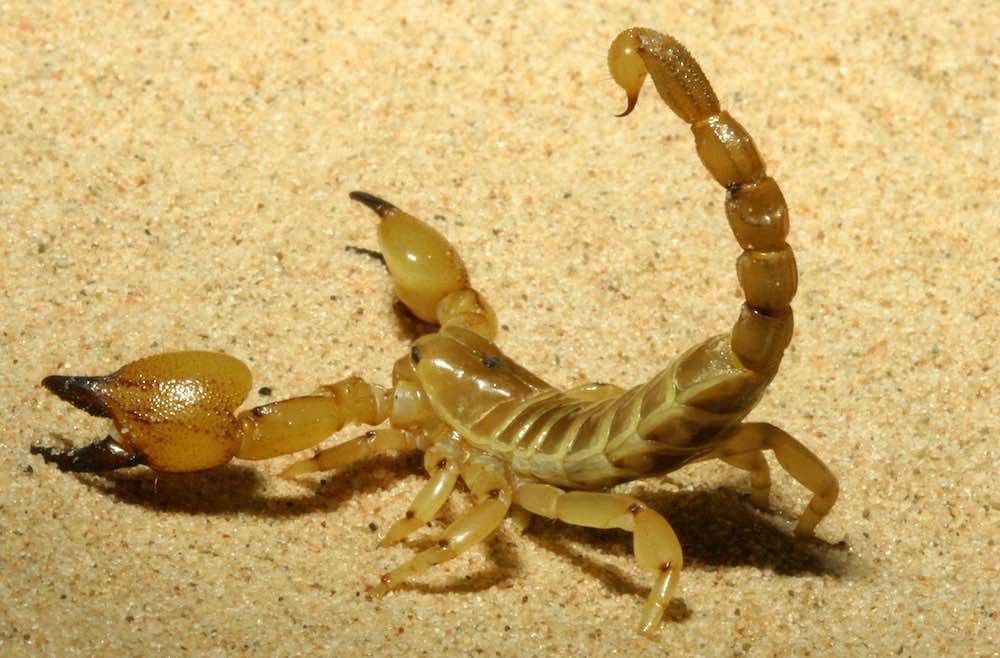
Since it's a predator, it will eat worms, cockroaches, maggots, and other small insects, but wild animals are not suitable for a scorpion. Keep in mind that scorpions are true gourmets. Although they can go for long periods without food, their diet should be varied, otherwise they'll become bored and start ignoring it, which can lead to serious consequences, including death. Therefore, try to vary your scorpion's diet. Kill the food first and cut it into pieces. You can simply purchase so-called "feeder insects" at a pet store.
And keep in mind that if several scorpions live in a terrarium at once, if there is a lack of food, they may start fighting for food or even eat each other.
Read also about the strangest insects in the world.
Temperature and humidity
The main factors for a scorpion are warmth and humidity. The microclimate in the terrarium should be tropical. The optimal temperature is 20-25°C. If your apartment is colder, you can place a heating mat under the terrarium.
To maintain the desired humidity level, periodically mist the terrarium with a spray bottle of water, but be careful not to spray it directly onto the scorpion. To measure humidity levels, purchase a hygrometer.
The soil should be moistened regularly (about once a day) and changed at least every four months. Ventilation should also be provided to prevent mold from forming in the tank.
Too bright lighting is contraindicated for Scorpios, so it will be enough to install lamps with subdued light.
Tips and nuances
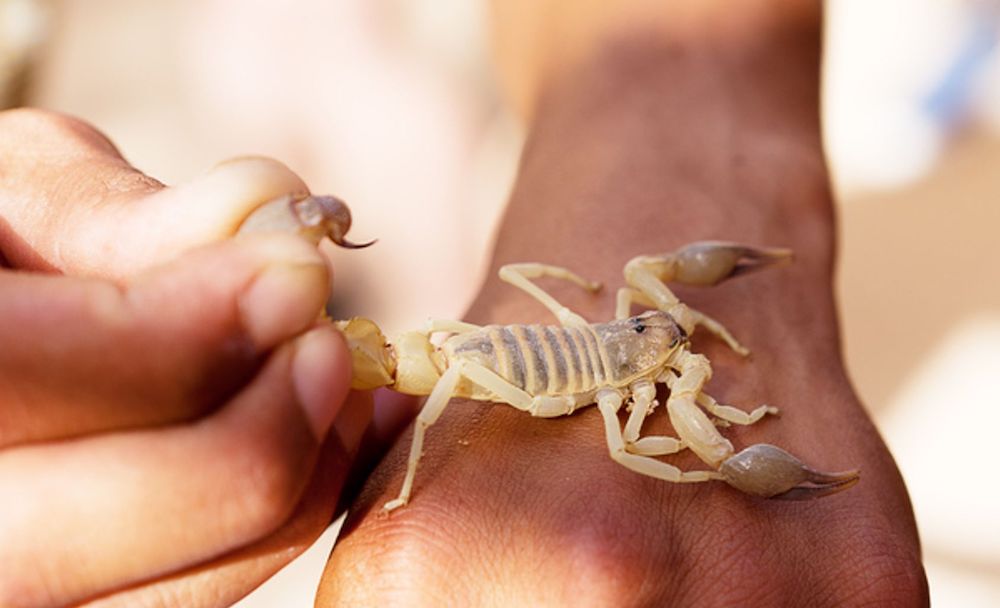
Consider some important nuances of keeping scorpions:
- A scorpion sting is usually not fatal, but it can still be painful. Therefore, remember safety precautions. Do not leave the tank open or handle the pet with bare hands.
- To clean the terrarium and in other situations, it may be necessary to relocate the scorpion. This can be done with tweezers, grasping the insect two sections below the stinger, and then moving it when it's free to hang. Another option is to offer the pet another container, placing it flush against the terrarium, and wait for it to crawl into it on its own.
- Scorpions breed well in captivity, but it's important to provide them with the necessary care and maintenance. Animals reach sexual maturity at approximately three years of age. When mating, the male and female will engage in a special ritual—a "walk together"—lasting several hours. After this, the female will usually devour the male on the spot (unless he manages to escape).
- Scorpions' gestation period lasts from 5 to 9 months (and sometimes longer, depending on the species), but after 2-3 months, the female should be moved to a separate terrarium. The newborn scorpions (25-35 in total) ride on their mother's back for a while in their translucent shell, and when they descend to the ground, they should be immediately isolated to prevent her from eating them.
A pet scorpion is a rather exotic pet, rarely seen in an ordinary city apartment. However, some people keep them as pets. Caring for scorpions is not difficult, but it's important to remember safety precautions and provide them with a suitable microclimate.
Read also: 5 types of unusual pets.