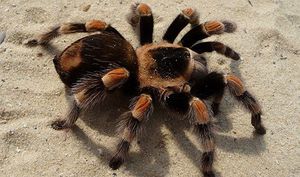
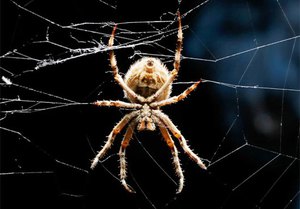
The dream of having an unusual pet often ends with a spider in the house. Arachnologists believe that furry creatures can truly become loyal friends, but there are practically no comparable animals in zoology. Arachnids are the most calm, ordinary, and trouble-free creatures in everyday life, but they are also unpredictable and sometimes dangerous. But before adopting a cute little spider the size of a fingernail or a large furry "monster," it's important to consider your family's attitude toward the future pet and study the behavior and habits of arachnids both in the wild and at home. To do this, it's worth considering the recommendations and opinions of experienced arachnologists.
If all your fears are behind you, and your cherished dream is a spider in a jar, let's consult with arachnology experts. It's important to choose the right spider for your living conditions, set up the terrarium in advance, and familiarize yourself with the care, feeding, and living conditions of this unusual pet.
Content
What spiders can you keep at home?
Most arachnids are completely undemanding in terms of care, but to survive in an artificial environment, it's essential to adhere to certain care guidelines—especially regarding temperature, humidity, and lighting. This is probably why many arachnologists believe that keeping a spider is like planting and nurturing a finicky plant. It's also important to consider the spider's size, color, and lifestyle: after all, arachnids are a special category of pets.
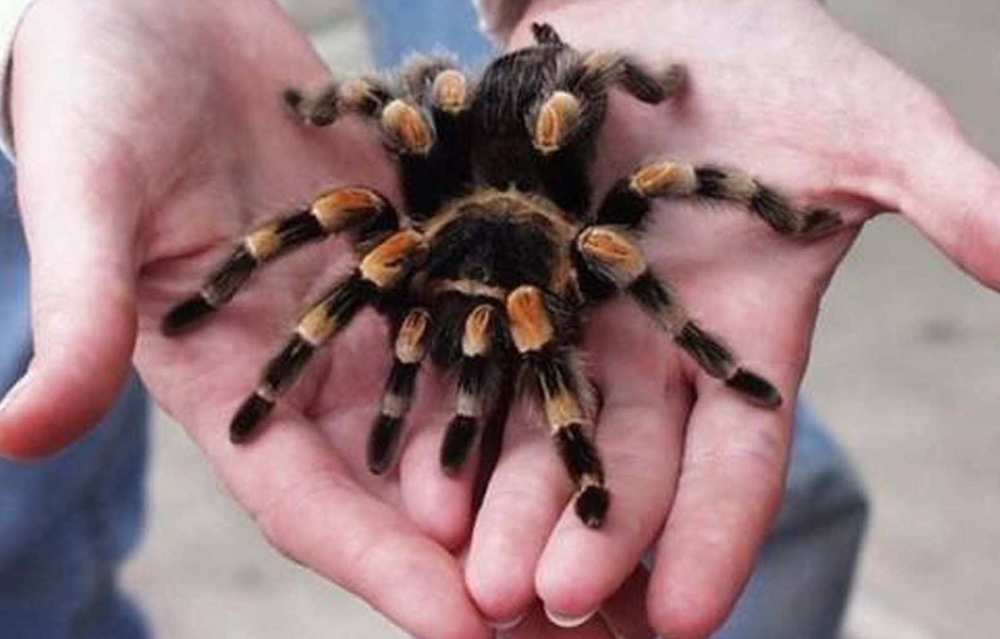
Quite often, lovers of arthropods get tarantulas. There are many reasons for this, not counting the fact that such a pet, along with its luxurious appearance, has a threatening appearance.
Here's why you should get a tarantula:
- He easily adapts to captivity.
- It also reproduces easily in such conditions.
- Easy to maintain, requires basic care.
- Lives much longer than other relatives.
- Absolutely safe for humans.
And most importantly, there are many species and subspecies of tarantulas, each with a fascinating and varied appearance and size range. Breeders most often recommend bicolor, giant, white-haired, and other tarantulas.
Cross spider – the simplest and most accessible of the arachnids. The female is always larger than the male. Moreover, after mating, the female will usually destroy her mate if the male has no escape route – a simple hunting instinct. This is worth considering if you plan to keep a "family."
- To keep a spider you will need a large space, but without a high ceiling, for weaving nets, moderate humidity and bedding made exclusively from natural materials.
- These pets are fed mealworms, flies, and cockroaches, and it's best to have live food on hand. A spider eats an order of magnitude more than its own body weight in food every day.
- It should also be remembered that the bite of the cross spider contains poison, although it is relatively harmless to humans.
Jumping spider (jumping spider) – an eight-legged little creature of small size, safe, non-venomous, one might even say cute in comparison with its relatives.
- It is one of the few arachnids that loves sunlight (but not direct sunlight), as it is native to Southeast Asia.
- Not afraid of drought and active during the day.
- Feeds on insects.
- Does not require a large terrarium volume.
- He will need a lamp for additional lighting - the spider loves to bask in the light.
When choosing an arachnid pet, you should focus on long-lived ones, as they are safer and less demanding. Keep in mind that male spiders typically live longer.
How to choose a terrarium for your home
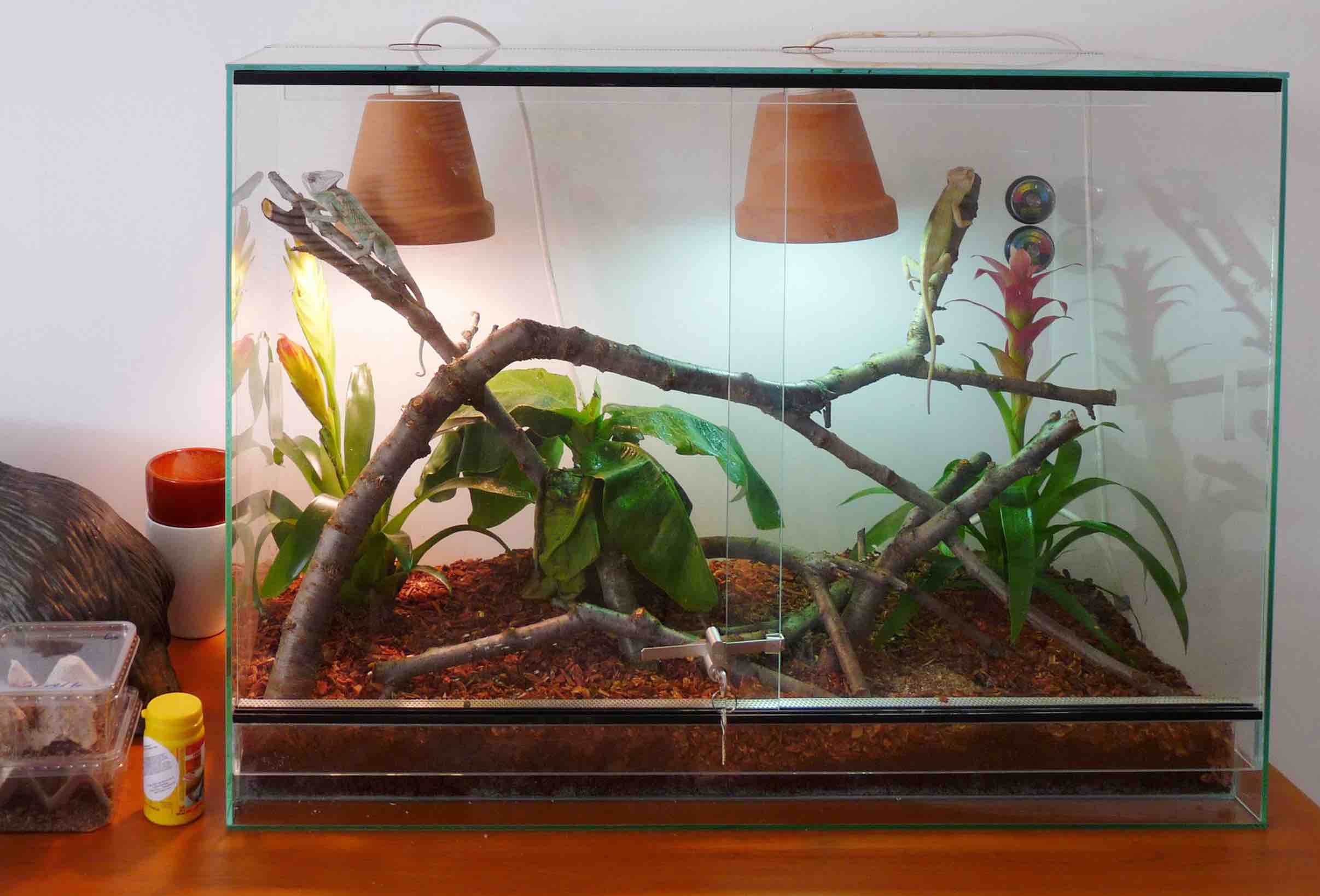
In advance, you need to prepare a spacious and well-ventilated container - a plastic container with a strong lid and holes for air exchange, or a special glass terrarium from a pet store.
- The main criteria for a spider's "house" are the strength and reliability of the materials. Spiders often chew through thin plastic containers, meaning regular food containers aren't suitable.
- The spider's habitat should be designed to accommodate at least two leg spans around its entire perimeter. However, spiders don't like overly large spaces—many know that arachnids prefer confined spaces, such as corners. In a large area, your new pet will simply get lost (or, to put it simply, hide).
- To create a suitable and comfortable space for the spider, it will need a soil mixture—a mixture of vermiculite and store-bought peat for seedlings, or coco coir in compressed blocks—all of which can be found at regular flower shops. Experts most often recommend preparing a mixture of the aforementioned peat solutions, laying a layer at least 5 cm thick. The soil provides cushioning for these delicate creatures' movements and helps retain moisture; burrowing spiders use the substrate as a home.
It is not recommended to house more than two pets in the same terrarium.
House spider: nutrition and care
When keeping pet spiders, it's essential to pay attention to temperature. These animals are quite heat-loving: temperatures between 21 and 30 degrees Celsius (70 and 86 degrees Fahrenheit) are considered optimal. The average temperature is 25-27 degrees Celsius (77-80 degrees Fahrenheit). Only exceptional arachnid species require periodic temperature reductions (for artificial hibernation and to create favorable conditions for reproduction).
Most spiders appreciate water. While it's not true that these pets thrive in high humidity, arachnids are completely uncomfortable in arid environments. Water is a basic bodily need. A lack of moisture, as well as the presence of small amounts of water in the open air, can cause critical changes in the pet's condition. While water isn't essential for young spiders, it's crucial for larger adults to thrive. Therefore, a water bowl is essential in the arachnid's home. The water should be changed a couple of times a week, as it becomes dirty.
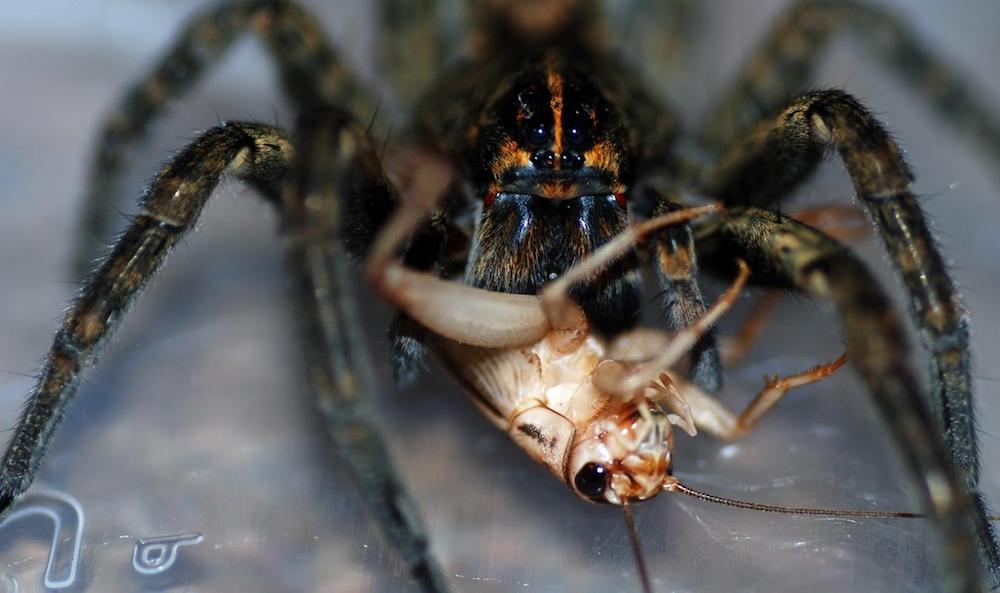
Most spiders prefer to spend most of the day in hiding. In the wild, they choose dark, secluded spots, dig burrows, and inhabit existing cavities under tree and plant roots, under rocks, in tree hollows and crevices, and in dense dead wood. Typically, the spider weaves a web near and around its hiding place. Therefore, it's important to provide various means to create a natural environment—a piece of bark, a boulder, pieces of a clay pot, or branches will all work.
To maintain humidity, it's recommended to keep a container of water and damp cotton wool or moss in the spider's enclosure. Increased humidity also helps stabilize the temperature during the hot summer months.
These unusual pets are fed not freshly caught flies and beetles, but insects purchased from specialized pet stores—this includes larvae, worms, and beetles. Feeding should be no more than 3-4 times a week. Try to dispose of any uneaten food scraps—this will keep the spider's home clean.
A thermometer is a must-have for a spider's habitat. Temperature monitoring should be constant. To maintain a comfortable environment, thermostats and special heating plates are installed.
It's a good idea to stock up on long tweezers—they'll come in handy for feeding and cleaning, even if your spider is completely harmless. Almost all arachnids are extremely timid, so all manipulations should be done with any convenient tool, not with your hands.
Once every 8-12 months the substrate should be changed and cleaning should be carried out (washing the drinking bowl, decorations, etc.).
Tips and nuances
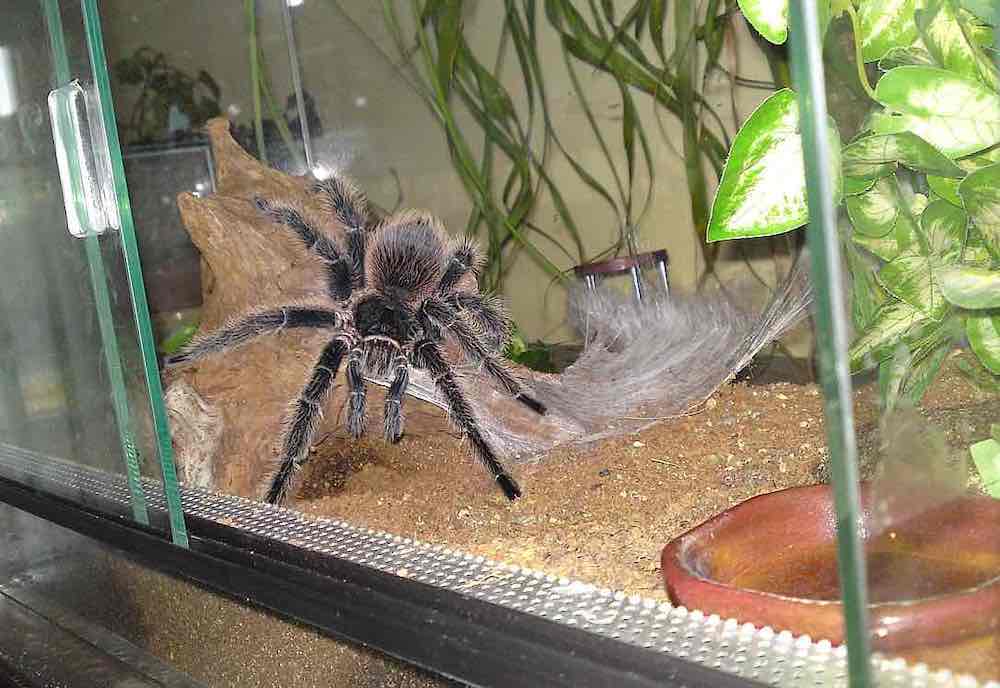
There are certain requirements worth keeping in mind if you've chosen a spider as a pet. Understanding the intricacies of their natural lifestyle will help you create a home environment as close to their natural habitat as possible.
- You shouldn't pick up spiders - they are actually quite fragile creatures and can be easily harmed.
- When arranging your pet's living space, choose twigs, bark, and rocks without sharp edges—spider's are very easily injured. They are perhaps one of the most delicate and fragile creatures in zoology.
- Direct sunlight is contraindicated for such pets – the hot, scorching sun is simply fatal for arachnids.
- Tarantula spiders are venomous, but only pose a danger to small animals and their fellow spiders. Therefore, tarantula venom, in its negligible concentration, is not dangerous to adults. However, children and people with allergies should exercise caution when handling these spiders, as reactions to a bite can vary.
- It is necessary to take a very responsible approach to poisonous arachnids, such as the black widow and tarantula.
- About once every two to three years, spiderlings undergo a molt—a change of shell. The pet becomes less active and more vulnerable, so it should not be handled. During this period, the spider leads an ascetic lifestyle. Spiders molt approximately 5-10 times in their lifetime.
- The lifespan of all spiders varies, ranging from 3-5 years to 25-30 years. However, house spiders typically live up to 12 months, sometimes up to 2-3 years.
Please note: arachnids cannot be trained as pets. They are not tame and require extra care to ensure their safety, as they may escape.
Keeping a spider at home is quite a serious undertaking. But if you're willing to get one and try to befriend the arthropod, it's not that difficult. Perhaps the most important thing is the desire, backed by a serious commitment to caring for such an extraordinary pet. If you're not intimidated by the frightening appearance of most arachnids, you can certainly keep one in your home.
Read more about spiders and scorpions.