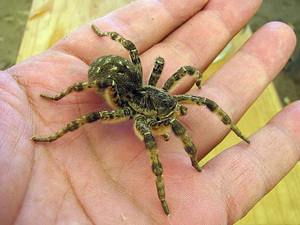
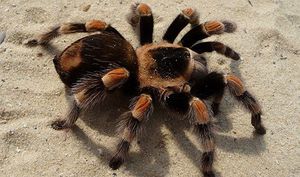
Even the mention of tarantulas often evokes fear: these spiders are distinguished by their menacing appearance. But even a tarantula can make an exotic pet: it's entirely possible to keep one at home. It's important to know all the conditions and rules for caring for them, their habitat, and their diet.
The tarantula is a fairly large spider from the wolf spider family, with a hairy body. In the wild, tarantulas inhabit deserts, steppes, and other dry areas. Like most other spiders, they are active at night—at this time they hunt—and during the day, tarantulas hide in vertical burrows up to 65 cm deep. They line the walls of their burrows with webbing and use it to create cocoons for their spider eggs.
At home, tarantulas require only gentle care. Therefore, they are often kept by exotic pet lovers (especially rare and large species). However, it's best to choose a female tarantula, especially if this is your first time. Female tarantulas have a significantly longer lifespan than males, reaching 20 or even 30 years.
Main types of tarantulas
There are nearly 200 species of these spiders. The most common species in our country is the South Russian tarantula, or mizgir. This is a small spider: females are no more than 3 cm long, and males are even smaller. Its coloration depends entirely on its habitat and can range from reddish to gray. In the wild, the South Russian tarantula is found in forest-steppe and steppe areas.
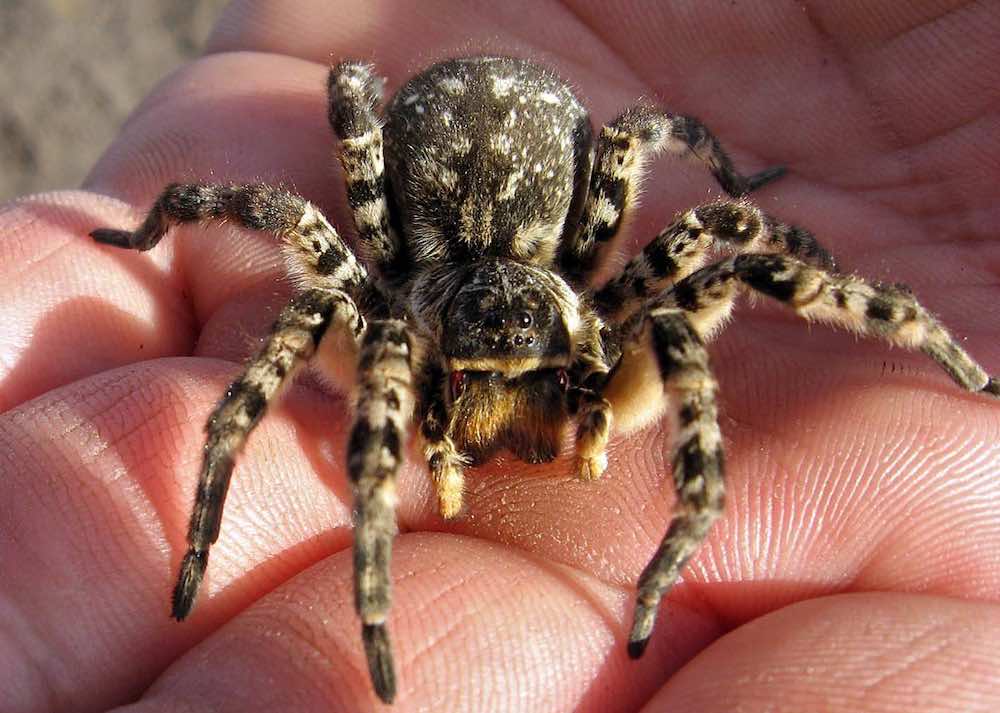
The Brazilian black tarantula is much larger but has a calm disposition. In the wild, it lives in South America, most commonly in Brazil, and perches on roots, logs, or rocks. It is dark brown in color. Its lifespan can reach 20 years.
The Apulian tarantula is native to Italy and other southern European countries, as well as North Africa. It is quite large, reaching approximately 7 cm in length, and is distinguished by its lack of web-spinning.
The Spanish tarantula. As its name suggests, it is common in Spain, as well as other southern European countries such as Portugal and Italy. It was previously considered a variant of the Apulian tarantula.
Regardless of species, all tarantulas share common features: a hairy body consisting of two parts—the abdomen and the cephalothorax. They have four pairs of eyes and a 360-degree field of view. However, the coloring of the animal may vary. The female is always larger than the male. Large tarantulas can have a body length of up to 10 centimeters, and their legs can reach 30 centimeters. The American species of tarantula are considered the largest. Smaller species do not exceed 2.5-3 centimeters in length.
Tarantula: How to Keep It at Home
Tarantulas are considered easy pets, but it's best to start with just one, preferably a female. Consider the size and characteristics of the breed. The larger the spider, the larger the terrarium. As for housing conditions, they should be as close to natural as possible, so it all depends on the species. Southern Russian spiders are easiest to care for, but exotic varieties require a more specific approach.
Like all pets, tarantulas appreciate care and are completely harmless unless aggressive. Just follow the care and maintenance instructions.
What do spiders eat at home?
Tarantulas are predators, and their diet consists primarily of protein. They eat small live insects (smaller than the tarantula itself): crickets, grasshoppers, cockroaches, and larger spider species can even eat small mammals. The prey is presented to the tarantula whole, into its paws.
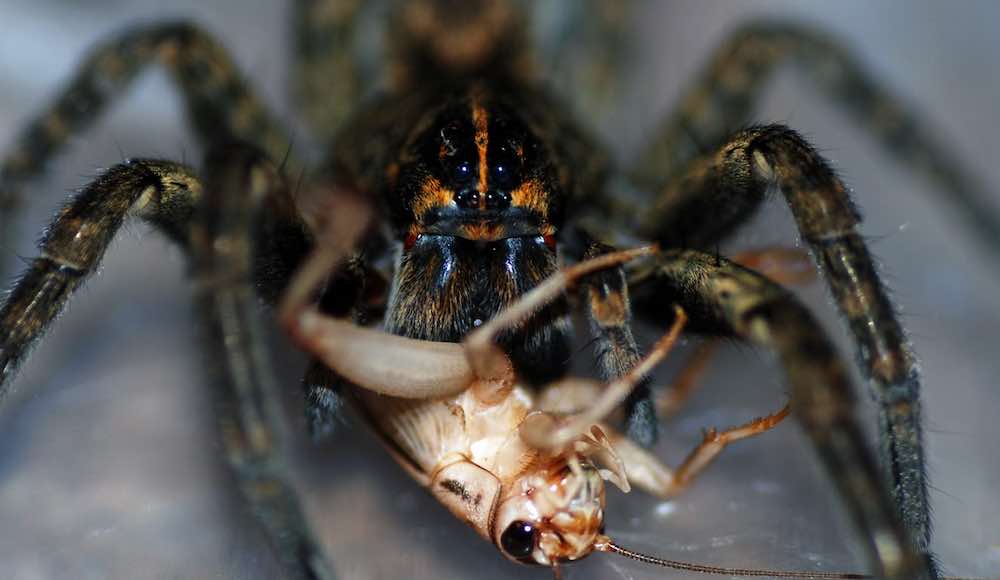
Keep in mind, however, that insects for feeding should be purchased from specialized stores and never caught outdoors. Outdoor insects carry diseases that can be dangerous to tarantulas.
Spiders eat rarely; an adult tarantula should be fed only once a week, no more often, otherwise it will develop health problems. If a tarantula is not hungry, it will not hunt and will show no interest in food at all. If you notice its abdomen has become significantly enlarged, feeding should be temporarily stopped to prevent the animal from dying from a ruptured abdomen.
Micronutrients and vitamins should also be included in the diet, as well as calcium gluconate twice a week. Keep in mind that the tarantula should not be fed three days before and three days after molting. The tarantula must have constant access to water.
Read also, How to keep a spider at home.
Keeping conditions for a domestic tarantula
A pet tarantula should be housed in a terrarium; its dimensions depend on the animal's size. For example, for an animal measuring 3 centimeters, a tank measuring 30 x 30 x 30 centimeters is suitable. For an animal up to 7 centimeters, the length and width should be approximately 50 centimeters. If the spider's body is larger than 8 centimeters, each side of the tank should be at least 80 cm.
For safety, the terrarium should always be covered with a lid to prevent the spider itself or the insects you bought for its dinner from escaping.
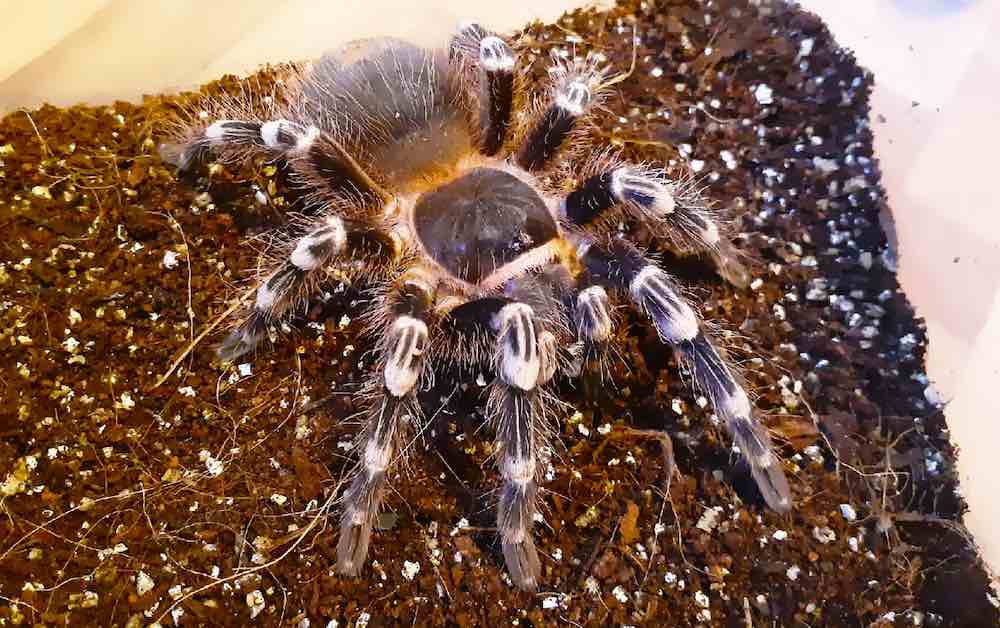
The tank should be similar to the tarantula's natural habitat—it should have some kind of burrow or other hiding place. A terrarium that's too large without such a hiding place will make the tarantula uncomfortable.
As for the terrarium material, it can be glass (like a regular aquarium) or plastic. Peat moss, which should be regularly moistened, is the best filler.
A good idea is to provide 1-3 holes in the tank so that the insect can hide from people.
The right microclimate should be created inside, with a temperature of +18° to +25°. If the temperature is too high, the tarantulas will grow more intensively.
Living conditions may be very modest, but if desired, you can buy:
- hygrometer to monitor humidity levels;
- terrarium lock - to prevent escape;
- Sprayers to maintain humidity levels.
The tank needs to be cleaned regularly; during this time, the tarantula is placed in a glass jar. The enclosure is washed with water, the lining is changed, and any remaining food particles are removed.
How long does a tarantula live at home?
Female tarantulas live longer than males, typically up to 20 years, and sometimes even up to 30. Males, however, don't live as long after reaching sexual maturity. Their overall lifespan is typically 5-10 years.
Read also: Tarantula spider Brachypelma albopilosum.
Tips and nuances
Basic tips for tarantula owners:
- When purchasing a tarantula, you need to check that it has no injuries and that all the documents are in order.
- Inexpensive tarantulas cost around 1000 rubles.
- If you have learned to care for one spider, you can try to increase the number of individuals.
- South Russian tarantulas aren't among the most beautiful representatives of this species. Their popularity stems primarily from their low maintenance requirements: this species is ideal for beginners.
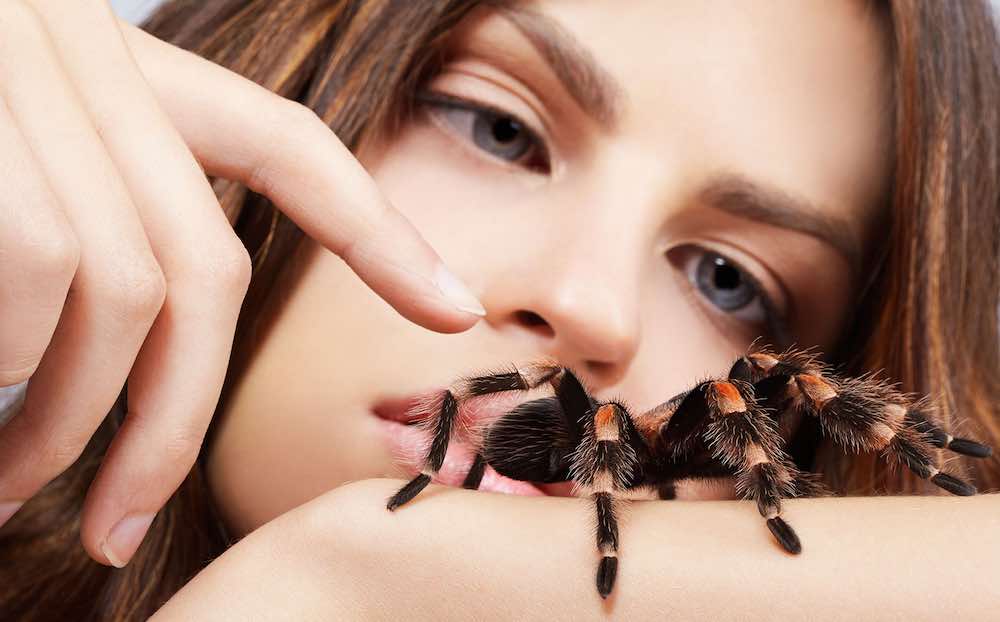
- Avoid aggression or hostility toward your pet. Despite its relatively peaceful nature in captivity, tarantulas are still predators and, if aggressive, may bite a person's hand. Although their venom is not fatal, it is unpleasant: a tarantula's bite can be compared to a bee sting. Therefore, it is important to take precautions and protect your hands with gloves when handling a tarantula.
As you can see, despite its menacing appearance, the tarantula poses no danger to its owner: with proper care and precautions, the risk of a bite is very low. This exotic spider is easy to care for and makes an ideal pet.
Read also, Are all spiders dangerous?.