Crabs are crustaceans with one pair of claws and ten legs, covered by a thick exoskeleton. These animals can live in water and also spend a lot of time on land. They're not the most popular pets, but every year, more and more aquarium owners are becoming interested in crabs with their vibrant colors and engaging behavior. In this article, we'll discuss how to choose a crab and provide it with optimal conditions to ensure it brings you joy for as long as possible.
Content
Features of keeping a crab at home
If you don't have enough fish in your aquarium, crabs are often the first choice for a new pet. They're fascinating to watch, so this exotic animal often becomes a favorite. However, keep in mind that not all pet store salespeople are familiar with crab care: it's best to do your own research to avoid the joy of acquiring a new pet being replaced by the grief of its untimely loss.
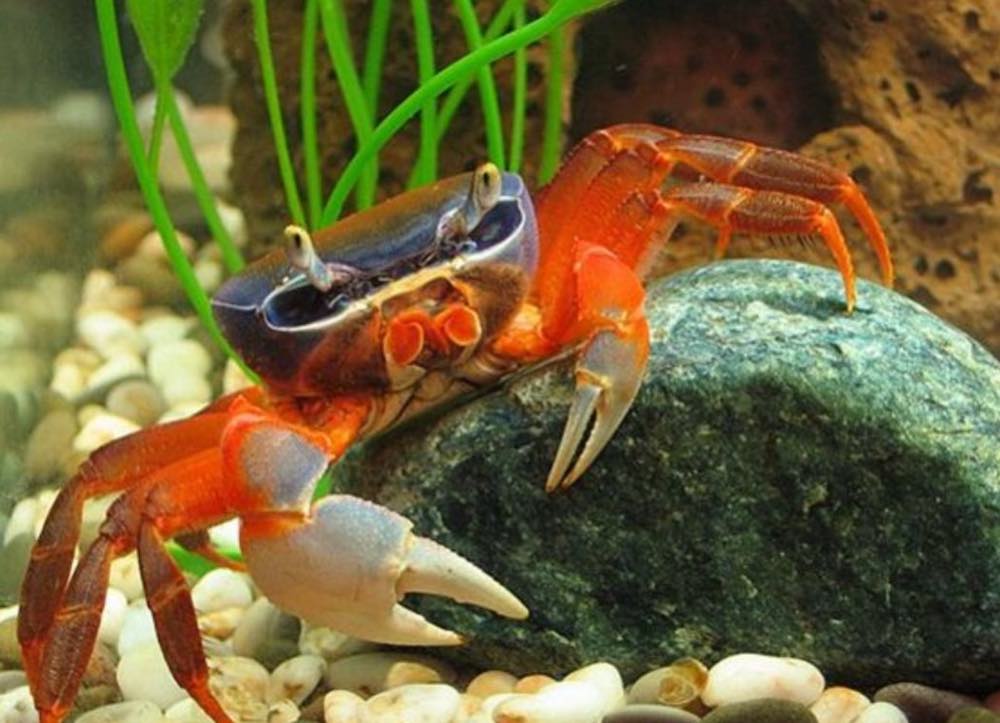
Keeping crabs isn't particularly difficult, but it's important to know a few nuances. First and foremost, it's important to choose your species carefully; not all crabs can thrive in a standard aquarium; those that do require a specialized aquaterrarium.
Many crabs have a quarrelsome and unsociable nature, and can react negatively even to their own kind. For this reason, it's not recommended to house two males in the same tank, as fights over territory and mates are inevitable. The consequences of such "duels" include severed limbs.
Some crabs can survive in fresh water, but they prefer brackish water. They need water to breathe: they can do so either while submerged or while their gills are moist. Fortunately, they can remain moist for long periods, but if their gills dry out, the animal will die.
Small Thai crabs, Limnopilos naiyanetri, and the rare Potamon potamios can live in freshwater. All others require saltwater.
During molting, crabs need a secure shelter: arrange for this in advance. Molting itself is nothing to worry about; it's a natural process during which the crab will shed its overly tight shell and grow a new one.
Disadvantages of crabs:
- possible aggression;
- escape risks;
- constant attempts to dig up and eat plants;
- They could theoretically eat fish in an aquarium (although this is not entirely typical for them).
Advantages:
- long life expectancy - up to 6 years;
- attractive appearance. Moreover, they are interesting to observe;
- Crabs act as a kind of "orderly" and prevent the water from spoiling, as they quickly eat all the food, and some even "polish" the stones in the aquarium.
The most popular breed is the Dutch crab; it's small and dark, can be kept in a freshwater aquarium, and gets along well with other fish. This animal requires plenty of hiding places and strong aeration.
The rainbow (indigo, tricolor) is distinguished by its large size (up to 20 cm) and vibrant coloration. This species is considered capricious and requires land rather than water.
The red mangrove crab requires a large aquarium (at least 60 liters), or better yet, an aquaterrarium (the same applies to the rainbow crab).
The small Vampire crab has a vibrant purple coloring and orange eyes. Despite its name, it is friendly and tolerates acclimation and molting well.
The red devil is also distinguished by its friendliness and exotic coloring (a combination of red and black).
What to feed a crab at home
In the wild, these animals eat carrion, small mollusks, leaves, fruit scraps, and rotting stems. In captivity, most crabs happily eat the same food as fish.
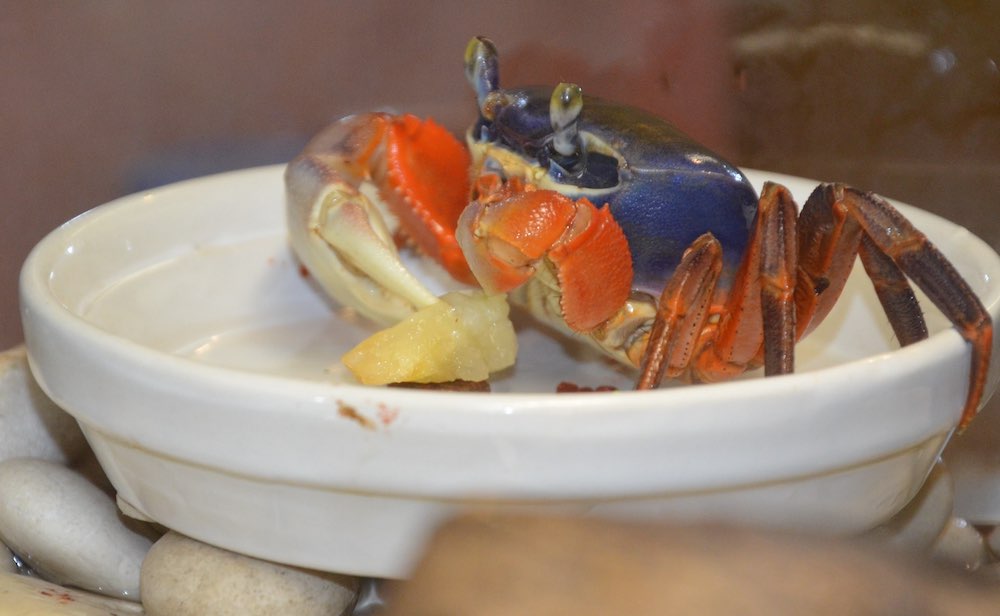
What can you feed them:
- dried nettle, calcium salt and paprika;
- spinach, apples, oranges, Brussels sprouts, bell peppers, dandelion leaves (greens are necessary to prevent crabs from destroying vegetation);
- boiled carrots;
- crickets and snails;
- squid, mussels and clams;
- lean meat, as well as white fish meat.
Crab food should be kept in a dry place; otherwise, it will decompose, which can cause illness. Regarding food intake, crabs are voracious eaters, but overfeeding them is not recommended. A typical daily food intake is approximately one-third of the crab's body weight.
Choosing an aquarium for keeping a crab
Crab is a lungfish. Many species spend 55 to 85 percent of their life out of water. Therefore, keeping crabs requires an aquaterrarium. Only a small number of crabs (king crabs, spider crabs, and leopard crabs) can survive without land and in a regular aquarium; the rest will die.
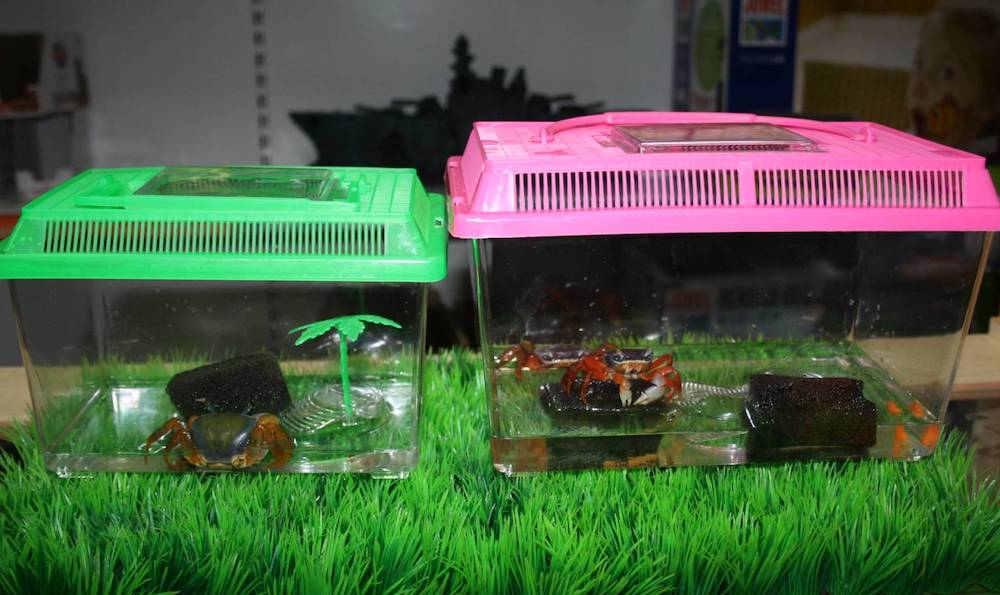
The land should be slightly elevated relative to the water; rocky islands are also an option. You can build an aquaterrarium yourself from an aquarium or buy one from a store.
The average aquarium size is 50 liters; smaller tanks are undesirable for crabs. The water level should be at least 10–15 cm deep.
If you've chosen a tropical crab, you'll need to provide it with hiding places and labyrinths; the more, the better. The aquarium's contents may vary—some species prefer silt, while others prefer sand. The most universal option is a mixture of zeolite and coral chips. Keep in mind that sand or gravel will need to be siphoned frequently; therefore, it's best to choose coarse-grained gravel. Rocks, driftwood, and hard-leaved plants are also essential.
At least 10 days before adding the crab to the tank, you should add nitrifying bacteria and small fish that tolerate alkaline conditions. You won't need heaters or filters; in fact, it's best to avoid any wires, as the crabs might try to break them with their claws and die from a short circuit.
These animals are burrowing animals and love to dig holes in the ground. Therefore, a pipe slightly larger than the shell's diameter is placed at an angle on the bank. After this, it needs to be regularly ventilated and ensured that water does not stagnate.
Read more about choosing an aquarium.
Water parameters for aquarium crabs
Aquarium crabs require clean water free of ammonia, nitrates, and heavy metals. The optimal aquarium temperature is 24–26°C, with the dry part 1–2°C warmer. However, these are general guidelines: the species of crab you have should be considered. For example, the freshwater Potamon potamios crab requires water no hotter than 22°C, and the minimum acceptable temperature is just 10°C. However, most leopard, king, and mangrove crabs are heat-loving.
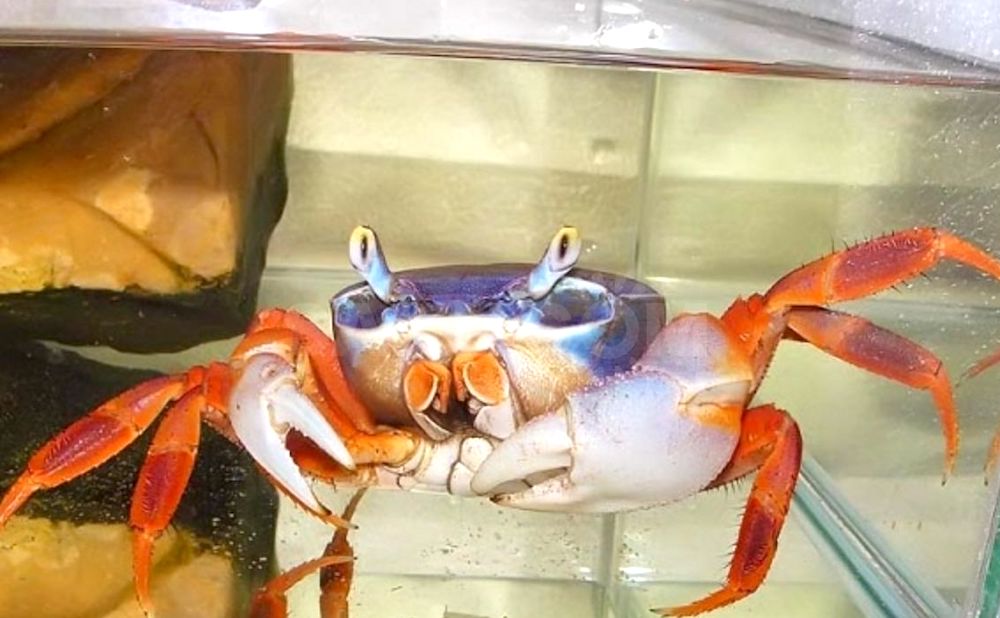
It's best to create a slow-moving water flow. Keep in mind that severe hypothermia or, conversely, excessive temperature can lead to death. Water that's too hot for the crab will cause premature molting, which can be dangerous.
The water should be hard (GH between 7.5-8.3°C)—this can be achieved by adding calcium chloride. Regarding salting, some species can survive in freshwater for a long time, but in most cases, it's still best to add salt (sea salt is best, but table salt can also be used). This will also help the pet adjust to the new conditions. A level of 2-3 grams per liter of water is sufficient. This amount can be gradually reduced.
How to ensure a successful crab molt
Crabs have a hard shell that doesn't grow with the animal and sooner or later becomes too small for it. Therefore, the crab must shed it and grow a new one. This process is called molting, and it is considered the most difficult ordeal in the animal's life.
It's seasonal; the frequency of shedding depends on many factors. It's important for the animal to be healthy, as it's especially vulnerable during this period and can sometimes even die (rare in the wild, but much more common in captivity). Shedding occurs in salt water; the animal simply sits there and gradually removes its limbs from its shell, which gradually disintegrates. Even parts of the intestines and stomach are renewed during this process. After this, the pet should rest and lie down in a shelter.
Adult animals shed 1-2 times a year, while the youngest ones shed every 10-14 days.
How long does a crab live at home?
The lifespan of crabs in captivity depends on the species, living conditions, and other factors. It's believed that, on average, with proper care, this pet can enjoy you for 5 or even 6 years.
Tips and nuances
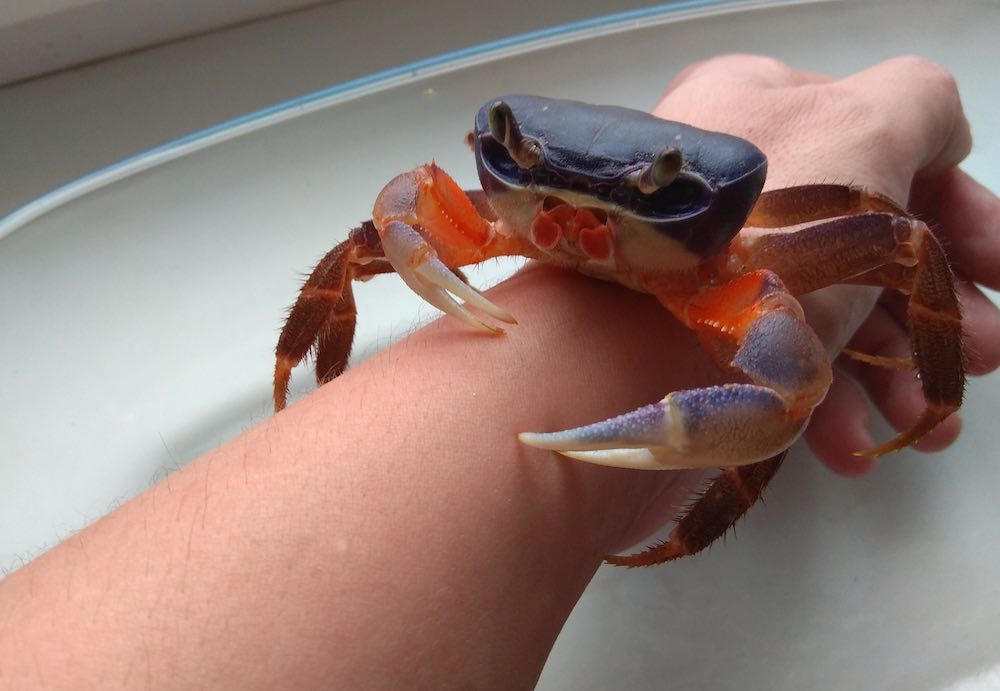
The main nuances of keeping crabs at home:
- If you have a small aquarium, it's best to house two crabs of different sexes. Most crustaceans require a comfortable habitat of 70% water and 30% land.
- Please note that they are very sensitive to contamination, so a high-quality filtration system is required.
- The aquarium must have a lid; otherwise, the pet will simply escape.
- Crabs can eat all the greenery in the aquarium (they are partial to greenery).
- If a crab escapes, leave a container of water in a visible place: it will definitely find it.
- Crabs do not reproduce in captivity, so breeding them is not possible.
- They tolerate solitude well. Among fish, crabs get along well with barbs, danios, swordtails, and guppies.
As you can see, the main challenge lies in setting up a suitable aquaterrarium and meeting water quality requirements; otherwise, crab care is relatively straightforward, even for an inexperienced owner. However, there are some feeding and molting recommendations that are important to know. If you can't create a tank with both water and land, choose crab species that thrive in water.
If all the conditions for keeping a crab are met, this unusual animal can live a long life: together with fish or separately.
Read also About fish compatibility in an aquarium.