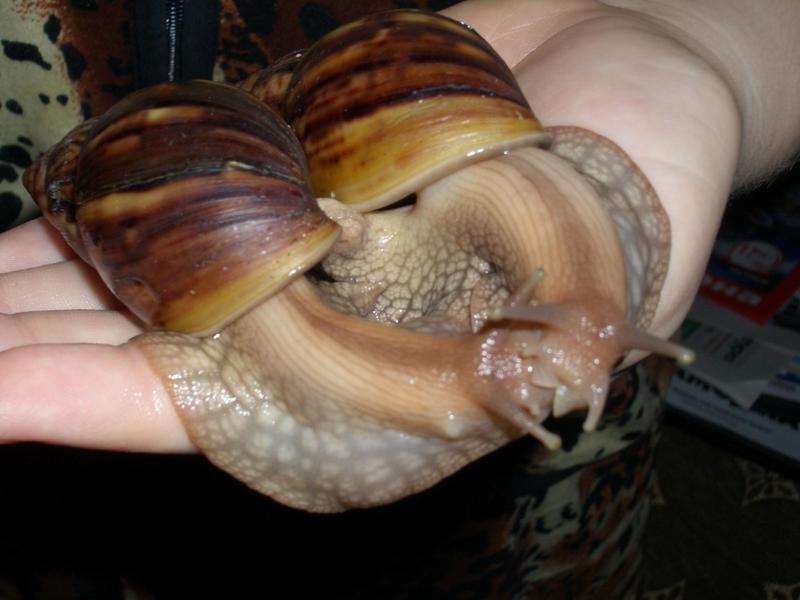
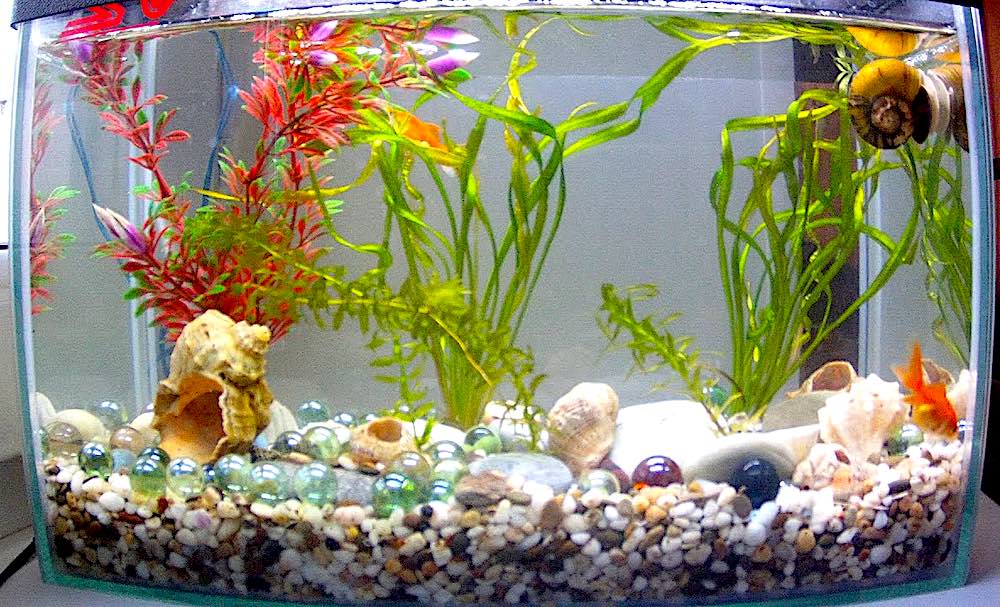
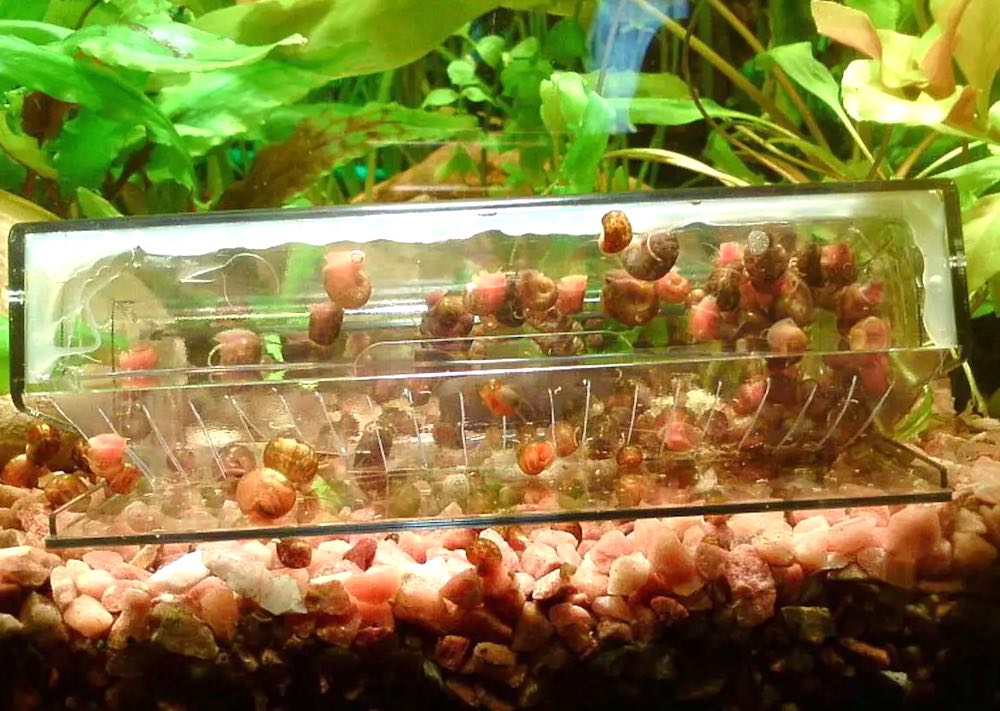
 Aquarium snails, the fish's constant companions, can live in all types of artificial ponds. They maintain the aquarium's biological balance and act as natural cleaners, eating up leftover food and cleaning the glass. Some are very beautiful and serve as pond decorations. Snails come in a wide variety. In this article, we'll discuss the most popular species, their roles, reproduction, and maintenance.
Content
Peculiarities of keeping snails in an aquarium
Snails, common inhabitants of almost every aquarium, are easy to keep. It is necessary follow only a few rules:
- Purchase aquarium mollusks only from reputable pet stores.
- Create conditions suitable for the selected snail species (temperature, water acidity and hardness, ventilation).
- It is better to equip the aquarium with a lid, since some types of mollusks can crawl out of it and die without water.
- It is not recommended to add fish from local waters to them, as they can infect the entire population of the underwater world with infectious diseases.
- The soil should be selected in accordance with the chosen type of snail.
- To avoid unwanted colonization of the reservoir with various representatives of mollusks, purchased aquatic plants and decorations must be carefully checked.
- It's best to manage the snail population yourself. Otherwise, they can multiply rapidly, ruining the aquarium's appearance and balance.
What do snails eat in an aquarium?
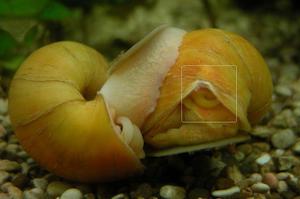 Most species of mollusks are omnivorous and can eat the same foods as fish. They are especially indispensable for large aquariums where food residue is almost invisibleSnails eat it with pleasure, thereby cleaning the bottom of the aquarium.
Mollusks love to feed on algae, especially those with large leaves. Snails are called "aquarium cleaners" because they consume decaying aquatic plants. If the snail population is too large, they can consume all the algae within a month. Therefore, you can add fresh greens, such as chopped wild sorrel or dandelions, as a supplement.
Over time, glass the walls become covered with organic plaque and become cloudy. Snails clean them, happily eating this residue.
Breeding snails in an aquarium
Mollusks begin to reproduce as soon as they reach sexual maturity. It's not necessary to purchase multiple individuals for this to occur, as the snails are unisexual. Some species lay their eggs on pebbles, walls, plants, and various objects, while others lay their eggs on the aquarium walls slightly above the water level.
During the first few days, the eggs appear as jelly-like lumps. After a few days, they turn brown, and then small mollusks hatch from them.
Observing snails, it seems as if they are constantly reproducing. In fact, under favorable conditions, their numbers can grow rapidly. Therefore, it is advisable to monitor snail reproduction.
If you want to start breeding snails, you need to know conditions under which they will reproduce:
- a separate container with a capacity of approximately 30 liters is required;
- the water must be settled;
- some seaweed should be placed there;
- 3-4 snails will be enough for reproduction;
- They need to be fed 1-2 times a day with fish food, a small amount of bread or boiled vegetables (potatoes, carrots, cabbage, etc.).
The main types of aquarium snails
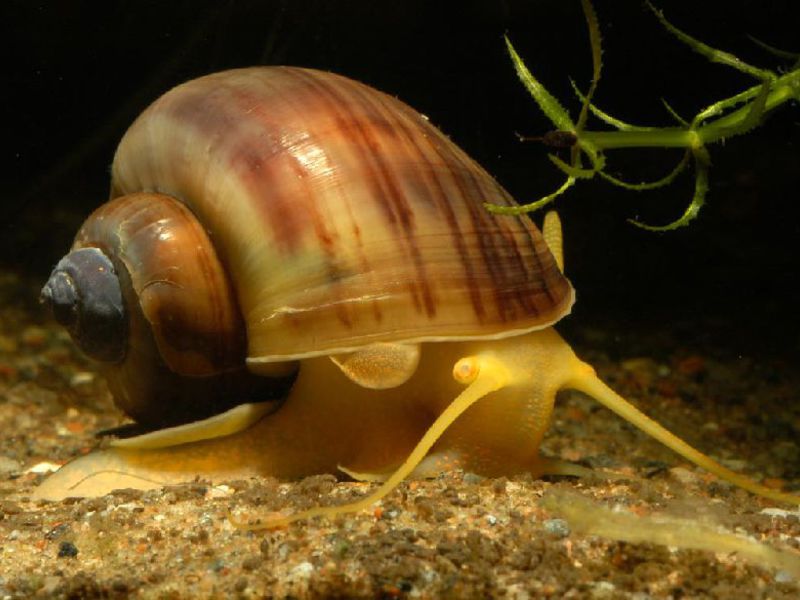
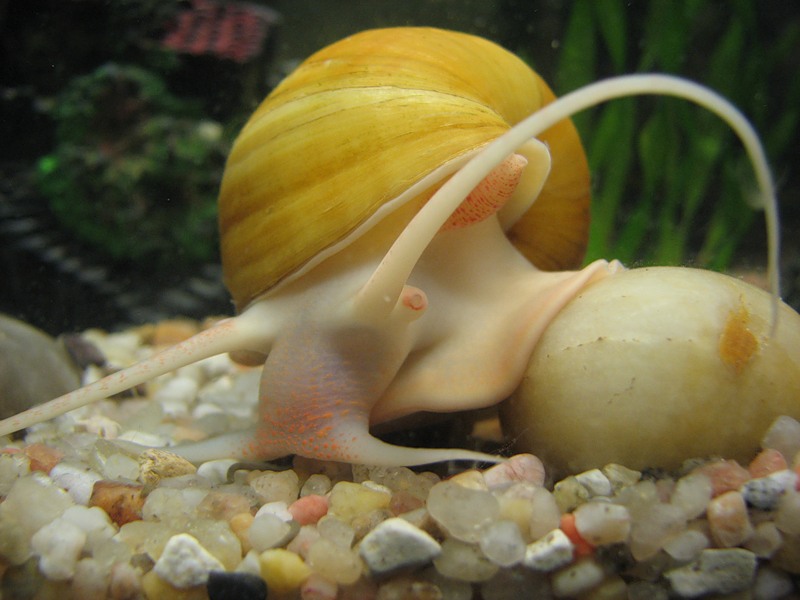
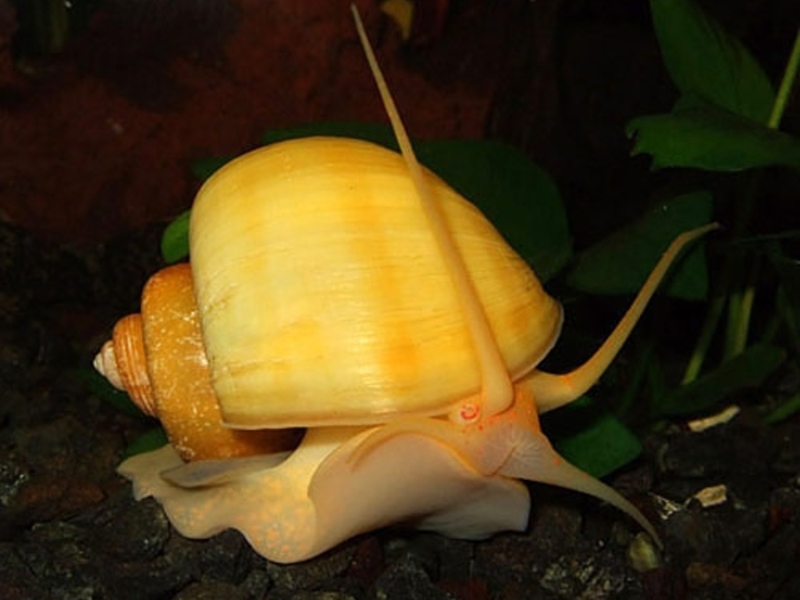
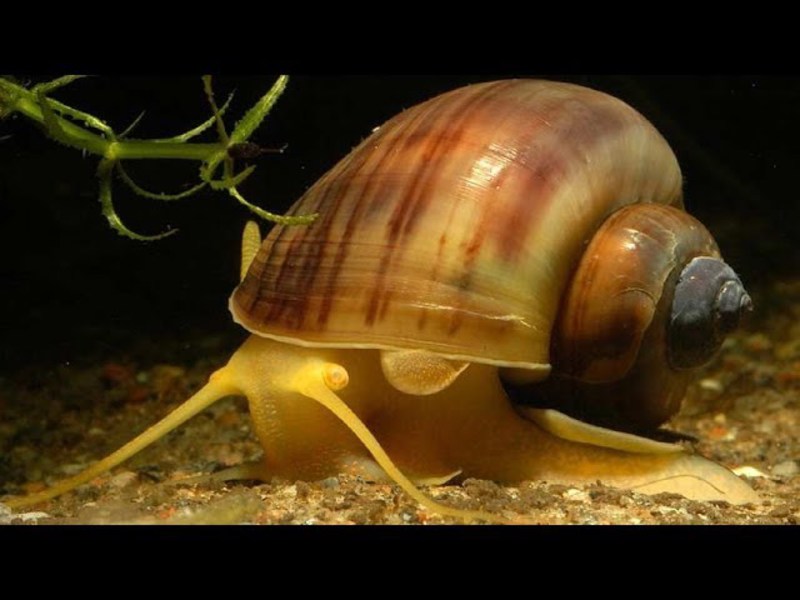
Ampullaria
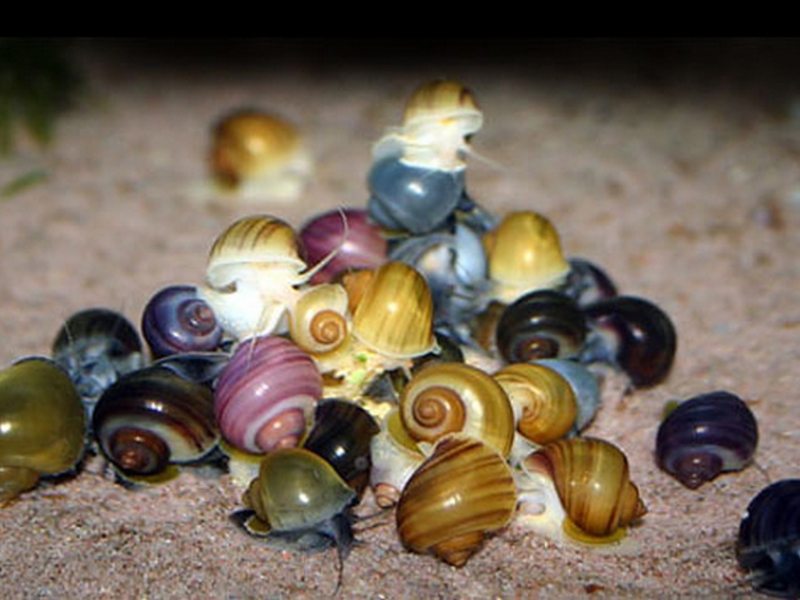
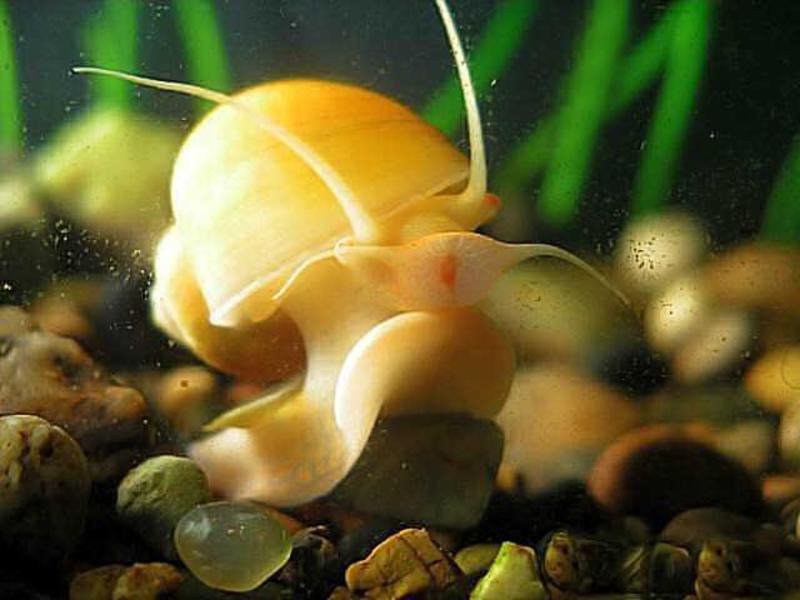
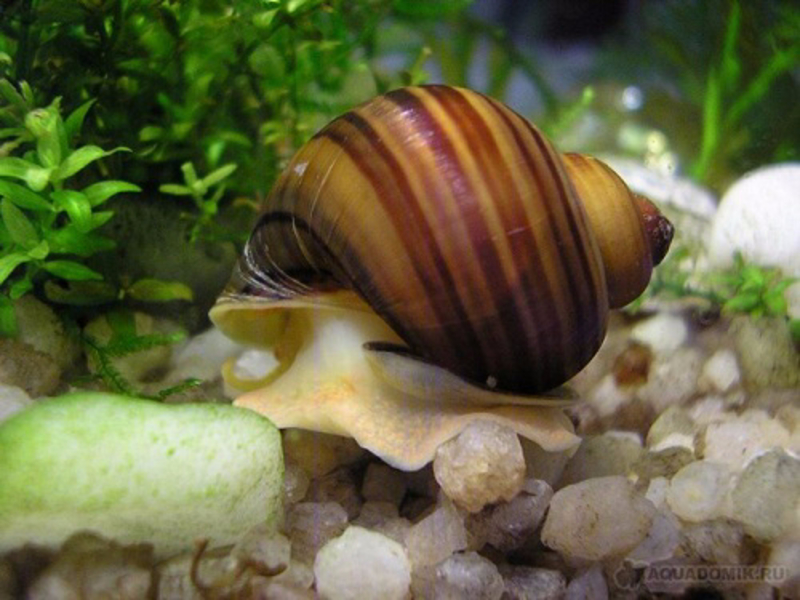
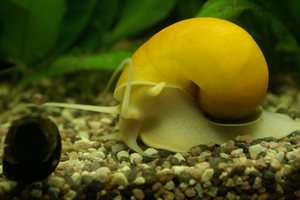
This is one of the most common types of aquarium mollusks and has a shell with a diameter of 5-7 cm, which most often it is yellow in colorApple snails with dark and striped shells are rare. They adapt easily and don't require special care. The following will suffice:
- maintain water temperature within 18C-27C;
- provide the reservoir with a filter;
- feed soft food in the form of fish flakes, boiled vegetables, bread crumbs.
It's best to have a sufficient amount of calcium in the water, which is essential for the shell's strength. If food is scarce, apple snails will feed on algae, so they are often kept in heavily planted aquariums.
Unlike other species, apple snails are dioecious. Therefore, for their reproduction 3 or 4 individuals will be neededThey lay their eggs above the surface of the water on the walls of the reservoir.
Apple snails can be kept with small fish or catfish. Predatory fish can destroy them.
Coil
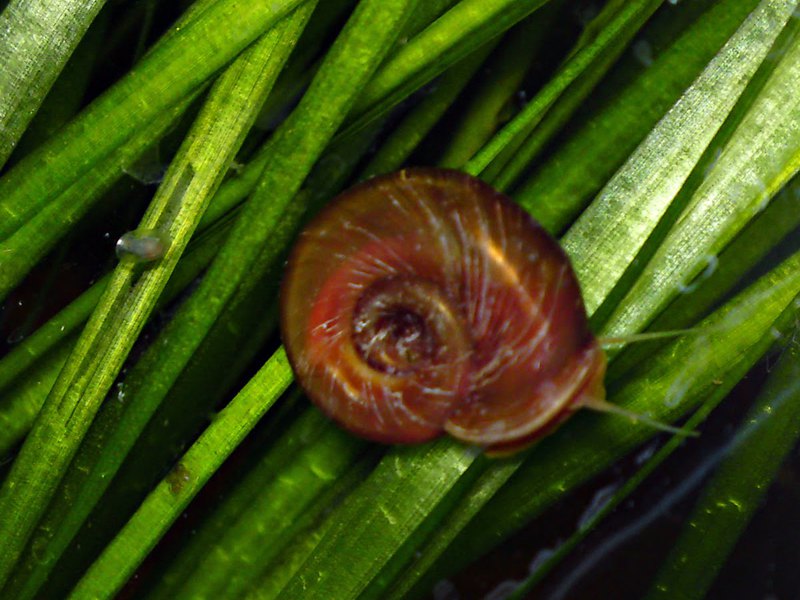
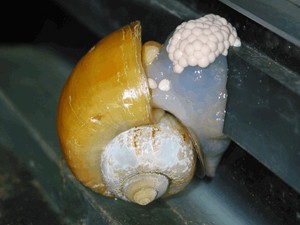 This species of snail is often found in bodies of water because it reproduces very quickly. They are hermaphrodites, so they are capable of self-fertilization. They lay their eggs on plant leaves.
In the wild, the coiled coil shell can reach a diameter of 3 cm; in artificial reservoirs, it grows no more than 1-2 cm. Mollusks of this species have a protruding mantle, which serves as their gills. However, they prefer to breathe underwater. A large number of coiled coils in an aquarium will quickly accumulate. depletes oxygen reserves from water, which is quite dangerous for fish. Therefore, the aquarium should be equipped with a filter, and the snail population should be monitored.
To stop the coil from multiplying excessively, you need to remove algae from the aquarium and reduce the amount of fish food.
Fiza
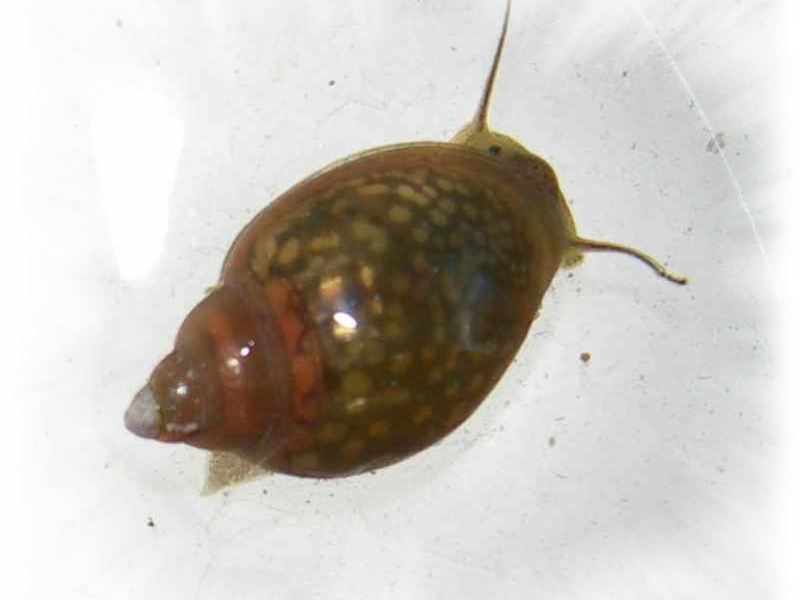
Small snails with a shell diameter of only 2 cm are able to crawl into even the most inaccessible corners of the aquarium and clean them. Physics differ:
- pointed at the top of the shell;
- the presence of pulmonary respiration;
- brown or yellow-brown color of the shell;
- the ability to clean the walls of a reservoir from green plaque, and the surface of the water from bacterial films.
Physas should be kept in water temperatures no lower than 20°C, with a hardness of 8-18 dH. In soft water, the shell of the clam will begin to deteriorate.
Physas reproduce by laying eggs. A single clutch can contain more than 20 eggs. The eggs are laid in clusters. attach to aquarium plantsPhysas reproduce very quickly this way, but there's no need to worry about that. They're readily eaten by fish.
Melania
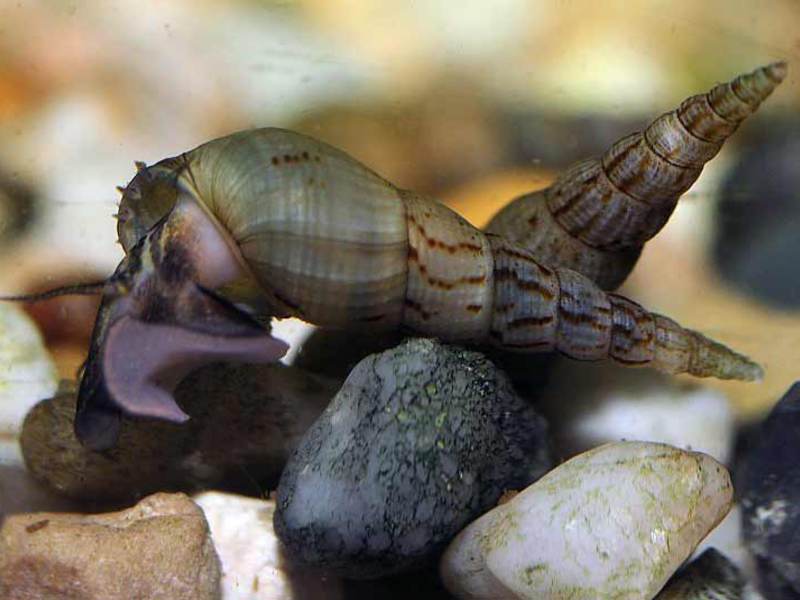
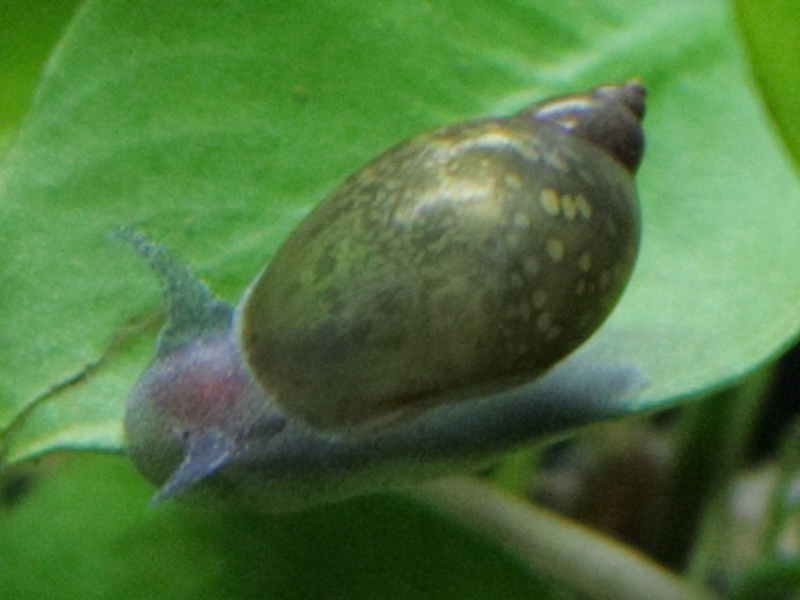
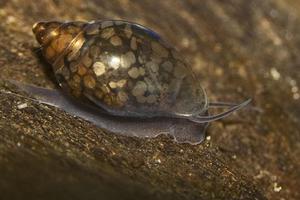 These aquarium inhabitants can be easily overlooked in a pond, as they prefer to hide in the substrate, cleaning it of biological and bacterial contaminants. Thus, by eating waste and mixing the substrate, they greatly benefit the ecosystem. However, melanias reproduce very quickly, literally inhabiting the entire aquarium within a short period of time. They can enter the pond with newly acquired algae or decorations.
The conical shell of this mollusk is gray-green with dark spots. It has a very hard consistency, making it inaccessible to many predatory fish. In an aquarium, an adult the individual grows up to 3.5 cm.
Melania snails don't thrive in cold water, so they should be kept in water with a temperature of 18-28°C. Water hardness and other parameters are unimportant. These snails are also undemanding when it comes to food. They eat fish scraps and small aquatic plants.
Melania snails are viviparous. Adults carry eggs, which hatch into large numbers of small snails.
Nerites
This species of aquarium snails naturally thrives in tropical climates, so it requires special care. Nerites require the following conditions of detention:
- water temperature not lower than 24C-27C;
- water hardness should be high or medium;
- acidity – about 7.5;
- You cannot allow nitrates and ammonia to accumulate in the water, so it should be changed frequently;
- For 2-3 individuals, an aquarium with a volume of at least 40 liters is required.
This species of mollusc grows up to 2.5 cm in length. Its shell can range in color from deep olive to almost black. It can also be decorated with golden, black, or other colored stripes.
Nertinae reproduce only in salt waterThe mollusks do not hatch from the eggs they lay in artificial freshwater reservoirs.
Helena
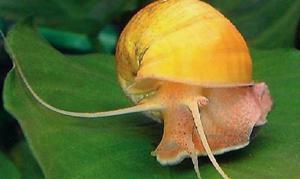 An aquarium snail that is known for its ability to eat its own kind. Therefore, if there are too many other mollusks in the aquarium, Helena can be added. In the absence of live food, it feeds on the food of aquarium fish.
Helena's conical shell is yellow with a dark brown spiral stripe and is distinguished by its ribbing. Adult the individual grows up to 2 cmThe snail likes to burrow into the substrate, which should be soft in the aquarium. Helen's fecundity is low.
Tylomelania
This very beautiful aquarium snail is large, reaching up to 12 cm, and has an unusually shaped shell. It can be smooth or have spines. The shell and body coloration of this mollusk can vary widely.
When keeping tylomelania it is necessary follow some rules:
 they cannot be kept together with other types of snails;
- the length of the container for large individuals should be at least 80 cm;
- they require water with high acidity;
- Tylomelania do not like hard water;
- the water temperature should be 20C-32C;
- Snails require a large amount of food, since they are omnivorous and very voracious;
- they need to be fed 2-3 times a day;
- Snails do not like bright colors, so the aquarium should be equipped with shelters.
 they cannot be kept together with other types of snails;
Tylomelania for life need a lot of space, therefore the pond should not be decorated with a large amount of algae.
Every aquarium should have snails. They not only serve as cleaners, but are also beautiful, unique creatures that are fascinating to observe. However, it's worth mentioning that keeping several species of snails in the same tank is not recommended. Larger species will eat smaller snails, meaning only the strongest will survive.