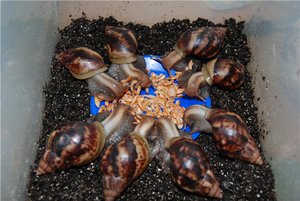
 You'll find all sorts of exotic pets in homes and apartments these days. Besides cats and dogs, rabbits, chinchillas, and even giant Achatina snails are very popular. Recently, breeding mollusks at home has become very fashionable. These beauties from the Dark Continent are easy to keep, but their care and feeding require some knowledge.
Content
Description and varieties of Achatina
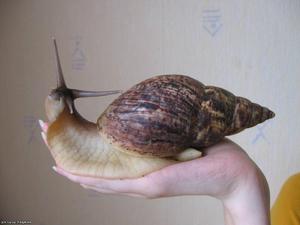
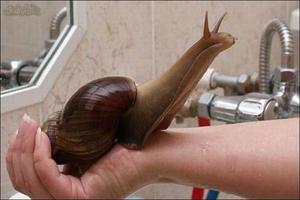
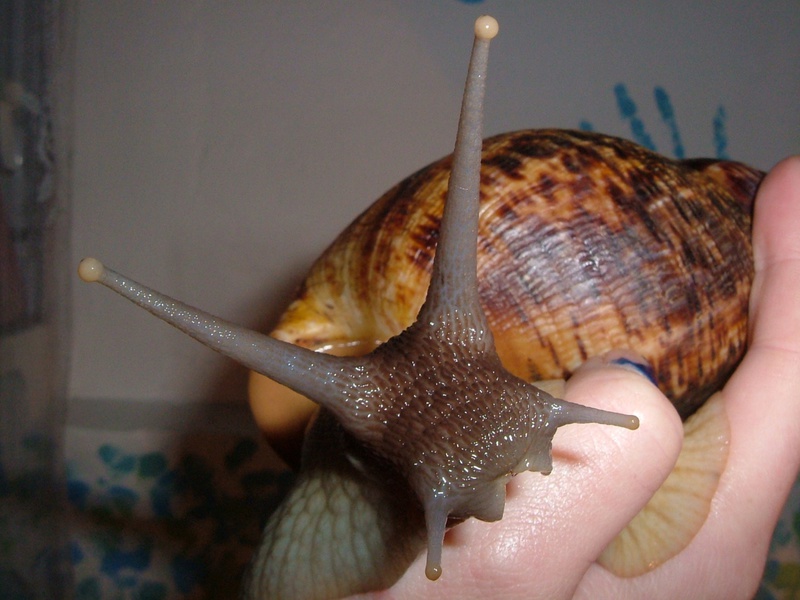
Snails in Africa depending on their standard of living can grow up to 30 cm in lengthThe Achatina snail's shell reaches 20-25 cm in length. The snails' tentacles have eyes at the ends, allowing them to see objects located a centimeter away and perceive light levels. Snails breathe not only through their lungs but also through their skin.
The Achatina snail's shell has an intriguing pattern, and its coloring directly depends on what it has eaten. It senses smells with the tips of its tentacles and the skin on its front, and perceives the shapes of objects with its sole.
It occurs in nature There are about a hundred species of Achatina snails.But the most common and frequently kept as pets are the following types of mollusks:
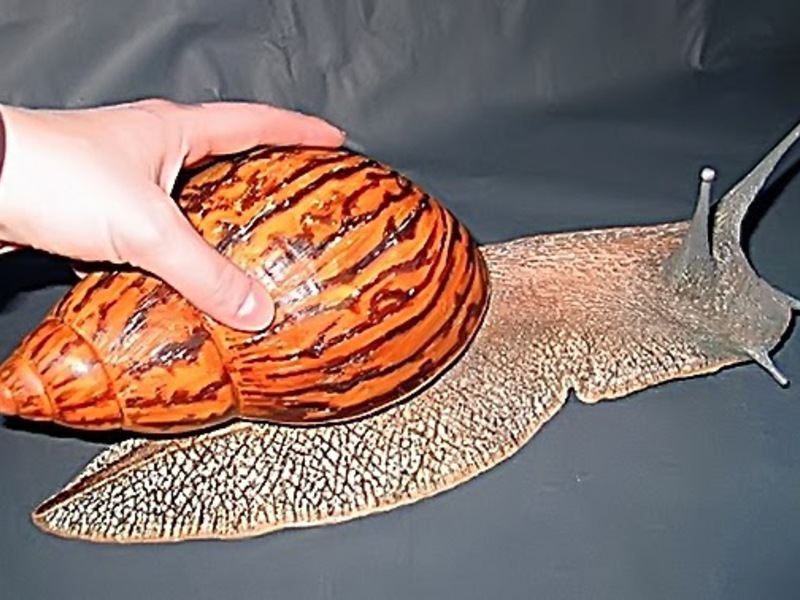
 The common Achatina snail is the largest species of snail, reaching up to 30 cm in size. Its shell can range from yellow to orange in color with brown or black stripes. Pets of this species are very calm by nature.
- The lemon Achatina snail is distinguished by its yellowish shell and is only 5-7 cm long. This viviparous species of snail can produce over 20 babies at a time.
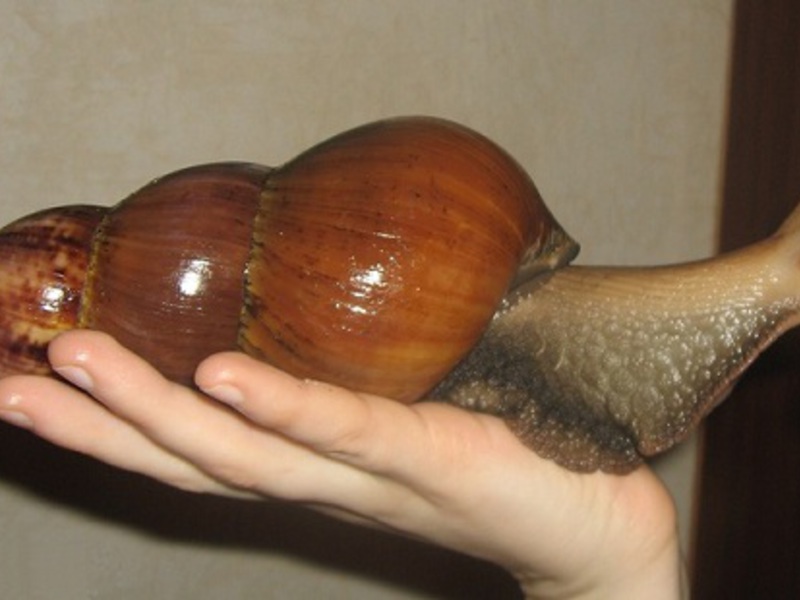
- The brown Achatina snail has a massive shell, distinguished by its semicircular coils. It is prolific and not shy when interacting with people.
- Achatina immaculata are snails with a shell of varying colors. Their distinguishing feature is a smooth stripe running from the head to the shell and a lilac or pink rim around the shell.
- Achatina albopicta grows up to 16 cm and is distinguished by a yellow or white columella on the carapace.
- The Achatina reticulata has a brown or black head and neck, a light border on the body, and a shell with a pattern of dots or stripes. In captivity, it grows up to 20 cm.
- Achatina fulica is a 20-cm-long mollusk with a red, brown, or black shell. This species is easy to care for and maintain, making it very popular.
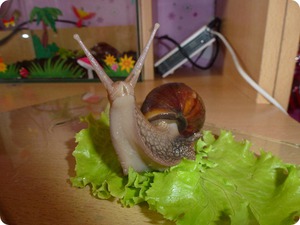 The common Achatina snail is the largest species of snail, reaching up to 30 cm in size. Its shell can range from yellow to orange in color with brown or black stripes. Pets of this species are very calm by nature.
Snail behavior
Achatina are nocturnal snails, so in the evening they crawl quickly around the aquarium in search of food, and during the day they sleep, burrowed into the soil. In high humidity, the pet may become active during the daytime as well.
If the snail's habitat is too dry or there's no food, it will hibernate for a long time. Achatina snails can sleep for up to two months without serious consequences. Therefore, it's safe to leave them alone while you go on vacation. However, to ensure hibernation, you need to prepare in advance. This requires no feeding, and the substrate in the terrarium should be replaced with dry soil. You can awaken the snail by holding it under a stream of warm water for 5-10 minutes. Once awakened, feed it immediately.
Achatina are considered to be “smart” snails, which are able to recognize their ownerThey love to be picked up and bathed in warm water. After handling a snail, it's recommended to wash your hands with soap. The snail's mucus doesn't cause allergic reactions, but in the wild, they carry parasites. However, in the Russian climate, infection is virtually impossible, as such parasites simply don't survive here.
Features of keeping the Achatina snail
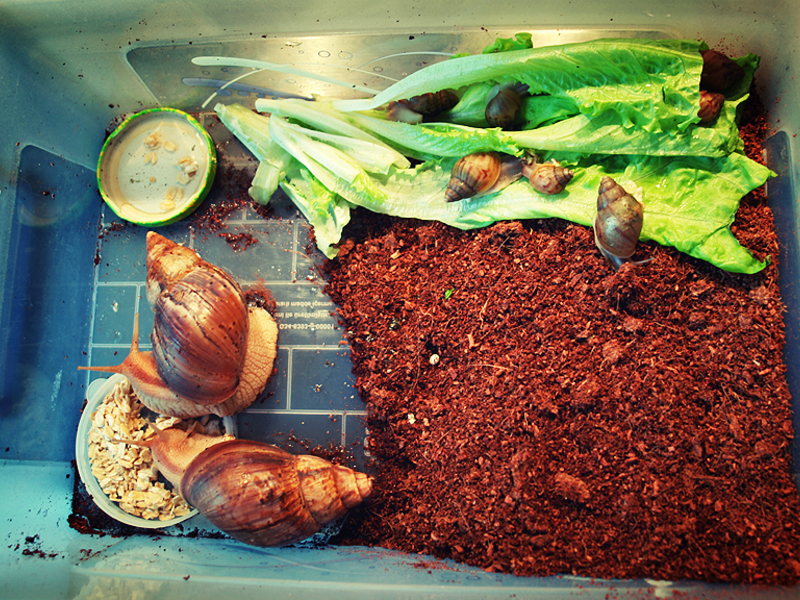
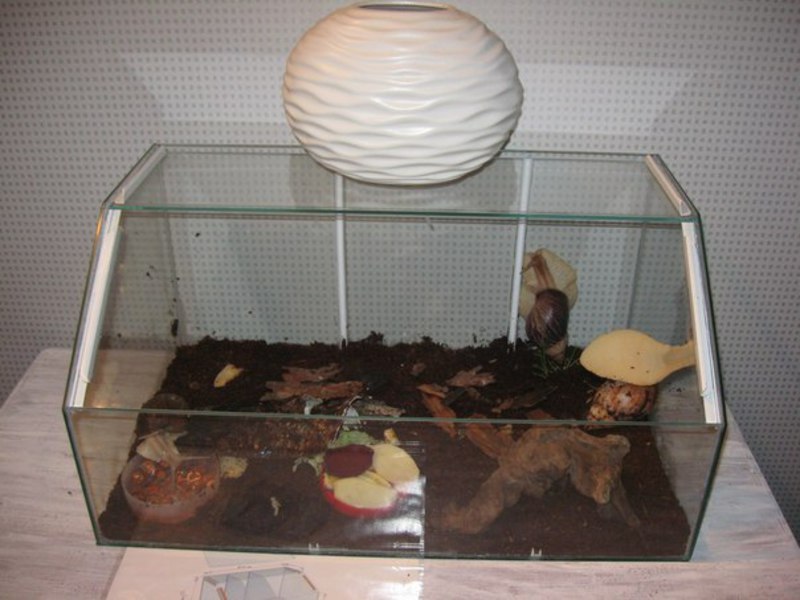
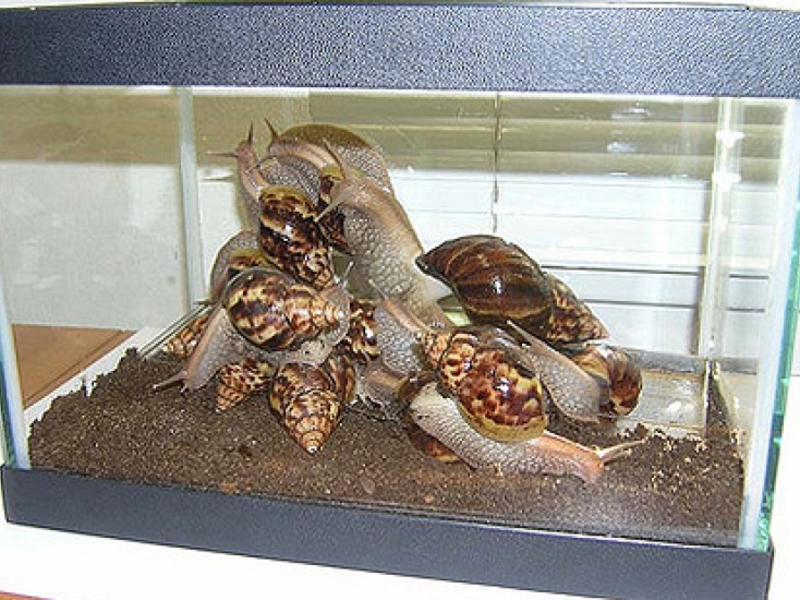
Caring for mollusks at home is quite simple, as they are very undemanding. You don't need a special terrarium to keep them; you can use a regular aquarium, even an old one, or a plexiglass structure.
Arrangement of the house
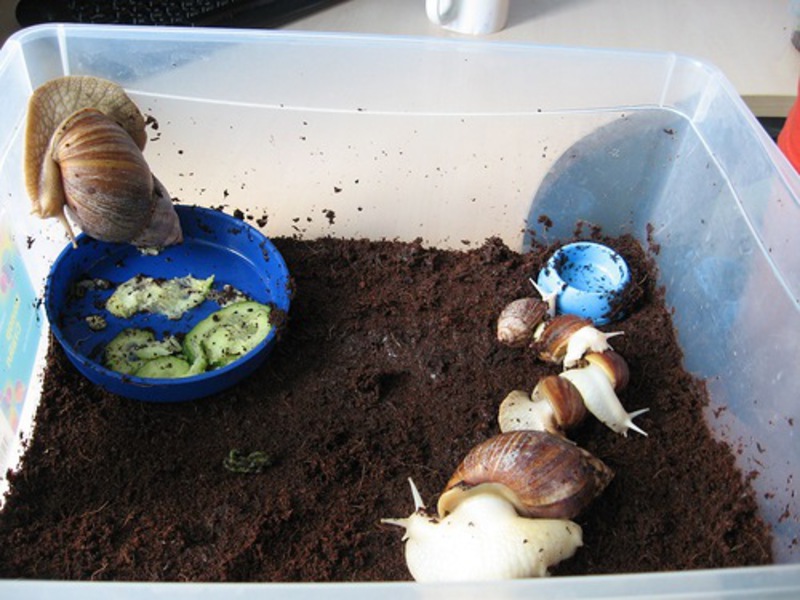
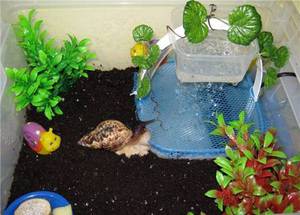 The volume of a terrarium or aquarium is selected based on the calculation – ten liters per snailTo prevent your pet from wandering, be sure to cover it with glass. Leave gaps between the roof and the enclosure to allow fresh air into the snail's home.
The bottom of the aquarium is covered with a 5-10 cm thick layer of substrate. Fertilizer-free peat, available at flower shops, or coconut substrate, available at pet stores, are suitable. Flower potting soil should not be used for keeping snails indoors, as it may contain chemicals and sawdust. Forest or garden soil can be used, but it should be disinfected by boiling first. The substrate will maintain optimal humidity in the snail's habitat, so it should be moistened regularly. It also acts as a soft bedding, preventing the snail from breaking if it falls from the sides of the aquarium.
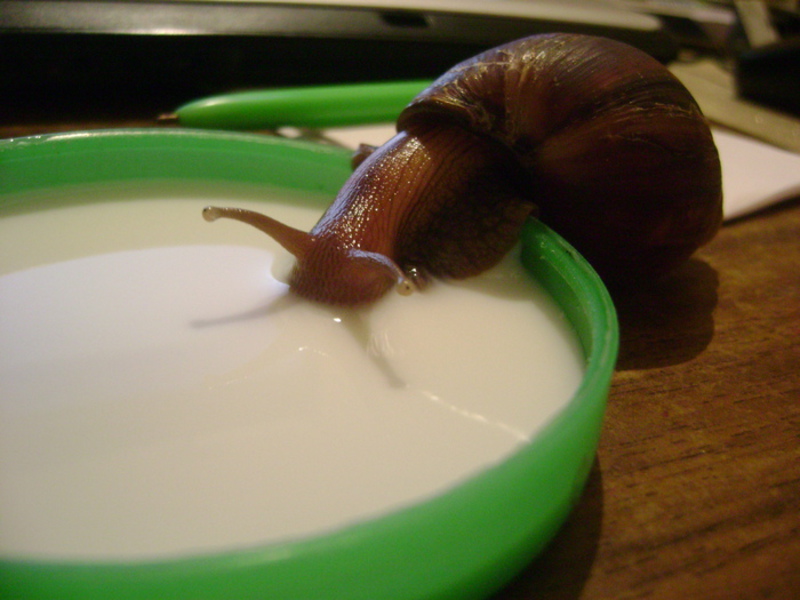
Snails love to swimTo do this, place a container of water in their home, changing it regularly. It's best to choose a shallow bowl to prevent accidental choking. You can add various hiding places to the aquarium, such as large rocks, driftwood, coconut shells, and half-flower pots. During daylight hours and in bright light, Achatina prefer to hide.
The air temperature for snails should be from 24C to 27CIf your home's room temperature is lower, you can increase it with a dim lamp. Achatina fish thrive in lower temperatures, but they move very slowly.
The right humidity level can be determined by the mollusk's behavior. If it tries to seal itself in its shell, the terrarium is too dry, and if the pet constantly hangs on the walls, it's too humid. By turning on the lighting and increasing the gap between the roof and the walls of the aquarium, you can dry the air. To increase humidity, simply spray the substrate or the walls of the enclosure with water.
What to feed a large Achatina?
When caring for snails, it's important to know what they like and what to feed them. Every pet is unique and has its own food preferences. You'll have to discover them through experimentation. However, the main diet of large snails should definitely include greens, fruits, and vegetables. In the wild, Achatina snails even eat meat.
For feeding shellfish The following products are suitable:
- Greens: alfalfa, plantain, yarrow, dandelion, sprouted oats, fruit tree and elderberry blossoms, nettle, daisies, clover, meadow plants.
- Vegetables: cabbage, spinach, cucumbers, celery, zucchini, lettuce, tomatoes, rutabaga, carrots, pumpkin, broccoli.
- Berries and fruits: grapes, melon, pears, strawberries, bananas, avocado, mango, pineapple, plums, figs, watermelon, apricots, strawberries, cherries, apples.
- Peas and legumes.
- Other types of products in the form of gammarus, baby food, boiled eggs, mushrooms, lean minced meat, fermented milk products, softened bread.
 Greens: alfalfa, plantain, yarrow, dandelion, sprouted oats, fruit tree and elderberry blossoms, nettle, daisies, clover, meadow plants.
All greenery intended for feeding snails should be picked as far away from the city and highways as possible.
Achatina should not be fed:
- acidic foods;
- sweets;
- pasta;
- smoked and fried products;
- spicy and salty foods.
A pet's diet should be balanced and contain vitamins and minerals. A snail needs calcium to develop its shell. A soft or deformed shell indicates a calcium deficiency. Large amounts of calcium are found in gammarus, eggshells, chalk, and shell rock.
Based on various elements it is possible prepare a special mixture, the use of which will produce quick results. This mixture contains:
- grain mixture consisting of wheat, barley, oats, flax seeds, millet – 70%;
- tricalcium phosphate – 12%;
- fish food – 5%;
- wheat bran – 5%;
- eggshell – 3%;
- gammarus – 5%.
Young snails need to be fed daily. It's recommended to feed them in the evenings, as they eat at night. Adult snails can be fed. once every two to three daysDon't forget about drinking water for snails, which they need to secrete mucus.
Reproduction of Achatina
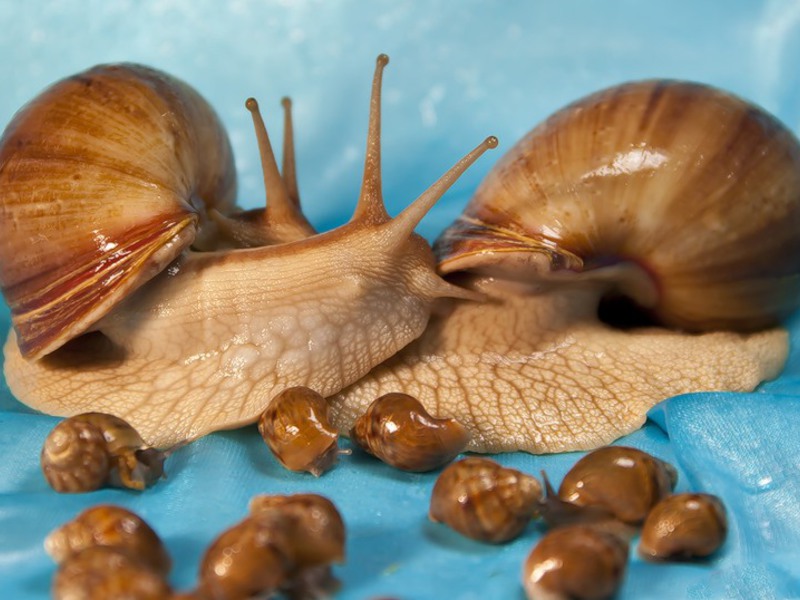
 Any individual Achatina can play both a female and a male role, so in low populations and extreme conditions, they can self-fertilize. However, this occurs quite rarely.
The larger snail usually plays the role of the female, as carrying the offspring requires strength. If the mollusks are the same size, then bilateral fertilization is possibleSmall Achatina snails can only act as males, as eggs are produced only when they reach a larger size. One to two hours before mating, Achatina snails begin their mating dances, which are fascinating to watch.
After one mating, a snail can store sperm for about two years, using it gradually. A single clutch can contain up to 200 eggs, with the snail producing up to six clutches each year.
The eggs remain in the mother's body for one to two weeks, after which they are laid in a burrow prepared in the ground. Achatina eggs are shaped like chicken eggs and reach 5 mm in size. Depending on the temperature, the small snails hatch from the eggs in one to three weeks. The young reach sexual maturity. 6-15 months from birthSnails grow rapidly until they reach sexual maturity, but then their growth rate slows down.
Many people wonder how long Achatina snails live in captivity. It all depends on how well they're cared for. On average, this species of snail lives 5-6 years. However, some specimens live up to 10 years.
As the article shows, Achatina snails don't require any special care, much less special conditions. Therefore, you can safely keep these beautiful pets as pets, which will delight not only children but also adults for a long time.
 Milena Shemerey
1 comment