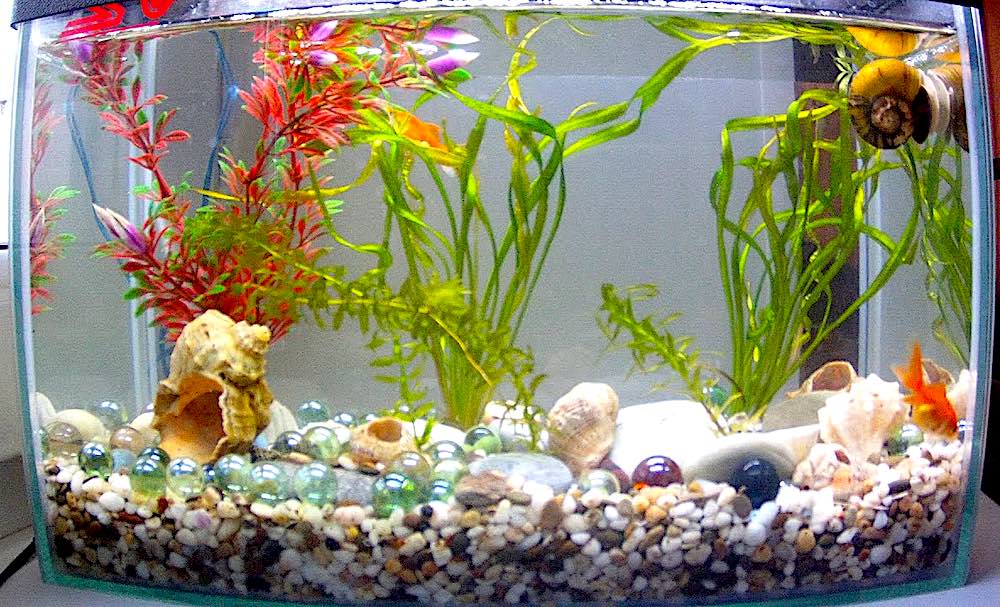
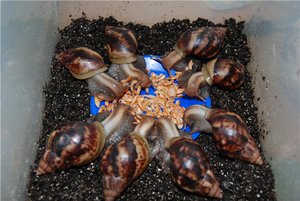
The problem of how to remove snails from an aquarium often arises for unlucky hobbyists who don't properly care for their underwater kingdom. It's rare to keep an aquarium without snails, as they provide invaluable benefits, making home aquarium maintenance easier and adding diversity to the aquatic fauna. However, some snail species reproduce quickly, filling the aquarium; eventually, instead of being beneficial, they become harmful. Reducing the snail population is easy, but eradicating them completely is not easy.
Content
What types of aquarium snails are there?
Snails are gastropods with a single shell, a muscular foot, and a small mouth. Sensitive tentacles protrude from their heads, containing eyes. When reproducing, snails, most of which are hermaphrodites, lay eggs. These eggs are typically found under plant leaves, but some snails lay them on the aquarium glass outside the water. For example, apple snails lay large clusters of yellow eggs, 2-3 mm in diameter, 4-6 cm above the water surface.
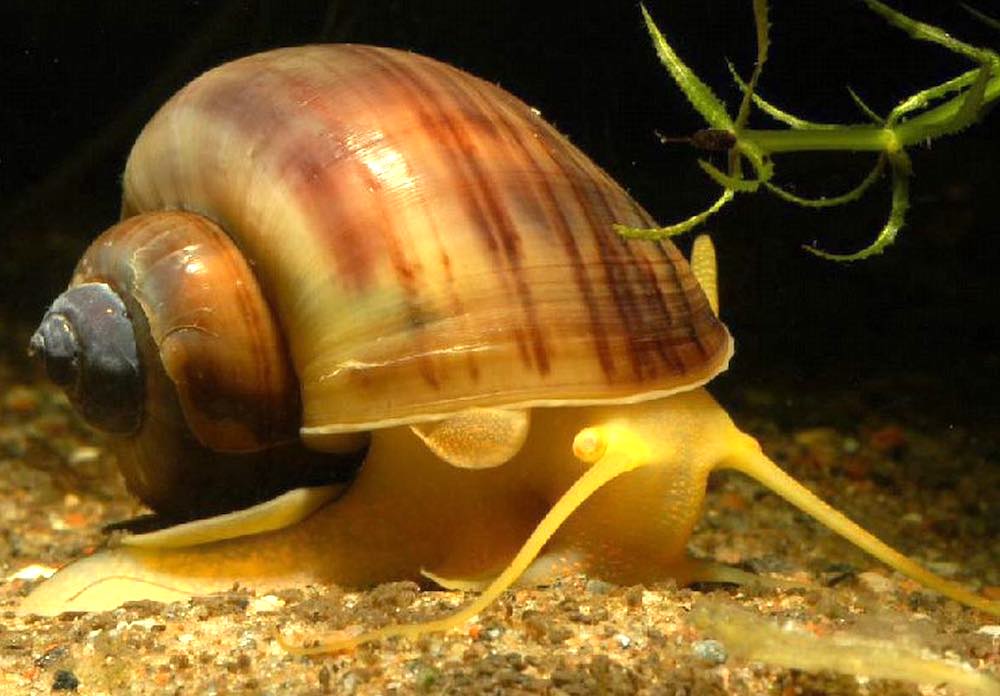
There are also viviparous species, such as melania. Aquarium snails feed on algae, fish food scraps, and will not shy away from rotting leaves of aquatic plants or even dead fish. Small snails do not harm aquarium plants, but some larger ones can destroy young leaves.
Two to three dozen species of snails are kept in aquariums.
The most popular are:
- Ampullaria Ampullaria snails are large mollusk (up to 6 cm) with a brown or bright yellow shell. They can breathe through both gills and lungs. They regularly surface to get air. Males and females are virtually indistinguishable from each other, but they are separate sexes. Ampullaria snails are kept in large aquariums. Controlling their population is not a problem.
- Coil – a group of species with a shell up to 3 cm in diameter, shaped like a spiraling ram's horn, red or black in color. The snail can swim near the water's surface. It is easily introduced accidentally from other aquariums and reproduces rapidly.
- MelaniaA small snail, easily recognizable by its cone-shaped brown shell. It lives primarily in the substrate, rarely appearing in public view, and is often accidentally introduced into an aquarium with newly purchased plants. It reproduces extremely quickly, to the point that the substrate appears "alive." It can thrive in any conditions.
- FizaAnother example of snails that appear "out of nowhere" in aquariums. It's no larger than 2 cm and lacks gill breathing. It's a hermaphrodite, reproduces very quickly, and is omnivorous.
Somewhat less frequently, aquarists keep:
- Marizu;
- neretina;
- horned snail;
- tylomelania;
- Helena.
Most snails are peaceful, but Helena is unique in that it eats other snails by inserting its proboscis under their shells.
Functions of snails in aquariums
Most aquarists believe that snails are essential in an indoor aquarium, but some disagree. While snails are certainly beneficial in small numbers, they can also cause significant harm if allowed to multiply uncontrollably.
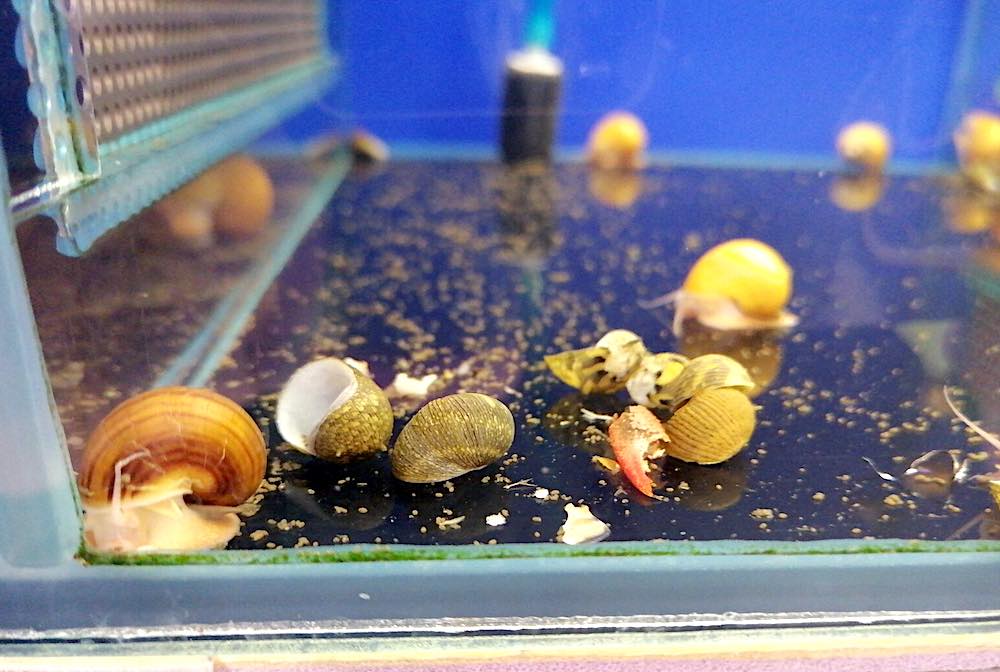
The positive role is as follows:
- careful removal of green algae that pollute the glass;
- destruction of food waste and decaying plant and animal organisms;
- mixing and aeration of soil;
- keeping the water clean.
Moreover, snails can act as a cleanliness indicator: their mass accumulation near the surface is a signal of trouble in the aquarium. In an ideal aquarium, snails are not always visible: they hide in the substrate or leaves, only occasionally emerging onto the glass to clean it by eating the green algae. Snails also aid in fish reproduction: their excrement produces tiny single-celled organisms—a unique first food for the fry.
The harm caused by snails appears when their quantity exceeds a reasonable limit.
This:
- violation of biological balance;
- a clear deterioration in aesthetics from their accumulation on glass, plants, and filters;
- water pollution with excrement and mucus.
Moreover, snails carry diseases. Therefore, experienced aquarists try to completely eliminate snails from the aquarium in the event of widespread fish diseases. In any case, their population must be strictly controlled. Unfortunately, this is easy to do with ampullaria, but difficult for most other snail species.
How to remove snails from an aquarium
Methods for combating snail overpopulation in an aquarium can be divided into mechanical, biological and chemical.
An obvious way to eliminate excess mollusks is to collect them manually. First, remove large specimens visible to the naked eye from the aquarium using your hands and a net. Small snails can even be crushed against the glass with your fingernail; their remains will be eaten by fish and other snails.
Control is more difficult in a large aquarium (over 4-5 buckets) densely planted, but if you trap them daily, you can quickly reduce the population. Traps are also considered a mechanical method. They are sold in pet stores, but it's easy to make your own.
The basic idea behind any trap is to add bait (cooked vegetables or meat) and wait for snails to gather overnight. The trap is then removed from the water and shaken out. The easiest way is to use a plastic bottle, poke holes in it to allow the snails to enter (to prevent fish from interfering with the trap), and place a scalded cabbage leaf inside. Experienced aquarists believe that darkened banana peels are even better, but they temporarily cloud the water. Mechanical methods won't completely catch all the snails, but they do help keep their numbers under control.
Biological methods involve the use of natural enemies of snails: they are simpler and more reliable than mechanical ones.
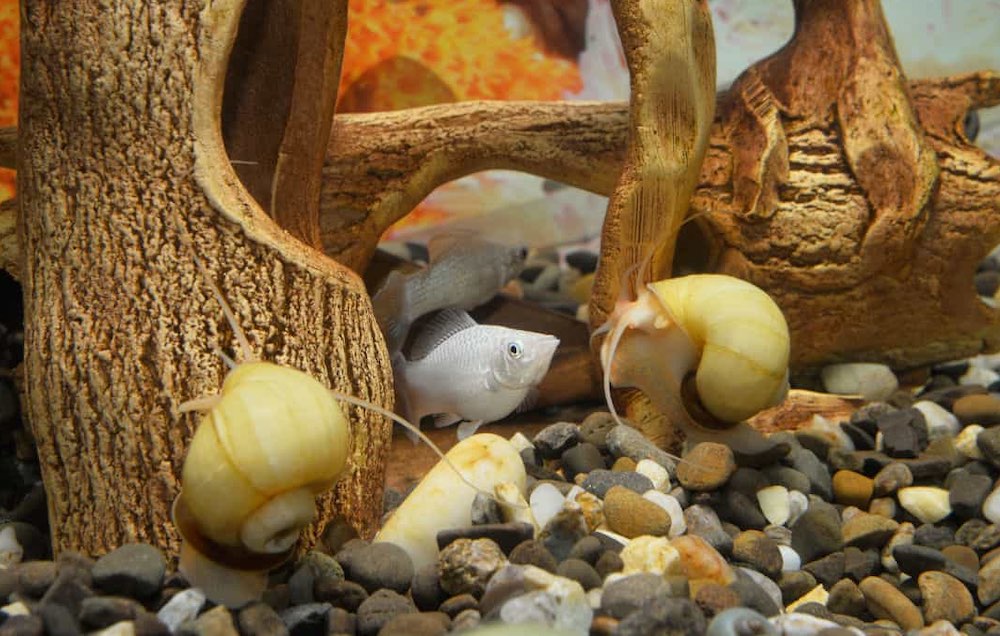
There are quite a few fish that happily eat snails, and the following cope with the problem better than others:
- bots;
- tetradonts;
- macropods;
- gourami.
True, the most effective snail fighters—tetraodonts—are aggressive and will even attack small fish. Ancistrus catfish are a more "gentle" option: they don't feed on adult snails, but they do destroy their eggs. There are also predatory snails—helenas—that quickly rid an aquarium of physalis and coils. Fortunately, helenas themselves reproduce slowly, and uncontrolled growth is almost never seen.
Chemical methods are the most reliable, but they have obvious drawbacks. While they help quickly kill 100% of snails, they pollute the water with toxic components. For example, many popular mollusc control products contain copper compounds, which are dangerous not only to snails but also to other invertebrates and higher organisms.
Inexpensive copper sulfate can be used with equal success: adding it to the aquarium at a concentration of 0.3 g per 10 liters of water will quickly kill all the snails. However, before using it, remove all fish and other necessary animals from the aquarium. Copper sulfate will do its job in a couple of hours in an aerated aquarium, but after removing the dead snails, you'll need to change all the water. Therefore, chemical methods should only be used as a last resort.
In addition to chemical treatments, electrolysis has a similar effect (a battery and copper wire are sufficient), but fish should also be kept out of the aquarium. The most labor-intensive, yet reliable, method of snail control is a complete aquarium cleaning with boiling of the substrate. However, this is hardly recommended for larger bodies of water.
Prevention of occurrence
It is easier to prevent a problem than to fix it.
If an aquarist decides to do without snails, he should:
- Before planting purchased aquarium plants, carefully inspect each leaf: it may not contain live snails, but it may contain eggs, or even better, quarantine the plants;
- new soil (gravel, sand, stones) should be baked in the oven before placing it in the aquarium, carefully monitor the soil, changing it periodically;
- ensure that the water has the required parameters (chemical, biological, temperature), and that the fish eat all the food;
- Get a couple of fish that feed on snails.
Everything placed in the aquarium should be treated with a pink solution of potassium permanganate. Weekly cleaning of the aquarium with a 20% water change is necessary.
However, it must be acknowledged that some snails (physes, coils) are considered "travelers" and can indeed appear in an aquarium unexpectedly. To prevent a few specimens from quickly multiplying, it's important to give the fish fasting days and, at the very least, avoid overfeeding them.
Read also, What can and cannot be put in an aquarium.
Tips and nuances
The main advice from experienced aquarists is that before adding snails to your aquarium, consider whether they're truly necessary. After all, getting rid of them can be quite difficult.
What constitutes an "excessive number" of snails? There's no specific standard, but it's generally accepted that 2-3 adult apple snails and a dozen melania snails are sufficient for a 5-6-bucket aquarium.
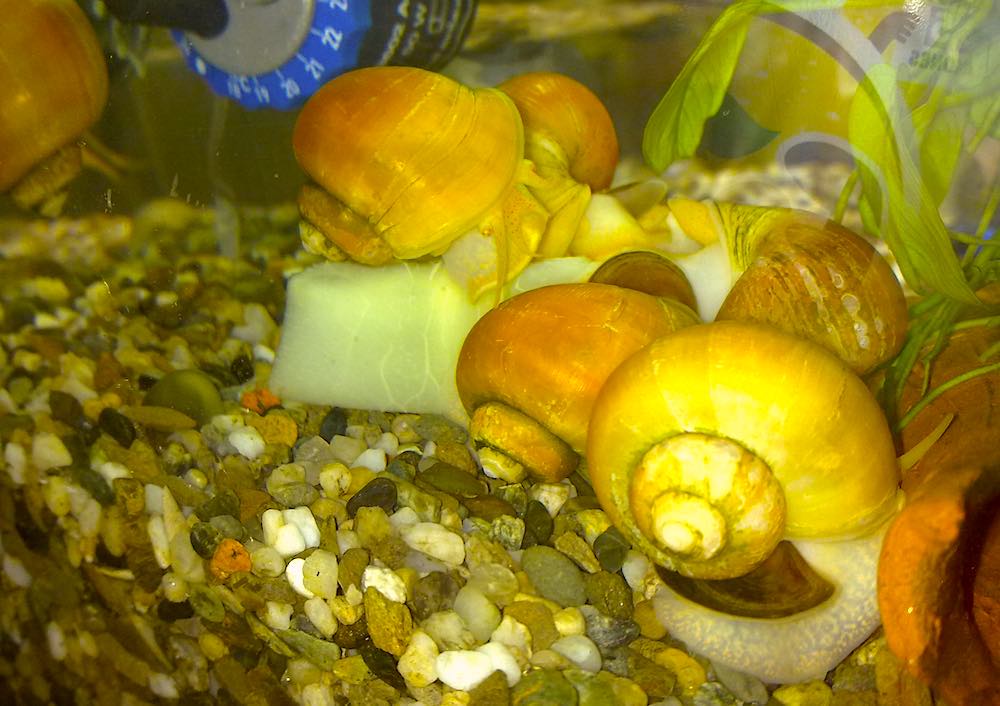
Some hobbyists keep aquariums specifically for the large mollusks (for example, ampullaria snails are truly beautiful and interesting). To prevent snails from eating exotic plants, they need to be fed. A lettuce or cabbage leaf, or chopped fruits and vegetables, will ensure the plants remain healthy.
Sometimes even predatory fish don't want to eat snails—they're simply not hungry. It only takes a couple of days without feeding a macropod, and it will turn to mollusks.
Copper preparations are certainly harmful. But placing a coil of uninsulated copper wire in the aquarium is somewhat less dangerous. Although… This won't improve the fish's health either.
Killing snails doesn't guarantee they won't reappear. The eggs are very difficult to spot, and the incubation period can be several weeks. Therefore, it's best to wait for new snails to emerge and continue working.
When dealing with aquarium snails, it's best to use a combination of methods, reserving chemicals for last resort. Usually, catching large snails by hand and adding a couple of predatory fish to the aquarium can solve the problem quite successfully.
Read also, How to properly clean an aquarium.