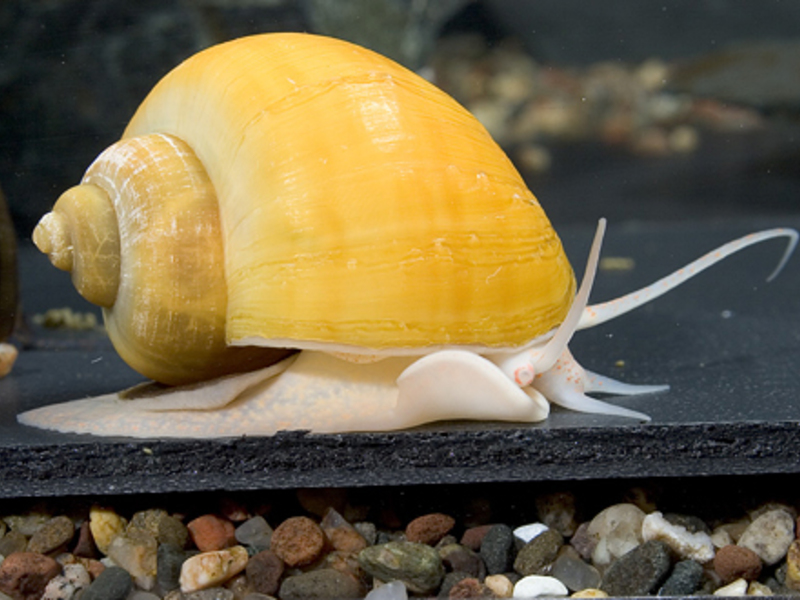
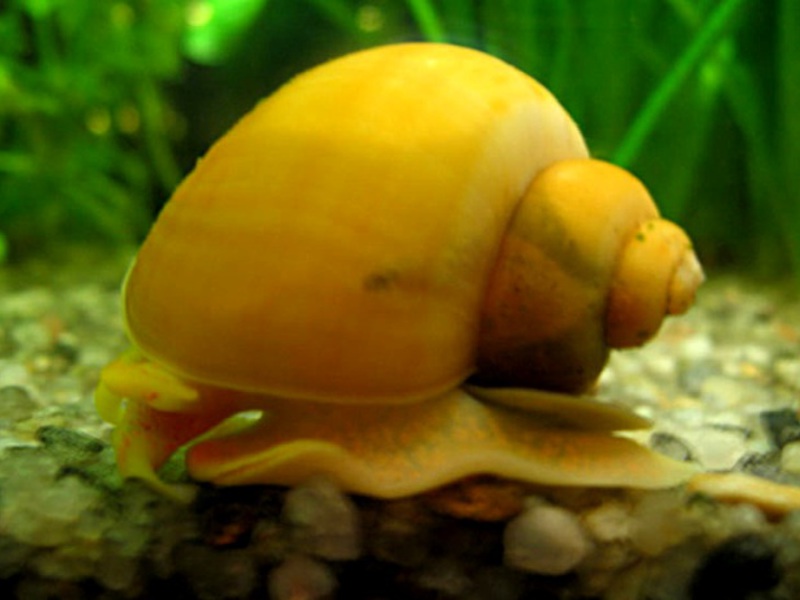
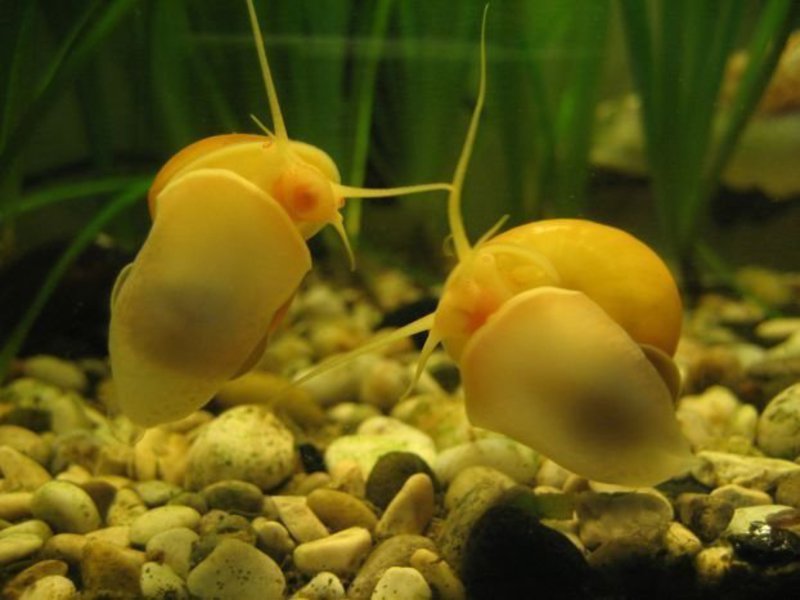
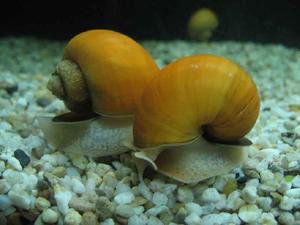
 The ampullaria (lat. Pomacea bridgesii) is a freshwater gastropod mollusk, beloved by aquarists for its beauty and relative ease of maintenance.
In the wild, the snail inhabits slow-moving or stagnant bodies of water in South America. However, they can now be found in Southeast Asia and even Hawaii.
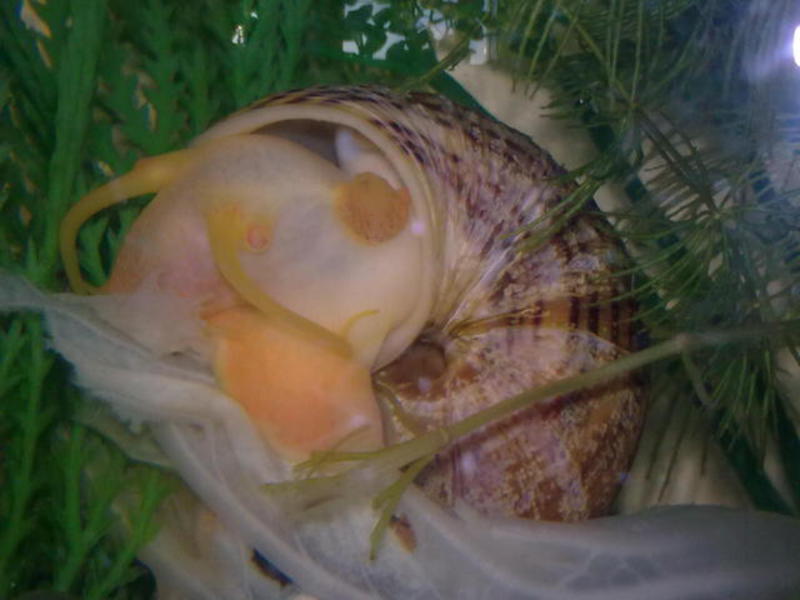
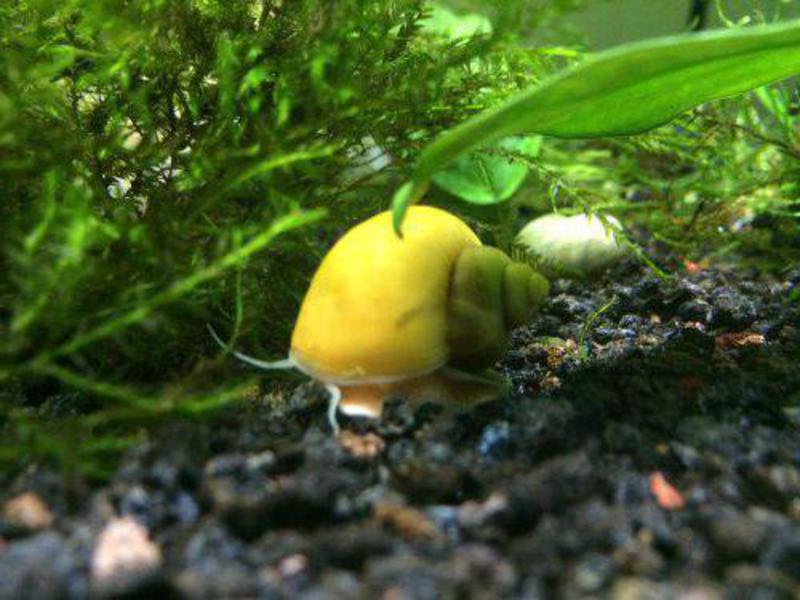
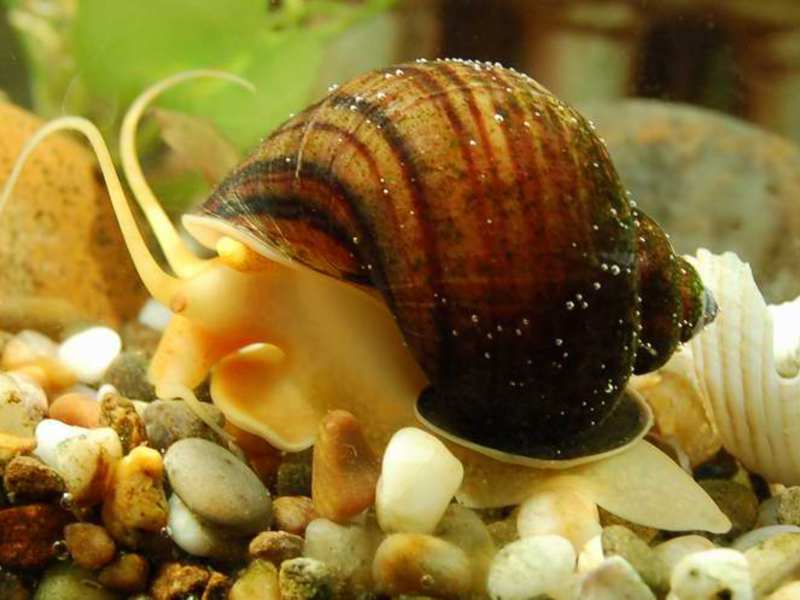
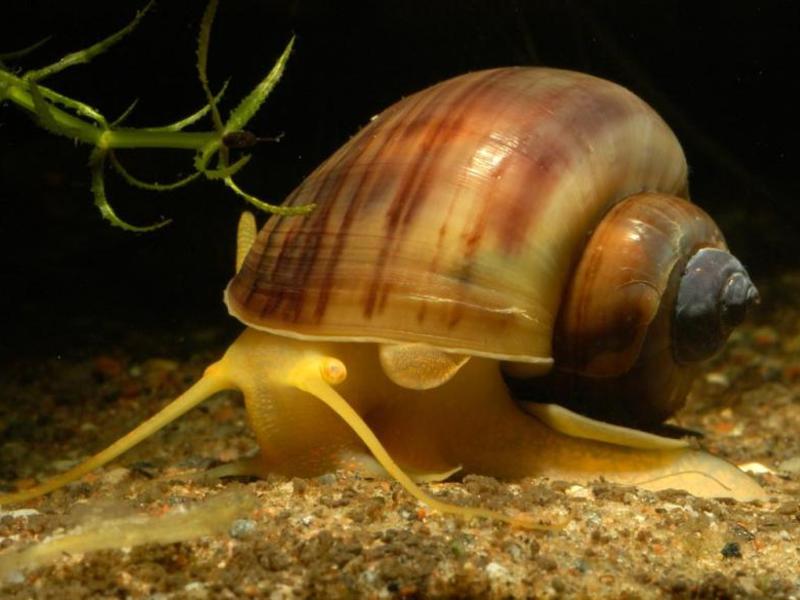
Wild snails of this species have a light brown shell with wide stripes running along it. But sometimes yellow color is also foundWhen unfavorable conditions arise, the animal closes its shell with a special horny flap and waits out the danger, tightly sealed off from the outside world.
The ampullaria is capable of absorbing oxygen not only from water but also from atmospheric air. This is made possible by its respiratory system, which consists of two halves. The right half is similar to the gills of fish, while the left half resembles the lungs of land dwellers. The snail has a special siphon, into which it pumps air as it rises to the surface. This allows the snail to escape onto land and even lay its eggs there, protecting them from aquatic predators.
This is a fairly large snail:
- Its shell can reach 7–8 centimeters in diameter.
- The leg is also quite large: its length can be up to 9 centimeters, and its width 3-4 centimeters.
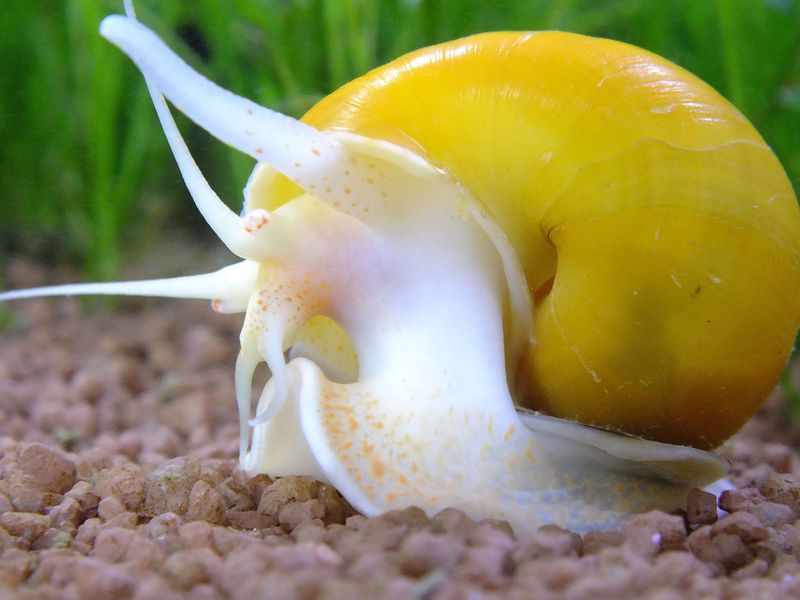
- The mollusk has a pair of eyes and two pairs of tentacles, which act as organs of touch.
- These animals have a keen sense of smell, which allows them to accurately determine the presence of food in their immediate vicinity.
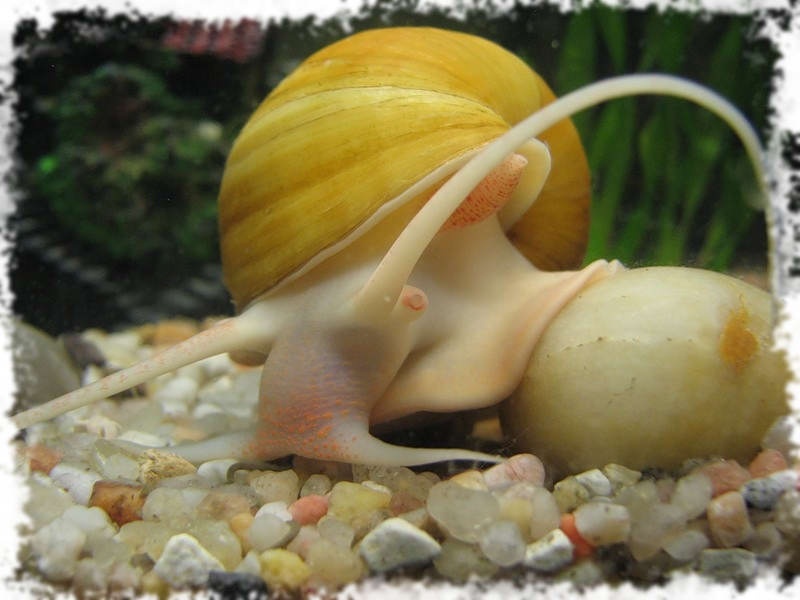
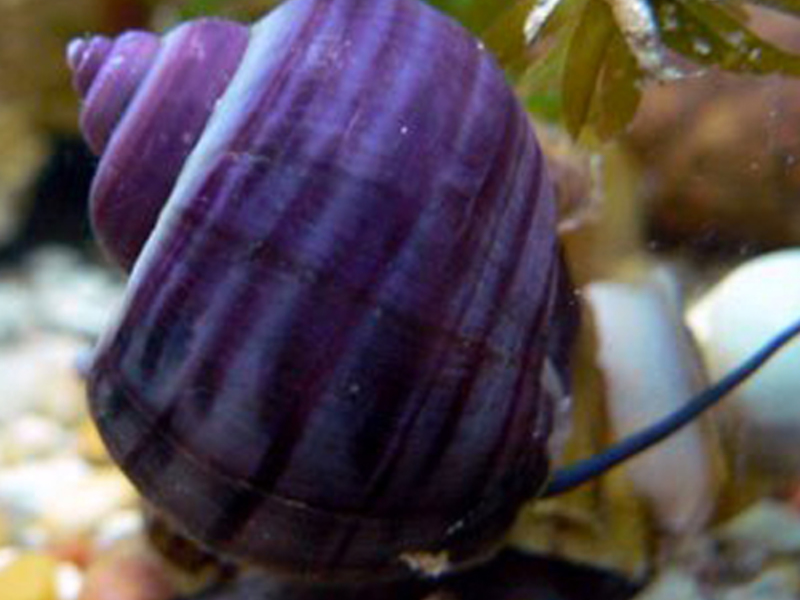
Yellow-colored mollusks are the most popular for home aquariums. However, there are many other color variations: pearl, pink, white, blue, purple, black.
Aquarium maintenance
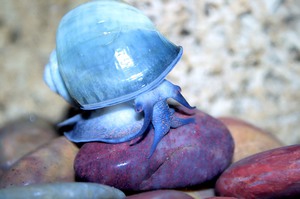 These animals are fairly easy to care for, so even a beginner can keep them. Ampularia are peaceful aquarium inhabitants, so they easily coexist with other aquarium inhabitants. However, their eggs and offspring, as well as the ampularia themselves, can become prey for turtles and some fish. Crustaceans can easily remove the ampularia from its shell and eat it.
Therefore, it is best to allocate a separate aquarium for keeping ampullaria. Its size should be chosen based on 10 liters of water per adult snailIt is recommended to keep at least three to four snails in an aquarium. However, too many snails in an aquarium is not recommended, as they are quite voracious and leave behind a huge amount of waste. They also love to dig up the substrate, digging up plants. Regarding the substrate, it should be replaced or cleaned weekly. This is due to the active contamination of it by snail excrement.
Given the ampullaria's natural habitat, you might expect them to be undemanding when it comes to water quality. However, it's important to note that a lack of calcium in the water can cause the shell to deteriorate. To saturate the water with calcium, simply place seashell fragments or limestone on the bottom of the aquarium. There are also special products available that increase water hardness.
Water temperature may fluctuate in the range from 15 to 33 degreesHowever, ideally, it should be above 20 degrees. This is because in colder water, this aquarium inhabitant stops reproducing and becomes lethargic. However, the mollusk's lifespan extends to 3-4 years due to a slower metabolism. In warm water, the snail lives from one and a half to two years.
What do ampullaria eat and how to feed them properly?
These aquarium inhabitants are not at all picky about their food, so feeding them is easy. In the wild, snails are vegetarians. However, as experience with them shows, in captivity they will happily consume both animal and plant food. Ampullaria snails kept in the same aquarium with fish risk not having enough time to feed and may go hungry. They will compensate for this by eating the leaves of aquarium plants. Therefore, it is best to avoid buying expensive plants for an aquarium containing these mollusks.
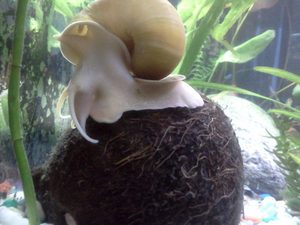
Ampularia, a photo of which is presented here, eats tubifex with pleasureBloodworms, daphnia, and even earthworms will do for her.
With all this said, the aquarium diet should consist primarily of vegetables and greens. The following are relevant:
- lettuce and cabbage leaves
- pumpkin pulp
- young cucumbers and zucchini.
Before feeding the snail, vegetables should be lightly boiled and greens should be doused with boiling water.
In addition, the snail will be happy with pelleted food, boiled egg yolk or banana peel.
Anything left over from the meal must be removed from the aquarium promptly to avoid water spoilage.
Living in a community aquarium, the snail acts as a cleaner, readily eating the dead inhabitants.
How do snails reproduce in an aquarium?
After acquiring these animals, aquarists often ask, "How do aquarium snails reproduce?" The answer can be found in this section of the article.
Ampullaria - dioecious animals, but even an experienced aquarist cannot distinguish between males and females. Therefore, 4-6 snails are usually kept in pairs, allowing them to separate into pairs.
This species of snail reaches sexual maturity at approximately five months of age. Breeding should take place in warm water, ideally between 25 and 28 degrees Celsius. Another important requirement is the presence of an air gap, which can be created by draining some of the water and covering the aquarium with glass.
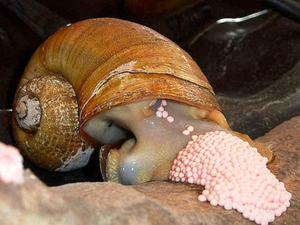 Reproduction is a mystery, so the snail usually lays eggs in the evening.
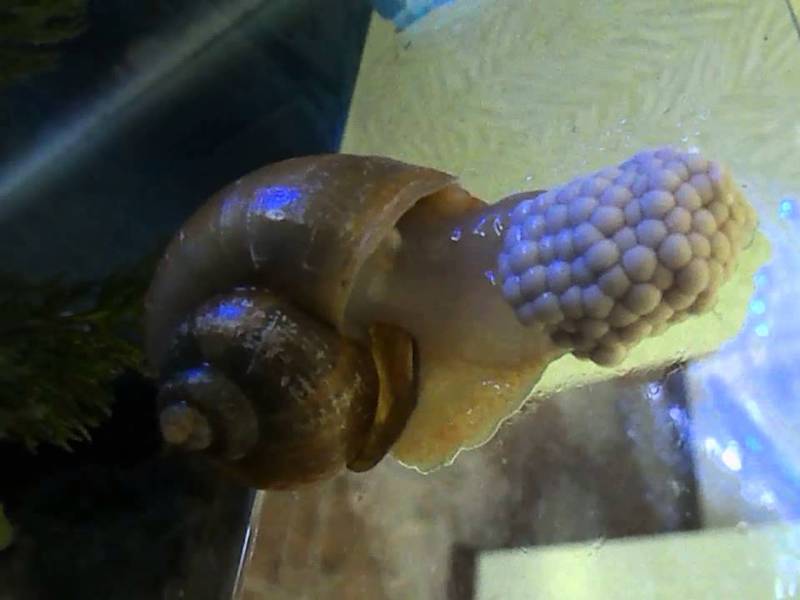
The eggs laid by the female, by appearance resembles a bunch of grapesThe eggs are usually laid on the wall of the aquarium in the air gap or on the glass covering the aquarium. It's important to ensure the eggs don't dry out, otherwise they will die. Fresh eggs are soft and transparent. Over the course of a day, they harden, the egg shells take on a whitish tint, and the entire clutch appears pink.
The eggs mature over a period of one to four weeks, turning dark. The actual hatching occurs five days later. The ampullaria hatchlings move into the aquarium water on their own. As they grow, they require enhanced nutrition. You can begin feeding them dry fish food soaked in water, boiled egg yolk, or very thin slices of frozen beef. As the young snails mature, are transferred to an adult diet.
Transferring juveniles to a community aquarium should be delayed as long as possible, as small snails will immediately become prey for other inhabitants.
This easy-to-care-for mollusk is such a fun aquarium inhabitant. Keeping, breeding, and caring for it are relatively easy, making it suitable for both professional aquarists and novice hobbyists.