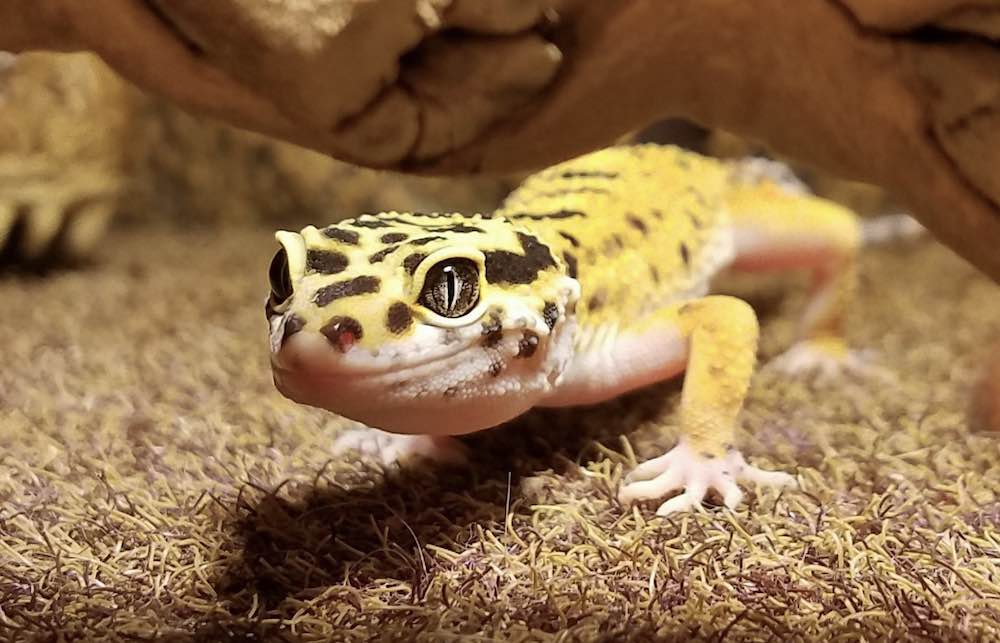
The leopard gecko is an unusual genus of lizards, growing up to 30 cm (including the tail) and weighing no more than 75 grams. This exotic reptile can be kept as a pet, especially since it is hypoallergenic.
Although reptiles rarely show emotion toward their owners, leopard geckos become accustomed to humans quite easily. Over time, they may even begin to happily sit in a person's hand or on their shoulder (and sometimes even sleep on them).
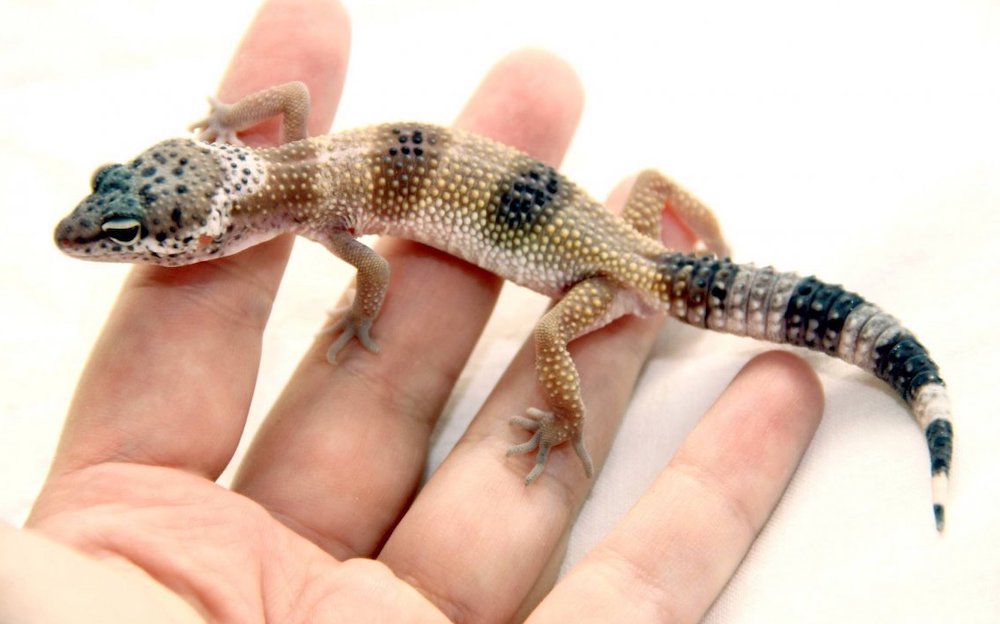
The most common pet gecko is the spotted leopard gecko, which is bred artificially and comes in dozens of different color patterns (morphs), but most commonly has a leopard pattern. Also popular are the Afghan, Turkmen (listed in the Red Book), Iranian (larger) leopard geckos, and Hardwick's (with brown-red stripes on the back).
While caring for a leopard gecko isn't particularly difficult, there are some important considerations. This article will cover all the nuances of caring for this pet, including feeding and choosing a terrarium.
Content
Keeping a Leopard Gecko at Home: The Pros and Cons of Keeping Lizards
Leopard geckos are not aggressive; they have a docile, calm nature. These animals readily interact with children and can become attached to their owner. However, keeping them does have its challenges. Keep in mind that they won't be as friendly as they might be during the first few days, while they get used to their new home and owners. During the adaptation period, leopard geckos may even seem aggressive; give them time to settle in.
Although they are solitary in the wild, several individuals can be housed in a terrarium, but only females. Males will begin to clash and divide territory.
Main benefits of content:
- Leopard geckos are hypoallergenic, so they can be kept in a home where there are allergy sufferers;
- animals are clean;
- they are friendly, calm and smart;
- adapt quickly;
- Leopard geckos are unpretentious: they can easily be left alone for several days.
Flaws:
- Difficulty in choosing food. Lizards need only protein-rich foods, but insects caught outside are not suitable;
- Leopard geckos are nocturnal, so it's very interesting to observe them at night. If you're an early bird, you'll miss many moments in your pet's life.
Feeding and care of outdoor lizards
Leopard geckos eat only protein-rich animal foods—no vegetables, greens, or fruits. Outdoor lizards' diet consists primarily of various insects, but they especially enjoy crickets. They can also be fed locusts, mealworms, grasshoppers, cockroach larvae, green caterpillars, and occasionally, newborn mice. Earthworms and other insects caught outdoors are not suitable.
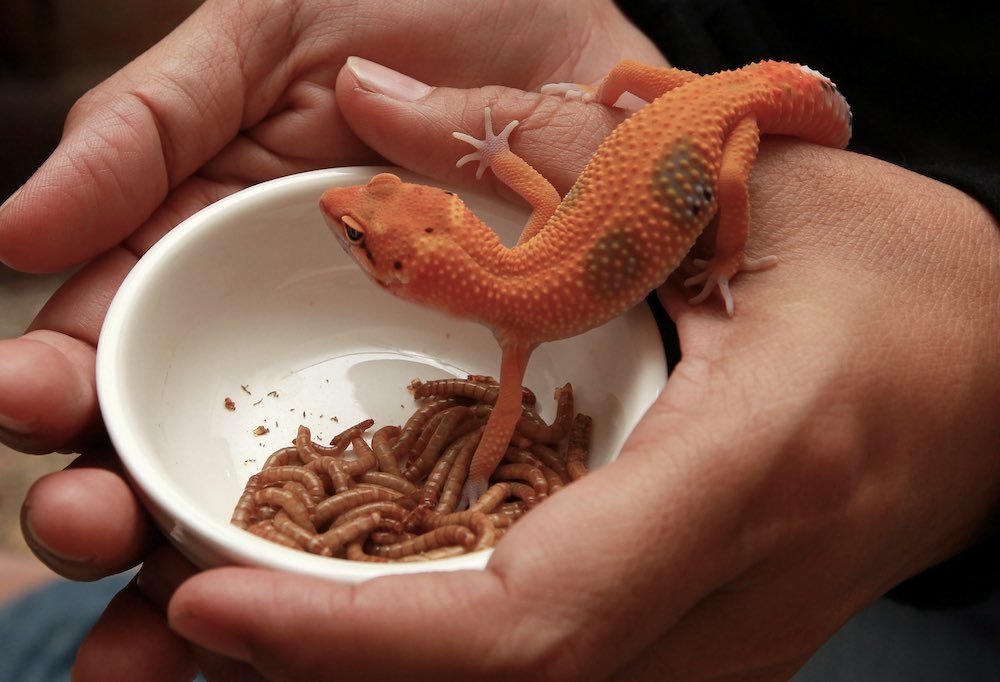
Rules for feeding leopard geckos:
- Food should be given by hand or with tweezers.
- The best time for feeding is late evening or early morning.
- Food is purchased only in specialized stores.
- Young leopard geckos are fed twice a day, with one insect per meal. The portion size is then increased, but the number of meals is reduced. Starting from the seventh month of life, they only need to be fed three times a week. A single meal for an adult (over one year old) is 10 crickets or other insects. Reptiles know their own feeding rate.
- Sometimes, leopard geckos need to be fed vitamins, especially calcium—add it in powdered form to their feeder. There are also other vitamin supplements suitable for lizards. Simply follow the instructions, adhering to the recommended frequency and dosage.
The leopard gecko requires a cozy home—a terrarium. Alternatively, consider a plastic container with everything the lizard needs.
The tank should be rectangular, measuring 35x35x35 or 40x30x30 centimeters. If there are several animals, it should be at least 50x40x40 centimeters. The frame can be plastic or wood, and the walls should be glass. Plastic containers have cloudy walls, making it difficult to observe the animal. Terrariums with sliding side doors are also available.
Leopard geckos are cold-blooded animals, but they thrive at room temperature (23-26 degrees Celsius). However, the substrate should be warm (up to 32 degrees Celsius); this is usually achieved with a heat mat. It's also important to leave an unheated area.
Read more about keeping lizards.
Since these animals are nocturnal, daylight is not enough. Furthermore, the terrarium should not be placed in direct sunlight, as this will create uncomfortable conditions for the pet. A lamp should be installed in the terrarium. Lizards also require ultraviolet (UV) light.
Leopard geckos shouldn't live in excessively dry conditions. The optimal humidity level is 50%, so the substrate should be occasionally sprayed with water. The lid or side walls should have ventilation holes to allow fresh air to flow.
The bottom of the terrarium should be filled with substrate: pebbles and stones, moss, sawdust, coconut fiber, and tree bark. You can partially fill it with sand, but be sure to monitor the animal's reaction. If the leopard gecko suddenly starts eating sand (this happens in captivity, although lizards don't eat it in the wild), it's best to remove it to prevent it from clogging its stomach.
The safest option is special decorative covers for lizards that imitate their natural habitat.
Consider landscaping the tank.
For this purpose, you can use both artificial and live plants, for example:
- aloe;
- Haworthia subshrubs;
- agaves (small varieties);
- Adromischus;
- sansevieria;
- Crassula;
- gasteria.
Cacti and poisonous plants are absolutely not suitable.
All the others will help create the desired microclimate and reproduce a natural atmosphere, reducing fluctuations in air humidity.
Like all reptiles, leopard geckos love to hide, so it's important to provide them with hiding places—bamboo tubes, houses, rocks, etc. Purchase two treated pieces of driftwood from a pet store for your pet to climb. Consider safety to prevent injury to your lizard: anything inside the terrarium should be free of sharp edges.
How long do leopard geckos live at home?
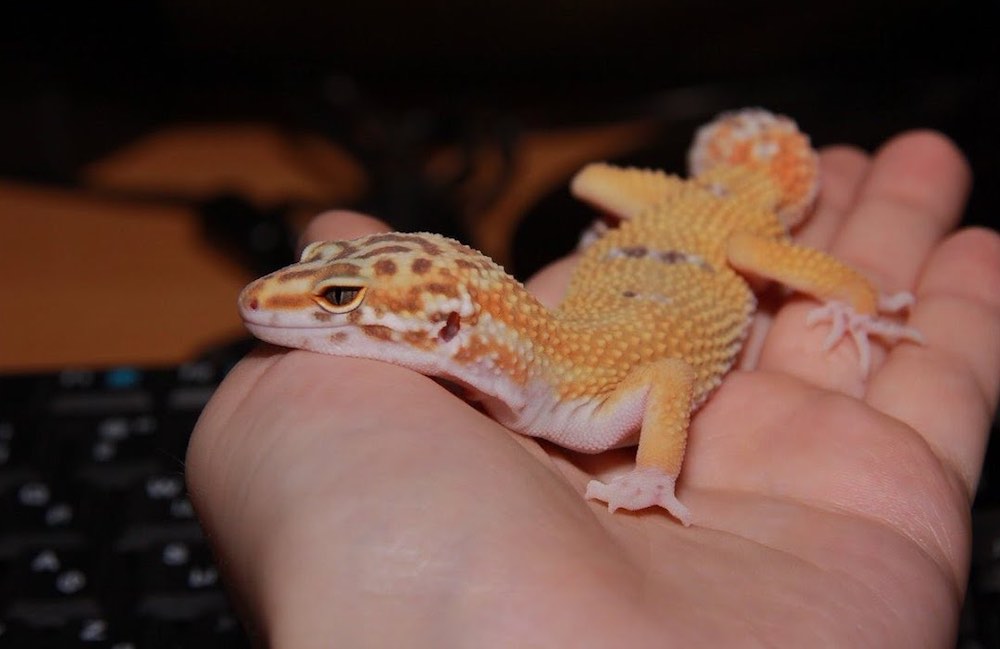
On average, these lizards live 15-20 years, although some can live up to thirty. Much depends on the species and living conditions. Keep in mind that, in captivity, their lifespan may be reduced by approximately five years compared to the average for this species.
Tips and nuances
The main important nuances of keeping eublephars:
- A high-quality ventilation system and maintaining the required humidity level (40-50%) are very important for them.
- The terrarium must have a warm (27-32 degrees) and a cool (23-26 degrees) zone.
- Keep in mind that if you feed your lizard in a terrarium, food scraps may decompose in the substrate, especially if you use substrates rather than pebbles.
- To prevent rickets in your pet, use an ultraviolet lamp and turn it on for 10-15 minutes a day. This will help with vitamin D3 absorption.
- Lizards shed periodically. This is indicated by changes in the skin—it cracks and turns white. During this time, it's best to move the pet to a humid chamber (a plastic container with a lid, placed in the cooler part of the terrarium, with a layer of coconut coir or sphagnum moss).
- Leopard geckos lap up water like dogs or cats. A ceramic (preferably), metal, or plastic bowl should be placed in the terrarium. Be sure to change the water daily.
- Provide your reptile with a varied diet; don't feed it the same thing all the time. Feed only protein-rich foods.
- Don't overfeed your pet, as this can lead to obesity. Its thickness should not exceed the width of its tail.
- It's important to regularly remove excrement and food remains from the terrarium. It should be cleaned and washed monthly, and the substrate should be changed every 2-3 months.
- Pay special attention to your pet during shedding.
- Do not put two males in the same tank.
Leopard geckos are pleasant and easy-to-care-for animals, suitable even for those with allergies. Under good care, they can delight you for 15-20 years. It's important to pay attention to their diet, as they only eat protein, and to properly set up their terrarium.
Read more about domestic lizards.