The Syrian hamster is a cute pet from the rodent family; its other name is the Persian hamster. Due to its low maintenance, it is a very popular pet, often kept by families with children and others. This article will discuss the care, feeding, and bathing of Syrian hamsters.
Content
Breed characteristics
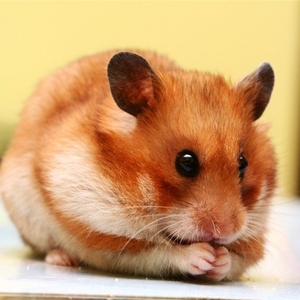
The Syrian hamster is a medium-sized rodent (up to 13 cm in length and weighing up to 250 g); it is the result of crossing several species of wild hamsters. Many years ago, it was accidentally discovered in Syria. This is where the hamster got its name.
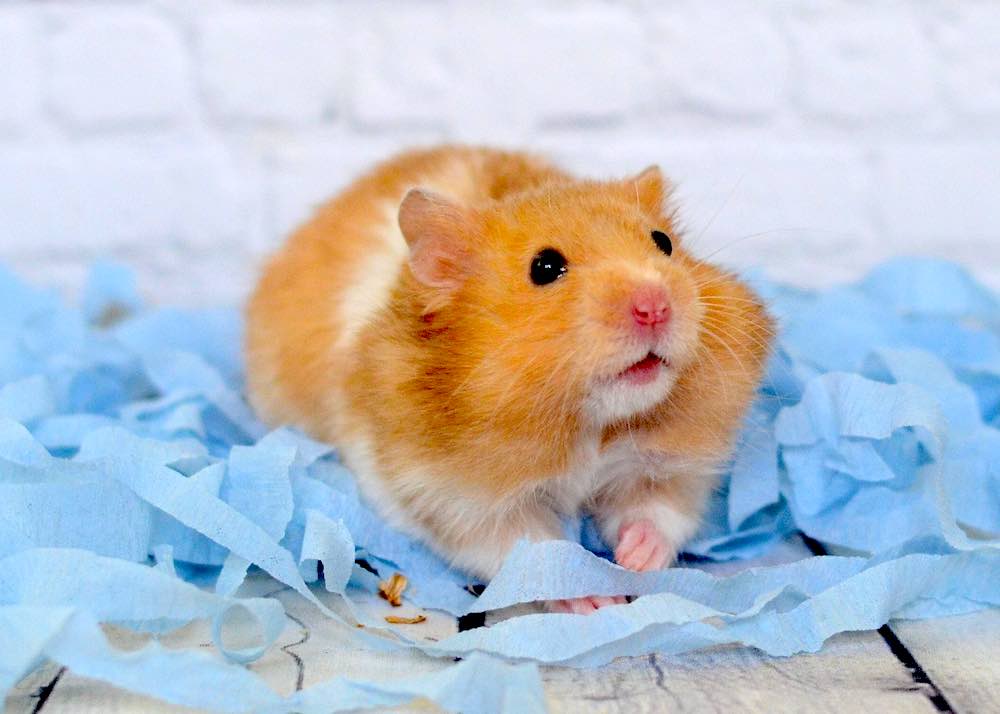
This hamster has a strong body and a short tail up to one and a half centimeters long. Its body is covered in thick, soft, golden-hued fur; there are short-haired and long-haired breeds. It has a round muzzle and small ears. A distinctive feature is the different number of toes on its hind and front paws (four on the front and five on the back). In the wild, they live in eastern Turkey and near the city of Habem in northwestern Syria.
Syrian hamster: care features
Syrian hamsters have an attractive appearance; they are easy-to-care-for and have a strong immune system. They quickly become attached to a particular location and lead a solitary life: keeping even a pair of pets is not recommended. They will defend their territory from intruders. Roborovski hamsters are an exception: they can be kept in groups.
Caring for a hamster
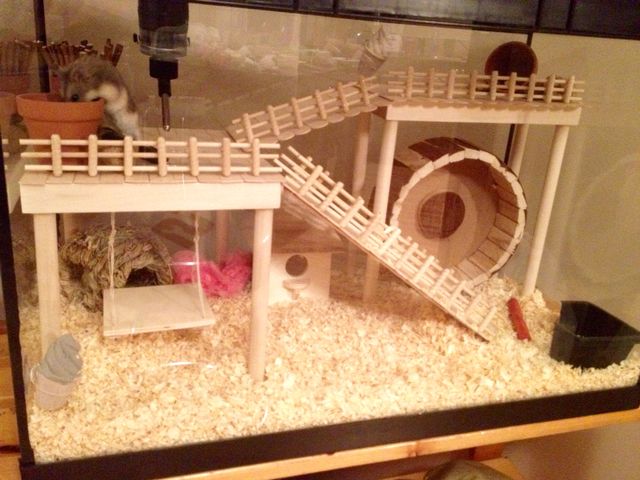
A Syrian hamster is a relatively large animal, so a cramped cage isn't ideal. It needs room for a wheel or a maze. A cage measuring 37 x 27 x 36 cm is generally considered suitable for a single hamster. The minimum dimensions are 50 x 30 cm. A two-story cage with the second floor at least 30 centimeters higher than the bottom is best.
Purchasing a cage that is too small will result in the animal becoming sedentary and likely becoming obese.
Please pay attention to the following nuances:
- A solid tray is preferable. It is filled with sawdust (not cotton wool or paper). The sawdust will absorb excess moisture and odors;
- there should be no more than 1 cm between the rods;
- the doors should not be tight.
A wheel is a form of exercise equipment. Play elements, including ladders, steps, mazes, and crawl spaces, are essential for keeping your pet active. A smooth piece of driftwood will also work.
A thorough cleaning is necessary every week. Remove the cage top, remove the bedding, and discard any food debris. Be sure to also wash the water bottle, bowl, and other items. A thorough cleaning should also include disinfection using safe products. Then, wipe the cage dry with a paper towel or napkin. Change the food daily, discarding any old food.
Read more about Caring for hamsters at home.
What to feed Syrian hamsters at home
Hamsters need a balanced diet. Store-bought formulas are best: they contain the optimal levels of microelements and nutrients in sufficient quantities for your pet. However, overfeeding is not recommended.

Here's what a hamster's diet should include:
- Fats - 5-6%.
- Proteins - 20-23%.
- Fiber - up to 10%.
The diet consists primarily of oats, wheat, millet, and other hard grains. Any food left in the bowl should be removed immediately.
Hamsters should avoid seeds, citrus fruits, chocolate, cabbage, dairy, and fermented milk products. Keep in mind that these pets have teeth that grow throughout their lives and need to be regularly worn down. To ensure this, it's important to include carrots, zucchini, apples, turnips, persimmons, and raspberries in their diet. It's also important to feed your hamster fruit tree branches.
Education and training
Hamsters are quite intelligent animals; in the wild, they can even sort grain on their own. And at home, these pets quickly learn to spin wheels, climb stairs, and even perform simple tricks. However, keep in mind that training isn't a necessity for a hamster; it should perceive everything as a game. Therefore, avoid shouting and aggression.
Here are some training tips:
- It's best to start with young animals (up to 3 months old). By older age, they've already developed a stable behavior pattern.
- Hamsters are most active in the evenings, so this is the best time to conduct training.
- It's best to choose a time 30-40 minutes after a meal. The animal should be slightly hungry.
- Make sure your clothes and hands are clean. Foreign odors will distract your pet.
- The hamster must trust the trainer.
First, place a treat on your palm and nearby. Wait until your hamster gets bold enough to climb onto your hand.
First, accustom your hamster to its name. This is very useful in case your pet gets lost. Repeat the name as often as possible. By the time training begins, your hamster should know it. The name itself should be simple, short, and catchy.
To train a hamster to run, train it hungry. Hold a treat under its nose, then move your hand away while repeating the words "run" or "run." After it runs a couple of laps, give it the treat.
You can train your hamster to stand by holding a treat high above its head. When it automatically follows the scent, say the word "stand" several times. Then give it the food. This is easy, as even in the wild, hamsters are adept at standing on their hind legs.
To teach your hamster to roll over, place a treat (such as a small piece of apple) on its back. To get it, it will have to roll over. At this point, say "roll over."
To teach a hamster to jump, hold a treat above and slightly in front, and repeat the command “jump.”
Completing any command should be rewarded (treat + petting), and for the wrong command say “no”.
How long do Syrian hamsters live?
Whether bred in the wild or in captivity, Syrian hamsters don't live long: their lifespan rarely exceeds three years. With ideal living conditions, a balanced diet, and timely treatment, this lifespan can be extended slightly (by a few months).

Diseases of rodents of the hamster family
Representatives of the hamster family of rodents are often susceptible to:
- obesity;
- the appearance of abscesses;
- baldness;
- dental diseases;
- herpes;
- intestinal disorders;
- Aujeszky's disease, or "false rabies";
- conjunctivitis;
- trichomoniasis.
Alarming symptoms in a pet can include:
- apathy;
- breathing problems;
- sharp aggression;
- the appearance of bald spots;
- felted wool;
- unusual stool (loose, dry, with a strong odor);
- the appearance of wounds or abscesses;
- shiver;
- active scratching of the skin.
Veterinarians strongly advise against self-medication. While ailments may be caused by dietary or care issues, serious health problems are also possible and can only be addressed by a qualified veterinarian.
How to wash a Syrian hamster at home
Syrian hamsters groom themselves. However, if for some reason they are unable to do so, they should be washed by hand; do not submerge them in water. In the wild, they dust bathe, so if space permits, a container of sand can be placed there.
Read more about different breeds of hamsters.
Tips and nuances
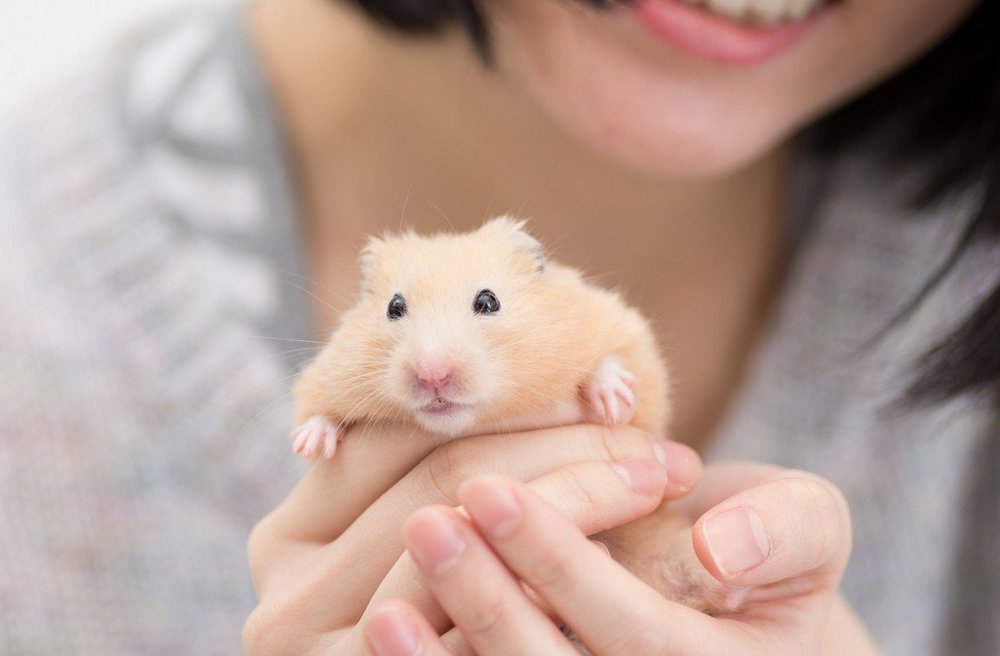
Here are some important tips for buying and keeping a Syrian hamster:
- You can buy it at a pet store or at the market, but the first option is preferable.
- Long-haired breeds cost about twice as much (about 600 rubles versus 300 rubles for short-haired ones).
- Syrian hamsters are easy to train and become attached to their owners. If you get them used to being handled, they'll even fall asleep next to them.
- Like many other rodents, they can hold food in their cheeks.
- Hamsters have an excellent sense of smell. Therefore, be sure to clean their cage thoroughly and avoid exposing yourself to strong, unfamiliar odors.
- Hamsters require a lot of activity. Therefore, it's a good idea not only to equip the cage with ladders and a wheel, but also to regularly (ideally daily) let the hamster out and "walk" in a fenced area. You can use a regular cardboard box and create a maze in it. However, never leave the animal unattended.
- Stress in a hamster can be caused by proximity to cats/dogs, loud sounds and smells, bathing, contact with strangers, and traveling to another place.
Females are reproductively capable at 4 months and males at 3 months. Mating occurs during estrus, leaving the male and female alone. Gestation lasts only 18 days, after which up to 15 litters are born. It is advisable not to disturb the female during mating and after birth, and her diet during this time should be as nutritious and varied as possible: egg yolk, cottage cheese, boiled chicken, and other protein foods.
Touching the babies is strictly prohibited, as the mother will eat them. The mother and babies need complete rest; the cage should preferably be placed away from bright light. The young hamsters can be separated only after 37 days of birth.
Syrian hamsters are known for their easygoing nature, making them a great choice for a home with children. They're also easy to care for, making them easy to care for even with a child. They're also easy to train and rarely aggressive. Although this pet isn't expected to live longer than three years, it's sure to become a wonderful friend and companion.
Read also about Djungarian hamster.