Hamsters are usually acquired at the request of children. Once your pet arrives at its new home, you can build it a cozy home with the help of everyone in the household. It should have a cozy sleeping area, a place for food and supplies. It's also important to remember the necessary accessories for play and hygiene, safe bedding, a litter box, and many other essentials for a hamster.
Content
What materials can be used to make a hamster house?
To ensure your furry pet feels comfortable and safe in their homemade home, it's made from eco-friendly materials, as they're rodents and are used to trying everything with their teeth. For the house, choose cardboard, paper, plywood, wood, or food-grade plastic. Its dimensions depend on the hamster's size. What housing options are available?
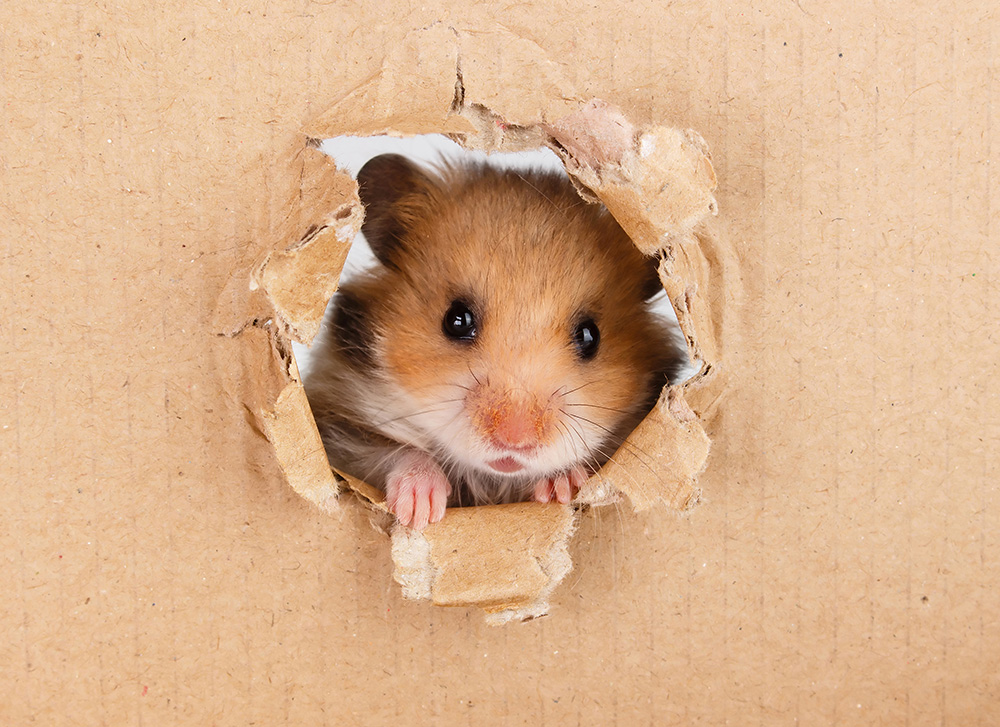
You can make a hamster house yourself from almost any material.
From a plastic container
To make this house, you'll need a plastic food container of the appropriate size (e.g., 640 x 460 x 300 cm), construction mesh, a marker, a ruler, a pencil, a knife, a lighter, and plastic zip ties. Cut a hole in the container's lid using a knife heated with a lighter. The mesh can easily be secured with plastic zip ties, after making holes for them with a hot knife. Your simple hamster house is ready.
From plastic bottles
This house can even replace an entire cage—in this case, you'll need at least three five-liter water bottles. The widest part of the bottles is cut off, and the lids are used to make a threaded ring. The tops of the containers are cut off, and holes are made 3–5 cm from the base, into which the cut-off necks and rings are tightly inserted (forming a tunnel from one container to the other). This connects the three bottles. One serves as the hamster's bedroom, containing a "burrow" (made from Lego or other material); the second contains a dining area; the third, a toilet; and the fourth, a play area, containing a wheel for the hamster. Securely fasten the house parts using tape and superglue.
From coconut shells
Make a hole in the coconut, drain the milk, and mark an entrance for the hamster. Drill a 5 cm diameter hole and scrape out the pulp with a chisel. To make this process easier, place it in the freezer overnight. After removing the contents, wash the coconut and sand the edges of the entrance. Place the finished house in the cage.
From cardboard tubes
This is the simplest hamster house option, suitable for small rodents. Two toilet paper or paper towel roll tubes are used. Flatten one of them and cut out semicircular segments on both ends, then do the same with the second tube. After straightening, insert them into each other in a cross-like pattern. The result is a mini-maze.
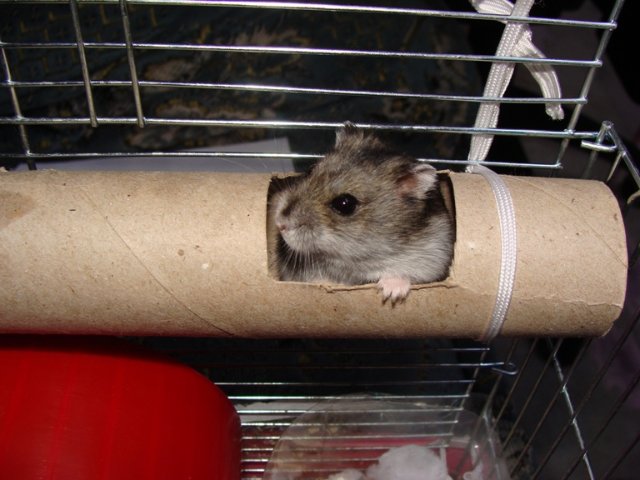
A hamster feels cozy in a house made of cardboard tubes.
From wooden sticks
For this design, you'll need 80-120 wooden popsicle sticks, wood glue, a knife, and a ruler. First, draw a drawing of two side walls, a floor, a ceiling, and two roof pieces. All the necessary details of the house are recreated using popsicle sticks glued parallel to each other. Glue the walls, ceiling, and floor together. You can use the same popsicle sticks to decorate the joints.
The rafters for the hamster house's roof (for rigidity) are made by placing sticks first lengthwise and then crosswise. While the glue is still wet, you can secure the structure with rubber bands. The house can be two-story or higher, if desired. It's easy to attach a ladder to the front using similar sticks.
We've listed the most popular rodent house building options in separate sections below and described them in more detail.
DIY Wooden Hamster House
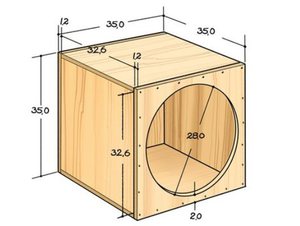
The most interesting and reliable design is a wooden house. You can also build a small fence with a multi-room mansion behind it. Plywood is easier to use for this purpose, but wood is more beautiful and lasts longer. The wood is pre-treated with a preservative, then stained, and then coated with furniture varnish to make cleaning easier. The principle of creating this hamster house is the same as that of a birdhouse.
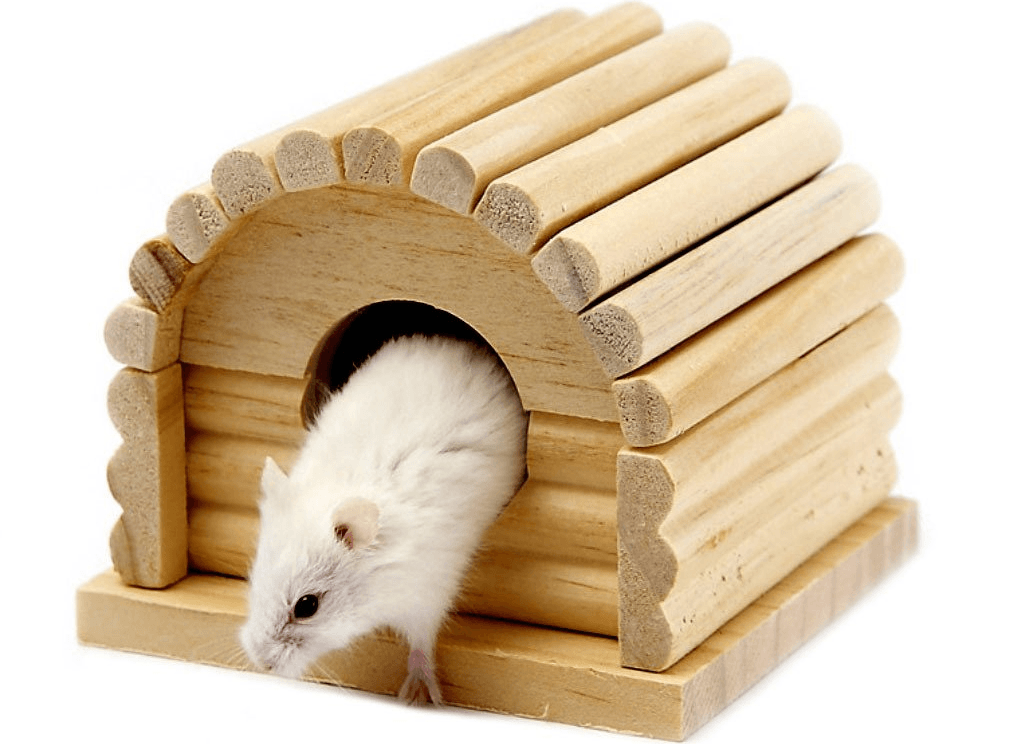
Wood is the best material for making a house
Necessary tools and materials
The best option for making a hamster house is a 4 cm thick hardwood board; plywood also works well. You'll also need a drill, sandpaper, small nails and a hammer or wood glue, a drill bit, and a jigsaw.
Manufacturing instructions
- Mark out the pieces. For small hamsters, the front and back walls are 15 x 10 cm, the side walls are 10 x 10 cm, and the top should be 17 x 12 cm, which will make the roof slightly wider than the perimeter of the house.
- Cut out windows in the front for entry and ventilation of the home.
- To make it easier to fasten the parts together, nail narrow slats to the places where they are connected.
- Sand each element of the house and clean the edges with sandpaper.
- Nail or screw the walls together. For ease of cleaning, leave the roof unattached to the frame.
- It's important that the nail tips don't stick out inside the enclosure. Hammer them in using a hamster-safe method to prevent injury.
Hamster house made of cardboard
Building a cardboard house for your furry friend with your own hands is much easier than a wooden one. But given the baby's sharp teeth and constant chewing habits, it will be much less durable. Taping it with tape will add some rigidity. You can print out a suitable template for a hamster's home on a color printer and, placing it on a sheet of cardboard, cut out the template. Bend it in certain places, glue the two pieces together, and don't forget to cut an entrance for the hamster in the front. But there is another option.
Necessary tools and materials
A cardboard box from paper napkins of sufficient size, several cardboard tubes from toilet paper rolls or paper towels, scissors, PVA glue.
Manufacturing instructions
- Place the box on its side so that the napkin opening is on the front surface.
- Fasten several toilet paper rolls together in a cross shape, as mentioned earlier.
- Insert one of these elements into the napkin hole, and connect the others to it and to each other. The result is a house with a maze-like exit.
- Secure all connections with glue. The hamster house is ready.
Features of buildings for the Dzungarian and Syrian breeds
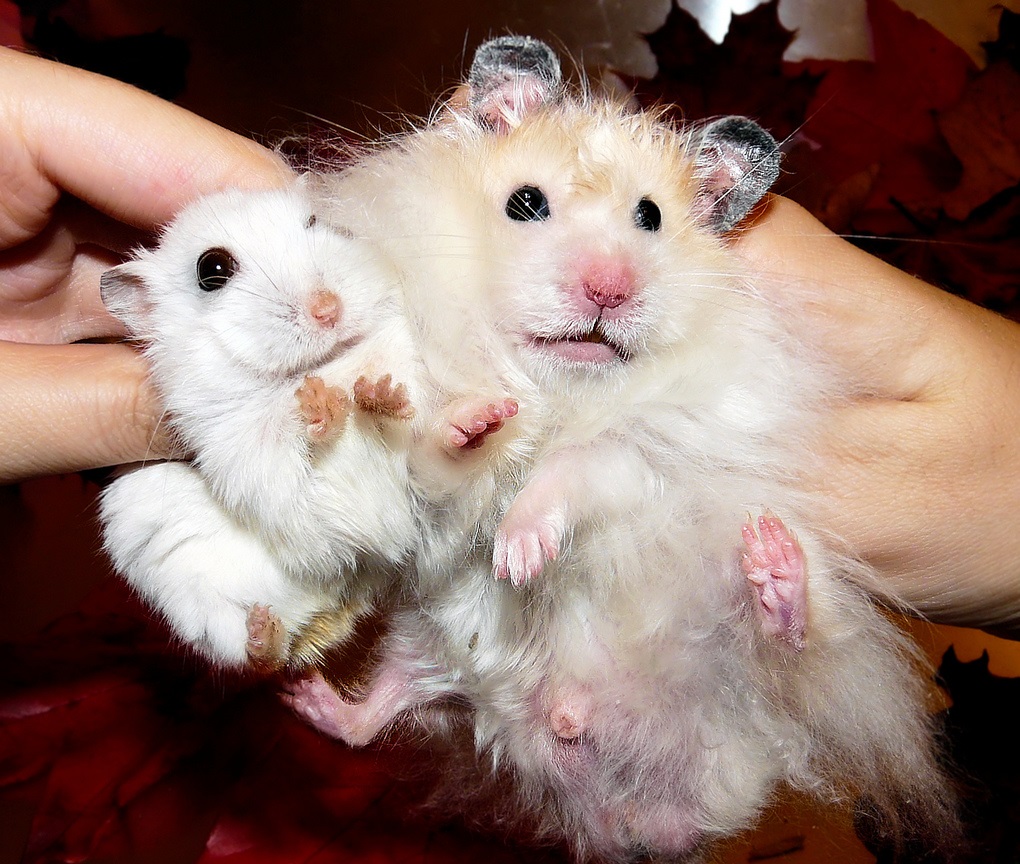
The sizes of houses for Syrian and Djungarian hamsters should be different.
Each hamster house should be designed taking into account the size and habits of the furry pet. It's important that active and nimble Djungarian hamsters have opportunities to play; they should feel comfortable and safe in their home. Djungarian and Syrian hamsters need soft, eco-friendly nesting materials. Cotton wool or napkins are acceptable, but newspaper is not recommended—lead alloy, used to cast printing fonts, is dangerous for these animals.
It's also important to consider that small animals can escape through cracks caused by poorly assembled parts during construction, or by chewing a hole if they find a weak spot. Larger Syrian hamsters can get stuck in a tunnel that's too narrow, which can be very frightening. Therefore, it's important to plan for every detail and regularly check the home.
Home accessories
To ensure that the rodent likes the house and that the baby grows up healthy and active in it, the home needs to be filled with suitable accessories..
Educational toys for hamsters
- An exercise wheel. Its size depends on the rodent's size: for Djungarian hamsters, a 20-centimeter toy is recommended, while for larger specimens, including Syrian hamsters, it can be up to 30 cm. The track should be solid; using a mesh track, which can cause injury, is not acceptable. It's important to know that hamsters like to be awake at night, so the toy should be quiet.
- Tunnels. They must be spacious and well ventilated.
- Hamster hammocks made from tubes of different diameters or swings in the form of four posts, a crossbar and a perch for sitting.
- Wooden bridges or other objects for developing the hamster's teeth. Mineral stones and crayons are also good options. Cardboard boxes, toilet paper rolls, and fruit tree branches are also suitable.
- A walking ball made of safe plastic in various colours with ventilation holes and recesses for paws.
Drinking and eating utensils
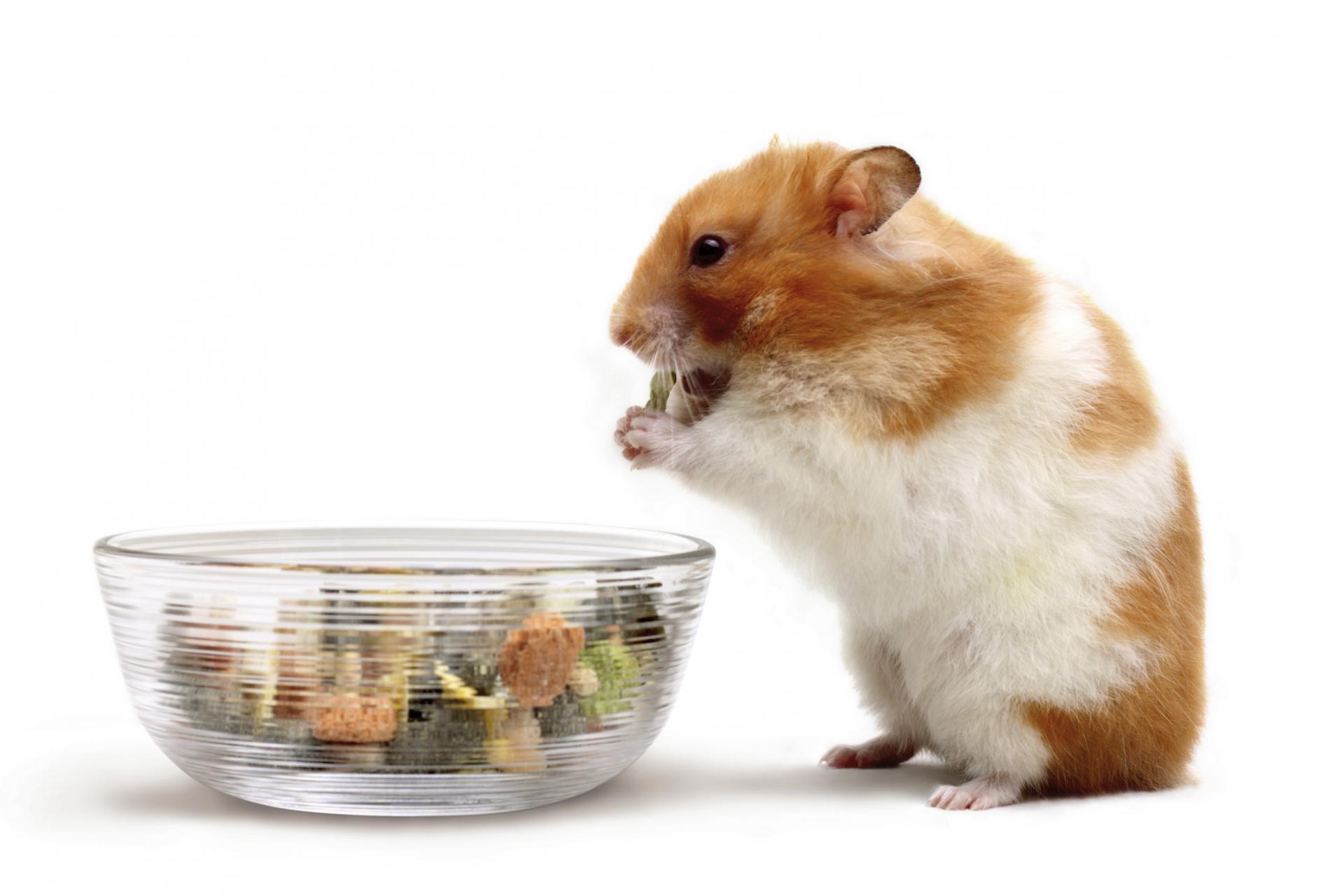
It is very important to choose the right feeder and waterer for your rodent.
There should be a special drinking bowl in the house for drinking. You can make your own or use a bowl, covered to prevent food or bedding from falling into it. Small hamsters like to dig for food, so you can place it in the bedding. Larger hamsters need a stable food bowl that's difficult to tip over.
It's best to provide two containers—one for wet food and one for dry food. Rodents typically like to sit in the feeder, so it should be spacious enough. It's also important to have a separate "storage area" for the hamster's inevitable stash. This could be a container in a secluded corner of the house. Your hamster will "tell you" where its hiding place is; just watch it closely and then place the bowl there.
Hamster bedding
Bedding is very important for keeping the house clean and creating comfort and coziness. This could be pressed sawdust, but not too small so that it doesn’t get stuck in the baby’s nose or tangled in his fur.
If wood pellets are used, they should be odorless and quickly turn to dust. Coniferous sawdust can cause allergies, and fabrics and cotton wool are dangerous because they can tear into fibers, which can entangle the hamster.
The best bedding for a hamster's house is pieces of corn cob with kernels, which can also be buried. Paper towels or unscented white toilet paper are also suitable.
The floor layer should be at least 6 cm deep, as hamsters love to play and burrow in it. It becomes thicker during colder weather. It should be cleaned daily and changed weekly. A few pellets from the previous bedding should be added to the fresh bedding to maintain a familiar scent; otherwise, the animal will become nervous.
Toilet
Hamsters are very clean animals, so they need a separate place in their house for the toilet. You'll need to clean it daily, removing waste and adding clean bedding. A cardboard litter tray works well for this purpose; this material is replaced quite frequently because it absorbs urine well, partially absorbing its odor.
Litter is often filled with special clean sand, which the animal loves to dig in and scatter around. However, sand doesn't hold odors well, so it needs to be changed frequently. Cat litter or mineral granules are not suitable for this purpose, as they can cause poisoning or allergies in your furry friend.
Sand bath
This is an essential element of a hamster's home, as water is not a favorite. Bathing in special chinchilla sand is a successful alternative. To clean the fur of grease and dirt, place a tall container with a ladder inside the house. A hole cut into the side is also acceptable. A lid is placed on top to prevent spillage. The volume of the bath should be twice the size of the furry pet, and its sides should be high enough.
Housewarming: Introducing your pet to a new home
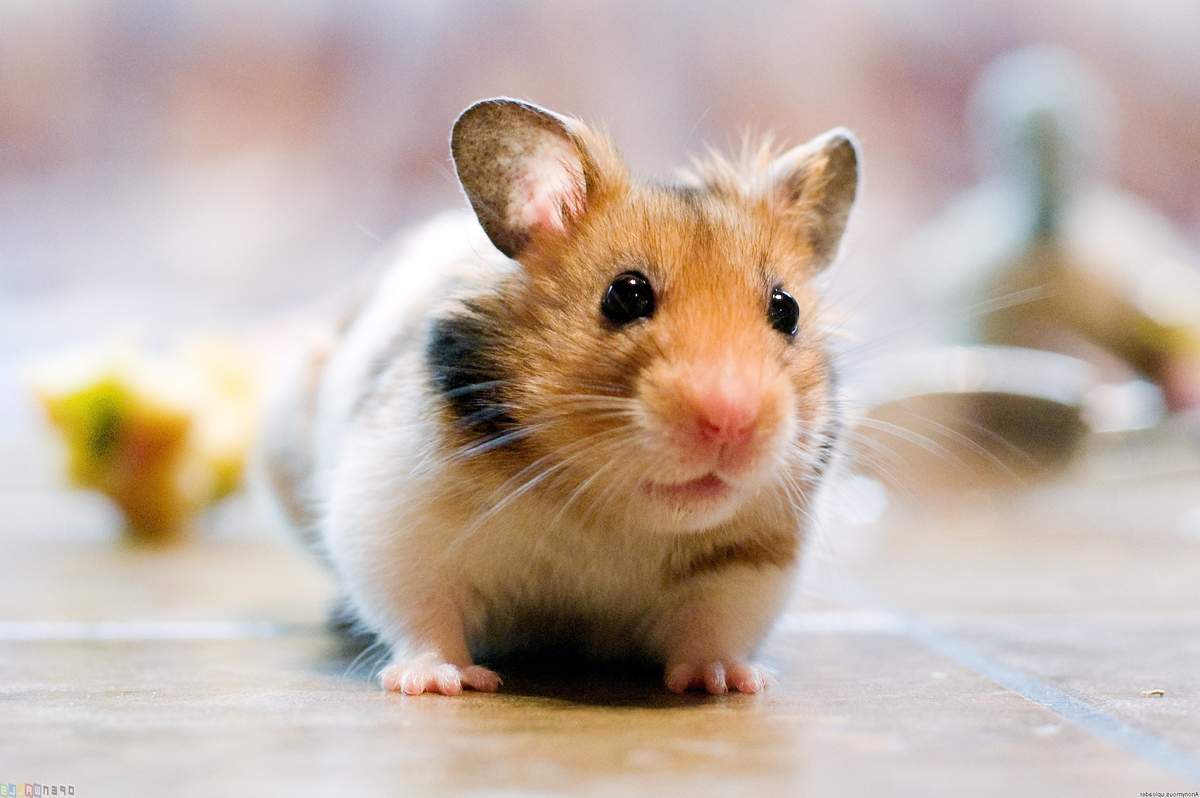
A hamster, like any other pet, needs time to adapt to a new home and owner.
A newly acquired hamster, being in a state of stress, is afraid of everything. It will take him at least a week to gradually get used to the new house. It's best not to disturb the baby while he's settling in. As he settles in, he'll begin actively marking his territory, so don't change his bedding at first.
Hamsters are naturally inquisitive, so sooner or later, if the baby doesn't sense danger, it will show interest in exploring its home and will definitely explore it.
It's important to train young animals to use the toilet right away. They'll designate a comfortable spot for it themselves. By carefully observing the behavior of the new arrival, you can correct any mistakes in their home setup, making some rearrangements or improvements to suit their tastes.
For example, if a toy wheel is poorly secured and makes loud noises when moved, the hamster will become scared and avoid playing. After securing it, lubricating the spindle, or replacing it with a quieter option, your furry friend will happily run and tumble around.
Video: DIY Hamster House
Before getting a hamster, you should familiarize yourself with its habits using informational materials. After all, it's not a living toy, but a creature with its own personality that requires care and attention. It's important to think about a home for your potential friend, including every detail of furnishing it. The best option is to make it and some necessary accessories yourself from natural and safe materials. This will bring the family together and allow everyone to participate in preparing for the arrival of the new member, helping children (who are often the ones who initiate the idea of getting a hamster) feel responsible for the fate of their little friend.