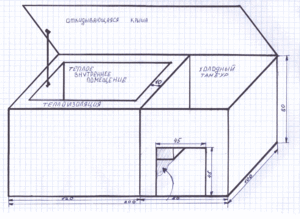
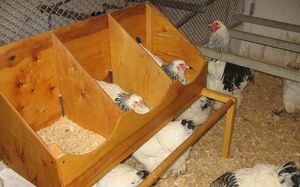
 Raising chickens is generally a straightforward affair and doesn't present any problems or inconveniences. However, with very little time, you can provide your family with not only chicken meat but also a large number of eggs. To ensure a smooth transition, it's important to plan your laying hen's nesting area in advance and arrange it properly. This will protect the eggs from damage.
Content
How to build a nest for laying hens yourself
From the very beginning of their egg-laying period, laying hens need to be trained to lay in the nest you build for them in the coop. But to get the birds used to it as quickly as possible, the following conditions must be met:
 For the nest in the chicken coop, you need to choose the darkest place.
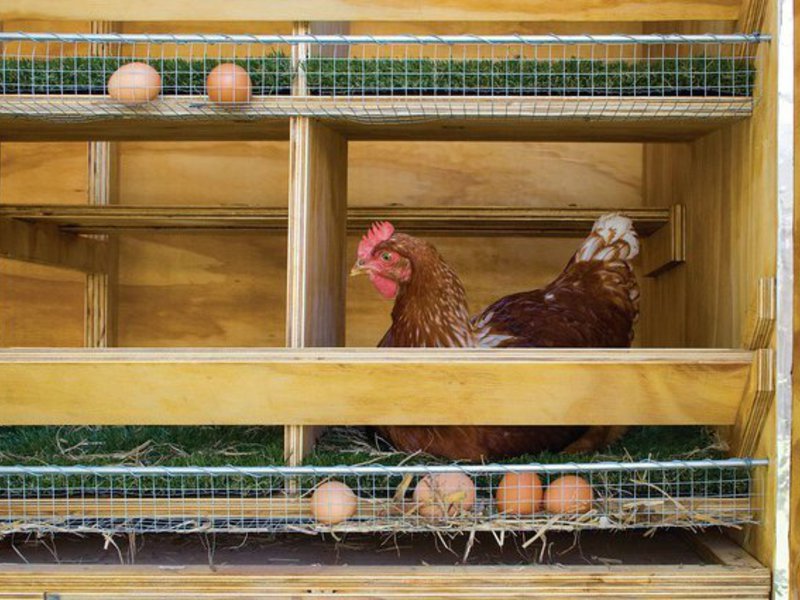
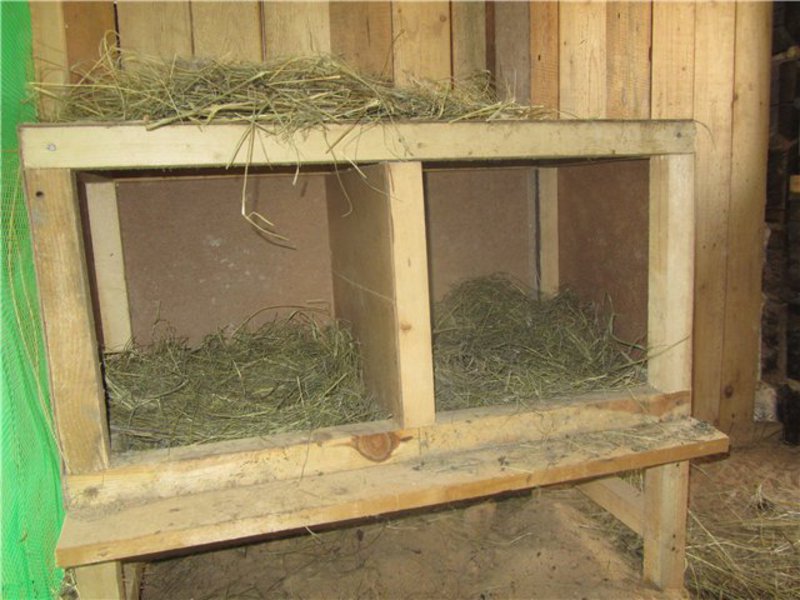
- The nesting area should not only be consistently dry but also warm. This can be achieved by using bedding made of straw or sawdust, which hens have difficulty pushing out of their nest. However, be sure the bedding is a few centimeters lower than the nest itself, otherwise the eggs will roll out.
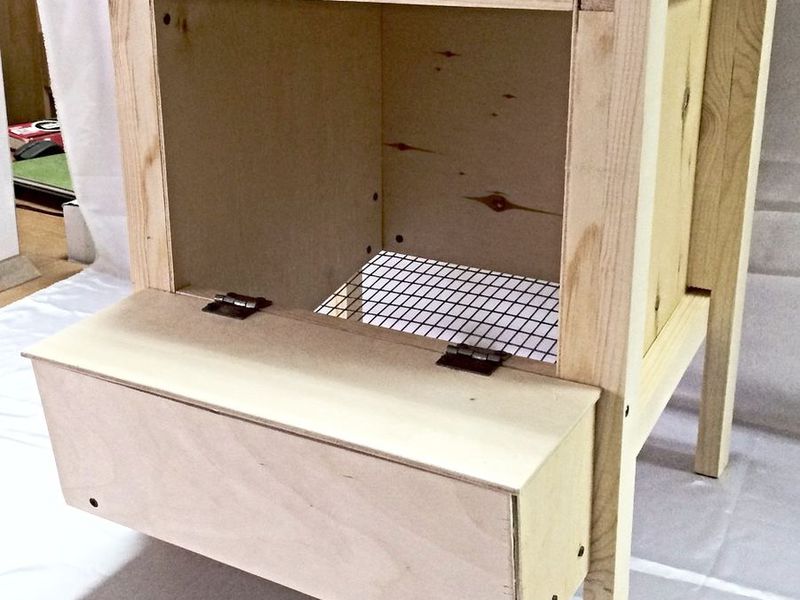
- To keep it dry, ventilation holes must be made in its bottom.
- You shouldn't place chicken coops right next to the entrance to the chicken coop, as it's usually dark and cool there and the birds might get sick.
- You shouldn't attach them to the wall either, because in the cold season the birds will freeze there and their productivity will decrease.
- Carefully inspect the nesting box for laying hens to ensure it's not only comfortable but also free of nails and other sharp objects. Otherwise, an injured bird won't be able to lay eggs.
- It's worth remembering that one nest can be used by up to five hens. Make sure there are enough nests for all the birds.
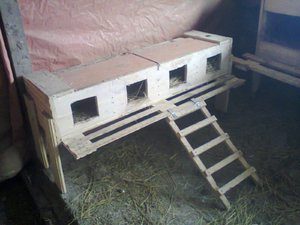 For the nest in the chicken coop, you need to choose the darkest place.
Types of nests for laying hens
The easiest way, of course, is to buy it already ready-made chicken houseYou can use any boxes or baskets you have in your home to create such a cozy nest. However, most often, many laying hens' owners decide to make their own nest for their birds.
Today, the following types of structures for laying hens exist:
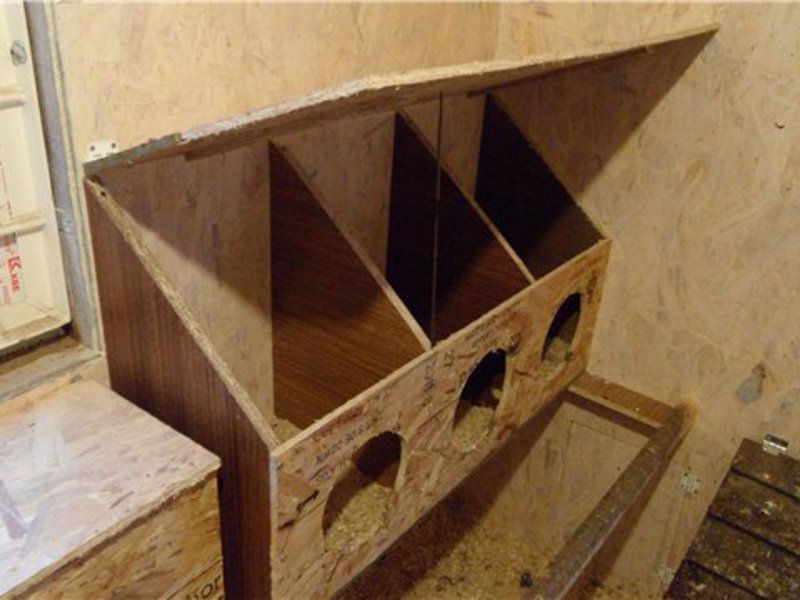
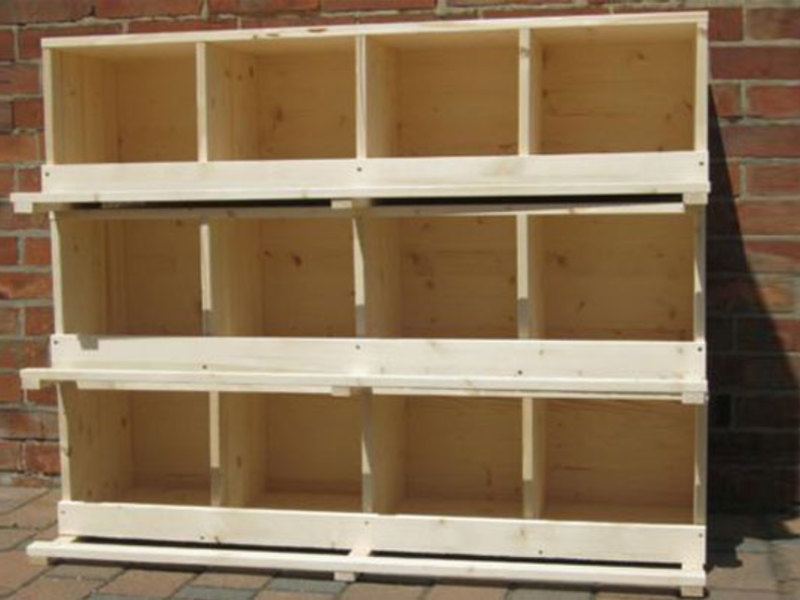
- Box-shaped nests. They're easy to make, and even easier to train a bird to use them: simply lock it in one of the nest boxes for a while.
- Nests with egg collectors. These designs are easy to use, and hens rarely touch the eggs.
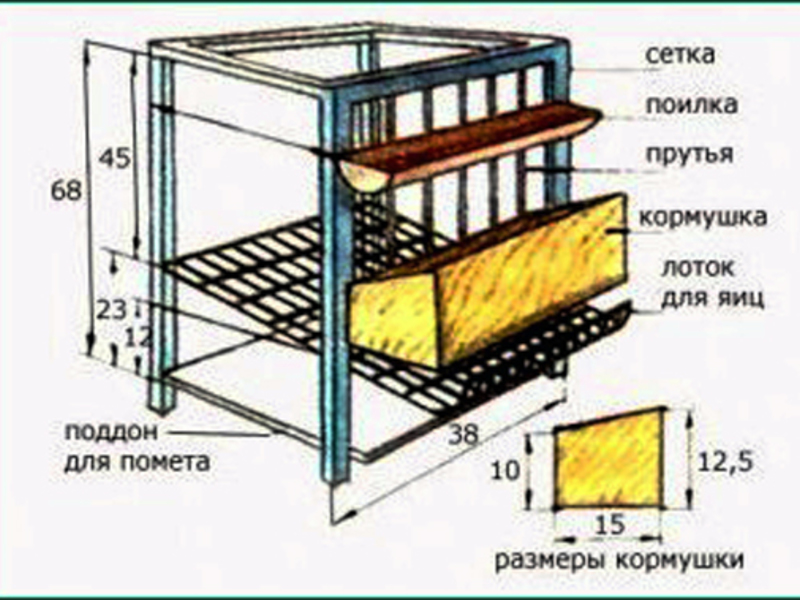
DIY nest sizes for laying hens with an egg collector
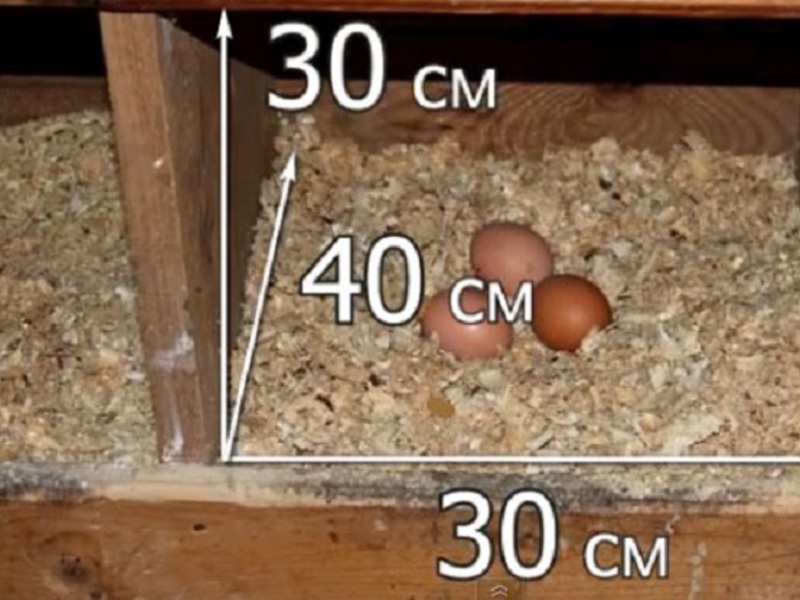
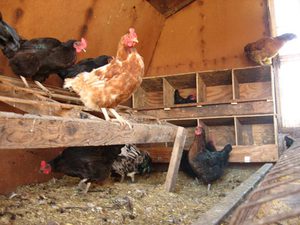 The size of the nest for a laying hen depends on the size of the bird, and this is already determined by the breed of chickensIt's been proven that if a hen feels uncomfortable in her nest, she won't lay eggs there and will look for another place. For example, a meat-and-egg breed will require a nest that's 30 centimeters wide, while a laying hen will require a nest that's 25 centimeters wide. The height and depth of the nest also vary.
There are standard nest sizes, regardless of breed and size. Before you begin making your own nest, it's important to take these dimensions into account.
The depth of the house, as well as its height and width, should be at least 30 centimetersYou can make it a little larger, for example, 35 centimeters. All materials, such as boards, must be well polished. Any protruding parts are cut off with a grinder to prevent the hens from damaging themselves.
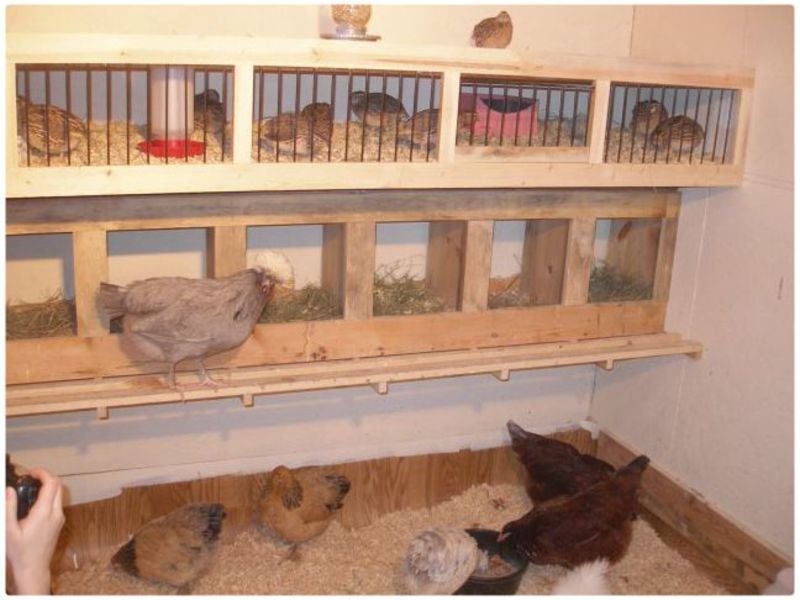
A shelf is essential before the entrance to the coop to help the bird take off. It's a good idea to have a nest in the coop before the bird is introduced. This will allow the bird to quickly get used to it and lay eggs while perched in the nesting structure.
A nest for laying hens should first be made according to a pre-prepared drawing; then there won't be any problems. Of course, it's impossible to build a birdhouse without tools. So what do you need to make one? It's worth planning and preparing them in advance.
To make a nest for laying hens with your own hands you will need the following material and tool:
- The material from which the nest will be made.
- Self-tapping screws or nails.
- Wood hacksaw.
- Sandpaper.
- Hammer.
- Screwdriver.
- A knife or scissors, or more often, both.
- Soft fabric, foam rubber is possible.
- Other items that you will need when making a specific chicken house with your own hands.
Sometimes, to make a nest with an egg collector, you need use rubber as wellBut this material can also be used individually, replacing it with something else.
The simplest nests for laying hens, made by hand
The simplest chicken house can be made using the following materials:
- The boxes are plastic.
- Plywood for shading.
This design also has its drawbacks: the birds are not always comfortable in it, and they are also most often placed on the floor, which leads to the hens getting sick.
Still, it is considered a more convenient option a house made of planksIt's necessary to select the material in advance, process it, and drill several holes in such a box. It's best to first create a drawing and then build the structure accordingly. If the structure is multi-tiered, then several staircases will need to be considered.
Making nests with egg collectors
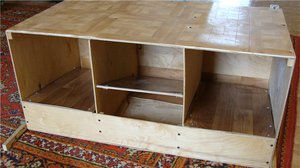 Often, owners of laying hens can't spend days monitoring their hens for when they lay eggs to collect them. That's why "tricky" nests were invented. Their construction is a bit more complicated than the ones described earlier. But with them, it will be It's easier to collect eggs.
There are several ways to make such “tricky” houses:
- Nest with a double bottom.
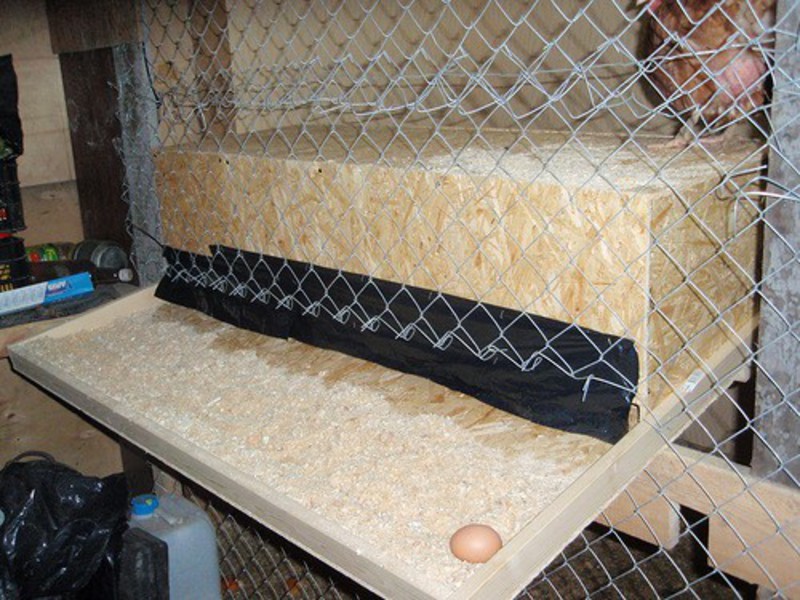
- House with egg container.
To make a chicken house with a false bottom, you will need plywood or you can use thin boards, sandpaper, fasteners, a hacksaw, a hammer and a screwdriver, material for upholstery of a pallet, scissors and a knife.
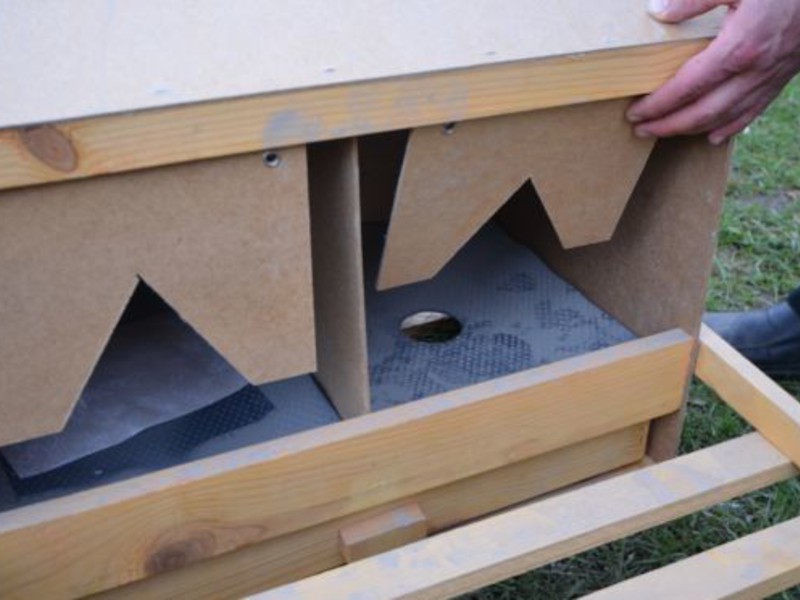
The resulting structure will look very much like a doghouse. It's built according to the drawing, but it's important to remember not to use nails or screws that are too long, as they will break later. can injure the birdThe bottom of the structure requires special attention; it should be built with a slight slope, approximately five degrees. When building a laying hen house, remember to leave a gap between the wall and the bottom for the eggs to roll out into, preventing the hen from pecking at them.
The saucer is lined with soft fabric, as it will be approximately 10 centimeters longer than the nest itself. This is done to ensure easy access to the eggs at any time. It's also essential to secure a bar to prevent the egg from falling to the ground, as this would easily break.
The second option for an egg house is to build your own, which is easy to come up with. For its construction, we'll need the following materials: plywood and egg containers, a hammer and saw, soft material, and nails.
The work is underway according to a specific planFirst, you need to draw up a blueprint to help you stay on track during construction. First, create a box with the side walls at an angle.
The front part should also be closed, leaving only openings for the hens. A small hole should be made in the back wall for the egg to roll out through. Attach a container to collect the eggs. Since the container will be lined with soft fabric, it will prevent damage to the eggs.
We are fixing nests in the chicken coop
To install a house for laying hens in a chicken coop There are two options:
- On pre-made stands.
- On the walls, but without contact between the nest itself and the wall of the chicken coop.
In the first case, a board is needed to place all the nests on it. Then we install another similar board, and then another one to place the nests for the laying hens on them.
But hanging nests are still more accessible to humans. The owner of such a convenient chicken coop won't even have to enter the room; he can simply open the rear door adjacent to the nest and take the eggs from there. But this design is perfect. suitable for wooden sheds, and it needs to be insulated.
If the nest is built properly, all you need to do is keep the birds warm and moist, and feed them properly. And then the laying hens will thank their owner.
How to acclimate birds to a new nest
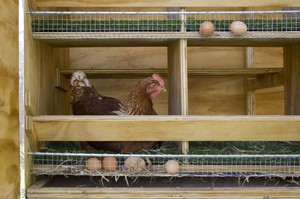 There are several rules that allow you to quickly and comfortably acclimate laying hens to a new nesting box, although this can sometimes be difficult. Sometimes you have to confine the hens and keep them in the nesting box for a few days to get them used to it. But knowing the rules will help you adopt a gentler regimen and achieve more successful results.
Basic rules how to accustom laying hens to a new nest that suddenly appeared in their hen house:
- The entrance to such a nest should not cause any discomfort to the bird.
- There should be no parasites in the nest, and this requires daily care and frequent changes of the bedding, which can become a breeding ground for them.
- The climate in the chicken coop should be comfortable for the birds to live in.
- You shouldn't add shells to your chickens' food, so they don't peck their own eggs.
- Buy special feed for laying hens to increase their productivity.
If nothing can make your hens lay eggs in the structure that you made with your own hands, then this means that you missed something and you need to look at everything in detail again and, accordingly, correct everything, and maybe even make a new nest for birds.