 Success in raising domestic chickens and roosters on a farm or backyard depends primarily on choosing the right breed, proper care and maintenance, and your passion for these birds. You can learn about which breed to choose and how to care for them in this article.
Content
Classification of chicken breeds, breeding, photos
Chicken breeds are categorized as ornamental, fighting, meat and egg, and meat and egg breeds. Before making a choice, it's important to familiarize yourself with the key characteristics of each.
Egg breeds: names and descriptions
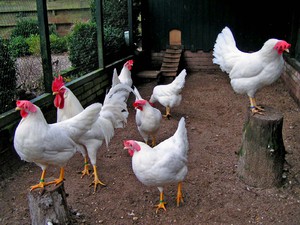
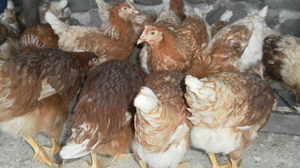 Most chickens have a well-developed comb. They are also distinguished by dense plumage, light bones, and a small body weight. These birds are also quite active.
Features of egg-laying chicken breeds:
- Poorly developed maternal instinct (bad brood hens);
- high egg production rates (170–240 eggs/year);
- eggs weighing 55–65 g, with a white shell;
- early laying;
- slow growth and weight gain.
However, despite some disadvantages, keeping egg-laying chickens remains a very profitable business not only for small households, but also for large poultry farms.
 Hybrid Dekalb whiteThe average laying hen produces approximately 360 eggs in 20 months. Feed consumption is 106–110 grams per head. Body weight is 1,700 grams.
- Hybrid LomanBody weight at 70 weeks is 1650–1700 g. Feed consumption is 102 g/day. They lay eggs up to 80 weeks. Egg weight is 64 g.
- Cross UkraineThe productivity is about 285-290 pcs/year.
- Hybrid High Line whiteLive weight at 17–18 months is 1.72 kg. Feed consumption is 100 g/day per hen. Egg laying period is up to 80 weeks, egg weight is 60 g.
Hybrids and breeds of chickens that lay brown-shelled eggs
- Hybrid Bovans Golden LineLive weight at 76 weeks is approximately two kg. Egg production ranges from 18 to 75 weeks, with a production rate of 332 eggs per 72 weeks. Feed consumption is 114 g/day.
- Hybrid Dominant 102The egg-laying period is up to 78 weeks. Egg weight is 63.5 grams. Feed consumption is 125 grams per day. Body weight at one and a half years is 2.5 kg.
- Lohmann-Brown hybridBy the age of one and a half years, they reach a body weight of 2700 grams. Feed consumption is 102 grams per day. The egg-laying period lasts up to 80 weeks.
- Cross Hisex brownEgg production: 320 eggs. Egg weight: 64 g.
- Hybrid Tetra SLFeed consumption is 115–125 g/day. Productivity is 305 eggs, egg weight is 65 g.
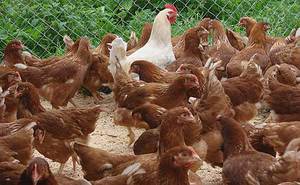 Hybrid Dekalb whiteThe average laying hen produces approximately 360 eggs in 20 months. Feed consumption is 106–110 grams per head. Body weight is 1,700 grams.
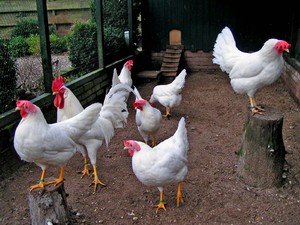 Hybrid Dominant 102The egg-laying period is up to 78 weeks. Egg weight is 63.5 grams. Feed consumption is 125 grams per day. Body weight at one and a half years is 2.5 kg.
Recent studies of egg-laying crossbreeds have shown that among white-feathered chickens, the best-performing breeds are Loman SL, Bovans, and Dekalb. Their productivity per young hen is 325–335 eggs in 13 months, and per average hen, 336–340 eggs.
Brown-plumaged crosses Dekalb, Bovans, and Hisex produce 327–334 and 337–340 eggs, respectively, during the same period.
Names and descriptions of meat and egg type chicken breeds
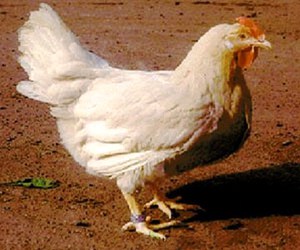 These layers are the result of crossing egg-laying and meat-laying hens. The growth rate of these hens is similar to that of egg-laying hens. Laying begins as early as five months, and the hatched young grow and develop very quickly. The hens produce 160–220 eggs, each weighing between 55 and 70 grams, with shells that are light brown, brown, or fawn.
Features of layers of these breeds:
- These are excellent brood hens;
- the taste of the meat compares favorably with that of egg-producing poultry;
- high egg production (even in winter);
- tolerate cold climates well.
Popular meat and egg breeds
| Breed | Egg production/year | Egg weight | Average body weight of laying hens/roosters |
| Adler silver | 160–180 pcs. | 60 gr. | 2.7 kg/3.6 kg. |
| Australorp | 170 pcs. | 57–60 gr. | 56–62 gr. 2.7 kg/3.5 kg. |
| Goloshiyka | 140–160 pcs. | 56–62 gr. | 2.0–2.6 kg/2.6–3.0 kg. |
| Moscow Black | from 180 pcs. | 58 gr. | 2.7 kg/3.6 kg. |
| Kuchinskaya's Anniversary | 180 pcs. | 60 gr. | 2.8 kg/3.7 kg. |
| New Hampshire | 200 pcs. | 58 gr. | 2.8 kg/3.7 kg. |
| Plymouth Rock tabby | 170 pcs. | 58–60 gr. | 2.7–3.0 kg/3.8 kg. |
| Yurlovskaya's loud voice | 120 pcs. | 60–80 gr. | 2.6 –3.0 kg/3.5 –4.0 kg. |
| Rhode Island | 170 pcs. | 58 gr. | 2.8 kg/3.8 kg. |
| Poltava clay | 290 pcs. | 60 gr. | 2.7 kg/3.6–3.7 kg. |
| Sussex | 170 pcs. | 58–60 gr. | 2.8 kg/3.7 kg. |
In Ukrainian farms, it is best to keep layers of meat and egg and egg types of the following breeds:
- Lohmann;
- Hisex;
- Belarus-9;
- Borki-color;
- Tetra SL;
- Borki-117;
- Borki 2M.
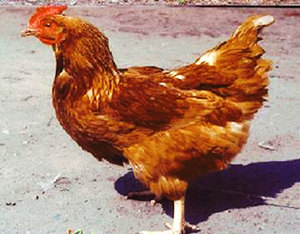 Lohmann;
With proper care and feeding, hybrid birds produce between 240 and 315 birds per year. These hybrids are based on the Plymouth Rock and Rhode Island breeds.
Meat breeds: description
Since these birds are primarily meat-producing, high egg production shouldn't be expected. These chickens have strong pectoral muscles and a wide breast. To ensure their meat is more nutritious and tasty, these meat-producing roosters should be kept in conditions as close to natural as possible. These meat-producing birds are characterized by a sluggish, phlegmatic demeanor, and a heavy weight. They have short legs and loose feathers.
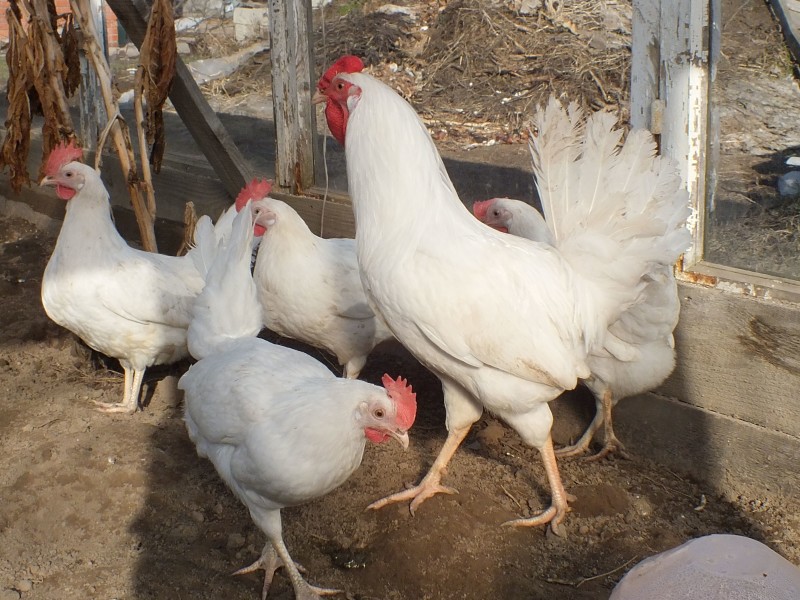
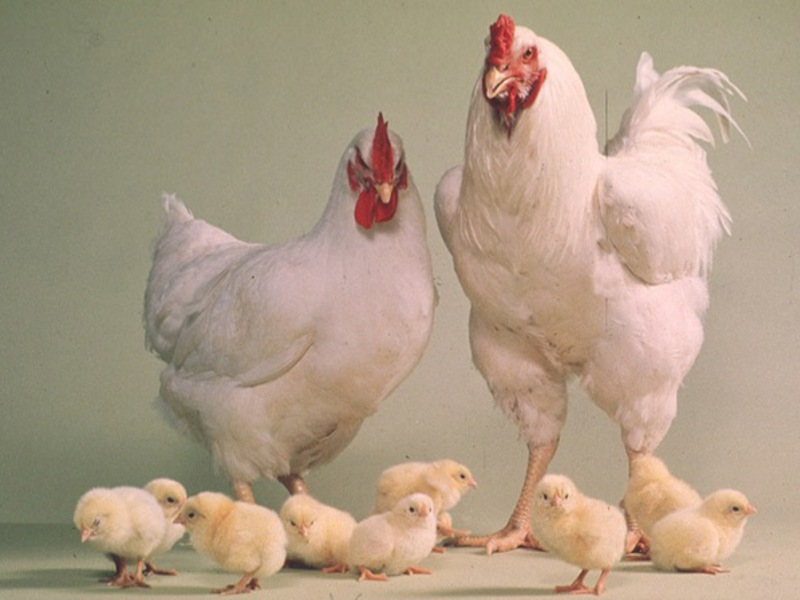
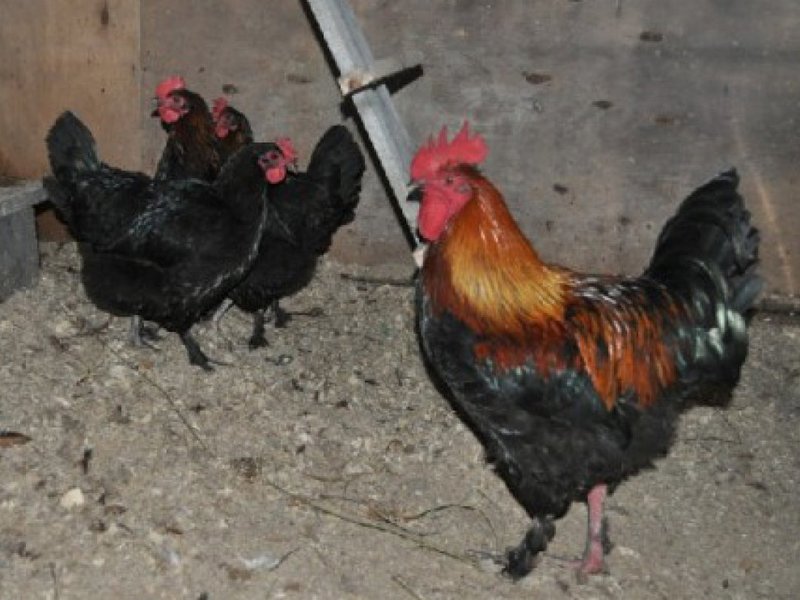
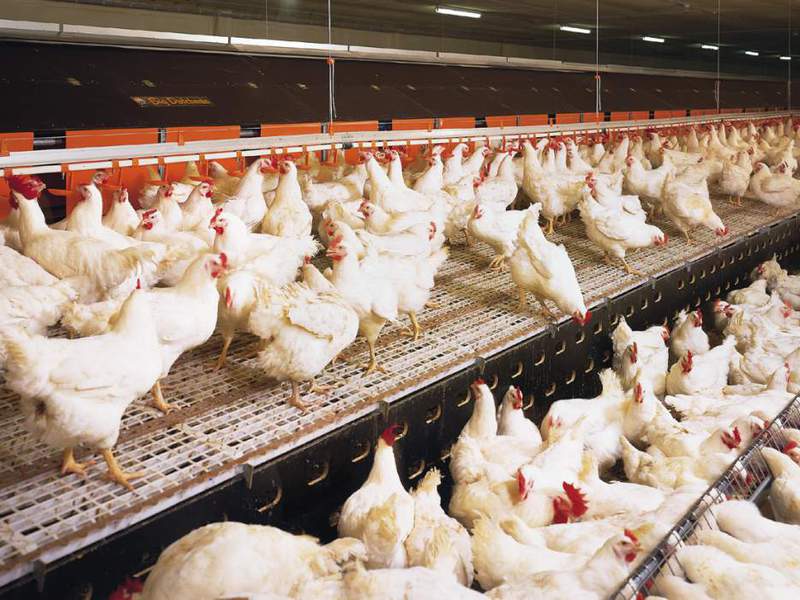
They begin laying eggs quite late: at six months. Production is low, ranging from 90 to 130 eggs, each weighing 58-70 grams.
Peculiarities:
- low productivity;
- well-developed maternal instinct: meat-type chickens make excellent brood hens.
The most common meat breeds in Ukraine
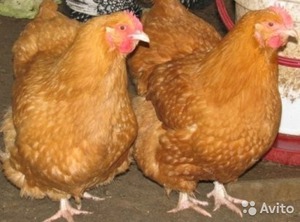 Some of the most popular meat crosses in Ukraine are Ross, Konkurent 2, Arbor Acrez, Cobb-500.
The Cobb-500 deserves special attention. The live weight of these hybrids at 1.5 months is approximately 2450–2480 g. Feed consumption is 1590–1730 g/kg of gain.
Poultry farms also breed and raise chicken breeds such as Hubbard, Lohmann, and Dominant. Among purebred breeds, the Russian White and Leghorn are noteworthy. Minorcas, Italian Partridges, and Hamburgs are also common in private farms.
The best breeds of laying hens in Russia
- Loman BrownWhen choosing a domestic chicken breed based on egg production, the German Lohmann Braun laying hens undoubtedly take first place, having become quite popular among poultry owners. Their productivity is 320 eggs per year. Furthermore, these hens adapt well to any living conditions: their productivity is unaffected by whether they are kept on a large poultry farm or a small private farm. Another important factor is their relatively low price compared to other common breeds. One important feature also contributes to this breed's popularity: the sex of the chick is determined immediately after birth. The hens' down is fawn, while the roosters' down is white. The young have a high survival rate (94-98%), which plays a significant role in breeding the breed. Adult roosters weigh up to 3,000 grams, while hens weigh 1,800-2,000 grams. These figures are more typical of meat-and-egg breeds than of domestic laying hens. The eggs are fairly large (63–64 grams) and brown. Lohmann Browns are friendly and docile, and are completely unshy. They do well in enclosed coops, but are best kept in an open-air run. They begin laying eggs at five months, a period that continues for 80 weeks.
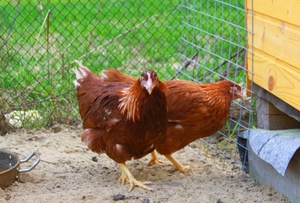
- Hisex BrownIn Russia, this chicken breed is deservedly the second most popular among poultry farmers. The average adult rooster weighs 2,500 grams, while layers weigh 2,000 grams. Productivity is almost the same as that of the Loman Brown—280–315 eggs per year. The eggs are quite large (up to 70 grams). The chick survival rate is approximately 97%, making raising Highsex chickens a very profitable endeavor. The egg-laying period for Highsex Brown chickens lasts approximately 80 weeks, after which, like the Loman breed, it declines sharply. Owners will undoubtedly appreciate the fact that as the temperature in the coop rises, the hens' feed requirements decrease, while productivity remains the same.
- TetraThis breed is the third most popular chicken breed in Russia. This is due to their high productivity and ability to lay eggs year-round. However, since the egg production of these hens is directly dependent on a balanced diet and feeding schedule, raising these birds on small farms is difficult. Under appropriate conditions, a hen's average laying rate is 310 eggs per year. To maintain high productivity, a hen's diet, in addition to its main feed, requires supplementary feed (120 grams per day per hen).
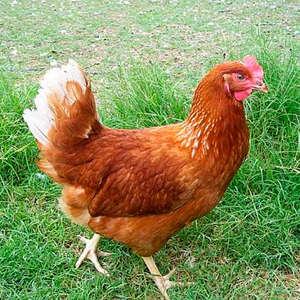 Hisex BrownIn Russia, this chicken breed is deservedly the second most popular among poultry farmers. The average adult rooster weighs 2,500 grams, while layers weigh 2,000 grams. Productivity is almost the same as that of the Loman Brown—280–315 eggs per year. The eggs are quite large (up to 70 grams). The chick survival rate is approximately 97%, making raising Highsex chickens a very profitable endeavor. The egg-laying period for Highsex Brown chickens lasts approximately 80 weeks, after which, like the Loman breed, it declines sharply. Owners will undoubtedly appreciate the fact that as the temperature in the coop rises, the hens' feed requirements decrease, while productivity remains the same.
Poultry farming has become a very popular pastime these days. Some raise chickens for eggs and meat, while others do so purely for decorative purposes. In both cases, the hens and roosters require appropriate living conditions to ensure they will delight you with their high productivity and well-groomed appearance.