 In rural areas, many people breed laying hens for egg production. However, to make the business profitable, it's essential to learn more than just modern developments and technologies. Knowing the right chicken breeds is crucial to a farmer's success. Laying hens can produce up to 270 eggs per year, while modern hybrid hens (crosses) set records, producing up to 320 eggs per year.
Content
Egg-laying chicken breeds – main characteristics
There are quite a lot of types of laying hens that are distinguished by good egg production, but all of them have similar characteristics:
- One of the main characteristics of laying hens is their light weight. On average, birds weigh no more than 2.5 kg, making them light-boned.
- Egg-laying hens develop fairly quickly and are ready to lay eggs by day 125. They reach full physical maturity by day 140.
- They have impressive wings and tails, well-developed plumage, and a leaf-shaped comb. A comb can reveal a lot about a chicken. A faint pink color indicates poor living conditions or illness. A hen with a well-developed, brightly colored comb at three months of age will lay eggs actively. This is worth paying attention to when choosing hens.
- Egg-laying hens are very active and rarely brood. This is especially true for crossbreds. Therefore, a farmer cannot do without an incubator.
- Birds require a balanced diet, which must contain a mineral calcium supplement.
A properly chosen breed will "pay" for its food well. Due to its small body size and fast metabolism laying hens are very active, so they eat quite a lot. It's crucial to feed them properly and provide them with the calcium they need to build their shells.
The well-known Leghorn – photo
This breed, which existed as early as the 19th century, remains popular among farmers. Many modern egg-laying chicken breeds are based on it. Leghorn hens are prolific layers, capable of producing up to 300 eggs per year.
The breed's characteristics include:
 triangle-shaped body;
- medium sized head;
- a pendulous comb in females and an erect comb in males;
- curved elongated neck;
- slightly convex rounded chest;
- black, red-and-white or striped color.
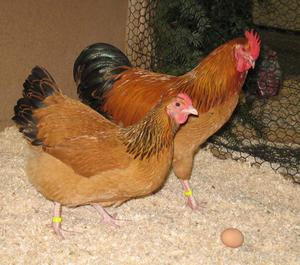 triangle-shaped body;
The live weight of a laying hen can reach 1.2 to 1.8 kg. Leghorns are renowned for their early maturity, ease of care, and hardiness.
The breed is very active and requires a yard for exercise. When kept in cages, the hens become emaciated within a year and can be culled.
A farmer keeping Leghorns needs to know that they are very are sensitive to various noises, which cause them stress. As a result, the birds develop "noise hysteria," running erratically, throwing themselves at the cage bars, and attempting to fly. After some time, their appetite suffers, their feathers thin, and their body weight decreases.
Today, there are several crosses of this egg breed on the market, which are distinguished by good egg production, early maturity, low feed consumption, good safety and vitalityThese include:
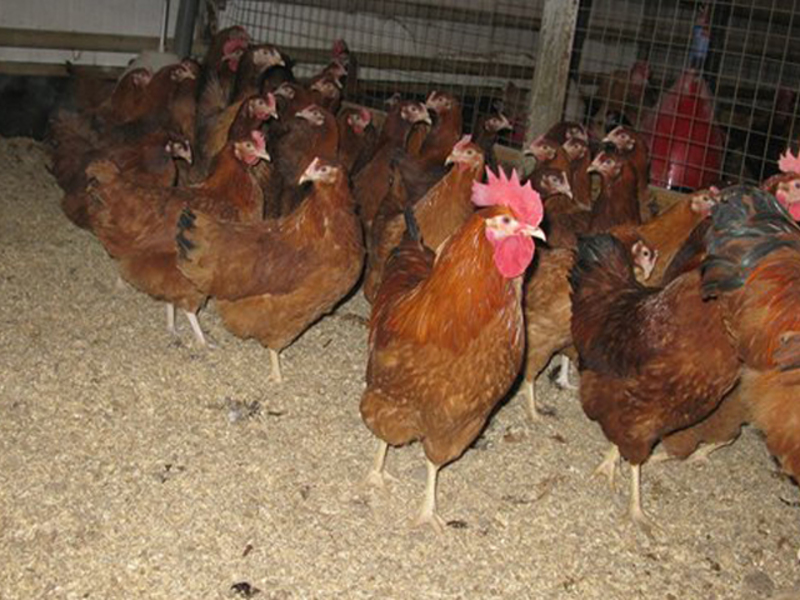
- Izobraun. Developed by French breeders, this cross is suitable for both floor and cage housing. This egg-laying breed acclimates well and can reach 50% egg production by the twenty-first week of life. Hens produce up to 320 brown eggs per year, averaging 63 grams. The young are very resilient. The chick mortality rate does not exceed 2%. Every ten eggs require approximately 1.5 kg of feed.
- Hein-Line. Hens of this laying breed reach 91% of their maximum weight by the twenty-ninth week and begin laying eggs. On average, one Hein-Line hen can produce 273 eggs per year. At the beginning of the laying period, the live weight of the bird is 1.19 kg, and at the end, 1.65 kg. This means that maintaining this laying breed does not require a large amount of feed. Ten eggs require 1.62 kg of feed. A hen eats only 100 grams per day.
- Tetra SL. A highly productive breed, a hen can lay 301 to 309 dark-brown-shelled eggs in 52 weeks. Hens reach peak productivity at 19 weeks. Tetra SL hens require more feed. They consume up to 125 grams of feed per day.
- Lohmann-Brown. The average lifespan of hens of this egg breed is about one and a half years. During this time, each bird produces up to 310 brown eggs. Each egg weighs 62-64 grams. Hens reach almost 90% of their egg production by 180 days. The young can be distinguished by plumage coloration as early as one to two days old. Lohmann-Brown hens have fawn plumage, while cockerels have white plumage.
Minorca – photo
This egg-laying breed is quite common on farms and smallholdings. It is quite demanding in terms of maintenance, so it is not bred on poultry farms. Minorcas are larger than Leghorns, but still quite small. Roosters weigh between 3.5 and 4 kg, while hens weigh up to 3 kg.
Birds are distinguished by:
- medium-sized body and head;
- high legs;
- black beak;
- white earrings;
- large, bright red, leaf-shaped comb;
- black plumage.
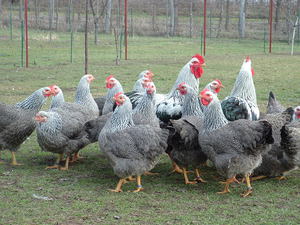 medium-sized body and head;
The birds are very beautiful, but that's not the only thing that attracts farmers. Minorcas can also boast economic and productive dataThese include:
- fast-growing young animals;
- up to two hundred eggs per year from each laying hen;
- snow-white eggs weighing 80 grams;
- tender meat;
- productivity that does not depend on the time of year.
Best results can be achieved by raising young birds separately from adults. Hens reach sexual maturity at four months of age. They do not incubate eggs.
This egg-laying breed has one drawback: poor tolerance to low temperatures. In harsh winters, the birds' toes and combs can freeze.
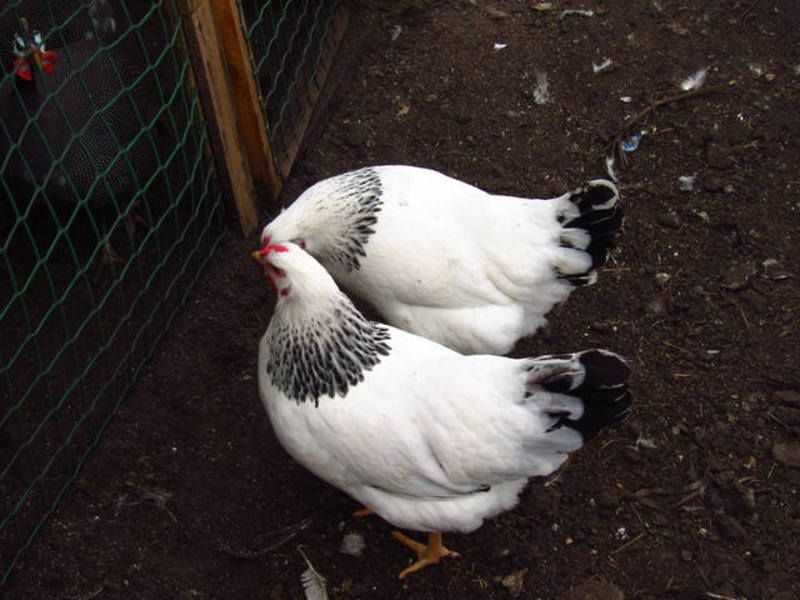
Russian White Chickens - Photos
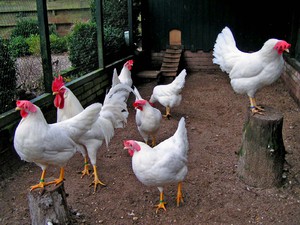
Developed in the USSR, this egg-laying chicken breed is the main source of eggs in Russia. It was created by crossing Leghorn roosters and hens, selecting large birds with large egg masses and excellent egg production.
Russian White has the following characteristics:
- slim, strong build;
- long and wide body;
- external resemblance to meat and egg-producing chickens;
- wide and convex chest;
- well-developed muscles and strong bones;
- bright orange legs and beak;
- snow-white feathers.
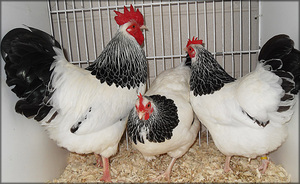 slim, strong build;
Another difference of the Russian White is that other layers produce yellow chicks, but only this breed produces snow-white chicks.
Males of the breed reach a weight of 3 kg, and hens - from 1.8 to 2 kg. Females are capable of laying eggs from the age of five months, giving annually from 200 to 250 eggs.
Russian Whites are widely used in commercial egg production because they are hardy, easy to care for, and disease-resistant. They are also popular among private farmers.
Hamburg chickens - photo
This is a very old breed, distinguished by its incredibly elegant appearance. Almost nothing is known about its origins. Hamburg chickens have:
- long body;
- long and lush plumage;
- small beak of a bluish tint;
- pinkish comb with a pronounced tooth in the center;
- light and thin, not very strong skeleton;
- bright red small earrings;
- red eyes;
- well developed strong and long feathers;
- large and voluminous tail.
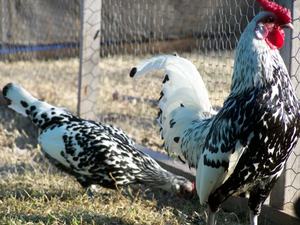 long body;
The birds' plumage is very beautiful. Most common are hens with silver-spotted plumage. Roosters have black plumage with a green sheen and a silvery-white mane. Day-old chicks have a particularly beautiful color.
The birds are incredibly active, making them quite difficult to catch. This is why the individual weighs only about one and a half kilogramsA hen lays 200 to 220 eggs per year, each weighing 50 grams. The young fledge quickly and have good fattening qualities. When free-ranging, the chickens are able to find their own food.
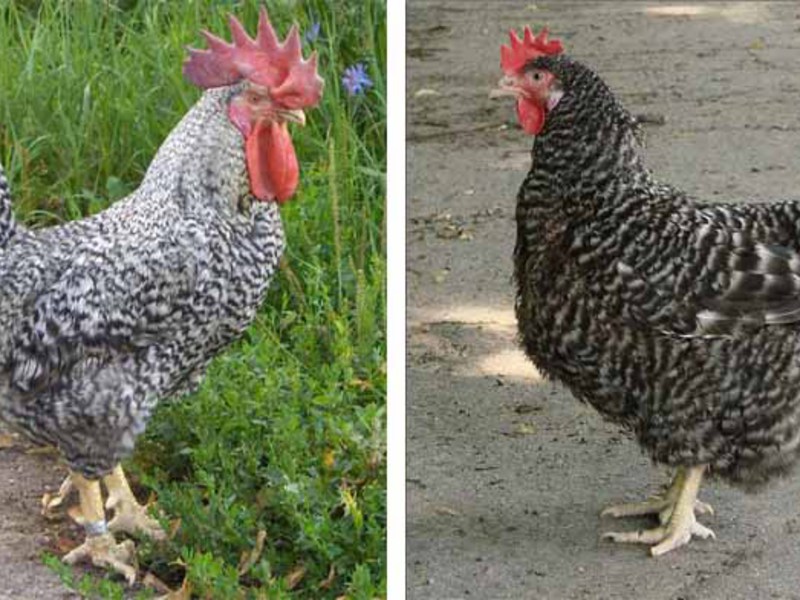
Italian Partridge Chickens - Photos
This ancient egg-laying breed can also be called the Brown Leghorn. It was widespread in Europe as early as the 19th century.
Chickens have a beautiful appearance, which differs:
- elongated triangular body type;
- medium sized head;
- with a leaf-shaped comb falling on its side;
- yellow legs and beak;
- not very wide, convex chest;
- straight back;
- not very high legs;
- wings adjacent to the body.
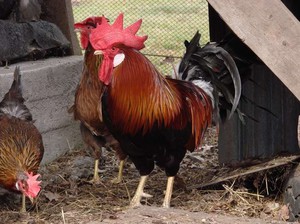 elongated triangular body type;
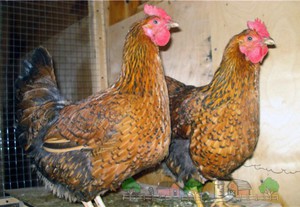
The variegated plumage of hens is particularly beautiful. The main part of their body is brown, and their mane is golden. But the roosters are especially beautiful, with a black tail with a green tint and a reddish-brown back and head. The down of day-old chicks is light brown or gray-brown. Their backs should always have two or three stripesYoung females have a black stripe running from the tips of their eyes. Males lack this line. This difference allows Italian chickens to be sexed from birth.
The breed reaches sexual maturity at five months of age. Males weigh approximately 2.8 kg on average, while females weigh between 1.5 and 2 kg. A hen can produce 180 to 240 eggs per year, each weighing 60 grams.
Italian partridge chickens are not very common in Russia, but some farmers still keep them. A small number of them are also registered at poultry farms across the country.
Andalusian chickens - photo
The egg-laying breed is different extraordinary beauty and high egg production. The birds have:
- slender build;
- large earrings;
- bright scarlet comb;
- black plumage with a metallic green tint.
But these hens are prized for more than just their beautiful appearance. An Andalusian hen can lay 190 to 220 eggs per year, each weighing 55-63 grams. However, the hens don't sit on the nests, so hatching the chicks requires an incubator.
The live weight of an adult rooster ist 3.5-4.5 kg, and laying hens - from 3 to 3.5 kgThe main disadvantage of the breed is that not all breed traits can be passed on hereditarily.
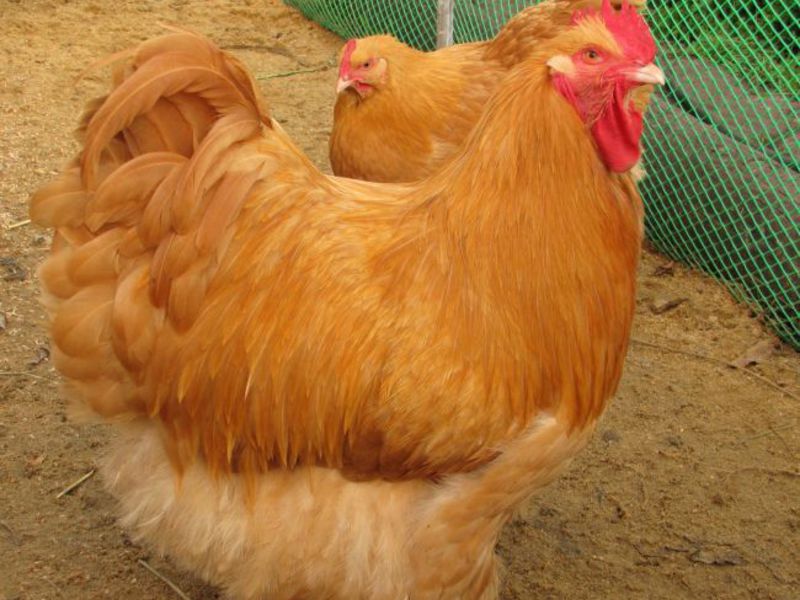
Mini chickens P-11 — photo
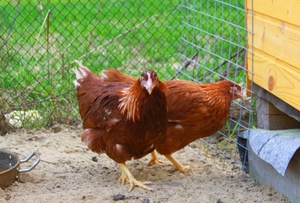
These are dwarf egg-laying hens, which can also be called Rhode Island. They are a real find for a farmer, because are very small in size, making them economical both in maintenance and feeding. Furthermore, the breed is distinguished by:
- short legs;
- red plumage;
- good immune system.
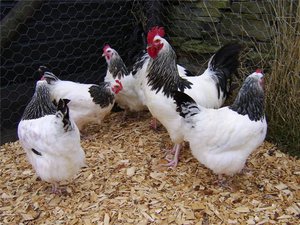 Miniature hens begin laying eggs as early as six months of age. To ensure good egg production, they need a balanced diet and nesting areas. A single hen will then lay 200 to 240 eggs per year, each weighing 50 grams. Adult hens weigh no more than 1.1 kg. They lay eggs almost year-round, regardless of the season.
Mini chickens can be kept in cages where it will always be quiet, since they have very calm characterWhen free-ranging, they get along well with other inhabitants of the yard.
Only 120 grams of feed per bird per day is sufficient. Avoid overfeeding, as this will make them indifferent to full feeders, which will reduce egg production.
Although there are many egg-laying chicken breeds, breeders are still working to develop new ones. Particular emphasis is placed on crossbreeds, which are more resilient and robust than purebred birds. However, choosing the right chickens for your farm is a personal decision.