 When choosing a chicken breed for their farm, every farmer wants to ensure their investment is worth it. That's why Amrox chickens, which grow quickly, reach large sizes, and boast excellent egg production, are so popular among poultry farmers. In addition to their excellent egg and meat production, these poultry also boast a distinctive appearance. They are easy to care for and maintain, making them a suitable choice even for beginning farmers.
Content
Origin of the breed
There are two versions of the origin of this breed. According to the first version, Amrox chickens appeared in the 19th century in North America, where selection work on selecting these birds began.
Another version holds that the breed was only developed in Germany in the mid-20th century. The painstaking work of German breeders resulted in the development of quickly maturing individuals with excellent egg production and excellent immunity. The Plymouth Rock breed served as the basis for this development.
In any case, the Amrox breed standard was established in the late 1950s, and within a few years, thanks to their excellent productivity, the chickens became very popular. Furthermore, they serve as the basis for developing several broiler crosses.
Currently, large farms do not breed this breed. Amrox chickens can only be found in private backyards.
Description of appearance
The breed is represented by tall, large birds, the appearance of which has the following features:
 wide, elongated body;
- head of medium size;
- developed muscles;
- broad chest;
- strong legs;
- heavy bones;
- short, powerful neck with a fluffy collar;
- slightly protruding brown eyes with a red tint;
- loose protruding feathers;
- bright red facial area, wattles and fleshy crest;
- wide and fluffy tail.
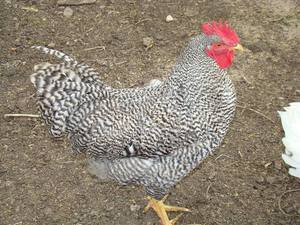 wide, elongated body;
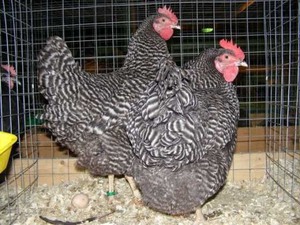
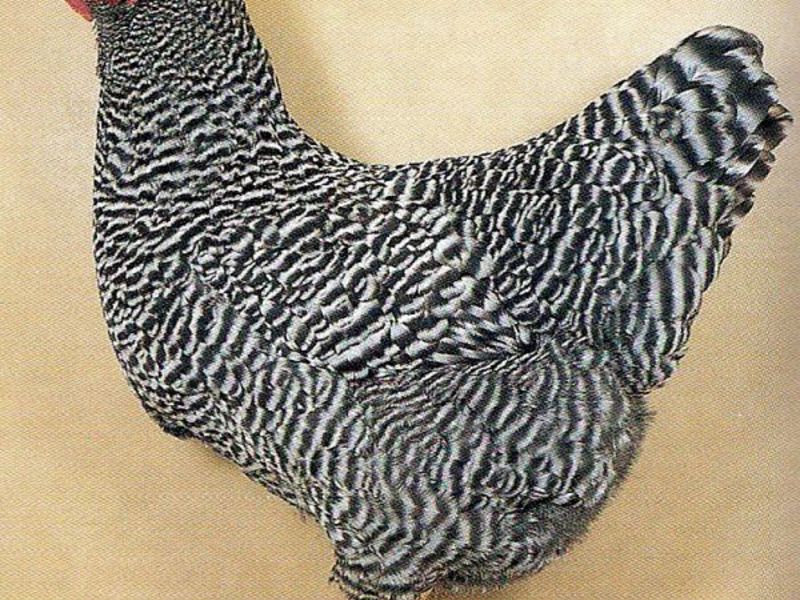
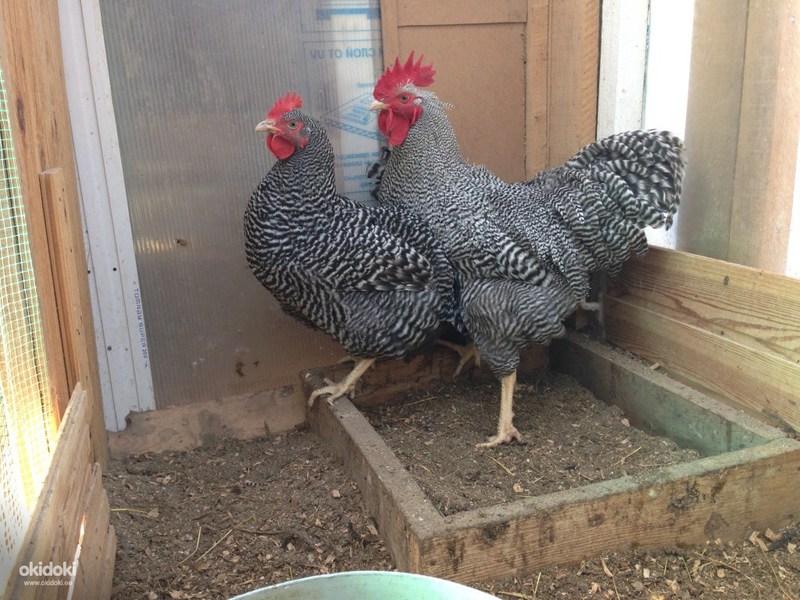
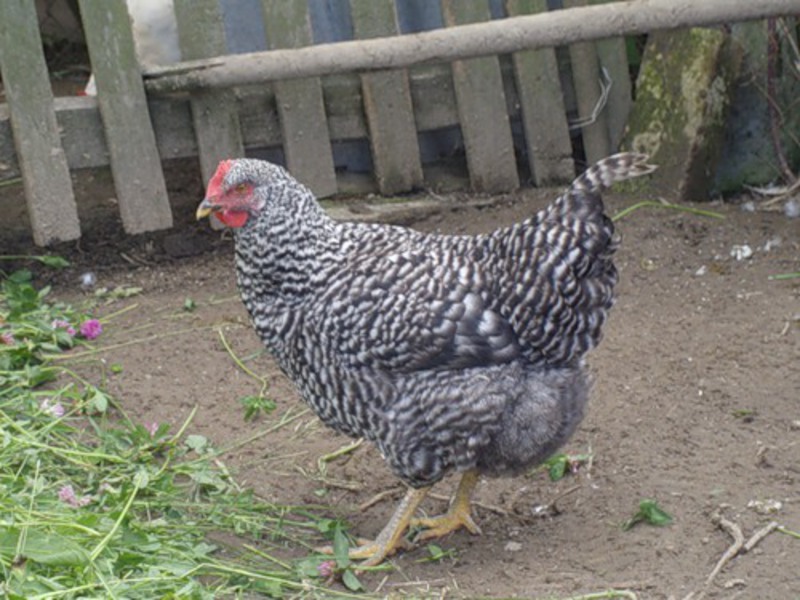
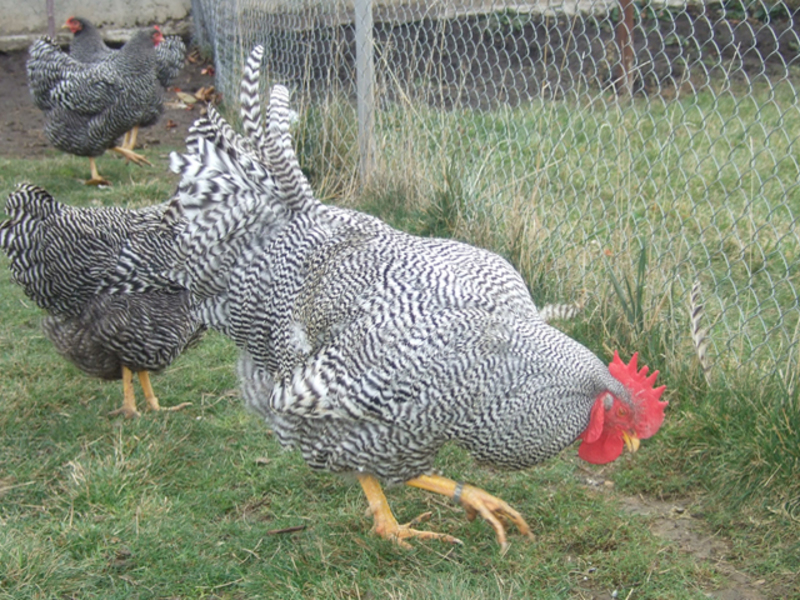
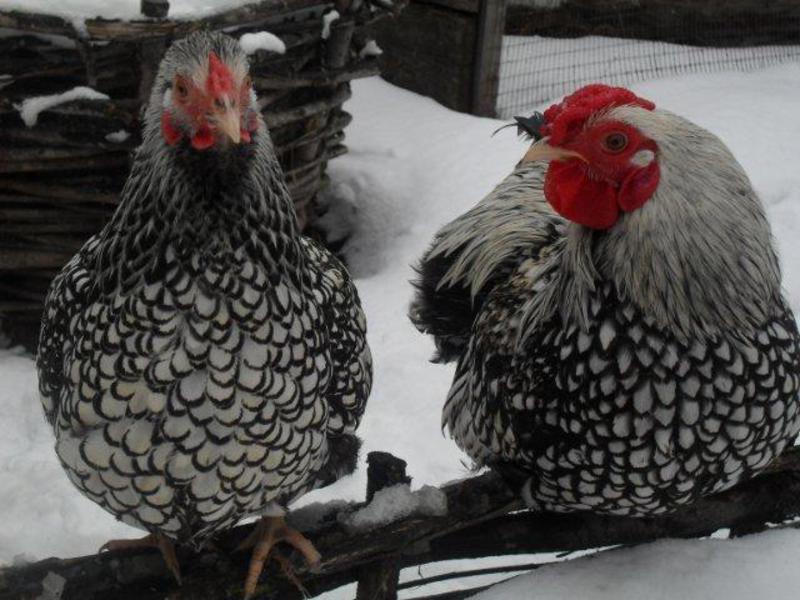
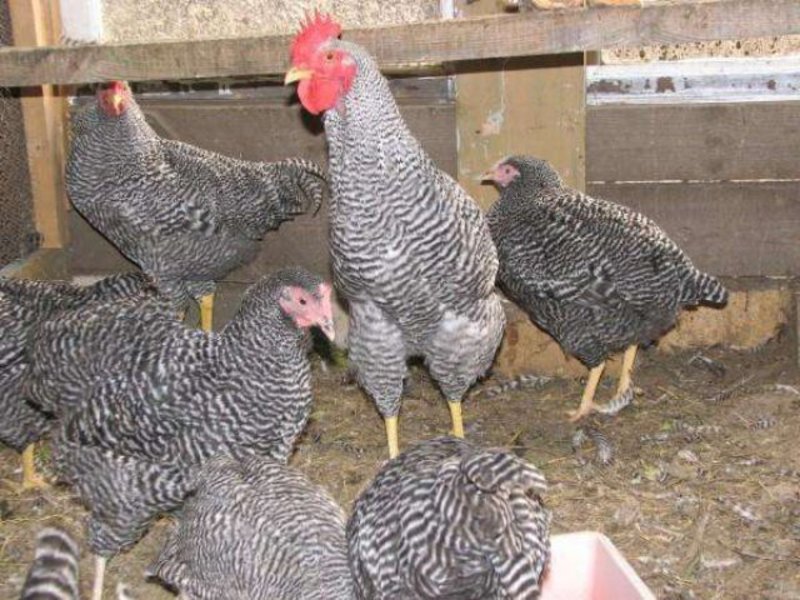
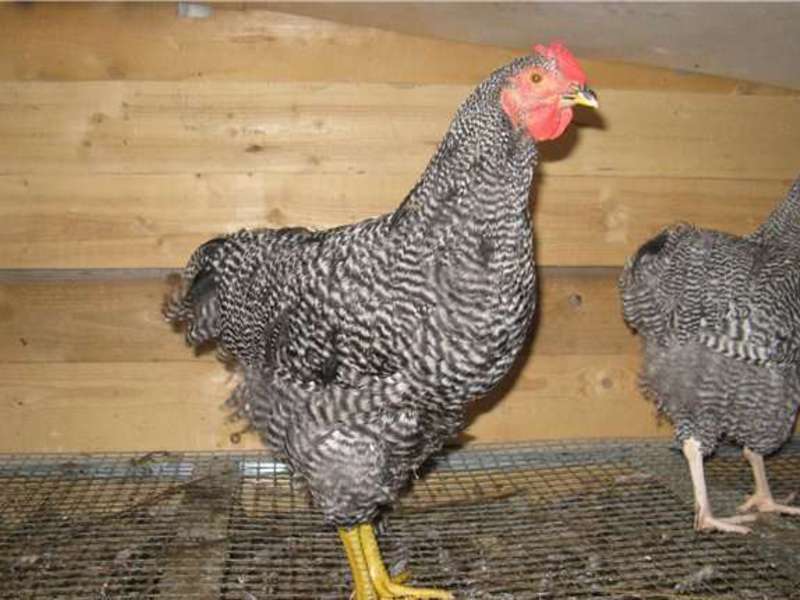
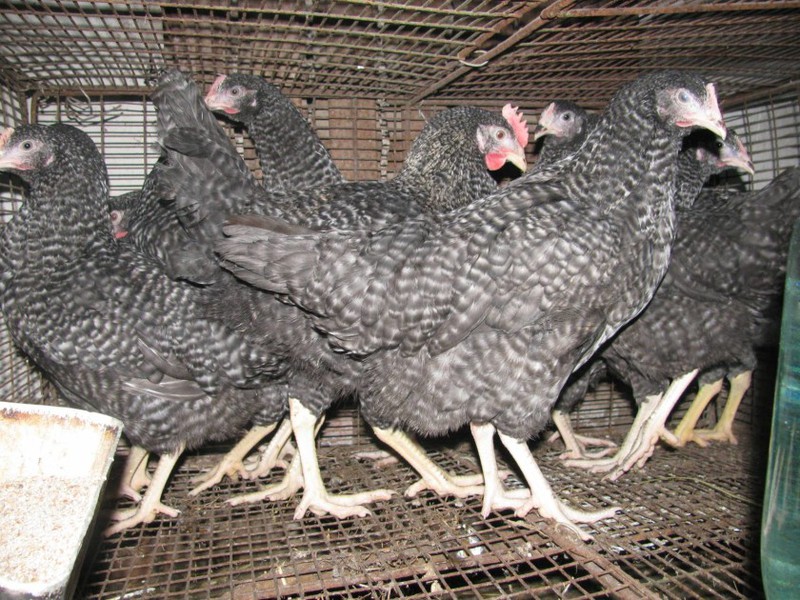
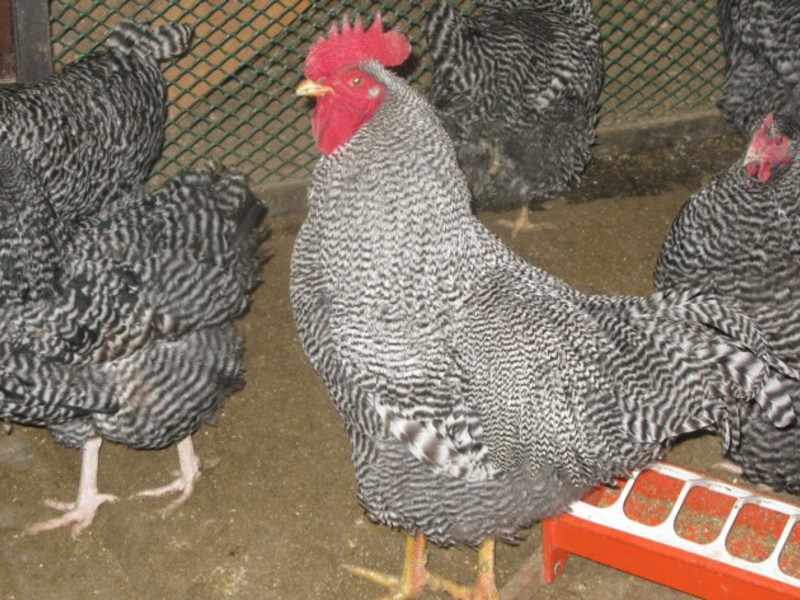
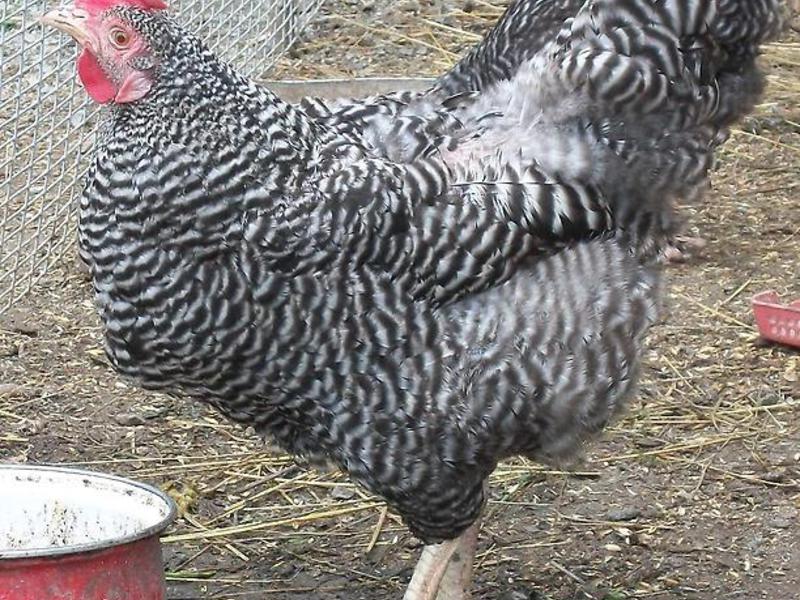
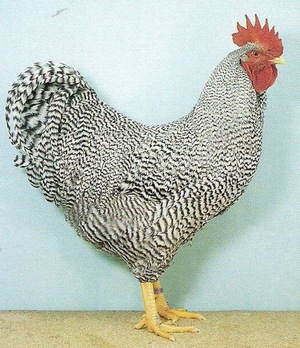
The Amrox chickens' mottled plumage requires a separate description. It has a cuckoo-like pattern, with each feather being colored. in light gray and blackRoosters appear paler than hens because their stripes are of equal width. In laying hens, the main plumage color is black, with gray stripes appearing to be painted on top of the base color.
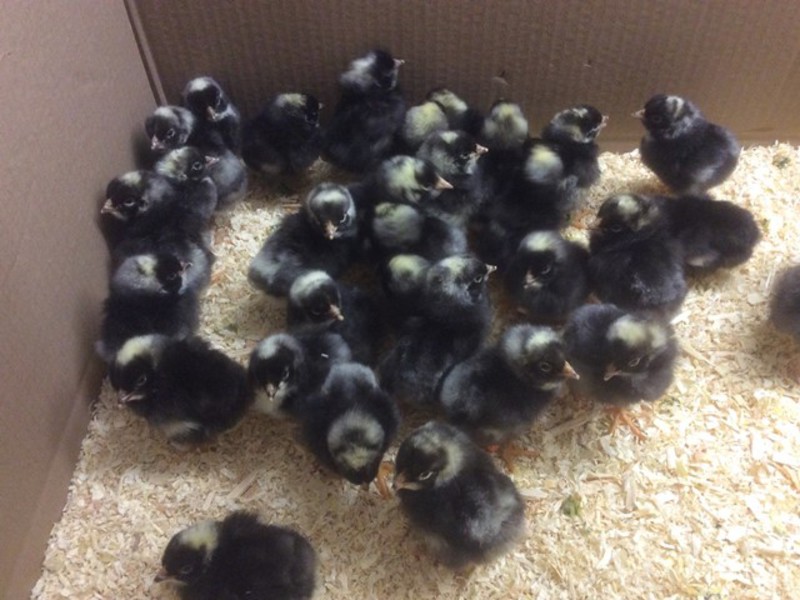
Amrox chickens are born black with white spots on their bellies. From the very first day, it's easy to distinguish hens from roosters, as hens are naturally marked with a light spot on their heads.
On professional farms, carefully monitor the purity of the breed, rejecting individuals that do not meet the standard. The following characteristics are considered defective:
- flight feathers are black;
- inconsistency of the colors of the eyes, metatarsus and beak with the description of the standard;
- too long beak and claws;
- absence of dark edging on feathers;
- a small number of dark stripes;
- gracefulness of proportions;
- short or narrow body.
Chickens are screened using roughly the same criteria. The absence of black stripes on the chickens' feathers indicates that they may be physically deficient.
Productivity
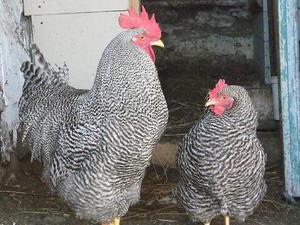 Amrox chickens are representatives of the meat and egg direction, therefore they show good results in both egg production and meat production. They are distinguished by good survival of young animals and rapid growth.
Hens grow until they are one and a half years old, reaching a weight of 4.5 kg for roosters and up to 3.5 kg for laying hens. At 5.5 months of age, hens begin laying eggs year-round, regardless of the season. In the first year, egg production is approximately 200 eggs, weighing 60 grams each. They are light brown in color and have a dense, strong shell. From the second year on, the laying hens begin to lay slightly fewer eggs, with egg production not exceeding 180 eggs per year.
To reduce the size of the bird while maintaining egg production, a dwarf breed, the Amrox, was developed in Germany. These hens weigh approximately 1.2 kg, and the cockerels up to 1.3 kg. A dwarf layer can produce 140 eggs per year, each weighing 40 grams.
Features of care and maintenance
The Amrox breed has good vitality and is very easy to care for. The only requirement is that the chickens live in a coop where the required humidity is maintained. do not tolerate dampness well, so the room should be well-ventilated. This will prevent the buildup of stale air and mold, which can make the bird sick. Good ventilation also prevents the active proliferation of various bacteria and viruses.
The poultry house needs to be disinfected regularly. To disinfect the floor, you can use regular lime spread with peat. To prevent the development of various parasites in feathers, you can sprinkle ash and sand inside the house. The birds will use these as baths.
In a well-lit and insulated coop, Amrox chickens will lay eggs well and grow quickly. Deep litter will help maintain the temperature during the winter. Providing the birds with perches for the night is essential.
Chickens can be kept either in a coop or free-range. The latter option is preferable, as it provides additional nutrition for the birds. they will find greenery, shell rock, and small stones themselves.
Feeding
Adult Amrox don't require a special diet. To ensure high productivity, they need only a balanced, fresh diet. The diet should include:
- chopped root vegetables;
- boiled potatoes;
- hay;
- vitamin flour;
- grass.
Chickens can be fed fresh kitchen scraps. They can also be fed fruit and vegetables from the garden. To strengthen bones and promote proper shell formation, birds should be given calcium in the form of ground eggshells.
The chickens are starting to be fed hard-boiled egg and crushed grainAfter some time, vegetables are introduced into their diet, such as boiled beets, potatoes, and carrots. Greens, yeast, and bran are used as a supplement to the main diet. At two months of age, corn and fish oil are added to the young animals' diet.
As soon as the plumage of the young hens becomes the same as that of the adults, they can be transferred to the adults, accompanied by their mother hen, and fed with coarse grain food.
To avoid poultry becoming obese, it is necessary to diversify the menu and monitor the amount eaten.
Breeding Amrox chickens
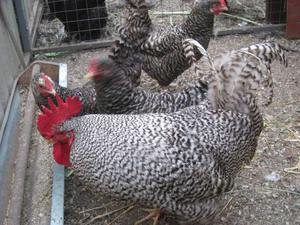 Chickens of this breed are excellent brooders, so there's no need to purchase a special incubator. They sit on eggs annually, sometimes even twice a year. In some cases, if the chickens don't have enough calcium, they may peck at the eggs. To prevent this, add crushed eggshells to their diet. The shell must be crushed., otherwise the birds will get used to it and start pecking their eggs.
If you don't want to put a hen on a nest, but want to hatch a large number of chicks at once, you can use an incubator. This should hatch approximately 80% of the chicks.
Chickens of this breed lay eggs in a unique way. They may lay for 3-4 days straight, then take a day off. It's also not recommended to change their lighting schedule, especially their coop. They may stop laying altogether for a while. They lay their eggs in protected areas.
After the chicks are born, it is recommended to immediately take antiparasitic measures using medications that are used for all birds.
All chickens of the Amrox breed quickly adapt to new conditionsThey are easy to care for and have a calm disposition. This is why they are recommended for beginner poultry farmers. With a clean coop and fresh, balanced feed, the birds will delight you with excellent productivity.
Reviews
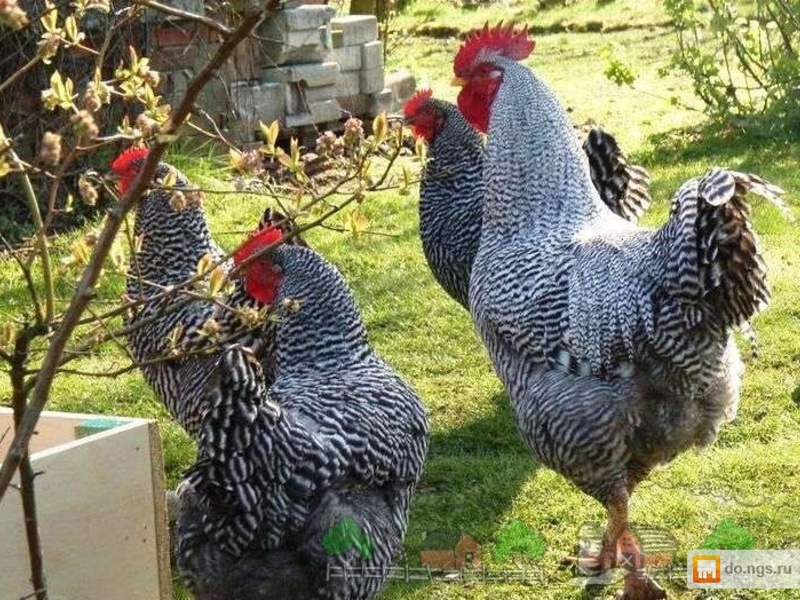
 I bought Amrox hens last year in mid-spring. They started laying eggs in the fall and are still laying. Two cockerels and three hens hatched. I kept them all, but decided to keep the spare cockerel separately. The hens are very tame and aren't afraid of anything. When you open the door, they run and jump right at you. I started collecting and hatching the eggs at the beginning of this year. The hatchability was about 70%, and all the adult chicks survived. From birth, you can tell which chicks are cockerels and which are hen. The hens have almost black down, and the cockerels have gray down. When the feathers appear, you can see that the hens have a dark stripe wider than the gray one, and the opposite is true for the cockerels.
We've been breeding simple farm chickens for a long time. This year, we decided to try purebred chickens and bought Amrox chickens. At two months old, they're very calm and cute. We'll see what happens next.
Last year I bred Amrox hens. The hens lay well. And the roosters not only grew like monsters, but they also fight. Overall, I'm happy with everything. This year I hatched chicks.
The Amrox hens hatched in May. The first egg was collected three weeks later, and three more the following day. The hens are very tame. Three days ago, the roosters were slaughtered. The net carcass weight is 2.2-2.4 kg.